Keeping Your ORV Plate Clean Enough to Read
Riding your off-road vehicle (ORV) in beautiful British Columbia is all about freedom and adventure, but sometimes the sheer joy of tearing up a muddy trail or kicking up some dust can lead to a sticky situation: an unreadable license plate. This can turn a fantastic day out into a frustrating encounter with enforcement, leaving you with a ticket instead of good memories. This guide will walk you through why keeping your ORV plate clean and visible is absolutely essential, how it gets dirty in the first place, and all the best tips and tricks to keep it perfectly legible, ensuring your rides are always hassle-free.
Why a Clean Plate Isn't Just Good Manners, It's the Law
It’s easy to think of your ORV license plate as just another piece of metal on your machine, but in BC, it's a vital identifier with significant legal implications. Ignoring its legibility can lead to more than just a stern look; it can directly impact your ability to enjoy the trails you love.
The Legal Requirement for Legibility
The Off-Road Vehicle Act in British Columbia is pretty clear: your ORV must display a number plate issued by ICBC, and that plate needs to be clearly visible and legible at all times when you're operating on Crown land, which includes pretty much every forest service road (FSR) and public trail. It's not just about having the plate affixed; it's about being able to read the characters on it without any obstruction or guesswork. Imagine a conservation officer or an RCMP officer trying to identify your machine from a distance – if they can't make out the numbers and letters because it's caked in mud, obscured by your gear, or simply too faded, you're immediately in non-compliance.
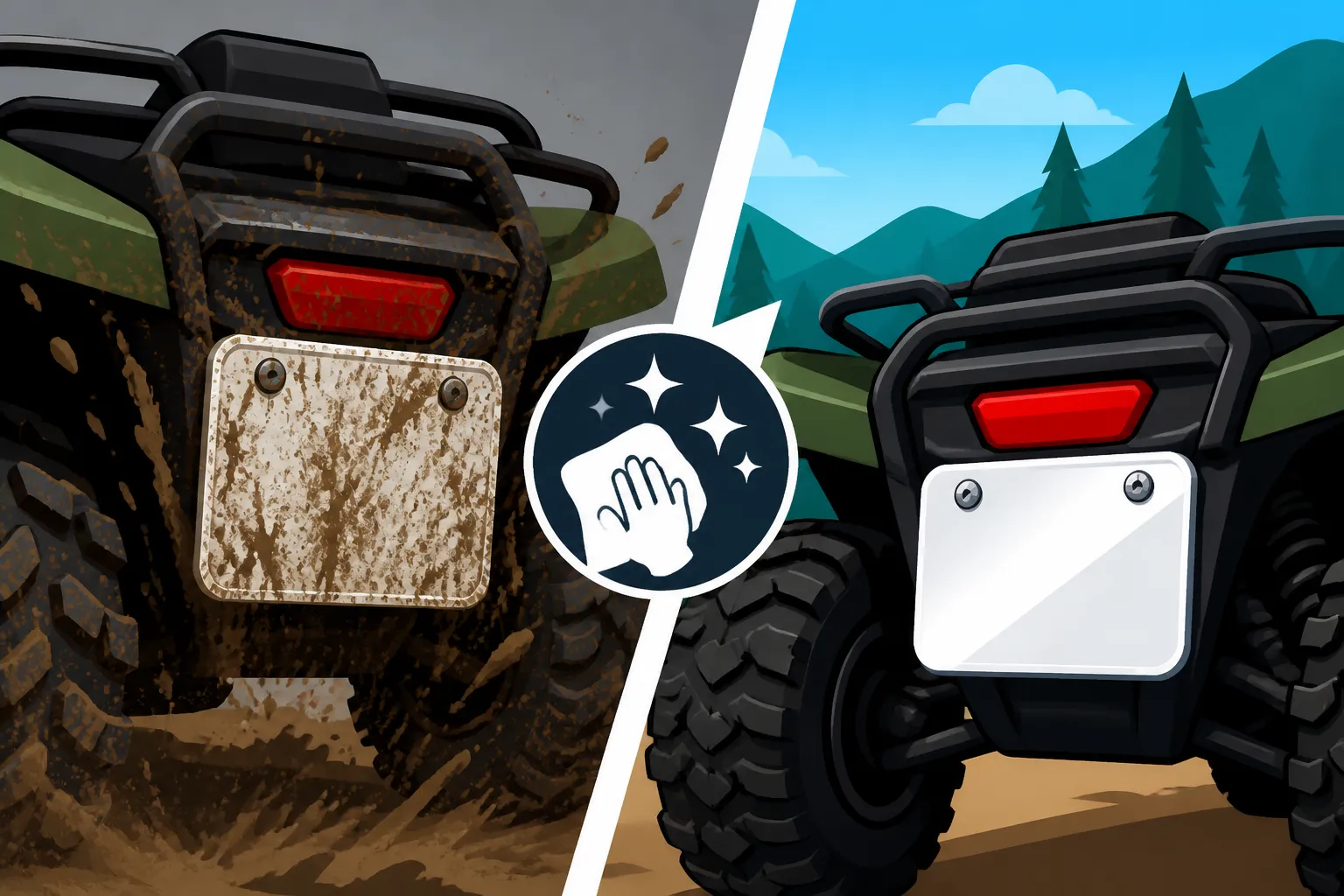
Picture this: you've just come off a particularly epic muddy section of trail near Chilliwack, and your quad looks like it just rolled out of a mud bog competition. You're feeling triumphant, but then you spot a ranger up ahead. They wave you down, and before you can even explain how awesome that mud pit was, their gaze fixes on your plate. If it’s unrecognizable beneath layers of dried earth, you’re looking at a violation ticket. It’s not an excuse that the trail was muddy; the responsibility for keeping that plate clean falls squarely on you. They're not looking to ruin your day, but they are enforcing the rules designed for safety and accountability on our shared public lands.
How Illegibility Can Ruin Your Ride
Beyond the immediate threat of a ticket, an unreadable plate can cause a cascade of other problems. First, and most obviously, if your machine is involved in an incident – say, a minor collision with another rider on a busy weekend in the Okanagan, or you need emergency assistance deep in the Cariboo backcountry – an unreadable plate makes identification incredibly difficult. This can delay emergency response or complicate insurance claims. Furthermore, if your ORV is ever stolen, a clean, visible plate is one of the quickest ways for law enforcement to identify and recover your machine. Every second counts in those situations, and a plate covered in crud simply isn't helping.
Think about the bigger picture: maintaining the privilege of riding on Crown land relies on all riders adhering to the rules. When plates aren't visible, it makes it harder to track machines, enforce regulations, and ensure accountability. This can lead to tighter restrictions or even closures of popular riding areas if non-compliance becomes widespread. It's about being a responsible member of the ORV community. Having your plate visible, along with carrying your [BC Riders Must Carry the Certificate] and [BC Riders Must Carry Photo ID], demonstrates that you're playing by the rules and helps preserve access for everyone. Plus, there’s simply the inconvenience: imagine getting stopped at a ferry terminal on Vancouver Island, only to be delayed because the attendant needs to fetch a rag and clean your plate before letting you board. It's a small detail, but it can absolutely derail your plans.
Common Culprits: What Makes Your ORV Plate Unreadable?
It doesn't take much for your shiny, new ORV plate to become an unreadable mess. From the very elements you seek out for fun to the way you store and transport your machine, several factors conspire against your plate's legibility. Understanding these common culprits is the first step in combating them.
Mud, Dirt, and Debris
This is probably the most obvious offender. British Columbia is famous for its diverse terrain, which often includes generous amounts of mud, dirt, and gravel. Whether you're splashing through creek crossings in the Kootenays or kicking up dust on a dry trail in the interior, your ORV is designed to get dirty. The issue is that much of that muck ends up on your license plate, especially if it's mounted in a low position or directly in the path of tire spray. A quick spin through a puddle can instantly render your plate illegible.
Consider a typical spring ride: the ground is soft, the trails are damp, and every corner promises a new splash. Your tires are eagerly flinging mud, and while your face might be protected by a visor, your rear-mounted license plate is taking the full brunt of it. Within minutes, the distinctive black letters and numbers against the white background are just a uniform brown. Even fine dust on a gravel road, over time, can create a film that obscures the reflective qualities of the plate, making it hard to read, especially in low light conditions. The environment we love to ride in is often the very thing that makes our plates disappear!
Scratches, Fading, and Wear and Tear
Beyond the grime, plates can become unreadable due to physical damage and the relentless march of time. Tree branches, bushes, and flying rocks can scratch and gouge the plate, removing paint and making the characters difficult to discern. If your machine spends a lot of time exposed to the elements, especially the intense summer sun, the colors can fade, and the reflective coating can degrade, reducing its visibility. Rust, particularly on older plates or those with chipped paint, can also spread and obscure crucial information.
Think about that older quad you inherited, or perhaps picked up for a steal. The previous owner might have ridden it hard and stored it outside. The plate might already be showing signs of wear – chipped paint from years of gravel spray, or a corner bent from an accidental bump in the garage. Even if it's perfectly clean, a plate that's heavily scratched or faded can be just as unreadable as one caked in mud. While [BC Has No Annual Renewal Sticker] to replace yearly, the plate itself isn't indestructible. These factors contribute to long-term illegibility that mere washing can't fix, eventually requiring a replacement.
Cargo, Gear, and Improper Mounting
Sometimes, it's not the environment or age, but what you're carrying or how your plate is mounted that causes the problem. If your plate is mounted on a rear rack, for example, a cooler, a spare tire, a fuel can, or a large gear bag can completely block it from view. Even a jacket strapped carelessly to the back can be enough to obscure the plate from certain angles. The ORV Act specifies that the plate must be "clearly visible," which means it can't be hidden by anything.
Then there's the mounting itself. While the regulation allows for [BC Plate Placement on Front, Back or Left], if you mount it too low, it's more susceptible to mud and debris. If it's too high, it might get caught on branches. If it's loose, it can flap and get bent or damaged. And if the mounting brackets themselves are bulky or improperly designed, they might partially cover the plate. It's a common oversight – you're focused on securing your cargo for a long day trip, and you inadvertently cover the very thing that keeps you compliant. This is why a little foresight into how you carry your essentials and where you mount your plate can save you a lot of grief.
Practical Strategies for Keeping Your Plate Spick and Span
Now that we know why our plates get dirty and why it's so important to keep them clean, let's dive into some practical, real-world solutions. It’s not about never getting dirty; it’s about making it easy to keep your plate legible.
Pre-Ride Checks and Simple Cleaning Hacks
The easiest way to avoid trouble is to adopt a simple routine: check your plate before every ride. Before you even fire up the engine, take a quick glance at your license plate. Is it clear? If not, a quick wipe down can save you a potential ticket. A small spray bottle filled with water, a dedicated microfiber cloth, or even just a handful of wet wipes can live in your gear bag or a storage compartment on your ORV. These are invaluable for a quick clean at a staging area or during a break on the trail.
Think of it like this: you wouldn't head out on the highway in your car with a completely obscured windshield, right? Your ORV plate needs the same consideration. When you're pulling into the staging area at Bear Creek OHV, take those two minutes. Spray a little water, give it a wipe. If the mud is dried on, let it soak for a minute before wiping. Some riders even carry a small, soft-bristled brush specifically for gently scrubbing off stubborn, caked-on mud without scratching the plate. This proactive approach ensures you're always starting your ride in compliance, and it's much easier to clean fresh mud than dried, hardened grime.
Mounting Solutions to Minimize Grime
Where and how you mount your plate can significantly impact how quickly and thoroughly it gets covered in trail debris. While the law permits [BC Plate Placement on Front, Back or Left], consider which location minimizes exposure to tire spray. For many ORVs, the rear is the default, but a plate mounted higher up on a rack, rather than below the bumper, might stay cleaner. Some riders even fabricate small mud flaps or splash guards that extend just enough to deflect the direct spray from the tires away from the plate.
Another common strategy is to use a plate relocation bracket that positions the plate in a less vulnerable spot, perhaps tucked slightly under a fender or mounted vertically (if the design allows for it legally and visibly). Some aftermarket solutions offer quick-release plate mounts, allowing you to easily remove the plate for deep cleaning or even tuck it away if you're transporting the machine and want to protect it from road grime. Whatever solution you choose, ensure that it still fully exposes the plate and doesn't obscure any characters. Remember, the goal is visibility, not concealment.
Protecting Your Plate from Damage
Beyond dirt, protecting your plate from physical damage is crucial for long-term legibility. Clear plastic or acrylic license plate covers can offer a good first line of defense against scratches from branches, flying rocks, and even minor impacts. However, it's important to ensure these covers are legal in BC – some jurisdictions have rules against tinted or reflective covers that might obscure the plate. A simple, clear, non-tinted cover usually passes muster and helps prolong the life and legibility of your plate.
When storing your machine, try to park it somewhere where the plate isn't exposed to direct sunlight for extended periods, as UV rays contribute to fading. If you’re storing it outdoors, a simple ORV cover can protect both your machine and its plate from the elements. Also, be mindful when maneuvering your ORV in tight spaces, especially around trees or rocks, to avoid bending or scraping the plate. A bent plate can be just as hard to read as a dirty one. Investing a little time in prevention can save you the headache and expense of replacing a damaged plate down the line.
What to Do If Your Plate is Beyond Cleaning (or Just Missing)
Sometimes, no amount of scrubbing or protective measures can save a plate. It might be too damaged, faded, or simply gone. When this happens, it's important to know the proper steps to take to get back on the trail legally.
Dealing with a Damaged or Illegible Plate
If your ORV plate is so bent, scratched, faded, or rusted that it can no longer be easily read, even after a thorough cleaning, then it's time for a replacement. Trying to ride with a plate in this condition is essentially the same as riding with a dirty one – it's illegible, and you're at risk of a ticket. The process for replacing a damaged plate is similar to replacing a lost one, and it involves visiting an Autoplan broker. They will guide you through the necessary paperwork, which often includes completing a form declaring the condition of the plate and requesting a new one.
You'll need to surrender the old, damaged plate when you apply for a new one. The broker will verify your [BC Registration Lasts as Long as You Own It] and process the request. It’s a straightforward process, but it does require a trip to a broker. Don't put it off; an unreadable plate is an open invitation for enforcement to pull you over, and it's far better to handle it proactively than to explain yourself on the side of a forest service road.
Replacing a Lost or Stolen Plate
Losing your ORV plate on the trail is a frustrating experience, but it happens. Whether it vibrated loose, got ripped off by a rogue branch, or, unfortunately, was stolen, you need to address it immediately. The first step if your plate is stolen is to report it to the police. They will provide you with a police file number, which you'll need for the replacement process. For a lost plate, a police report isn't always mandatory, but it can be helpful documentation.
Next, head to an Autoplan broker. You will need to complete a form requesting a replacement plate and often, a statutory declaration. This is where a resource like LawDepot might be useful for understanding the format or language typically used in such declarations, though the broker will usually have the specific forms you need. You're essentially declaring under oath that the plate is lost or stolen. The broker will process your application, and you'll receive a new ORV plate. There will be a fee for the replacement plate. While you wait for your new plate, the broker might be able to provide some temporary documentation, but generally, you should not operate your ORV on Crown land without a physical, legible plate displayed. For a deeper dive into the process, check out [BC Plate Replacement If Lost]. The good news is, once registered, the actual ORV registration itself is pretty resilient, as [BC Registration Lasts as Long as You Own It], but the physical plate is a different story.
Paperwork to Support Your Claims (and avoid hassle)
Having your registration certificate and photo ID on hand is always crucial, as [BC Riders Must Carry the Certificate] and [BC Riders Must Carry Photo ID] are legal requirements. But when dealing with a lost or damaged plate, other paperwork might come into play. If you're required to complete a statutory declaration for a lost plate, you might wonder about the specifics. A statutory declaration is a formal, written statement of facts that you declare to be true, witnessed by a commissioner for taking affidavits. This is often used when a bill of sale is missing for registration, as discussed in [BC Statutory Declarations Cost $15]. For a lost plate, it serves a similar purpose, formally documenting the circumstances of the loss.
While the broker will have the official forms, being familiar with what a statutory declaration entails, perhaps through an online resource like LawDepot for examples of legal forms, can help you prepare. The more organized and documented you are, the smoother the process will be. Always keep copies of any police reports or declarations related to your lost or damaged plate with your other important ORV documents, perhaps along with your [BC Registration Paperwork Checklist]. This creates a clear trail and helps you prove your efforts to comply with the law, should any questions arise during a trailside stop.
Beyond the Plate: Other Compliance Considerations for BC Riders
Keeping your ORV plate clean and visible is a fundamental part of responsible riding in BC, but it’s certainly not the only thing you need to think about. A compliant rider is a safe and respected rider, and that means being aware of a few other key requirements that often go hand-in-hand with plate legibility.
Carrying Your Registration and Photo ID
It cannot be stressed enough: when you are operating your ORV on Crown land in BC, you must carry your Certificate of Registration and a valid piece of government-issued photo identification. An officer can ask to see these at any time, and if you can't produce them, you're looking at a ticket. This isn't just about showing that your machine is registered; it's about proving you are the rightful operator. Imagine being pulled over on a remote FSR near Prince George, far from cell service. If your plate is clean but you can't show your papers, you're still in a bind.
Keep these documents in a waterproof bag or container, secured somewhere on your person or your ORV where they won't get lost or damaged. A zippered pocket on your jacket, a small Pelican case mounted to your rack, or a dedicated compartment on your machine are all good options. Don't just stuff them into a glove box where they can get wet or fall out. Officers are often doing checks to ensure machines are properly registered, especially in popular riding areas. Being prepared shows respect for the rules and makes any interaction quick and painless.
BC Spark Arrestor Rules and Fines and Other Equipment
Beyond registration, there are other visible aspects of your ORV that enforcement officers will check. Your exhaust system, for instance, needs to have a properly functioning spark arrestor. This isn't just a suggestion; it's a critical safety measure to prevent wildfires, especially in BC's dry interior. An officer can and will check for it, and the fines for not having one are substantial, as detailed in [BC Spark Arrestor Rules and Fines]. Similarly, ensure your lights (headlight and taillight) are in working order if you ride in low light or at night, and always wear an approved helmet if you're on a ride-astride machine.
Consider an equipment check by a conservation officer. They'll start with your plate, then ask for your registration and ID. After that, they might visually inspect your machine for things like a spark arrestor. If your plate is dirty, that immediately raises a red flag and makes them more likely to scrutinize other parts of your machine. Conversely, a clean, visible plate and readily available paperwork send a clear signal that you're a responsible rider, often leading to a much quicker and more pleasant interaction.
Navigating a Checkpoint or Stop
Despite your best efforts, you might still find yourself being waved down by an enforcement officer. Perhaps your plate just got a fresh coating of mud from an unexpected puddle, or maybe they're simply conducting a routine spot check. When this happens, remain calm and cooperative. Pull over safely, turn off your engine, and keep your hands visible. Inform the officer that you have your documents ready. If your plate is momentarily obscured, you can proactively offer to clean it, explaining that you just hit a muddy section.
Being respectful and cooperative goes a long way. Trying to argue or being unhelpful will only make the situation worse. If you do get a ticket for an unreadable or missing plate, remember that [BC Tickets for an Unregistered Machine] can be a costly lesson. However, sometimes these tickets can be disputed if you genuinely believe there was a misunderstanding or if you can demonstrate that you were actively trying to comply. But the best strategy is always prevention: keep that plate clean, carry your documents, and ride responsibly. It’s all part of the BC ORV experience, ensuring everyone can enjoy our incredible backcountry safely and legally.
| Plate Issue | Common Cause | Immediate Action | Long-Term Solution | When to Replace |
|---|---|---|---|---|
| Caked in Mud/Dirt | Tire spray, wet trails, puddles | Quick wipe with water/cloth | Strategic mounting, mud flaps, pre-ride checks | If cleaning leaves permanent stains or damage |
| Faded/Discolored | UV exposure, age, chemical cleaners | Thorough cleaning with mild soap and water | Protective cover, garage storage | If characters are indistinct even when clean |
| Scratched/Gouged | Branches, rocks, impacts, rough handling | Gentle cleaning to assess damage | Protective cover, careful riding, secure mounting | If characters are physically unreadable |
| Bent/Deformed | Impacts, cargo, loose mounting, crashes | Carefully attempt to straighten (if minor) | Sturdy mounting, avoid cargo obstruction | If severely bent, cracked, or characters distorted |
| Obscured by Cargo | Gear bags, coolers, spare tires, fuel cans | Reposition cargo, remove obstruction | Reconfigure cargo setup, use proper tie-downs | N/A (issue is cargo, not plate) |
| Missing | Vibrated loose, ripped off, stolen | Backtrack (if recently lost), report to police | Secure mounting with lock nuts, regular checks | Immediately via Autoplan broker and statutory declaration |
Disclaimer
This article is for general informational purposes only and does not constitute professional advice. Laws, prices and regulations vary by location and change over time. Consult a qualified professional for guidance on your specific situation.