Documents to Bring to a Broker
You've just bought an ATV, UTV, or snowmobile, or maybe you're finally getting around to registering that quad that's been in the family for years. You know you need to visit an Autoplan broker, but the thought of showing up with incomplete paperwork, getting turned away, and having to make another trip can be incredibly frustrating. This guide is here to walk you through exactly what documents you need to bring to a broker in British Columbia to ensure a smooth, successful ORV registration or transfer, saving you time and headaches.
The Frustration of Missing Paperwork: Why Knowing Your Documents Matters
Let's be honest, few things are as annoying as dedicating time out of your busy schedule to tackle an administrative task, only to be told you're missing something crucial. You queue up, wait patiently, finally get to the counter, and then, "Sorry, we can't complete this today because…" It's a common story when it comes to registering off-road vehicles (ORVs) in BC, and it's particularly frustrating because the requirements can sometimes feel a bit obscure compared to registering a road vehicle.
The All-Too-Common Wasted Trip
Picture this: you've loaded up your machine, driven across town to the nearest Autoplan broker, found parking, and walked in, feeling prepared. You even took a day off work for this! Only to find out you're missing a specific bill of sale from three owners ago, or your handwritten receipt isn't quite cutting it. Suddenly, your afternoon is shot, and you have to start the whole process over again, tracking down elusive documents or figuring out an alternative. This kind of experience is precisely what we want to help you avoid.
Why Brokers Are So Strict About ORV Paperwork
It might seem like an unnecessary hurdle, but there's a good reason why Autoplan brokers are so diligent about the paperwork for ORV registration. The provincial government, through the Off-Road Vehicle Act, aims to ensure clear ownership, prevent theft, and maintain a verifiable record of all ORVs operating on Crown land, which, let's face it, is most of where we love to ride. The broker isn't trying to make your life harder; they're acting as the gatekeeper for this system, ensuring that when a machine is registered, its legal ownership is rock-solid. They are verifying a crucial chain of possession, which leads us directly to a key principle in BC ORV registration: [BC's Continuity of Ownership Problem]. Without a clear paper trail, there's a risk of registering stolen property or creating future legal disputes over who truly owns the machine.
Understanding the "Continuity of Ownership" Principle
Unlike highway vehicles that often have a "title" document that gets transferred, ORVs in BC operate on a "certificate of registration" system. This means that to register or transfer an ORV, you need to show an unbroken chain of ownership from the very first registered owner, or at least from the point the machine was last officially accounted for. This is what brokers refer to as "continuity of ownership." Every transfer, every sale, from the moment the machine leaves the dealer or is imported into BC, needs to be documented. If there's a gap in this chain – say, an owner who bought it cash, rode it for years, and then sold it without any formal paperwork – that gap needs to be addressed before registration can proceed. This principle is one of the biggest reasons people get turned away, as they often don't realize they need a full history, not just the most recent transaction.
Essential Documents for Any ORV Registration or Transfer in BC
When you head to an Autoplan broker for your ORV registration or transfer, think of it like building a case for ownership. You need to provide clear, verifiable evidence that the machine is yours and that you are who you say you are. Here’s a breakdown of the core documents you should have on hand, regardless of your specific situation.
Proof of Identity
This is your most basic and fundamental document. The broker needs to confirm you are the person requesting the registration.
- Primary Identification: Your valid BC Driver's Licence is usually sufficient. It serves as both proof of identity and often, proof of address. If you don't have a BC Driver's Licence, a combination of other documents will be required.
- Secondary Identification: This could include a BC Identification Card, passport, permanent resident card, or a similar government-issued photo ID. It's always a good idea to have more than one form of ID, especially if your primary ID is relatively new or if there are any discrepancies. Remember, [BC Riders Must Carry Photo ID] when out riding anyway, so getting into the habit of having it isn't just for the broker.
Proof of Address
Even if your driver's license has your current address, sometimes a secondary proof of residency is requested, especially if you're a new resident to BC or your address has changed recently.
- Accepted Documents: This could be a utility bill (hydro, gas, internet), a rental agreement, or a property tax assessment. Make sure the document is recent, typically within the last 90 days, and clearly shows your name and current residential address in BC.
The All-Important Bill of Sale (or Series of Bills of Sale)
This is often where the rubber meets the road, or rather, where the mud meets the trail. For any used ORV, you need a bill of sale. Not just a bill of sale, but typically a clear, continuous chain of them. [BC Bills of Sale for Every Prior Owner] is not just a suggestion, it's a requirement to establish the chain of ownership.
- What Makes a Bill of Sale Legitimate: A valid bill of sale should clearly state:
- The full legal names and addresses of both the buyer and the seller.
- The date of the sale.
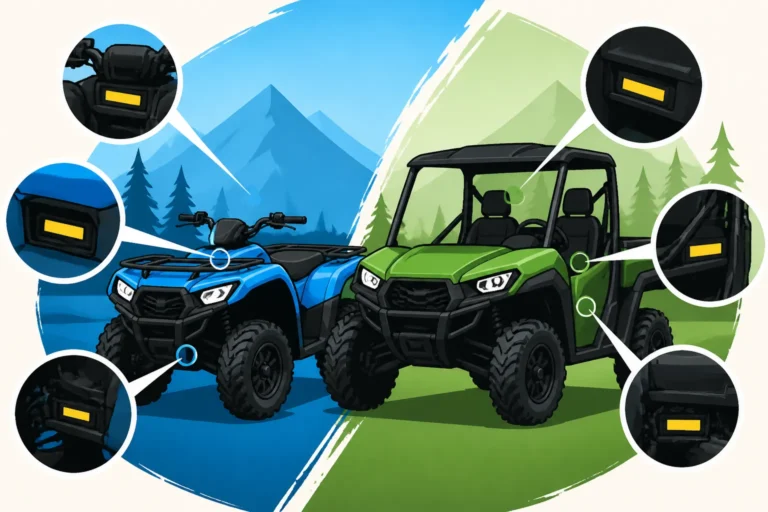
- A clear description of the ORV, including its make, model, year, and most importantly, the Vehicle Identification Number (VIN).
- The purchase price (even if it's $0 for a gift).
- Signatures of both the buyer and the seller.
- If you're buying from a private seller, having their contact information readily available can save you a trip back if the broker has questions.
- Challenges with Handwritten Receipts: While a handwritten receipt can be accepted, it must contain all the elements listed above. A scribbled note on a napkin saying "Sold quad for $100" with just a first name and a date simply won't cut it. Brokers need verifiable information.
- The Chain of Ownership: As mentioned, you need to account for every owner since the machine was new or last registered. This means if you bought your quad from John, and John bought it from Sarah, you might need both your bill of sale from John AND John's bill of sale from Sarah. This is the heart of [Why Every Past Sale Has to Be Documented].
Certificate of Registration (if previously registered in BC)
If the ORV has been previously registered in British Columbia, the seller should provide you with the original [BC's Certificate of Registration Explained]. This document is proof that the machine has been through the BC registration system before and will make your life much easier.
- What it Shows: The certificate lists the previous owner, the ORV's details, and its unique BC ORV Plate number. It’s essentially the ORV's official ID card.
- When You Don't Get One: If the seller doesn't have it, it might mean the machine was never registered, or they've lost it. In either case, be prepared for additional steps, which we'll cover in the next section.
Statutory Declaration (Replacing Missing Bills of Sale)
This is a critical document for those moments when the perfect paper trail simply doesn't exist. If you're missing a bill of sale in the chain of ownership, or perhaps you bought a machine years ago and the seller has vanished, a statutory declaration might be your only recourse. [BC Statutory Declaration for an ORV] allows you to declare under oath that you are the rightful owner and explain the circumstances of acquiring the machine without a formal bill of sale.
- When It's Needed: This document is used when [When a Declaration Replaces a Missing Bill of Sale]. It's typically required when there's a gap in the ownership chain, a bill of sale is lost, or the seller is unreachable.
- What It Involves: A statutory declaration must be signed in front of a Commissioner for Oaths (many Autoplan brokers can do this, but not all are Commissioners, so it's best to check ahead or get it sworn elsewhere first). It must contain:
- Your full legal name and address.
- A detailed description of the ORV (make, model, year, VIN).
- A complete account of how you acquired the ORV, including approximate dates and any efforts made to contact previous owners or find missing documents.
- A declaration that you are the sole and rightful owner and are unaware of any other claims to the machine.
- This is where services like LawDepot can be helpful for drafting official-looking statutory declarations that cover all the necessary legal bases, ensuring you don't miss any critical details.
- Multiple Declarations: If there are multiple missing links in the ownership chain, you might need a separate declaration for each missing bill of sale, or one comprehensive declaration covering the entire gap.
Manufacturer's Statement of Origin (MSO) or New Vehicle Information Statement (NVIS)
If you're registering a brand-new ORV purchased from a dealership, these are the documents that prove its first legal sale.
- From the Dealer: The dealership will provide you with the MSO (sometimes called NVIS), which is essentially the birth certificate of your ORV. It confirms that the vehicle is new and has not been previously registered. This document typically goes from the dealer to you, and then to the broker to establish the first registration in your name.
Proof of Insurance (for riding on Crown land/FSRs)
While not strictly a registration document, many people choose to purchase their ORV insurance at the same time they register. If you plan to ride on Crown land, particularly on Forest Service Roads (FSRs), certain liability insurance is mandatory. [BC Insurance Bought With Registration] is a convenient option.
- Minimum Requirements: For FSRs, a minimum of $200,000 in third-party liability insurance is required. While other Crown land doesn't legally require liability, it's a very wise choice, and brokers can help you get this coverage.
Here's a quick reference table for common scenarios:
| Scenario | Required Documents | Potentially Needed (If Applicable) |
|---|---|---|
| New ORV (from dealer) | 1. Proof of ID & Address 2. Manufacturer's Statement of Origin (MSO)/NVIS 3. Dealer Sales Invoice |
4. Proof of insurance (for FSRs/Crown land) |
| Used ORV (from registered owner) | 1. Proof of ID & Address 2. Original BC Certificate of Registration (from seller) 3. Bill of Sale (from seller to you) |
4. Proof of insurance (for FSRs/Crown land) |
| Used ORV (from unregistered owner, clear chain) | 1. Proof of ID & Address 2. Bill of Sale (from seller to you) 3. All previous Bills of Sale (back to original owner/last registration) |
4. Proof of insurance (for FSRs/Crown land) |
| Used ORV (from unregistered owner, missing papers) | 1. Proof of ID & Address 2. Statutory Declaration (explaining acquisition/missing papers) 3. Any available Bills of Sale/proof of prior ownership |
4. Proof of insurance (for FSRs/Crown land) |
| Gifted ORV (family transfer) | 1. Proof of ID & Address 2. Gift Letter or Bill of Sale for $0 3. Previous Certificate of Registration (if registered) |
4. Statutory Declaration (if previous papers missing) |
| Inherited ORV | 1. Proof of ID & Address 2. Grant of Probate/Letters of Administration 3. Death Certificate 4. Previous Certificate of Registration (if available) |
5. Statutory Declaration (if other papers missing) |
| Imported ORV | 1. Proof of ID & Address 2. Customs Import Document (Form 1) 3. Bill of Sale from seller in original jurisdiction |
4. Statutory Declaration (if other papers missing) |
Navigating Tricky Situations: When You Don't Have All the Papers
Life isn't always a neat, tidy package with all the required forms perfectly filled out and filed. Sometimes, especially with ORVs that might have changed hands informally over the years, you'll encounter situations where the standard documents are just not available. This is where things can get a bit more complex, but usually, there's still a path to registration.
Older Machines with No Paper Trail
This is arguably the most common hurdle ORV enthusiasts face, particularly when trying to register a classic quad or an older dirt bike that’s been passed down or bought with a simple handshake decades ago. You’ve got a machine that runs great, but the ownership history is murkier than a backcountry mud puddle. For these scenarios, the statutory declaration is your best friend. [Registering a Quad Bought for Cash Decades Ago] often means you'll need to go this route.
- The Power of the Declaration: A statutory declaration allows you to formally attest to your ownership history. It's not just a casual statement; it's a legal document where you swear under oath that the information you're providing is true.
- What to Include in Your Declaration: You'll need to detail how and when you acquired the machine, from whom (if you remember), and why you don't have a formal bill of sale. For example, "I purchased this 1985 Honda ATC 250R from a private seller, Fred Smith, in the summer of 1995 for $2000 cash. At the time, no formal bill of sale was exchanged, as was common practice. I have been the sole owner since then and have no knowledge of any other claims to this vehicle." You may need to demonstrate efforts to locate previous owners, if applicable.
- Addressing the "Gap": The declaration fills the gap in the [BC Ownership Chains Going Back Decades]. If you know there were multiple owners before you, and you can only account for your immediate seller, your declaration needs to explain that gap. Sometimes, the broker might ask for additional information or a longer explanation in your declaration to fully satisfy the continuity of ownership requirement. Using a service like LawDepot to create a clear, legally sound declaration can be very beneficial here, ensuring all pertinent details are included.
Gifted Machines (Especially Family Transfers)
Passing an ORV down through the family, or gifting one to a friend, is a wonderful gesture. However, even a gift needs proper documentation for registration purposes. You can’t just say, "My dad gave it to me."
- The Gift Letter: A formal gift letter, signed by the giver, is usually sufficient. This letter should clearly state that the ORV is being gifted, include the full names and addresses of both parties, the date of the gift, and a complete description of the ORV, including its VIN. This is essentially a bill of sale with a $0 purchase price. [BC Gift Letters Between Family] can save you from paying PST, but the transfer still needs to be formally recorded.
- PST Implications: While immediate family gifts might be exempt from Provincial Sales Tax (PST), you still need to prove the transfer occurred and the value was indeed $0. The broker will guide you on the PST aspect based on your relationship with the giver.
Inherited Machines (Estate Transfers)
If you've inherited an ORV, congratulations on the new ride – but prepare for some extra paperwork. Proving legal ownership from an estate requires specific legal documents.
- Key Estate Documents: You'll likely need the Grant of Probate or Letters of Administration (documents from the court proving who has the legal authority to administer the deceased's estate). The death certificate and the deceased's previous Certificate of Registration (if they had one) will also be necessary.
- Executor's Role: The executor of the estate will be the one formally "selling" or "transferring" the ORV to you, even if it's for $0. They will need to sign the bill of sale or transfer document in their capacity as executor.
Imported Machines
Bringing an ORV into BC from another province or country introduces a specific set of requirements, mostly revolving around customs and prior registration.
- From Another Province: If you're importing from a Canadian province that registers ORVs (like Alberta), you'll need the equivalent of their registration document and a bill of sale. If from a province that doesn't register, then a bill of sale and perhaps a statutory declaration explaining its history will be needed. [BC Registration for an Imported Machine] is a common scenario for new BC residents.
- From the USA: For machines imported from the United States, you’ll definitely need your customs import documents (like a Canada Border Services Agency Form 1) along with the bill of sale from the US seller and any US title or registration documents. The VIN will be crucial here for customs and provincial registration.
Machines with Missing or Damaged VINs
This is a serious red flag and can be the most challenging situation. The Vehicle Identification Number (VIN) is the unique identifier for your ORV, and without it, proving ownership and registering the machine becomes extremely difficult, if not impossible.
- What to Do: If the VIN is missing, defaced, or unreadable, you must attempt to locate it. Check all common VIN locations (frame, engine, sticker plates). Take clear photos if it's damaged but legible. [BC Registration When the VIN Is Gone] is a huge issue.
- Broker's Discretion: A broker may require a police report or an inspection by an authorized body to confirm the machine's identity and rule out theft. In some cases, if the VIN cannot be clearly established, registration might be refused. Always contact a broker before you even consider purchasing a machine with a compromised VIN.
Before You Go: Final Checks and Smart Tips for a Smooth Broker Visit
So, you’ve gathered your documents, perhaps filled out a LawDepot statutory declaration, and you're ready to head to the broker. Before you jump in the truck, a few final checks and smart tips can make all the difference between a quick, successful visit and another frustrating deferral.
Calling Ahead: Don't Just Show Up!
This might seem obvious, but it's often overlooked. Not all Autoplan brokers handle ORV registration with the same frequency, and some might have specific procedures or preferences. A quick phone call can save you a lot of grief.
- Ask Specific Questions: Call your local Autoplan broker and ask, "Do you handle off-road vehicle registrations, specifically for ATVs/UTVs?" Then, briefly explain your situation (e.g., "I'm registering a used quad from a private seller, and I have a bill of sale, but the previous owner lost the old registration certificate."). This will help them anticipate your needs and advise you if there are any specific local requirements or if they need you to book an appointment. Asking about [BC Registration Questions Brokers Hear] can get you ahead of the game.
- Confirm Commissioner of Oaths: If you plan to get a statutory declaration sworn at the broker, confirm they have a Commissioner of Oaths on staff who is available during your visit.
Making Copies of Everything
While the broker will need to see originals, it's incredibly wise to make photocopies or take clear photos of every document you plan to present.
- For Your Records: This ensures you have a backup of all your paperwork.
- Broker Needs: Sometimes, a broker will ask to keep copies for their files, especially if the ownership chain is complex. Having them prepared demonstrates thoroughness and speeds up the process.
Checking the VIN: Is It Clear and Does It Match?
Before you even leave your driveway, ensure the Vehicle Identification Number (VIN) on your ORV is easily accessible, clean, and matches exactly what's written on all your bills of sale and any other documents.
- Locate and Verify: Find the VIN plate or sticker on your machine (often on the frame, under the seat, or near the engine) and compare it character by character with your paperwork. Any discrepancy, even a single digit, will halt the registration process.
- Stolen Vehicle Check: While the broker will do their own check, it's always a good idea to perform your own preliminary check if you have any doubts about the machine's history. You can sometimes do this through online services by entering the VIN, which can help [Running a Stolen Vehicle Check Before You Hand Over Cash] and prevent a costly mistake.
Preparing for Provincial Sales Tax (PST)
When you register an ORV that you've purchased privately, you will generally be required to pay Provincial Sales Tax (PST) on the purchase price.
- Calculation: PST is calculated on the higher of the purchase price or the estimated depreciated value of the ORV. The broker will have access to valuation guides. Even if you bought it for a steal, be prepared to pay PST on what the province deems its fair market value. For more details, look up information on [BC PST on an ATV Purchase].
- Exemptions: Gifts between immediate family members are typically exempt, but you must prove the relationship.
Bringing Payment Methods
You'll need to pay the registration fee (which is a one-time charge as long as you own the machine) and any applicable PST.
- Common Payment Options: Most Autoplan brokers accept debit, credit cards, and sometimes cash. Confirm their accepted payment methods when you call ahead.
Knowing the Broker's Expertise
While [BC Autoplan Brokers Handle ORV Registration] province-wide, some brokers deal with ORVs far more frequently than others. A broker in a rural area like Cranbrook or Prince George might be very familiar with the ins and outs of ORV paperwork, whereas one in downtown Vancouver might process very few ORV registrations.
- Seek Experienced Brokers: If your situation is complex (e.g., an older machine with no papers), it might be worth seeking out a broker who explicitly advertises their expertise in ORV registration or one recommended by local riding clubs. They'll be more adept at navigating the nuances. As a veteran blogger, I can tell you that [Why Some Brokers Know ORV Registration Better Than Others] is a real thing, and finding the right one can make your life much easier.
By being thorough and proactive with your documentation, you're setting yourself up for a successful registration, getting you one step closer to hitting those beautiful BC trails with confidence and legal peace of mind.
Disclaimer
This article is for general informational purposes only and does not constitute professional advice. Laws, prices and regulations vary by location and change over time. Consult a qualified professional for guidance on your specific situation.