Serial Numbers and Where They Hide
Riders in British Columbia often face a frustrating puzzle: finding the elusive serial number or VIN on their ATV or UTV, especially if it's an older machine or one you're buying privately. This isn't just a minor inconvenience; a clear, readable serial number is absolutely crucial for legal ownership, registration, and protecting yourself from potential headaches down the road. This comprehensive guide will walk you through exactly why these numbers are so vital, where to look for them on your machine, and what to do if they seem to have vanished into thin air.
Why Serial Numbers Matter So Much in BC
The Backbone of BC's ORV Registration System
In British Columbia, the serial number – often called a Vehicle Identification Number (VIN) – isn't just a random string of characters. It's the unique identifier that ties your off-road vehicle (ORV) directly to you, the owner, in the provincial registration system. Since BC made ORV registration mandatory back in 2015, every machine used on Crown land or Forest Service Roads needs to be registered with ICBC. Without a legible serial number, you simply can't complete this crucial step.
Imagine you've just bought a fantastic used quad, maybe from a buddy or through an online marketplace. You're excited to hit the trails around Salmon Arm or explore the vast wilderness near Prince George. But when you head to an Autoplan broker to get your [BC's Certificate of Registration Explained], the first thing they'll ask for is that serial number. If it's unreadable, obscured, or missing, your registration process grinds to a halt. This isn't just about bureaucracy; it's about creating a clear record of ownership that helps prevent theft and ensures accountability on our shared riding areas.
Furthermore, a clear serial number forms the essential link in the chain of ownership. When you go to transfer ownership of a used machine, whether you're selling it or buying it, that serial number must match the documentation from all previous owners. This is a key reason why [Why Every Past Sale Has to Be Documented] is so important in BC – it creates an unbroken lineage of the machine, all anchored by that unique VIN.
Protecting Against Theft and Proving Ownership
Beyond registration, your ORV's serial number is your primary defence against theft and your strongest proof of ownership. Unfortunately, ATVs and UTVs are attractive targets for thieves due to their value and portability. If your machine is ever stolen, law enforcement will rely heavily on that VIN to identify it, track it, and return it to you. Without it, recovering a stolen machine becomes significantly more challenging, if not impossible.
Think about it this way: if you purchase a machine that has a tampered or unreadable VIN, you could unwittingly buy a stolen vehicle. That's a nightmare scenario no rider wants to face. When you are buying a used machine, taking a clear photo of the serial number and doing a quick check with local law enforcement (or a service that provides stolen vehicle checks) is an incredibly smart move. This diligence, especially for private sales, can save you immense stress and financial loss later on.
A strong, verifiable serial number also comes into play for insurance claims or even legal disputes. Should your machine be involved in an accident or suffer damage, your insurance provider will use the VIN to confirm the specific vehicle. It's a non-negotiable piece of information that verifies the identity of your investment, ensuring that your policy covers the correct asset. In essence, your ORV's serial number is its legal fingerprint.
Common Hiding Spots for Your ATV's VIN/Serial Number
Frame Locations for Quads and Dirt Bikes
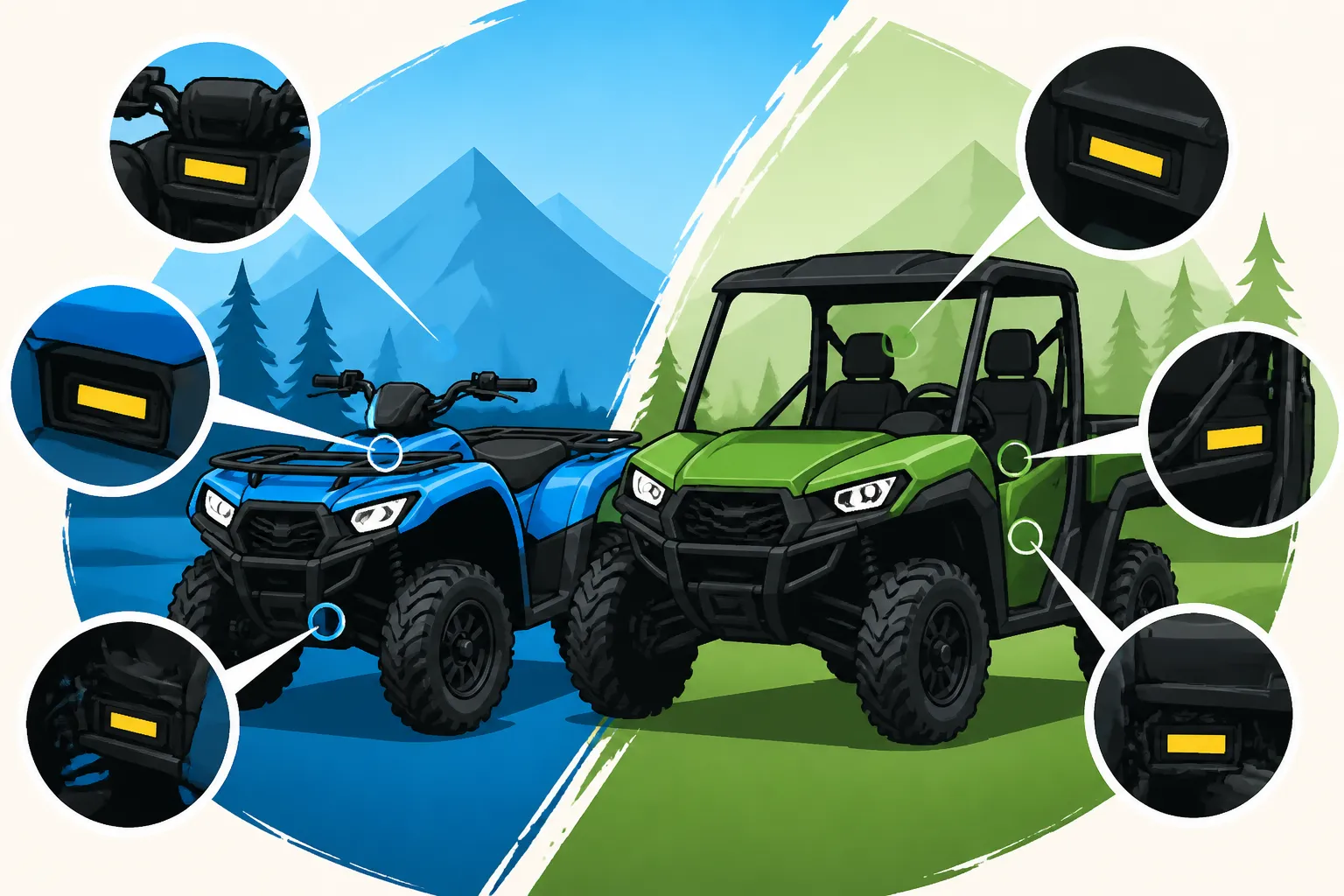
When it comes to ATVs and dirt bikes, the serial number (VIN) is almost always stamped directly onto the frame. This makes sense; the frame is the structural backbone of the machine and less likely to be replaced than other components. For most quads, you'll want to start by looking on the lower-left side of the frame, usually near the front wheel well or just below the handlebars. It's often a small metal plate or a series of stamped numbers directly into the steel.
Take, for example, a popular utility quad like a Honda Foreman or a Polaris Sportsman. You'll typically find the VIN stamped into the main frame rail, often on the left side, close to the front suspension A-arm, or just under the engine near the footpeg. Sometimes it's on a vertical tube leading up to the steering head. It might be covered in mud, grease, or even paint, so be prepared for a bit of a cleaning mission. On dirt bikes, the VIN is almost universally found stamped into the steering head tube, right where the front fork attaches to the main frame. You might need to turn the handlebars slightly to get a clear view.
For older machines, the VIN might be less prominent or in a slightly different spot, but the general area on the frame remains consistent. Always remember to check both sides of the frame, from the front to just under the seat, before you give up. A strong flashlight and a wire brush or rag can be your best friends in this search.
Side-by-Sides and Their Unique VIN Placements
Side-by-sides (SxS or UTVs) often have similar VIN locations to quads but with a few additional possibilities due to their larger and more complex chassis. Like ATVs, the primary VIN will be on the frame. Common locations include the driver's side frame rail, often underneath the driver's seat or near the firewall (the panel separating the cab from the engine compartment). Some manufacturers also place it on a crossmember in the front of the vehicle, beneath the hood, or sometimes even stamped into the chassis inside the cab itself.
Consider a Can-Am Defender or a Yamaha Wolverine. You might find the VIN stamped on the frame near the rear wheel on the driver's side, or perhaps on one of the frame tubes in the front storage area when you lift the hood. Because side-by-sides have a more enclosed structure, sometimes the VIN plate can be in a less exposed, but still accessible, spot within the cab. It's crucial to consult your owner's manual if you have it, as it will often show a diagram of the precise VIN location for your specific model.
Another less common, but still possible, spot for side-by-sides is on a sticker or plate attached to the dashboard or door jamb, similar to what you'd find in a car. While these stickers are convenient, the primary, legally recognized VIN is almost always the one physically stamped into the metal frame itself, as stickers can be damaged or removed.
Engine, Transmission, and Other Component Numbers
While the main VIN is typically on the frame, many ORVs also have serial numbers on major components like the engine and transmission. These are separate numbers from the primary VIN and usually identify the component itself, not the entire vehicle. However, they can still be useful for identification, especially if you're trying to match an engine to a specific machine or track its history.
On an engine, the serial number is usually found stamped into the engine block itself, often near the crankcase or cylinder head. You might need to wipe away some dirt or grease to see it clearly. For transmissions, it's typically on the casing. While these numbers are helpful for mechanics or for ordering parts, remember they are generally not what an Autoplan broker needs for ORV registration. For registration purposes, the frame VIN is king.
Sometimes, for extremely old machines, or if the main VIN is completely obliterated, these component numbers can offer supporting evidence of the machine's identity when combined with other documentation. However, they rarely stand alone as sufficient proof of identity for formal registration in BC. The key is to find that primary, factory-stamped VIN on the frame.
Here's a quick guide to common VIN locations:
| ORV Type | Primary VIN Location | Notes |
|---|---|---|
| ATV (Quad) | Lower-left frame rail, near front wheel/footpeg | May be under mud/paint; check both sides |
| Dirt Bike | Steering head tube (where forks attach) | Often requires turning handlebars |
| Side-by-Side | Driver's side frame rail, under seat/dashboard | Check under hood, inside cab, and front crossmembers |
| Snowmobile | Tunnel (main chassis), near footrest/engine | Specific to snowmobiles, typically visible on the side |
Troubleshooting Tips for Elusive Serial Numbers
When the VIN is Hidden by Dirt, Paint, or Rust
It's incredibly common for ORV serial numbers to be obscured. After years of riding the trails in the Okanagan, through mud and dust, or enduring coastal winters, that vital number can be hidden by layers of grime, chipped paint, or even surface rust. Don't panic if you can't see it immediately. Your first step should always be a thorough cleaning.
Grab a sturdy wire brush, some degreaser, and a good rag. For stubborn areas, a little penetrating oil can help loosen rust. Carefully clean the suspected VIN area, working slowly to avoid damaging the numbers themselves. You might be surprised what appears after a bit of elbow grease. For numbers hidden by paint, gentle scraping with a plastic scraper or even a soft brass brush (to avoid scratching the metal) might reveal the digits underneath. Sometimes, the numbers are just lightly stamped, and the slightest buildup makes them invisible.
A strong, directional light source is also your best friend here. Hold a flashlight at different angles across the area; sometimes the shadows cast by the stamped numbers will make them visible even if the surface is still a bit dirty or rusted. Many times, a number that seems completely gone will suddenly 'pop' into view with the right lighting. Patience and persistence are key here, as many riders have found their VINs after a dedicated cleaning session.
What to Do When Documentation is Missing or Unclear
Sometimes the problem isn't just finding the VIN on the machine, but also making sure it matches the paperwork you have – or dealing with a complete lack of paperwork. This is a common hurdle, especially when buying older used machines where the seller might not have all the previous bills of sale, or if you've inherited a machine. BC has specific rules for [BC Machines With No Paperwork] when it comes to registration.
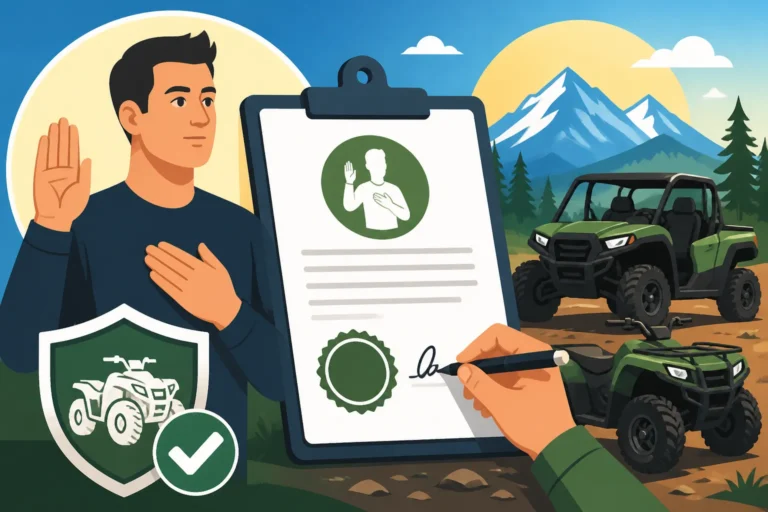
If you're missing a bill of sale, or if the one you have is handwritten and unclear, you might need to use a statutory declaration to establish ownership. A statutory declaration is a sworn statement, made under oath, confirming the facts of ownership and how you acquired the machine. This can be a vital piece of the puzzle for [BC Registration Without a Bill of Sale]. Services like LawDepot offer templates for statutory declarations, which can be a lifesaver for documenting your claim of ownership when the paper trail is otherwise weak. You'd fill it out, sign it in front of a Commissioner for Oaths (like an Autoplan broker or notary public), and present it with your registration application.
Remember, the goal is to create an unbroken chain of ownership. If there's a gap, or if previous owners are untraceable, a statutory declaration helps bridge that gap, provided you can clearly identify the machine by its VIN and explain how it came into your possession. Always bring all available documentation, however scant, to your Autoplan broker. They are experienced in navigating these situations and can advise you on the best path forward.
Seeking Professional Help for Difficult Cases
There are instances where, despite your best efforts, the serial number remains unreadable or appears to be tampered with. In such situations, it's wise to seek professional help. Your local Autoplan broker is always the first point of contact for registration questions, but if the VIN is truly problematic, they might advise you on further steps.
One option could be to take your ORV to a reputable dealership for the brand of your machine. Dealerships often have specialized tools or knowledge about where VINs are placed on their specific models, and sometimes they can help clean or even lightly etch around a corroded number to make it visible without damaging it. They might also be able to cross-reference engine numbers or other component identification with their databases, though this isn't a substitute for the main frame VIN.
In rare cases where a VIN is legitimately unreadable or appears altered, you might need to involve law enforcement. This isn't to imply wrongdoing, but rather to get an official assessment. Police can inspect the machine and verify if the VIN is truly unidentifiable or if there's any suspicion of tampering. Having an official report can be invaluable when trying to register a machine with a challenging history. Remember, attempting to alter a VIN yourself is illegal and can lead to severe penalties. Always consult the experts.
The Importance of a Clear VIN for Registration and Beyond
Seamless Registration and Transfer of Ownership
A clear, legible serial number is the single most critical piece of information for navigating the BC ORV registration system. Without it, you simply cannot complete the [How to Register an ATV in BC] process. When you visit an Autoplan broker, they will meticulously check this number against your bills of sale and other documents to ensure consistency and legality. This is particularly important for [BC Transfer of Ownership Explained].
Imagine you're selling your well-loved side-by-side to a new owner. If the VIN on the machine doesn't perfectly match the VIN on the certificate of registration, or if it's too corroded for the buyer to verify, the sale can fall through. The buyer won't be able to register it in their name, creating a huge headache for everyone involved. This is why when you're preparing to sell, a quick check of your VIN and comparing it to your existing [BC's Certificate of Registration Explained] is a wise step. If there are discrepancies or issues, address them before you list the machine for sale.
Even for machines acquired as a gift between family members, a clear VIN is essential for the [BC Gift Letters Between Family] process. The gift letter, often created using a service like LawDepot, will explicitly state the machine's VIN to ensure there's no ambiguity about which specific ORV is being gifted. This attention to detail safeguards both the giver and the recipient from future registration problems.
Running a Stolen Vehicle Check Before You Buy
One of the most powerful uses of a serial number, from a buyer's perspective, is the ability to [Running a Stolen Vehicle Check Before You Hand Over Cash]. Before you finalize any private sale, always ask the seller for the VIN and run a check with local law enforcement or through an online service. This simple step can save you from inadvertently purchasing a stolen machine, which would result in its confiscation and you losing your money without recourse.
When you present the VIN to an officer, they can typically cross-reference it with national stolen vehicle databases. While this isn't always foolproof, it significantly reduces your risk. This due diligence is especially crucial given that BC does not issue titles for ORVs in the same way it does for cars; instead, you get a certificate of registration. This distinction means the burden of verifying ownership history falls more heavily on the buyer, and the VIN is your best tool.
A seller who is hesitant or unable to provide the VIN should immediately raise a red flag. A legitimate seller will have no problem sharing this information and allowing you to perform your checks. If they can't produce a clear VIN or refuse to cooperate, it's usually a strong indicator that you should walk away from the deal, no matter how good it seems. Your financial security and peace of mind are worth more than a potentially problematic discount.
Long-Term Maintenance and Parts Sourcing
Beyond the legal and ownership aspects, your ORV's serial number is also vital for long-term maintenance and sourcing the correct parts. When you need to order a specific component for your quad or side-by-side, especially for engine or chassis parts, the manufacturer or a dealership will often ask for the full VIN. This ensures they can pull up the exact specifications for your model year and trim, avoiding costly mistakes with incompatible parts.
For instance, if you ride a Polaris RZR and need a new suspension component, telling the parts counter "I need a spring for a RZR" isn't enough. There are countless variations across model years. Providing the VIN allows the parts department to pinpoint your specific machine, ensuring you get the right part the first time. This saves you frustration, downtime, and potentially multiple trips back to the store.
Keeping a record of your VIN, perhaps a photo on your phone or a copy of your [BC Registration Paperwork Checklist] readily accessible, is a smart practice for any ORV owner. It simplifies not only legal and ownership matters but also the practicalities of keeping your machine running smoothly and safely for years of enjoyment on BC's incredible trails, from the Chilliwack Valley to the Cariboo.
Disclaimer
This article is for general informational purposes only and does not constitute professional advice. Laws, prices and regulations vary by location and change over time. Consult a qualified professional for guidance on your specific situation.