BC Autoplan Brokers Handle ORV Registration
It can feel incredibly confusing trying to figure out where to even begin with off-road vehicle (ORV) registration here in British Columbia. Many riders assume they need to visit a government office, or they simply put it off because the process seems daunting. The good news is, registering your quad, dirt bike, side-by-side, or snowmobile is much more accessible than you might think, and this guide will walk you through exactly why your local Autoplan broker is the key to a smooth and straightforward experience.
Why Autoplan Brokers Are Your Go-To for ORV Registration
When you think of Autoplan, your mind probably jumps straight to car insurance, right? You're not alone! For years, that's almost exclusively what these offices were known for. But with the introduction of the Off-Road Vehicle Act in 2015, their role expanded significantly, turning them into the essential hub for everything related to your ORV's paperwork.
More Than Just Car Insurance
It's a common misconception that anything to do with vehicles not on the main highway system falls outside the scope of what an Autoplan broker handles. People often imagine a separate, perhaps specialized, government office for ORVs. This simply isn't the case in British Columbia. When the province decided to make ORV registration mandatory, they wisely leveraged the existing, extensive network of Autoplan brokers. This meant that instead of creating a whole new bureaucratic system, they integrated the new ORV requirements into a system already familiar to most British Columbians.
So, while you might walk in with a classic vehicle in mind, don't hesitate to pull up a chair and ask about your ATV. These brokers are now equipped, trained, and authorized to process all the necessary documentation to get your ORV legally registered and plated. They understand that off-road vehicles have unique needs and regulations compared to passenger cars, and their systems are set up to differentiate between the two, ensuring you get the correct documentation. They are essentially your one-stop shop for both your highway and off-highway vehicle needs.
Convenience and Accessibility Across BC
One of the biggest advantages of having Autoplan brokers handle ORV registration is the sheer convenience and accessibility they offer. Think about it: almost every town and city in British Columbia, no matter how small, has an Autoplan broker office. You don't have to travel to a provincial capital or a specific, hard-to-find government building to get your quad registered. Whether you're in the bustling Lower Mainland, a remote Kootenay community, or up in the Cariboo, there's likely a broker just a short drive away.
This widespread network means less travel time, less hassle, and more time enjoying the trails. You can often drop in during regular business hours, and many brokers offer flexible appointments. Their familiarity with local nuances, whether it's common riding areas or specific regional questions, can also be a huge asset. This local presence is invaluable, especially when dealing with the sometimes complex or unique situations that can arise with ORV ownership.
Expertise in Complex ORV Rules
Let's be honest: government regulations can be a bit of a maze. The Off-Road Vehicle Act, while crucial for rider safety and environmental protection, introduced a whole new layer of rules that many people found confusing at first. Everything from [BC ORV Number Plates and Decals] to the specific scenarios that trigger the registration requirement felt like a lot to learn. This is precisely where the expertise of an Autoplan broker shines.
These professionals undergo specific training to understand the intricacies of ORV registration, the different classes of vehicles, and the documentation required. They're well-versed in scenarios like transferring ownership, registering an imported machine, or handling situations where paperwork might be missing. Instead of you having to pore over legal documents and decipher jargon, the broker can guide you through each step, clarify any uncertainties, and ensure that all your paperwork is completed accurately and legally. They are there to demystify the process and make sure you leave their office with confidence that your ORV is properly registered.
The Registration Process: What to Expect at the Broker's Office
Stepping into an Autoplan broker's office for ORV registration for the first time might feel a bit like uncharted territory, especially if you're used to just renewing your car insurance. But fear not! The process is designed to be as straightforward as possible, with the broker there to guide you. Knowing what to expect and what to bring can make it even smoother.
Essential Documents You'll Need to Bring
The success of your ORV registration largely hinges on having the right documents in hand. Just like registering a car, proving ownership and identity is paramount. The core documents you'll need are proof of ownership, personal identification, and proof of your BC address.
For proof of ownership, the gold standard is a complete [BC Transfer of Ownership Explained] document or a detailed bill of sale for both the immediate prior sale and, ideally, a complete chain of ownership going back to the original retail purchase. This could be a new machine dealer invoice or a bill of sale from a private seller. If you're buying a brand-new machine, the dealer will typically provide all the necessary paperwork. For a used ORV, you'll need a bill of sale that clearly identifies the vehicle (make, model, VIN), the seller, the buyer, the sale date, and the purchase price. Remember, the province also charges PST on the fair market value of the machine unless it's a gift between immediate family, so the sale price is important for tax calculations. Without clear ownership documents, the process can become a bit more involved, potentially requiring a statutory declaration.
You'll also need valid government-issued photo identification, such as your BC driver's license. This confirms your identity. Finally, the broker will ask for proof of your current BC residential address, which might be on your driver's license, or you might need to provide a utility bill or other official mail if your ID doesn't show your current address. Bringing these items organized can save a lot of time and back-and-forth.
Filling Out the Paperwork
Once you've presented your documents, the broker will help you complete the required forms. This isn't like filling out a complicated tax form by yourself; the broker will typically input the information into their system based on the documents you've provided and then guide you through verifying the details. They'll ask for information about your ORV, such as its make, model, year, and crucially, its Vehicle Identification Number (VIN) or serial number. It's incredibly important to ensure this information is accurate, as it directly links your registration to your specific machine.
The broker will also record your personal details as the new owner. They might ask questions to clarify details, especially if the bill of sale is handwritten or seems incomplete. Their job is to ensure everything is above board and that the information aligns with provincial requirements. This process typically culminates in the creation of your [BC's Certificate of Registration Explained], which is the official document proving your ORV is registered. It’s a very straightforward process, made simple by their expertise, so don't feel intimidated by the forms.
Understanding Fees and Payments
When it comes to costs, one of the most welcome aspects of BC's ORV registration system is its simplicity: it's largely a one-time affair. You're not looking at annual renewal fees like you might with car tabs in some jurisdictions. This is a huge relief for many riders! The initial registration involves a one-time fee. This fee covers the administrative cost of registering your vehicle and issuing your number plate and decal. It's a single payment that covers the lifetime of your ownership of that specific machine.
Beyond the registration fee, you will also be required to pay the provincial sales tax (PST) if you purchased the machine privately. The broker will calculate this based on the purchase price listed on your bill of sale or, if the price seems unusually low, they might assess it based on the fair market value. They accept various payment methods, including debit, credit card, or cash, making it easy to complete the transaction on the spot. While the registration itself doesn't expire, it's worth noting that if you sell the machine, the new owner will pay a new transfer fee, so the previous owner doesn't pay again. This makes [BC ORV Registration You Pay Once] a genuinely unique feature of the system.
Common Challenges and How Brokers Help
Navigating the world of ORV registration isn't always a straight line, especially with used machines or unique ownership histories. This is where Autoplan brokers truly earn their stripes, helping riders overcome some of the trickiest hurdles.
Navigating Missing or Incomplete Paperwork
Perhaps the most common headache for anyone trying to register a used ORV in BC is the dreaded missing paperwork. We've all heard stories, or perhaps even lived one, of buying a machine years ago with just a handwritten note, or inheriting an ATV from a relative where the original bill of sale vanished decades ago. It feels like an impossible situation, making you wonder, "How on earth do I prove I own this thing?" This is where your Autoplan broker becomes an invaluable ally.
The province understands that not every ORV has a perfect paper trail, especially given that registration only became mandatory in [BC Registration Became Mandatory in 2015]. For machines bought before this, or even more recently with informal sales, the original documents might be long gone. In these scenarios, a [BC Statutory Declaration for an ORV] often comes to the rescue. This is a legal document where you declare under oath that you are the rightful owner of the machine, detailing how and when you acquired it, and explaining why you don't have the standard proof of ownership. Your broker can guide you on when a declaration is appropriate and what information needs to be included. Services like LawDepot can be incredibly helpful for creating a formal declaration document, providing templates that ensure all the necessary legal language is included before you bring it to your broker. The broker won't draft the declaration for you, but they will review it and confirm if it meets the requirements.
Registering Older or Imported Machines
Registering an ORV that's been around for decades, or one you've brought in from another province or even another country, can present its own set of unique challenges. These situations often involve different sets of rules and documentation compared to a straightforward new purchase. For older machines, sometimes the VIN plate might be damaged, or the serial number hard to locate. Your broker will know exactly what to look for, and what steps to take if identifying marks are obscured or missing, potentially requiring a verification process.
When it comes to [BC Registration for an Imported Machine], say from Alberta or Washington, there are specific procedures to follow. The broker needs to confirm that the machine was properly imported into Canada and that any previous registration or titling from its home jurisdiction is accounted for. This might involve reviewing customs documentation or previous registration papers from another province. They'll ensure that the machine hasn't been reported stolen elsewhere and that all necessary forms are completed for its new life in BC. This detailed scrutiny ensures compliance with all provincial and federal regulations, preventing future headaches down the trail.
Understanding Ongoing Obligations (or Lack Thereof)
One of the biggest questions riders have after successfully registering their ORV is, "What next? Is there an annual renewal sticker? Do I need to pay every year?" This is where the simplicity of BC's system truly shines, and where your broker can provide much-needed clarity. Unlike many other jurisdictions or even highway vehicles in some provinces, [BC Has No Annual Renewal Sticker] for your ORV. Once you've paid the one-time registration fee and received your certificate and plate, you're generally good to go for as long as you own that specific machine.
However, "no annual renewal" doesn't mean "no responsibilities." Your broker will emphasize the importance of carrying your Certificate of Registration with you whenever you're operating the ORV off-highway. This is a crucial requirement under the Off-Road Vehicle Act, and law enforcement officers may ask to see it, along with your photo identification. For example, [BC Riders Must Carry the Certificate] on every ride. They'll also explain requirements for [BC ORV Number Plates and Decals] placement and ensuring your plate remains visible. So, while you won't be back at the broker's office every year to renew, the advice they provide on these ongoing obligations is critical for legal and responsible riding.
Here's a quick overview of document requirements for common scenarios:
| Scenario | Required Documents | Special Considerations |
|---|---|---|
| New Machine Purchase | – Dealer's Invoice / Bill of Sale | – Dealer handles much of the initial paperwork. |
| – Photo ID | – VIN is typically clear and verified by dealer. | |
| – Proof of BC address | – PST typically charged at the dealership. | |
| Used Machine (Full Papers) | – Bill of Sale (from seller to you) | – Broker verifies ownership chain. |
| – Previous Certificate of Registration (if available) | – Ensure VIN matches all documents. | |
| – Photo ID | – PST collected by the broker on purchase price. | |
| – Proof of BC address | ||
| Used Machine (Missing Papers) | – Statutory Declaration (confirming ownership history, how acquired, why papers are missing) | – Broker helps determine if a declaration is needed. |
| – Photo ID | – May need details like previous owner's name, if known, to check for stolen status. | |
| – Proof of BC address | – Use a service like LawDepot for a formal declaration before visiting. | |
| Imported Machine | – Original ownership/registration documents from prior jurisdiction | – Customs documentation (e.g., Form 1 for vehicles imported from the US) is essential. |
| – Proof of import into Canada | – Broker ensures compliance with federal and provincial import regulations. | |
| – Photo ID | – PST collected by the broker. | |
| – Proof of BC address |
Beyond Registration: Other Services Brokers Can Provide
While getting your ORV registered is undoubtedly a primary reason to visit an Autoplan broker, their services extend far beyond just handing you a number plate. They are equipped to handle a variety of related needs, ensuring you're not only registered but also properly insured and able to transfer ownership smoothly when the time comes.
ORV Insurance Options
Simply registering your ORV doesn't automatically mean you have all the insurance coverage you need, and this is a critical area where your Autoplan broker's expertise is invaluable. In BC, the insurance landscape for ORVs has different tiers of requirements. For instance, if you plan on crossing a highway or riding on a [BC Forest Service Road Requirements], you absolutely need a specific level of liability insurance. On other Crown land, liability insurance is voluntary but highly, highly recommended. Nobody wants to face a massive lawsuit because of an accident on the trails, and the costs can be astronomical.
Your broker can walk you through the various options available, explaining what [BC ATV Insurance Requirements] entail for different riding environments. They can help you understand the difference between basic liability coverage, which protects you from claims if you cause damage or injury to others, and comprehensive coverage, which protects your own machine from damage or theft. They'll help you tailor a policy that fits your riding habits and budget, ensuring you're adequately protected whether you're sticking to private property, exploring vast tracts of Crown land, or using resource roads for access. Without this guidance, many riders might unwittingly put themselves at significant financial risk.
Transferring Ownership When You Sell or Buy
Eventually, you might decide it's time for a new machine, or you're bringing another one into your garage. Whether you're selling your current ORV or buying a new-to-you one, the ownership transfer process is a crucial step that needs to be handled correctly, and your Autoplan broker is key. When you sell your registered ORV, you, as the seller, are responsible for initiating the transfer. This ensures that your name is removed from the registration and that the new owner is properly recorded. Failing to do so can leave you potentially liable for tickets or incidents involving the machine after you've sold it.
The broker will process the [BC Transfer of Ownership Explained], collecting the new owner's information and ensuring all the necessary documentation, including the bill of sale, is in order. For the buyer, it's equally important to get the machine transferred into their name promptly. This process ensures they receive their own Certificate of Registration and are legally recognized as the owner. The broker will facilitate this, calculate any applicable PST, and issue the new registration. It's a quick and efficient process, preventing any future headaches for either party and making sure the ownership chain remains clear.
Addressing Specific Situations (e.g., Estate Sales, Business Machines)
Life throws curveballs, and sometimes ORV ownership isn't as simple as buying a new machine from a dealer. What happens if you inherit a quad, or if your business needs to register a fleet of side-by-sides for industrial use? These special situations often have specific documentation requirements and processes, and your Autoplan broker is the expert to guide you through them. For example, registering an ORV from an estate sale will require specific legal documents like a grant of probate or letters of administration to prove the legal authority to transfer ownership.
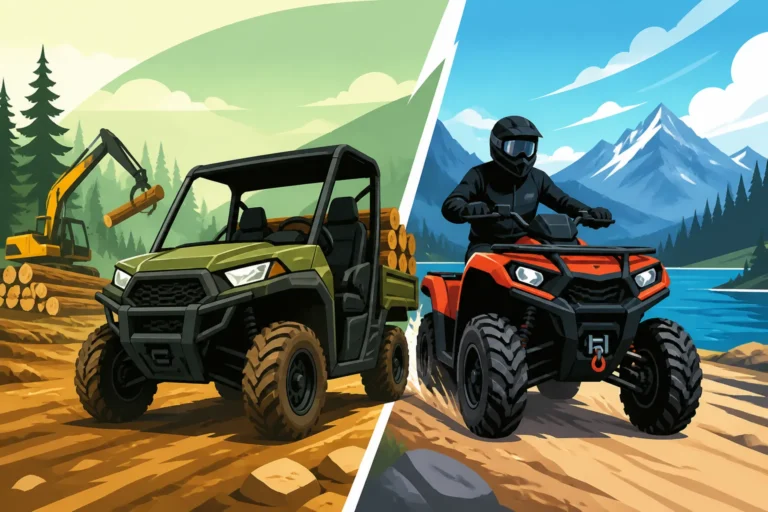
Similarly, if you're registering an ORV for a business, there might be different considerations for the registrant's name (the business entity rather than an individual) and how the vehicle is insured for commercial use. The broker can explain how [BC Registration Covers Work and Recreation], ensuring that whether your machine is used for logging, farming, or weekend trail rides, it's compliant with the law. They can also assist with scenarios like [BC Registration With Two Owners], ensuring all parties are correctly listed and understand their responsibilities. Their ability to handle these less common but equally important situations makes them an indispensable resource for ORV owners across BC.
Why Some Brokers Stand Out
While all Autoplan brokers are authorized to handle ORV registration, just like any profession, some have a deeper well of experience and knowledge in specific areas. When it comes to something as distinct as off-road vehicles, seeking out a broker with a solid grasp of the nuances can make a world of difference in your experience.
Finding an Experienced ORV Broker
It's true that not every Autoplan broker office will have the same level of familiarity with ORV registration. Some offices might process dozens of car renewals daily but only see a handful of ORV registrations annually, especially in urban centres where off-roading might be less prevalent. This doesn't mean they can't help you, but an experienced ORV broker often means a smoother, faster process because they're already familiar with the common questions and potential pitfalls. They know what documents to ask for without hesitation, and they can quickly assess unique situations, such as when a [BC Statutory Declaration for an ORV] might be needed.
To find an experienced ORV broker, don't be afraid to ask when you call or visit. You can simply state you're looking to register an ATV or side-by-side and ask if they have staff who specialize in ORV services or frequently handle them. Often, brokers located in communities closer to popular riding areas, like the Okanagan, Kootenays, or Vancouver Island's interior, will have a more seasoned team when it comes to off-road vehicles. Word-of-mouth within local riding clubs can also be an excellent resource for recommendations.
What Makes a Good ORV Broker Experience
A truly good ORV broker experience goes beyond just getting the job done. It's about feeling confident, understood, and that your time is respected. A great broker will offer clear, concise communication, patiently explaining each step of the registration process and answering all your questions, even if you feel they might be basic. They understand that for many, this is a new type of registration, and they won't make you feel rushed or silly for asking about details like [BC Plate Placement on Front, Back or Left].
Efficiency is another hallmark. An experienced broker will have their system down, processing your paperwork accurately and quickly, minimizing wait times. They will often double-check information with you to prevent errors that could cause problems later. Moreover, a good broker offers empathy. They recognize that dealing with missing paperwork or understanding new regulations can be stressful. They'll work with you to find solutions, such as guiding you through using a formal document from a service like LawDepot if a bill of sale is missing. Ultimately, the goal is to reduce your stress and get you back to what you love: riding your ORV legally and safely on BC's incredible trails and resource roads.
Disclaimer
This article is for general informational purposes only and does not constitute professional advice. Laws, prices and regulations vary by location and change over time. Consult a qualified professional for guidance on your specific situation.