BC Gift Transfers Between Family
Navigating the ins and outs of Off-Road Vehicle (ORV) registration in British Columbia can feel like a tangled web, especially when you're just trying to do something nice like pass your beloved quad down to a family member. It’s frustrating when you assume a simple handshake and a "it's yours now, kid!" is enough, only to find out the province has its own set of hoops. This guide is here to untangle that process, showing you exactly how to execute a smooth, legal ORV gift transfer to a family member in BC, ensuring everyone stays on the right side of the rules and avoids unnecessary headaches.
The Basics of Gifting an ORV in BC
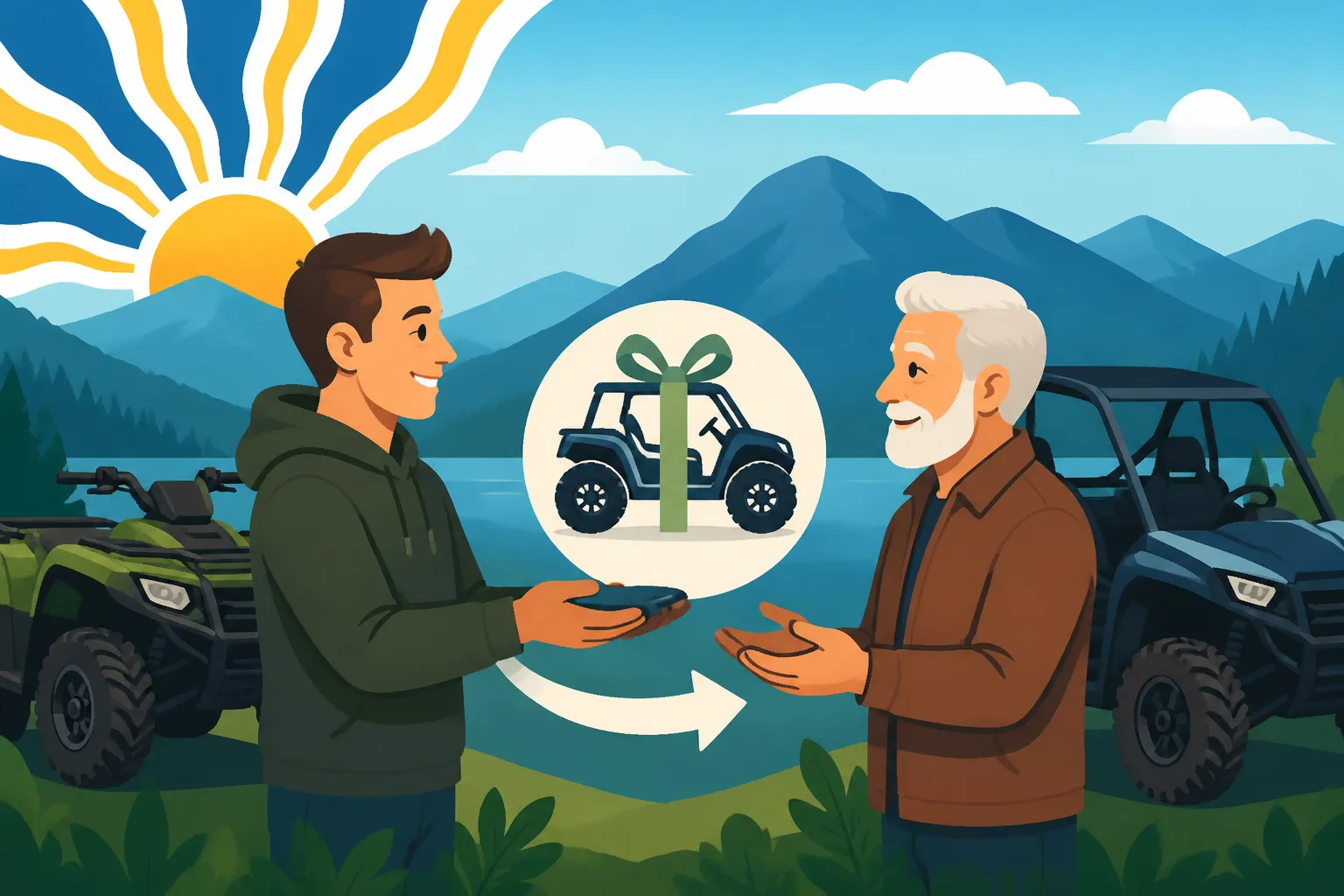
Handing down a quad or a side-by-side to a child, grandchild, sibling, or even a parent is a wonderful gesture, often steeped in years of shared trail memories. Many of us want to keep these machines in the family, passing on the joy of exploring BC's backcountry. However, even a heartfelt gift needs to be officially documented to ensure the recipient can legally operate it on Crown land, which, let's be honest, is where most of the fun happens! The province doesn't care if it's a gift or a sale; they care about clear ownership. Without proper paperwork, your family member could face tickets or difficulties if stopped by authorities.
This isn't just about avoiding fines; it’s about establishing a clear chain of ownership, which is something BC takes very seriously for ORVs. The process is designed to prevent stolen machines from being re-registered and to ensure that when a machine is involved in an incident, there's no question about who the legal owner is. While it might seem like bureaucratic red tape, it's ultimately there for consumer protection and public safety. Think of it as crossing your T's and dotting your I's, so the gift truly becomes theirs, free and clear, without any lingering doubts or potential legal snags down the trail.
What Makes a Gift a "Gift" in BC?
In British Columbia, for an ORV transfer to be considered a genuine "gift" between family members, a few key criteria need to be met. The most crucial one is that absolutely no money or other valuable consideration changes hands. This isn't just a casual term; it's a legal declaration. If you receive any form of payment, even a token amount, it ceases to be a gift in the eyes of the law and becomes a sale, which comes with different tax implications – specifically, Provincial Sales Tax (PST) generally applies to sales, even between private parties. The distinction is vital for avoiding unexpected costs and ensuring the transfer is processed correctly.
Furthermore, a true family gift transfer usually refers to transfers between specific types of relatives, often lineal descendants or ascendants (like parents, children, grandparents, grandchildren) or spouses. The intent behind this is to provide a specific exemption from PST on certain inter-family transfers. While the exact qualifying relationships can be quite specific, the underlying principle is that the ORV is genuinely being given without expectation of return. It's about a clear, unequivocal intent to transfer ownership as a present, from one family member to another, solidifying that bond and continuing the machine's legacy within your lineage. When you prepare your documentation, being explicit about this intent is paramount.
Essential Information for Your Gift Letter
The cornerstone of any successful family gift transfer for an ORV in BC is a well-drafted gift letter. This document is your official declaration of intent and provides all the necessary details to facilitate the transfer of ownership. Think of it as the formal proof that this is indeed a gift, not a covert sale, and that all parties are in agreement. Using a template can be incredibly helpful to ensure you don't miss any critical information. Platforms like LawDepot offer customizable legal document templates, which can be a real lifesaver when you're trying to figure out the exact wording and structure for such an important piece of paper.
Here’s what your gift letter absolutely must include:
- Date of the Gift: The day the ownership officially changes hands.
- Full Legal Names and Addresses of Both Parties: Clearly identify the donor (giver) and the recipient (receiver).
- Relationship Between Donor and Recipient: State whether it's parent-child, grandparent-grandchild, spouse, sibling, etc. This is important for the PST exemption rules and verifying the familial link.
- Clear Statement of Gift Intent: Explicitly state that the ORV is being given as a gift, and that "no money or other consideration has been exchanged." This sentence is crucial.
- Complete Description of the ORV: Include the year, make, model, and most importantly, the Vehicle Identification Number (VIN). The VIN is the unique identifier for the machine and will be meticulously checked by the broker. You'll also need to know the engine size and type (e.g., ATV, Side-by-Side, dirt bike).
- Signatures of Both Donor and Recipient: Both parties need to sign the document, acknowledging the transfer. Having an independent witness sign and date the document can add another layer of legitimacy, though it might not always be strictly required for an ORV gift letter specifically for an Autoplan broker.
Accuracy is absolutely critical for this letter. Any discrepancies or missing information could cause delays or even rejection of the transfer by the Autoplan broker. They need to see a clear, concise, and complete narrative of the gift. A well-prepared letter ensures a smooth transition, allowing the recipient to get out on the trails faster. This attention to detail on paper is what prevents future headaches on the trail. [BC Registration Paperwork Checklist] can give you an even broader sense of what documentation is generally required for ORV transfers.
The Role of the Autoplan Broker in a Family Gift Transfer
Even when an ORV is changing hands within the family as a gift, you can't just scribble a note on a napkin and call it done. The process still needs to go through an authorized Autoplan broker, just like any other ORV registration or transfer in British Columbia. These brokers are the only ones authorized to process ORV registrations, issue the official Certificate of Registration, and handle the associated fees and paperwork. Many people mistakenly think that because it's a family affair, they can bypass this step, but that's simply not the case. The broker acts as the provincial gatekeeper, ensuring all legal requirements are met and that the new ownership is properly recorded in the provincial system.
Their role isn't just about processing forms; it's about verifying information, preventing fraud, and ensuring compliance with the Off-Road Vehicle Act. They'll scrutinize your gift letter, check the VIN, and confirm identities. This step is non-negotiable for making the gift official and ensuring the new owner can legally operate the ORV. It’s also where you'll deal with the nominal transfer fee that applies to all ownership changes, regardless of whether it's a sale or a gift. [BC Autoplan Brokers Handle ORV Registration] are your essential partners in this journey.
Documents the Broker Needs to See
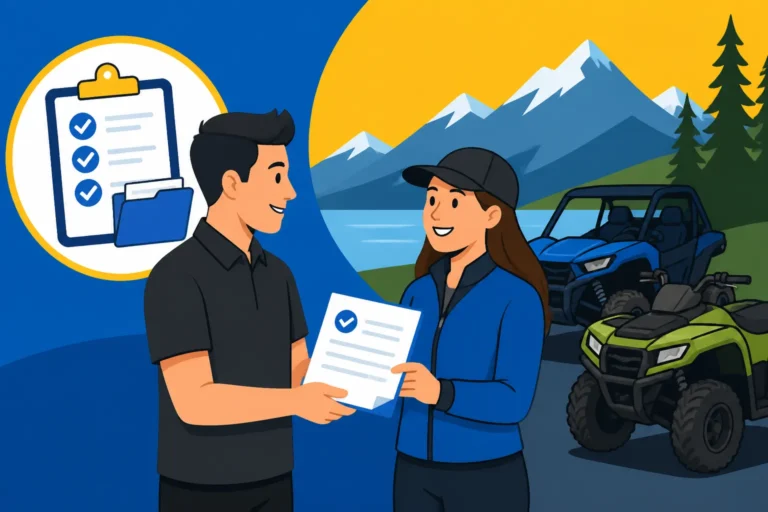
When you head to your local Autoplan broker to transfer an ORV as a family gift, you'll need to arrive prepared with a specific set of documents. Missing even one piece of paper can halt the entire process, leading to frustrating delays. This is why having a clear checklist and gathering everything beforehand is so important. Think of the broker as a meticulous librarian of vehicle records; they need to see every chapter to approve the next one.
Here’s a breakdown of the critical documents the Autoplan broker will require:
- Original Certificate of Registration for the ORV: This is the most crucial document from the donor. It serves as proof of the donor's legal ownership. It’s the ORV equivalent of a car's ownership papers. If the donor can't find it, they'll need to obtain a duplicate or, in some cases, use a statutory declaration process (more on that below).
- The Gift Letter: As discussed, this detailed letter from the donor to the recipient, explicitly stating the gift and all the ORV's particulars, is vital. It verifies the nature of the transfer and the familial relationship. Remember to include the explicit declaration that no money or other consideration was exchanged.
- Photo Identification for Both Donor and Recipient: The broker needs to verify the identities of both parties involved in the transfer. A valid BC driver's license or other government-issued photo ID is typically sufficient.
- Proof of Relationship (if applicable for PST exemption): While the gift letter will state the relationship, sometimes the broker might require additional proof, especially when it comes to confirming eligibility for Provincial Sales Tax exemptions. This could include birth certificates, marriage certificates, or other official documents that substantiate the stated family relationship. It’s always best to bring these along if you have them, just in case.
Having all these documents organized and ready will make the process at the broker's office much smoother and quicker. It signals to the broker that you’ve done your homework and are serious about completing the transfer correctly. [Papers a Broker Needs to Transfer a Quad] is a great resource if you want to double-check against a broader list.
The Transfer Process at the Broker's Office
Once you've gathered all your documents and made your way to an Autoplan broker, the actual transfer process for a family gift ORV is usually quite straightforward. The broker will guide you through the necessary steps, but knowing what to expect can help ease any anxieties. It's essentially a verification and record-keeping exercise designed to update the provincial database and issue new credentials.
Here’s a typical rundown of what happens at the broker's office:
- Document Review and Verification: The broker will carefully examine all the documents you’ve provided: the original Certificate of Registration, the gift letter, and the photo IDs of both the donor and recipient. They’ll cross-reference the VIN on the gift letter with the Certificate of Registration and potentially with the physical ORV if it's present (though this is rare for a gift transfer where the machine isn't physically at the office). They’re looking for consistency and accuracy across all submitted paperwork.
- New Registration Form Completion: The recipient, as the new owner, will need to complete a new ORV registration form. This form captures all their details and confirms their acceptance of ownership. The broker will help fill in the required fields, ensuring everything is entered correctly into the provincial system.
- Identity Confirmation: Both the donor and recipient will have their identities verified against their photo IDs. This is a crucial step to prevent fraudulent transfers.
- Payment of Transfer Fee: While it's a gift and often exempt from PST, there is still a nominal transfer fee associated with changing the ownership record in BC. The broker will collect this fee. Remember, this fee is for the administrative act of transferring the registration, not for the value of the ORV itself. [BC Charges $28 to Transfer Ownership] is something you should budget for.
- Issuance of New Certificate of Registration: Once all documents are verified, forms completed, and fees paid, the broker will issue a brand-new [BC's Certificate of Registration Explained] in the recipient's name. This is the official proof that the ORV now belongs to them. They will also receive a new ORV number plate if the machine never had one, or if it needs a replacement. This new certificate is what the recipient will need to carry with them whenever they're riding on Crown land. The entire process, assuming all documents are in order, can often be completed in a single visit.
Common Hurdles and How to Overcome Them
While the idea of gifting an ORV to a family member is lovely, the reality of provincial paperwork can sometimes throw a wrench in the plans. It’s not uncommon for folks to encounter issues, particularly around missing documents or proving a clear, continuous chain of ownership. These hurdles can feel overwhelming, making a thoughtful gesture suddenly complicated. But don't despair! Most of these challenges have solutions, and knowing them upfront can save you a lot of stress.
One of the biggest frustrations is realizing that previous owners might not have kept meticulous records, creating gaps in the paper trail. This is a surprisingly common scenario, especially with older machines that have been passed down informally over the years. Another frequent snag is simply misplacing essential documents like the original Certificate of Registration. The good news is that the provincial system has provisions for these situations, allowing you to bridge these gaps and still achieve a legal transfer. [BC Machines With No Paperwork] is a common scenario, but it doesn't have to be a dead end.
What if the Original Registration Certificate is Missing?
It's a common scenario: you’ve cherished your quad for years, maybe even inherited it informally, and now you want to pass it on to a loved one. But when you go looking for that original Certificate of Registration, it’s nowhere to be found. Perhaps it was lost in a move, damaged, or simply never given to you by a previous owner who bought it before registration became mandatory in 2015. This can be a major hurdle, as the Autoplan broker needs this document to prove the donor's legal ownership and facilitate the transfer.
If the original Certificate of Registration is missing, your first step should be for the donor (the current registered owner) to try and obtain a duplicate from an Autoplan broker. If they are the registered owner, this process is usually straightforward, involving a small fee and a visit to the broker with photo ID. The broker can access the provincial system and print a new copy.
However, what if the donor was never formally registered as the owner, or if there's a significant gap in the ownership chain (e.g., they bought it decades ago with just a handwritten receipt, and the previous owner is long gone)? In these more complex situations, a Statutory Declaration can often come to the rescue. A statutory declaration is a sworn legal statement made before a lawyer, notary public, or commissioner for taking affidavits, affirming that you are the rightful owner of the ORV and detailing how you came into possession of it. It effectively replaces missing ownership documents, providing the legal narrative required for registration. These declarations need to be precise and contain all the machine's identifying information, like the VIN. Services like LawDepot can provide templates for statutory declarations, helping you structure this critical document correctly. [BC Statutory Declaration for an ORV] outlines this process in detail, and understanding [When a Declaration Replaces a Missing Bill of Sale] is key to overcoming this common challenge.
Demonstrating Genuine Gift Intent and Familial Relationship
When dealing with a family gift transfer, the Autoplan broker isn't just a paper pusher; they also act as a gatekeeper to ensure the transaction is legitimate, especially regarding potential PST exemptions. This means you need to be very clear about two things: the genuine intent of the gift and the exact nature of the familial relationship between the donor and recipient. Any ambiguity can lead to questions, delays, or even a requirement to pay PST if the broker isn't convinced it's a true, qualifying family gift.
Your gift letter, therefore, plays a pivotal role. It should explicitly state that the transfer is a gift, with "no money or other consideration exchanged." This is the cornerstone of proving genuine gift intent. The letter also needs to clearly spell out the relationship, for example, "father to daughter," "grandmother to grandson," or "sibling to sibling." While the broker might not always ask for extra proof of relationship for every transfer, they are well within their rights to do so, particularly if the relationship isn't immediately obvious or if there are any red flags. For instance, an in-law relationship might require more scrutiny than a direct parent-child transfer for PST purposes.
Having your gift letter meticulously drafted, perhaps using a template from a trusted source like LawDepot, ensures that all the necessary legal language is present and accounted for. This clear documentation helps the broker understand the nature of the transaction and process it quickly and correctly, ensuring that the recipient benefits from any applicable tax exemptions and that the ownership chain is properly updated. Understanding the nuances of [BC Ownership Chains Going Back Decades] reinforces why this clarity is so important; the broker needs confidence that this machine is legally yours to give.
After the Transfer: What to Know and Do
Congratulations! You've successfully navigated the paperwork, the Autoplan broker, and the provincial system. Your family member is now the proud, legally registered owner of their gifted ORV. But the journey doesn't end the moment you walk out of the broker's office. There are still a few crucial steps and ongoing responsibilities to ensure they can enjoy their new machine without any further hiccups, particularly when it comes to compliance on BC's vast Crown lands and resource roads.
The paperwork might be done, but the real fun (and responsibility) begins now. This stage is all about ensuring the machine is visible, the documents are accessible, and the new owner understands their obligations while riding. It's about transitioning from the administrative process to practical, on-the-trail readiness. Thinking ahead about these final steps ensures the gift truly translates into hassle-free enjoyment for years to come.
Securing Your New Certificate and Plate
Upon successful transfer, the Autoplan broker will hand over the shiny new [BC's Certificate of Registration Explained] with the recipient's name proudly displayed as the legal owner. This document is golden – it is the official proof of ownership and registration in British Columbia. It's not a title in the traditional sense, but it serves the same critical purpose for ORVs. The broker will also ensure the ORV has an official BC ORV number plate. If the machine already had one, and it was in good condition, that same plate might continue its journey with the new owner. However, if it was missing, damaged, or the machine never had one (perhaps it was unregistered before 2015), the broker will issue a new one.
It’s vital that this plate is properly affixed to the ORV. The rules dictate that the plate must be mounted horizontally, clearly visible, and free from any obstruction. Whether it's on the front, back, or side of the machine, as long as it meets these visibility requirements, you're good. [BC Plate Placement on Front, Back or Left] allows for some flexibility, but the key is legibility. Similarly, the annual decal (which confirms the plate is current, even though there's no annual renewal fee after the initial registration) needs to be placed on the plate as directed by the broker. Take a moment to ensure it's securely attached and not prone to peeling off in the elements. This attention to detail prevents any potential "equipment violations" when you're out on the trails. [What the Broker Hands You After You Register] is much more than just a piece of paper and a metal rectangle; it's your ticket to legal riding.
Carrying Your Documents and Compliance
Receiving the Certificate of Registration and having a plate attached is fantastic, but it's only part of the story. Once you hit the trails, particularly on Crown land, you have ongoing responsibilities as the ORV operator. The most critical one is carrying your documents. This isn't just a suggestion; it's a legal requirement. Any enforcement officer, be it an RCMP officer, a Conservation Officer, or a Forest Service officer, has the authority to request proof of registration and identification.
Therefore, the new owner must [BC Riders Must Carry the Certificate] of Registration whenever they are operating the ORV off their own private property. It's highly recommended to keep it in a waterproof bag or container, secured on the machine or on your person, to protect it from the elements and accidental loss. Alongside the Certificate of Registration, the operator must also [BC Riders Must Carry Photo ID]. This allows officers to verify that the person operating the machine is indeed the registered owner or an authorized user.
Finally, while the initial registration is a one-time fee, and there's no annual renewal sticker, remember that liability insurance is a separate, though often voluntary, consideration for ORV use. If you plan to ride on [BC Crown Land Triggers the Registration Rule], particularly on [BC Resource Roads Count as Crown Land], you will need specific liability coverage. This can often be purchased at the same time you register your ORV with the Autoplan broker. While basic liability isn't strictly mandatory for all Crown land riding, it's a smart idea for protection. [BC Insurance Bought With Registration] is an important conversation to have with your broker. Staying compliant with these rules ensures your family member can enjoy their gifted ORV without unexpected interruptions or fines.
Comparative Overview: ORV Transfer Documents
To help you visualize the document requirements, here's a quick comparison between a standard private sale of an ORV and a family gift transfer in BC. This highlights where the gift letter becomes a unique and essential piece of the puzzle.
| Document Type | Standard Private Sale | Family Gift Transfer | Notes |
|---|---|---|---|
| Original Certificate of Registration | Required from Seller | Required from Donor | Essential proof of prior ownership for both scenarios. |
| Bill of Sale | Required from Seller to Buyer, showing purchase price | Not Required (replaced by Gift Letter) | Clearly documents the transaction and sale price for PST calculation. |
| Gift Letter | Not applicable | Required from Donor to Recipient | Crucial for proving genuine gift intent and family relationship, particularly for PST exemption. |
| Photo ID (Seller/Donor) | Required | Required | For identity verification at the Autoplan broker. |
| Photo ID (Buyer/Recipient) | Required | Required | For identity verification and new registration. |
| Proof of Relationship | Not applicable | Potentially required (e.g., birth certificate) | To confirm eligibility for family PST exemptions. |
| Statutory Declaration | Potentially required if original documents are missing | Potentially required if original documents are missing | Legal statement of ownership if prior records are incomplete. |
| Transfer Fee | Yes | Yes | Administrative fee charged by the province for changing ownership records. |
| Provincial Sales Tax (PST) | Generally Yes | Generally No (if qualifying family relationship) | Applies to the purchase price in sales; exempt for specific family gifts. |
This table underscores that while many elements of the transfer process are similar, the gift letter and the potential PST exemption are the key differentiators for family transfers.
Disclaimer
This article is for general informational purposes only and does not constitute professional advice. Laws, prices and regulations vary by location and change over time. Consult a qualified professional for guidance on your specific situation.