Work Machines and Recreation Machines Alike
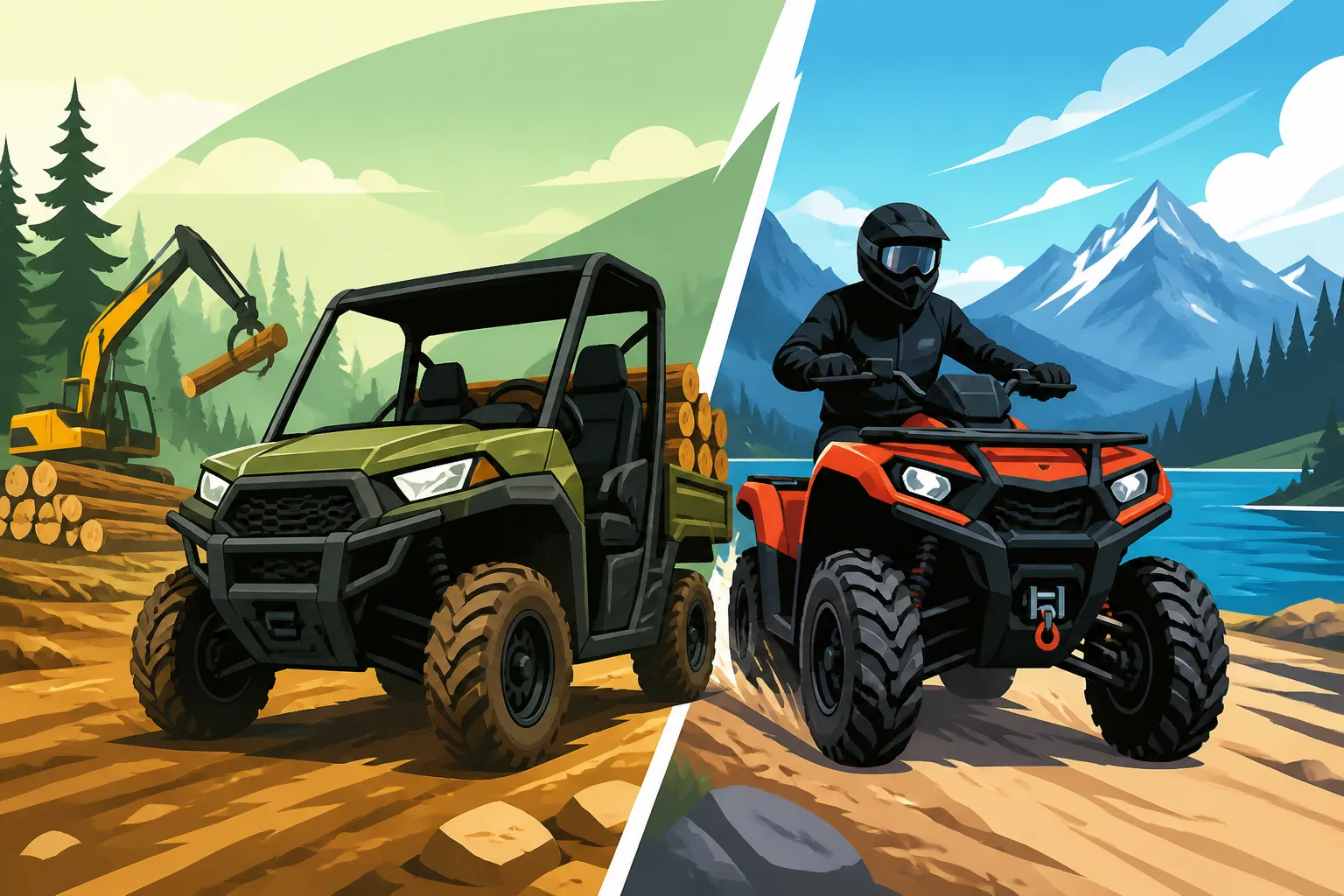
It's incredibly common for off-road vehicle owners in British Columbia to scratch their heads, wondering if their quad, side-by-side, or dirt bike needs to be registered if it's primarily a workhorse instead of a weekend toy. This confusion stems from a very natural assumption: if you're using it for your farm, business, or just on your own property, surely the rules are different, right? This guide is here to untangle that knot, making it crystal clear that in BC, the law generally treats all off-road vehicles the same, regardless of whether they're hauling feed or tearing up trails.
The Broad Scope of BC's Off-Road Vehicle Act
When it comes to the legal landscape governing off-road vehicles (ORVs) in British Columbia, the key takeaway for owners is just how broadly the Off-Road Vehicle Act defines what needs to be registered. Many riders, especially those who've owned machines for decades, or newcomers arriving from other jurisdictions, often find this aspect surprising. They might be used to systems where a farm vehicle, for instance, operates under different rules or even exemptions. However, BC's approach is designed for comprehensive oversight, meaning fewer exceptions and a clearer path for compliance.
Defining an Off-Road Vehicle in BC
Let's start with the basics: what exactly constitutes an "off-road vehicle" in the eyes of BC law? The Off-Road Vehicle Act is quite explicit, and it encompasses a wide range of machines that are often referred to by their common names. Essentially, if it's designed or adapted for travel on land other than a highway, it likely falls under this definition. This includes your typical all-terrain vehicles (ATVs), those agile, ride-astride machines often called quads. It also covers utility terrain vehicles (UTVs), more commonly known as side-by-sides, which offer bench seating and often a cargo bed. Dirt bikes, snowmobiles, and even certain types of specialized vehicles like off-road motorcycles are included.
What's crucial to understand here is that the definition focuses on the machine's design and capability for off-highway travel, not the specific purpose you've assigned to it. If it looks like an ORV, acts like an ORV, and isn't expressly excluded (like a mobility aid or a specific piece of industrial equipment that stays strictly on a worksite and never touches a road or trail), then it's an ORV. There isn't a clause that says, "unless it's painted green and used for hauling manure." This broad definition ensures that the regulatory framework applies consistently across the board, covering everything from a high-performance sport quad to a utilitarian side-by-side used daily in the back forty. For a deeper dive into what the act covers, check out [What the Off-Road Vehicle Act Covers in BC].
Why Purpose Doesn't Matter for Registration
This is where many owners encounter the most confusion, and it's completely understandable. In many areas of life, the purpose for which you use something dictates its regulatory category. You might have a commercial driver's license for a work truck but a standard license for your personal car. However, BC's Off-Road Vehicle Act largely sidesteps this distinction for registration purposes. The primary driver behind this broad inclusion is multifaceted, aiming for environmental protection, public safety, and streamlined land management.
When the province introduced mandatory registration in 2015, the goal was to create a comprehensive inventory of all ORVs operating on Crown land and designated trails. This inventory helps track ownership in cases of theft, aids in accident investigations, and provides data for trail planning and management. Imagine the administrative nightmare if every ORV had to be classified by its primary use before determining if it needed a plate. Would a quad used one day for trail maintenance and the next for a family picnic be a "work" or "recreational" machine? The law sidesteps this ambiguity by simply stating that if it's an ORV and you're operating it off-highway, particularly on Crown land, it needs to be registered. This applies whether you're navigating a remote logging road to access a work site or exploring an ATV park for pure recreation. It all boils down to the fact that the machine itself, and where it's being operated, triggers the requirement, not your specific intent that day. The moment your wheels touch what is legally considered Crown land, the registration rule kicks in. For more on this critical trigger, see [BC Crown Land Triggers the Registration Rule].
Common Scenarios: From Farm Quads to Weekend Warriors
It's natural to think that different uses might lead to different rules, especially if your ORV feels more like a tool than a toy. But BC's Off-Road Vehicle Act casts a wide net, ensuring that whether your machine is pushing snow, pulling a trailer of fencing supplies, or kicking up dust on a mountain trail, its registration requirements remain consistent. This approach is designed to simplify enforcement and ensure accountability across the entire spectrum of ORV activity.
Farm and Commercial Use
This is perhaps the most common area of misunderstanding. Many farmers or those in industrial sectors like forestry or resource extraction assume their quads or side-by-sides are exempt from registration because they're essential tools for their livelihood, not leisure. They might think, "It's a farm quad, it stays on the property," or "It's a work machine, totally different from a recreational one." However, the BC Off-Road Vehicle Act does not typically make these distinctions for registration. [BC Farm Quads Are Not Exempt], for example, directly addresses this specific misconception.
Consider a rancher who uses their quad daily to check on livestock, move feed, or carry tools across vast tracts of land. While much of this use might occur on private property, it's very rare for such an operation to never involve a brief foray onto a public road or, more commonly, a forest service road (FSR) that happens to cross or border their land. The moment that quad travels on an FSR—which, legally, is a type of Crown land—it's subject to the registration rules. Similarly, a contractor using a side-by-side to access a remote worksite might travel miles down a resource road. These resource roads are almost universally Crown land and therefore trigger the registration requirement. [BC Resource Roads Count as Crown Land] delves into this in more detail. Even if your machine is primarily used for guiding hunting or fishing tours, forestry surveys, or utility inspections, it falls under the same registration umbrella as any recreational machine. The law views these machines as capable of operating off-highway, and thus, they must be registered to ensure they can be tracked and operated responsibly on public and shared lands.
Recreational Adventures
For the weekend warrior, the dedicated trail rider, or the hunter using an ATV to access their favourite spot, the registration requirement often feels more intuitive. These machines are clearly being used for off-highway travel in what most people would consider "recreational" contexts. Whether you're planning a multi-day backcountry camping trip, exploring the vast network of trails around Bear Creek, or simply using your dirt bike to get to a fishing hole, your machine falls squarely within the scope of the Off-Road Vehicle Act.
The joy of hitting the trails legally, knowing you're compliant, is significant. It means less worry about potential fines and more focus on the adventure itself. These are the machines you see loaded onto trailers, heading for staging areas near Chilliwack, Kelowna, or Prince George. They are ridden for the sheer thrill of it, for accessing remote natural beauty, or for facilitating outdoor pursuits like hunting and fishing. The law makes no distinction between the type of adventure—a leisurely cruise through a forest or a challenging climb up a steep grade—it simply requires the machine to be registered if it's operating on any land that isn't entirely private, fully enclosed, and inaccessible to public thoroughfares. In essence, if you're riding beyond your own backyard, registration is a must.
The Practicalities of Registering Any ORV
Understanding that nearly all off-road vehicles require registration in British Columbia, regardless of their intended purpose, is half the battle. The other half is knowing how to actually get it done and what that process entails. The good news is that the system is fairly straightforward, handled through familiar channels, and designed to get you compliant efficiently. It’s not about complex classifications or different types of plates for different uses; it’s one system for all.
The Single Registration Process
This is perhaps the most reassuring piece of information for ORV owners: there isn't a bewildering array of registration categories for "farm ORVs," "commercial ORVs," or "recreational ORVs." There's just one process for registering an off-road vehicle in BC. This means you won't be asked to declare your machine's primary use when you go to register it, simplifying the entire experience. The registration you get for your side-by-side used for work will be identical to the one your neighbour gets for their quad used exclusively for fun.
To register your ORV, your first stop will be an authorized Autoplan broker. These are the same offices where you might register your car or truck for highway use. They are equipped to handle ORV registrations, ensuring accessibility across the province. You'll need to bring in several key pieces of documentation. Foremost among these is proof of ownership. This typically means a bill of sale from the previous owner (or the dealer if it's brand new). You'll also need the machine's Vehicle Identification Number (VIN) and, of course, some personal identification.
One common hiccup, especially with older machines or those bought through informal sales, is a missing bill of sale. Don't panic! The province has a solution for this: a statutory declaration. This is a legal document where you declare ownership under oath. Sometimes a chain of ownership might be broken, or a previous owner has vanished. In such cases, a statutory declaration can be crucial. Resources like LawDepot can be helpful for generating such legal documents, ensuring you have all your ducks in a row before visiting the broker. The broker will guide you through the specifics, but having a properly completed declaration can save you a lot of hassle. For more details on the process, consider reading [How to Register an ATV in BC] or [BC Statutory Declarations Cost $15].
What You Get and What You Need to Carry
Once you successfully register your ORV, you'll walk away with two critical items: a Certificate of Registration and a number plate. The number plate is what distinguishes your registered machine from an unregistered one out on the trails. It must be clearly displayed on your ORV, mounted either on the front, back, or left side, and kept clean so it's easily legible. [BC ORV Number Plates and Decals] provides more guidance on plate placement.
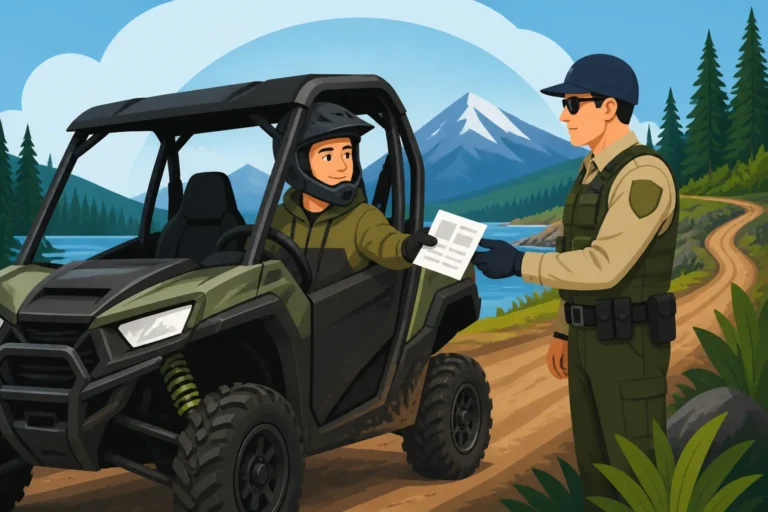
The Certificate of Registration is essentially your ORV's official ID card. It's a paper document, and it's absolutely vital that you carry this document with you every single time you operate your ORV off-highway. This isn't just a suggestion; it's a legal requirement. Along with your Certificate of Registration, you must also carry valid photo identification. This allows enforcement officers to verify that you are the registered owner or authorized operator of the machine.
What's also important to remember is that this registration is not an annual affair. Unlike your car's insurance or some other province's ATV registrations, in BC, you pay for the ORV registration once, and it lasts as long as you own the machine. There's no annual renewal sticker or fee for the registration itself. This is a huge relief for many owners, as it removes the hassle of yearly administrative tasks. [BC Registration Lasts as Long as You Own It] explains this enduring benefit. So, once you've gone through the process, you're set until you decide to sell the machine.
Below is a table summarizing various ORV uses and their registration requirements in British Columbia.
| ORV Use Case | Description | Registration Required in BC? | Notes |
|---|---|---|---|
| Farm Work | Checking fences, moving feed, hauling tools on agricultural land, often crossing unpaved paths or FSRs. | Yes | Most farm operations, even if primarily on private land, will at some point require travel on Crown land (e.g., resource roads) or unpaved public access ways, triggering the registration requirement. Refer to [BC Farm Quads Are Not Exempt]. |
| Forestry / Industrial Use | Accessing remote work sites, carrying equipment, conducting inspections for commercial purposes. | Yes | These machines almost invariably operate on Crown land, industrial sites, or resource roads, making registration mandatory. |
| Hunting / Fishing Access | Using an ORV to reach remote areas for hunting, fishing, or trapping. | Yes | This typically involves travelling on Crown land, including resource roads, which explicitly requires registration. |
| Recreational Trail Riding | Exploring designated ORV trails, forest service roads, or other Crown land for leisure. | Yes | This is the quintessential use that the ORV Act was designed to cover. |
| Private Property Maintenance | Landscaping, moving materials, or other tasks strictly on entirely private property. | Potentially | Only if the machine never leaves private property and is entirely inaccessible from public land. Any brief crossing onto public or shared land (even a ditch or shoulder) would trigger registration. |
| Guided Tours / Rentals | Machines used by commercial operators for guided tours or rental fleets. | Yes | Business-owned machines are still ORVs operating on Crown land or managed sites, necessitating registration. |
| Backcountry Camping / Exploring | Using an ORV to access remote campsites, explore natural areas, or transport gear. | Yes | Nearly all backcountry access in BC involves Crown land, where registration is mandatory. |
Dealing with Ownership Documentation for Any ORV
One of the biggest hurdles many ORV owners face, regardless of whether their machine is for work or play, is proving ownership when it comes time to register. This is particularly true for machines that have changed hands several times over the years, or those bought informally, perhaps even decades ago. The Province of BC is quite particular about establishing a clear chain of ownership, and brokers must adhere to these requirements to process your registration.
When Bills of Sale Go Missing
It's a common story: you bought a quad ten years ago from a buddy of a buddy, paid cash, got a handwritten receipt, or maybe no receipt at all. Or perhaps you inherited a vintage dirt bike, and the paperwork from its previous life is long gone. When you visit an Autoplan broker to register that machine, they'll need to see proof that you legally own it. The ideal scenario is a clear bill of sale from the person you bought it from, and if that person wasn't the original owner, they'll want to see their bill of sale, and so on, creating a continuous "chain" of ownership back to the original dealer or manufacturer. This is critical because it prevents the registration of stolen vehicles and ensures that PST (Provincial Sales Tax) is accounted for.
When those bills of sale are missing, or the chain of ownership is broken, it can feel like you've hit a brick wall. This is where a statutory declaration becomes your best friend. A statutory declaration is a legal document where you solemnly declare, under oath, that you are the rightful owner of the ORV and explain how you came to possess it. This document essentially fills the gap left by missing paperwork. You'll need to provide as much detail as possible, including where and when you acquired the machine, from whom (if known), and why you don't have a bill of sale. It's important to be completely truthful, as making a false declaration is a serious offence. You can often find templates or services to help you create a formal statutory declaration; for instance, resources like LawDepot offer templates for legal documents that can assist you in preparing a professional-looking declaration for your broker. While the declaration isn't a bill of sale, it serves as crucial evidence of your ownership claim, allowing the broker to proceed with the registration process.
Ensuring Your Paperwork is Ready for the Broker
Before you even step foot in an Autoplan broker's office, it pays dividends to gather all the paperwork you possibly can. This preparation can save you multiple trips and a lot of frustration. Start by locating the machine's VIN. This unique identifier is usually stamped on the frame and is essential for identification. Take clear photos of it, as well as the machine itself. Then, scour your records for any purchase agreements, receipts, or even old registration documents from other provinces. The more documentation you have, the smoother the process will be.
If you suspect you'll need a statutory declaration due to missing bills of sale, it's wise to prepare one in advance. As mentioned, tools like LawDepot can help you draft this document correctly. Make sure it includes:
- Your full legal name and address.
- A detailed description of the ORV, including make, model, year, and VIN.
- A clear statement declaring your ownership.
- An explanation of how and when you acquired the machine, and why a bill of sale is unavailable.
- Your signature, witnessed by a Commissioner for Oaths or a Notary Public. Most Autoplan brokers can commission these declarations for a small fee, or you can find independent notaries.
Remember, the broker's job is to ensure that the ORV is legally yours before issuing a Certificate of Registration and a number plate. They are protecting both you and the public by ensuring proper ownership is established. Having all your ducks in a row, whether with a clear chain of bills of sale or a comprehensive statutory declaration, will make the process much quicker and less stressful, allowing you to get your work machine or recreation machine legally on the trails in no time. [BC Registration Paperwork Checklist] can offer a comprehensive list of what to bring.
Disclaimer
This article is for general informational purposes only and does not constitute professional advice. Laws, prices and regulations vary by location and change over time. Consult a qualified professional for guidance on your specific situation.