Registering a Quad You Inherited From a Relative
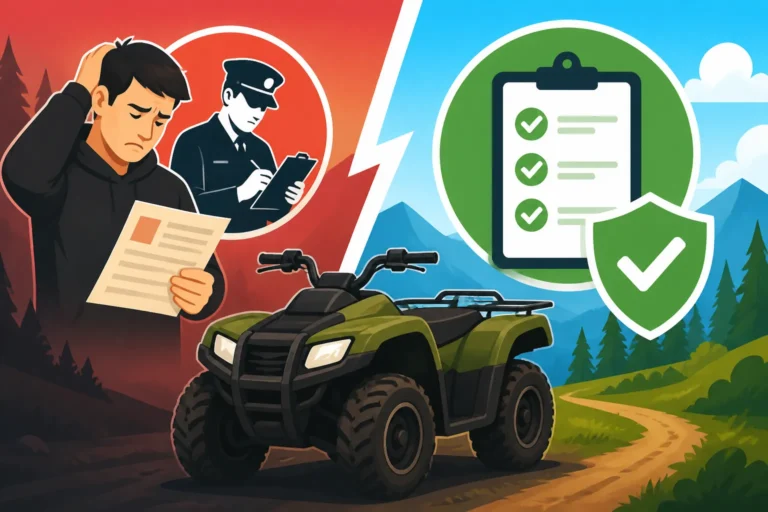
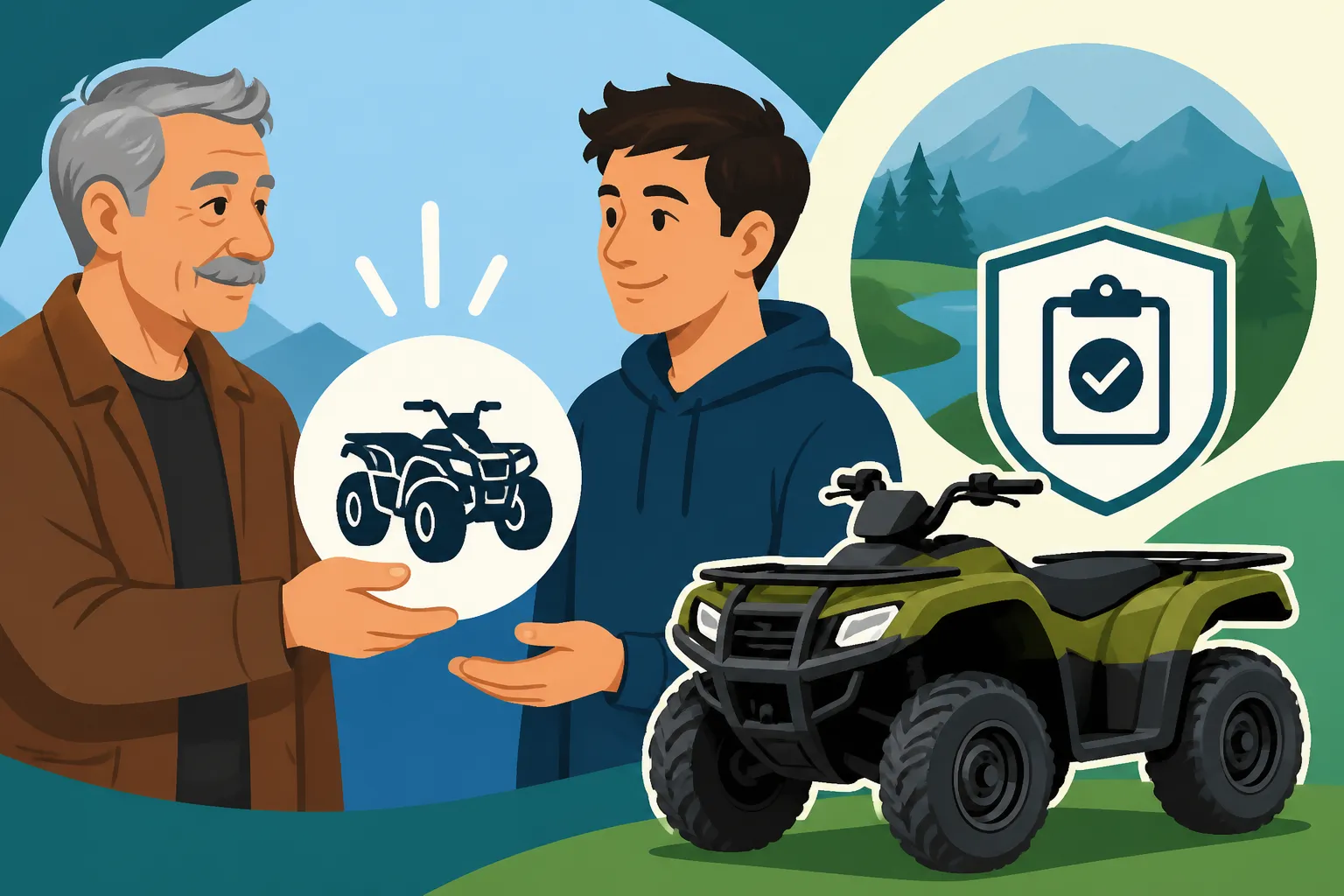
Inheriting an off-road vehicle like an ATV or UTV can be a bittersweet experience. On one hand, it's a tangible link to a loved one, perhaps bringing back fond memories of rides shared or adventures planned. On the other hand, it often comes tangled with the daunting task of estate administration, which is already emotionally taxing, and then you're faced with the added bureaucratic headache of figuring out how to get that machine legally registered in your name here in British Columbia. It's a frustrating situation, especially when you're grieving and the paperwork feels overwhelming. This guide is here to walk you through the specific steps and common pitfalls of registering an inherited quad in BC, helping you navigate the process with a bit more ease.
The Emotional Rollercoaster of Inheriting an ATV
Let's be real, dealing with an estate is tough. When you lose someone close, the last thing you want to do is hunt for old bills of sale or decipher legal jargon. But when an off-road vehicle is part of that estate, these tasks become necessary, and often, more complicated than you might expect. It's perfectly normal to feel a mix of emotions – nostalgia, sadness, and often, a hefty dose of overwhelm when it comes to the administrative side of things.
Dealing with Grief and Paperwork
It’s hard enough to process grief without adding a stack of paperwork to the mix. Often, family members delay dealing with estate details for months, sometimes even years, because it just feels like too much. When it comes to an ATV, this delay can sometimes complicate the trail of ownership even further, as documents might get misplaced or forgotten over time. It’s important to acknowledge this emotional hurdle and give yourself grace, but also recognize that addressing the registration sooner rather than later can prevent bigger headaches down the road. You might find it helpful to delegate the initial document gathering to another family member or a trusted friend if you’re not quite ready to dive into the details yourself.
Understanding the Previous Owner's Records (or lack thereof)
A significant challenge with inherited quads often stems from the original owner's record-keeping habits. Many long-time riders might have bought their machines decades ago, long before BC's mandatory ORV registration came into effect in 2015. They might have a handwritten bill of sale, or perhaps no formal paperwork at all, especially if the machine changed hands within the family or between friends over the years. This isn't uncommon, but it does mean you'll need to be prepared to piece together the [BC Ownership Chains Going Back Decades] to satisfy the registration requirements. It's a problem many BC residents face when trying to [Registering a Quad Bought for Cash Decades Ago].
Essential Paperwork When Registering an Inherited Quad
When you inherit an ATV in BC, the key is to prove legal ownership and the clear transfer of that ownership from the estate to you. This is where estate documents become absolutely crucial. Without them, it’s like trying to navigate a dense forest without a compass – you'll eventually get lost.
The Importance of a Will or Estate Documents
Ideally, the deceased relative left a valid will. A will clearly outlines how their assets, including the ATV, should be distributed. If the ATV is specifically bequeathed to you in the will, this makes the process much smoother. You'll typically need a certified true copy of the will and the Grant of Probate (or Letters Probate) from the Supreme Court of British Columbia. These documents legally establish the executor's authority to act on behalf of the estate and transfer assets. The executor will then need to formally transfer the ATV to you, often with an Executor's Deed of Transfer or a similar document, detailing the transfer of the specific vehicle by VIN. This forms a critical link in the [BC Transfer of Ownership Explained].
When There's No Will: Intestacy and Letters of Administration
What if your relative passed away without a will? This is called dying "intestate." In this scenario, the assets of the estate are distributed according to BC's Estate Administration Act. This path is generally more complex and time-consuming. Someone will need to apply to the Supreme Court for Letters of Administration, which grants them the legal authority to administer the estate. This person, the administrator, then has the same powers as an executor to distribute assets. You'll need the Letters of Administration and documentation of the transfer from the administrator to you, following the intestacy rules. This adds an extra layer of legal process before you can even think about registering the quad.
The Role of a Statutory Declaration for Missing Ownership Proof
Sometimes, even with a will or Letters of Administration, there's a missing link in the ATV's ownership history. Perhaps the deceased owner never had a formal bill of sale for their purchase, or previous owners are untraceable. This is a common hurdle, especially with older machines. In such cases, you might need to use a statutory declaration. This is a formal statement made under oath, declaring that you are the legal owner of the ATV and explaining how you came into possession of it, including the chain of custody from the deceased owner's estate to you. [BC Statutory Declarations Cost $15] and can be a lifesaver for situations like this. You can find templates for these declarations, often prepared by legal document services like LawDepot, though you'll need to customize them to your specific situation and have them notarized by a Commissioner for Oaths or a lawyer.
Documenting the Transfer of Ownership to You
Regardless of whether there was a will or not, you need clear documentation showing the ATV has been legally transferred from the deceased's estate to you. This might be:
- Executor's/Administrator's Transfer Document: A formal document signed by the executor or administrator of the estate, explicitly stating that the specific ATV (identified by its VIN) is being transferred to you as a beneficiary.
- Probate/Administration Grant: The court documents proving the executor or administrator's authority.
- Bill of Sale from Estate (if sold): If the estate sold the ATV to you (even at a nominal price), a bill of sale would be required, just like any private sale.
- Gift Letter: If the ATV is a gift from the estate (as per the will or intestacy rules), a gift letter from the executor/administrator to you, alongside the estate documents, can help clarify the transfer, especially if it's considered a [BC Gift Transfers Between Family].
Remember, the goal is to create a clear paper trail from the original owner (the deceased) through their estate, and finally to you. This demonstrates the [Why Every Past Sale Has to Be Documented] and that there is no [BC's Continuity of Ownership Problem].
Steps to Registering Your Inherited ATV in British Columbia
Once you've navigated the emotional and legal complexities of the estate, and have your paperwork in order, the actual registration process in BC is straightforward. It all happens through an Autoplan broker.
Gathering Your Documents for the Broker
Before you head to the broker, you'll want to assemble a comprehensive package of documents. Think of it like packing for a long ride – you don't want to forget anything essential. Here's a checklist of what you'll likely need:
- Proof of Identity: Your valid government-issued photo ID (e.g., BC Driver's Licence).
- Estate Documents:
- Certified true copy of the Will (if applicable).
- Grant of Probate or Letters of Administration (court order).
- Executor's/Administrator's transfer document, bill of sale from the estate, or gift letter.
- Original Ownership Documents (from deceased):
- Original Certificate of Registration (if the machine was previously registered in BC).
- Previous Bill of Sale (if available).
- Any other documents proving the deceased's ownership.
- Statutory Declaration (if needed): If there are gaps in the ownership history or missing bills of sale, your notarized statutory declaration explaining the chain of ownership up to the deceased, and then from the estate to you, will be vital. You can find templates for statutory declarations through online legal document services like LawDepot, but ensure they are tailored to BC requirements and then properly commissioned.
- Proof of Vehicle Information: The ATV's Vehicle Identification Number (VIN) or serial number. It's a good idea to take a photo of it on the machine itself.
- Method of Payment: For the registration fee and any applicable PST (Provincial Sales Tax), though the PST often doesn't apply to inherited gifts.
Having all your ducks in a row for the [BC Registration Paperwork Checklist] will save you multiple trips to the broker and prevent delays.
Visiting an Autoplan Broker Who Understands ORVs
Not all Autoplan brokers deal with ORV registration every day, so it can be a good idea to call ahead to a few local offices and ask if they are familiar with [BC Autoplan Brokers Handle ORV Registration], particularly complex scenarios like inherited machines. Some brokers specialize in these transactions more than others. They'll be able to confirm exactly what documents they need to see based on your specific situation. Many brokers will tell you that the more documentation you can provide, the smoother the process will be. Remember, the ORV Act registration is distinct from standard vehicle registration and requires brokers to follow different procedures to establish the chain of ownership.
What Happens at the Broker's Office
When you meet with the Autoplan broker, they will review all your submitted documents. Their main task is to verify that you are the rightful owner and that the transfer from the estate is legitimate. They'll scrutinize the will, probate documents, and any statutory declarations. If everything is in order, they will process the transfer of registration into your name. You'll pay a one-time registration fee – remember, [BC ORV Registration You Pay Once] and [BC Has No Annual Renewal Sticker] for the registration itself, only for any optional insurance you purchase. The broker will then issue you a new [BC ORV Number Plates and Decals] and your own [BC's Certificate of Registration Explained]. This certificate is your proof of ownership, and you must carry it, along with photo ID, whenever you're riding your machine on Crown land. This process helps you [Registering an ATV With ICBC in BC], as Autoplan is the system used.
Common Hurdles and How to Overcome Them
Even with the best preparation, unique situations can arise when dealing with inherited ATVs. It's helpful to anticipate these challenges and know how to address them.
Navigating Gaps in the Ownership Chain
One of the most frequent issues is a gap in the ownership chain. Maybe your relative bought the ATV from a friend years ago with just a handshake, and now that friend is gone or untraceable. British Columbia’s ORV Act requires a continuous chain of ownership to register a machine. If there's a missing bill of sale, or a previous owner can't be identified, the statutory declaration becomes your best friend. In this declaration, you'll need to explain in detail how the deceased acquired the machine and then how it passed to you through the estate. The broker will review this declaration to see if it provides a reasonable and credible explanation for the missing links. Sometimes, if the gap is particularly large or complex, the broker may suggest consulting with a legal professional to ensure your declaration is ironclad. This is often the case when [Registering a Quad With a Gap in Its Ownership Chain].
Dealing with Multiple Beneficiaries
What if the will states that the ATV is to be shared among multiple beneficiaries, or if intestacy rules lead to co-ownership? This introduces a few extra layers of complexity. If more than one person will be an owner, all owners typically need to be present at the Autoplan broker's office or provide notarized consent for the registration. The [BC Registration With Two Owners] scenario means that all listed owners will appear on the Certificate of Registration. This is critical for future sale or transfer, as all registered owners would need to agree and sign off on any subsequent transaction. Clear communication and agreement among all beneficiaries are paramount before you approach the broker.
What If the Estate Is Still in Probate?
Probate can take time – sometimes many months, or even over a year, depending on the complexity of the estate. During this period, the ATV technically belongs to the "estate" and cannot be fully transferred to a beneficiary until the Grant of Probate (or Letters of Administration) has been issued by the courts. While you might have possession of the quad, you can't legally register it in your name until the estate's administration is far enough along to allow for the transfer of assets. If you're eager to ride, you might be able to insure the machine in the interim, but full ownership and registration usually have to wait for the legal probate process to conclude. Your Autoplan broker will need to see the official court documents that prove the executor or administrator has the authority to make the transfer.
The journey of registering an inherited ATV in British Columbia can be a challenging one, particularly when dealing with the emotional weight of loss and the intricate details of estate administration. But by understanding the necessary paperwork – from wills and probate documents to statutory declarations and formal transfer papers – and knowing what to expect at the Autoplan broker, you can navigate this process successfully. Remember to gather all your documents, especially any that prove the deceased's ownership and the subsequent transfer to you. With patience and preparation, you'll soon be able to ride that quad, honouring its legacy and creating new memories.
| Document Type | Required If… | What It Proves | Where to Get It |
|---|---|---|---|
| Will / Grant of Probate | Deceased left a will | Executor's authority to transfer assets | BC Supreme Court Registry / Estate Lawyer |
| Letters of Administration | Deceased died without a will (intestate) | Administrator's authority to transfer assets | BC Supreme Court Registry / Estate Lawyer |
| Executor's Transfer Document | Estate officially transfers ATV to beneficiary | Formal transfer of ATV from estate to you | Prepared by Executor/Administrator or Estate Lawyer |
| Deceased's Original Bill of Sale | Prior ownership documentation for deceased | Deceased's legal acquisition of the ATV | Deceased's personal records |
| Statutory Declaration | Missing prior bills of sale or ownership gaps | Your claim to ownership under oath, explaining history | Prepared by you, sworn before a Commissioner for Oaths |
| Your Photo ID | Always required for registration | Your identity | Government-issued ID (e.g., Driver's Licence) |
| ATV VIN/Serial Number | Always required for registration | Specific identification of the ATV | Directly from the ATV frame |
Disclaimer
This article is for general informational purposes only and does not constitute professional advice. Laws, prices and regulations vary by location and change over time. Consult a qualified professional for guidance on your specific situation.