BC Charges $28 to Transfer Ownership
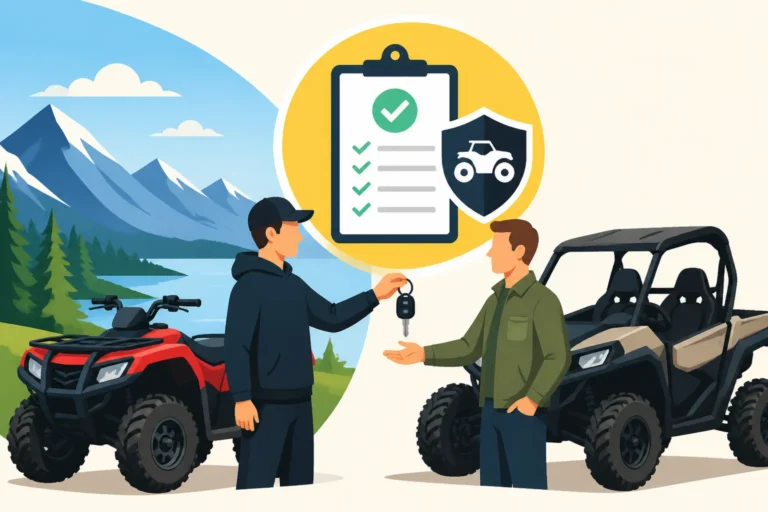
Buying or selling an ATV or UTV in British Columbia can feel like navigating a dense forest, especially when it comes to the paperwork. One common question that crops up, causing a bit of confusion, is about the cost involved in simply changing the name on the registration. This guide is here to untangle the details of the BC transfer fee, focusing on that specific $28 charge that makes your beloved machine officially yours, or officially someone else's.
Understanding the $28 Transfer Fee in BC
Let's cut right to the chase: when you're transferring ownership of an off-road vehicle (ORV) in British Columbia, there's a specific, standard fee you'll encounter. It's often one of the least talked-about parts of the process, yet it’s a crucial one to understand. This fee is a fixed administrative cost, designed to cover the processing of the ownership change within the provincial system. It's not a tax, and it's not tied to the value of your machine in the way the provincial sales tax (PST) is. Think of it more like a small service charge to update the records and ensure everything is above board.
This $28 fee applies to every single ownership transfer, whether you're buying a brand-new quad from a dealership, picking up a used side-by-side from a private seller, or even if a family member is gifting you their old dirt bike. It's a fundamental part of the administrative process for updating the Certificate of Registration. Many people mistakenly believe that once they've paid the initial registration fee when the machine was new, that's it for any future costs outside of insurance. However, each time the ownership changes hands, this specific fee comes into play. It's a small amount, but it’s an essential piece of the puzzle for a complete and legal transfer.
What the $28 Fee Covers (and What It Doesn't)
The $28 transfer fee is specifically for the administrative action of updating the provincial database to reflect the new owner's information on the ORV's Certificate of Registration. When you visit an Autoplan broker, this is the charge you pay to literally switch the name from the old owner to the new one. It covers the entry of new data, the printing of a new certificate, and ensuring the provincial records are accurate. Essentially, it's the cost of formalizing the transfer of legal ownership within BC's ORV registration system.
However, it's really important to distinguish this from other potential costs you might encounter during an ownership transfer. For instance, this fee does not include the Provincial Sales Tax (PST) that's often applicable when you purchase an ORV. PST is calculated separately, usually as a percentage of the purchase price, and can be a significantly larger sum. [BC PST on an ATV Purchase] is a whole different beast! Similarly, the $28 transfer fee doesn't cover any costs associated with securing a new ORV plate and decal if the machine didn't have one, or if you needed a replacement. Those are separate charges, though often handled at the same time by your broker. It’s purely for the name change on the document that proves you are the legal custodian of the machine.
The Rationale Behind This Specific Fee
You might wonder why there's a distinct $28 fee for this specific action. The rationale is quite straightforward: it's a cost-recovery mechanism for the provincial government and the agents who process these transactions. Every time an ownership transfer occurs, there's administrative work involved – checking documents, inputting data, issuing new certificates, and maintaining an accurate registry. This fee helps offset those operational expenses. It ensures that the system for tracking ORV ownership remains functional and accessible.
Consider that the initial [BC ORV Registration You Pay Once] covers the setup of the machine in the system. The $28 transfer fee is for subsequent modifications to that record. Without such a fee, the cost of administering these transfers would either fall entirely on taxpayers who may not even own an ORV, or the service would be difficult to sustain. By applying a modest, fixed fee, the province ensures that those directly benefiting from the accurate registration system contribute to its upkeep. It's a common practice across many jurisdictions for various types of vehicle and property transfers, designed to keep administrative services running smoothly.
Comparing the Fee to Other Jurisdictions
While we won't get into specific dollar amounts for other places, it's worth noting that British Columbia's approach to ORV ownership transfer fees is generally consistent with how other provinces and states handle similar administrative tasks. Many jurisdictions have some form of a flat fee for title or registration transfers, separate from sales tax or annual renewal fees. The shape of the cost is often similar – a relatively low, fixed administrative charge.
Some places might combine it with other charges, or structure it slightly differently, but the underlying principle of having a designated fee for changing the registered owner is fairly universal. What stands out in BC, as many riders know, is that the ORV registration itself is generally a one-time fee, and there's [BC Has No Annual Renewal Sticker] to pay after that initial registration. This makes the $28 transfer fee quite distinct because, for an ORV, it's one of the only recurring administrative fees you'll pay outside of sales tax, if you're buying a used machine. This contrasts with highway vehicles, which often have annual renewal fees in addition to transfer costs. So, in the grand scheme of things, the BC ORV system aims for simplicity with its recurring fees once you're registered.
The Essential Documents for a Smooth Transfer
Transferring ownership isn't just about handing over some cash and shaking hands; it's about the paperwork. And let me tell you, having all your ducks in a row before you head to the Autoplan broker will save you a world of headache and potential multiple trips. Missing just one piece of the puzzle can bring the whole process to a screeching halt, leaving you frustrated and your new (or old) machine unregistered in the new owner's name. It's a common pitfall that many new and seasoned riders fall into, simply because they weren't aware of all the specific requirements.
The provincial government, through ICBC and its Autoplan brokers, is very particular about documentation to establish a clear "chain of ownership." This is especially true for ORVs, which don't have titles in the same way cars do. Instead, we rely heavily on the Certificate of Registration and supporting documents to prove who bought what, from whom, and when. This meticulous approach is designed to prevent fraud and ensure that only the rightful owner can transfer a machine. So, let's break down the key documents you absolutely need to bring to the table.
The Certificate of Registration: Your Main Document
The single most important piece of paper when transferring an ORV in BC is the [BC's Certificate of Registration Explained]. This document is issued by an Autoplan broker once an ORV is registered for the first time or when ownership is successfully transferred. It acts as the primary proof of ownership, containing vital information about the machine and its registered owner. Think of it as your ORV's birth certificate and ongoing identity document rolled into one. It details the vehicle identification number (VIN), make, model, year, and the name and address of the current registered owner.
When you're selling a machine, you, as the registered owner, will need to endorse this certificate by signing the "transferor" (seller) portion. The buyer will then sign the "transferee" (buyer) portion. This physical document, with both signatures, is what the Autoplan broker will use to process the ownership change. If you're the buyer, make sure the seller provides you with this original signed certificate. A photocopy simply won't cut it. Without this original document, transferring ownership becomes significantly more complicated, often requiring additional steps like a statutory declaration to establish your claim to the machine. [BC Riders Must Carry the Certificate] whenever they ride, so it's a document you'll become very familiar with.
Why a Bill of Sale is Absolutely Crucial
Next to the Certificate of Registration, a detailed bill of sale is arguably the most critical document for a smooth transfer, especially if you're buying from a private seller. While the Certificate of Registration shows the last registered owner, the bill of sale provides the crucial link in the current transaction – proving you bought the machine from that specific person (the registered owner) and for how much. This is vital for two main reasons: firstly, it proves the transaction actually occurred, and secondly, it establishes the value for PST purposes. [BC Bills of Sale for Every Prior Owner] are important, but the one connecting the current seller to the current buyer is paramount.
A good bill of sale should include:
- The full names and addresses of both the buyer and seller.
- The date of the sale.
- The purchase price (even if it's $0 for a gift).
- A clear description of the ORV, including its make, model, year, and most importantly, the VIN.
- Signatures of both the buyer and seller.
Having a clear, well-documented bill of sale protects both parties. For the buyer, it's proof that they legally acquired the machine. For the seller, it confirms they relinquished ownership on a specific date, absolving them of future liability. You can find templates for bills of sale online through various resources, including legal document providers like LawDepot, which offers customizable forms to ensure you cover all the necessary details. Don't just settle for a handwritten scrap of paper; a professional-looking document provides much better clarity and fewer questions down the road.
When a Statutory Declaration Becomes Your Best Friend
Sometimes, despite your best efforts, you might not have a complete paper trail. Perhaps you bought an older machine years ago with a casual handshake and no formal bill of sale, or the original Certificate of Registration is long gone. This is where a [BC Statutory Declaration for an ORV] steps in as your absolute best friend. A statutory declaration is a formal statement made under oath, affirming certain facts to be true. In the context of ORV ownership transfer, it's used to establish your legal claim to a machine when primary documents are missing or insufficient.
You might need a statutory declaration if:
- The previous owner never transferred the machine into their name, and you can't get a bill of sale from the registered owner.
- The original Certificate of Registration is lost or damaged, and the registered owner is unavailable or deceased.
- You've owned the machine for a long time but never formally registered it, and now you want to comply with the mandatory registration rules (which came into effect in 2015).
Creating a statutory declaration involves detailing how and when you acquired the ORV, explaining why the usual documentation isn't available, and signing it in front of a commissioner for taking affidavits (often found at Service BC centres or some notary publics). The cost for having a statutory declaration commissioned is often around $15. It's a legal document, and making false statements can carry serious penalties, so be absolutely truthful. It's a lifeline for many riders caught in a documentation bind, allowing them to finally regularize their ORV's status. LawDepot is another resource where you can find templates for statutory declarations, which can help guide you on the specific information required.
Step-by-Step: Transferring Ownership at an Autoplan Broker
So, you’ve done your homework, gathered all your documents, and you're ready to make it official. The process of transferring ownership for your ATV or UTV in British Columbia is handled exclusively through an authorized Autoplan broker. These are the same offices where you would register your car or truck for highway use. It's important to remember that Service BC centres, while they handle some government services, don't typically process ORV registrations or transfers directly. Heading to the right place from the start will save you time and frustration.
Going to an Autoplan broker might feel a bit intimidating if you've never done it for an ORV before, but rest assured, they handle these transactions every day. The key is showing up prepared, knowing what to expect, and asking questions if anything is unclear. They're there to help you navigate the system and ensure your machine is legally registered in your name. Let's walk through the steps involved to make your transfer as smooth as possible.
Preparing Your Documents Before You Go
Before you even think about heading out the door, take a moment to double-check that you have everything you need. This preparation step is crucial and can prevent a wasted trip. As we discussed, the documents required are pretty specific, and any missing piece can delay the transfer. Think of it like packing for a long ride; you don't want to forget your helmet or extra fuel!
Here's a quick checklist for your convenience:
- Original Certificate of Registration: This is the one signed by both the seller (transferor) and you (the buyer/transferee).
- Bill of Sale: A clear, detailed bill of sale, especially important if you're buying from a private party, outlining the machine's details, sale price, and signed by both parties. If you used a template from LawDepot, ensure all fields are filled.
- Photo Identification: You'll need valid government-issued photo ID (like your driver's licence) to prove your identity. The broker needs to verify who you are.
- Proof of Address: If your ID doesn't show your current address, or if it's different, you might need a secondary document like a utility bill to prove your residential address in BC.
- Statutory Declaration (if applicable): If you're missing the Certificate of Registration or a proper bill of sale from the registered owner, bring your completed and commissioned statutory declaration.
- Payment for the $28 transfer fee: Be ready with cash, debit, or credit card.
- Payment for PST (if applicable): If you purchased the machine, you'll likely need to pay the Provincial Sales Tax, so be prepared for that separate payment.
Having physical copies of all these documents in hand, organized and ready to present, will make the process much faster for both you and the broker. Remember, [BC Autoplan Brokers Handle ORV Registration], so they're well-versed in these requirements.
What to Expect During the Broker Visit
Once you arrive at the Autoplan broker's office with your meticulously prepared documents, the process generally unfolds like this:
- Greeting and Intake: You'll explain to the clerk that you're there to transfer ownership of an ORV. They will likely ask for your photo ID first to begin the process.
- Document Review: The broker will carefully review all the documents you've provided: the Certificate of Registration, bill of sale, any statutory declarations, and your personal identification. They are looking for completeness, accuracy, and clear proof of the ownership chain. They might ask questions to clarify details, especially if there are any inconsistencies or missing links in the ownership history, which sometimes happens with older machines.
- Data Entry: Once satisfied with the documentation, the broker will input the new ownership details into the provincial system. This is where the magic happens and your name becomes officially linked to the ORV.
- Fee Collection: You will be prompted to pay the $28 transfer fee, and if applicable, the Provincial Sales Tax. The broker will provide you with a receipt for all payments.
- New Certificate Issuance: Finally, the broker will print out a brand-new Certificate of Registration with your name as the registered owner. This is your official proof of ownership.
The entire process, assuming all your documents are in order and there isn't a long wait, can often be completed within 15-30 minutes. It's a pretty efficient system once you've got everything ready. For more general advice, you can check out [How to Register an ATV in BC].
What You Get Back After the Transfer
After successfully navigating the paperwork and payment, you'll walk out of the Autoplan broker's office with a few key items that are essential for any ORV owner in BC. This isn't just about a new piece of paper; it's about having the legal proof you need to ride and peace of mind that your machine is properly registered.
Here’s what you should expect to receive:
- New Certificate of Registration: This is the most important document. It will display your name and address as the new registered owner, along with the ORV's details (VIN, make, model, etc.). Make sure to double-check all the information for accuracy before you leave the office. This is the document you must carry with you whenever you operate your ORV on Crown land or Forest Service Roads.
- Receipt for Payments: You'll get a receipt for the $28 transfer fee and any PST paid. Keep this for your records.
- Information on Insurance (Optional but Recommended): While ORV registration is mandatory for riding on Crown land, basic insurance is also required on Forest Service Roads and highly recommended everywhere else. The broker can discuss your insurance options, including the basic liability coverage required for FSRs and any additional voluntary coverage you might want. Even though the registration itself doesn't have an annual renewal, you will need to think about your insurance yearly.
Remember, the new Certificate of Registration is your definitive proof. Guard it carefully, keep it with your machine, and always have it on hand when you're out riding. It's the cornerstone of legal ORV operation in British Columbia. [What the Broker Hands You After You Register] is essentially your new official identity for your quad or side-by-side.
Common Hurdles and How to Overcome Them
As an experienced rider and blogger, I've heard countless stories of people running into roadblocks when trying to transfer ORV ownership. It's rarely a straight shot for everyone, and sometimes the history of a machine can be as winding as a remote logging road. These hurdles often stem from informal past transactions, missing documents, or simply not understanding the unique requirements for ORVs in BC. But don't despair! Most of these challenges have solutions, even if they require a bit more effort.
The provincial system is designed to accommodate various scenarios, but it requires you to be proactive and understand the alternatives. One of the biggest frustrations is showing up at the broker only to be told you're missing a key document, leading to that disheartening feeling of a wasted trip. By understanding these common issues ahead of time, you can prepare for them and ensure a smoother process, even if it means an extra step or two.
Dealing with a Missing Bill of Sale or Prior Owner
This is perhaps the most frequent headache riders encounter. Imagine buying a quad from a friend of a friend years ago, with just a handwritten note and a handshake. Or perhaps you've inherited a machine, and the original owner passed away without leaving clear documentation. If you don't have a direct bill of sale from the currently registered owner or the original Certificate of Registration is missing, you've hit a hurdle. This situation is particularly common with older machines that pre-date the mandatory registration rules (which became law in November 2015). Before then, many people rode their quads for decades on private land without ever needing formal paperwork. [BC Registration for an Older Machine] often presents this challenge.
The primary solution here is the statutory declaration. As discussed, this sworn statement allows you to formally declare how you came into possession of the ORV and explain the absence of typical documentation. You'll need to detail all known facts about the machine's history, even if it's just your personal account. The broker will use this, along with any other supporting evidence you can provide (like old receipts, even if informal), to assess your claim of ownership. While it adds an extra step and a small cost ([BC Statutory Declarations Cost $15]), it's often the only path forward when the paper trail is incomplete. LawDepot can be a helpful starting point for understanding what a statutory declaration typically requires.
Navigating Transfers for Inherited or Gifted Machines
Transferring an ORV that has been inherited or gifted also has its own set of nuances. While the $28 transfer fee still applies, the way the "purchase price" is handled for PST purposes changes, and the documentation might differ slightly.
For Inherited Machines: When you inherit an ORV, you typically won't have a bill of sale in the traditional sense. Instead, you'll need documents proving your right to the deceased's assets, such as a Grant of Probate, letters of administration, or a will. If the estate is small or straightforward, a statutory declaration from you or the executor confirming the inheritance might suffice. The key is to demonstrate legal entitlement to the machine from the deceased registered owner. You'll still need the original Certificate of Registration if it exists, signed by the executor or administrator of the estate. The broker will then process the transfer with you as the new owner.
For Gifted Machines: If a family member or friend is giving you an ORV, you'll still need to formally transfer ownership. The main difference is the "purchase price" on the bill of sale will be $0, or explicitly stated as a gift. This is important because it impacts the PST calculation. For gifts between immediate family members (parents, children, spouses), PST is generally exempt. For gifts between friends or more distant relatives, PST might still apply based on the machine's fair market value, even if no money exchanged hands. A [BC Gift Letters Between Family] can be a simple way to document this, functioning much like a $0 bill of sale, and is crucial for avoiding unexpected PST charges. Again, a clear written record, even for a gift, is essential.
Addressing Out-of-Province Purchases
Buying an ORV from outside British Columbia, whether it's from Alberta, Washington State, or another jurisdiction, introduces another layer of complexity. While the ORV registration rules are BC-specific, the principles of establishing ownership still apply. The $28 transfer fee will be part of the process once you're ready to register it in BC, but getting to that point involves additional steps. [BC Registration for an Imported Machine] covers this in more detail.
Here's what you typically need to consider:
- Original Ownership Documents from the Originating Jurisdiction: This could be a title document, a registration certificate, or a bill of sale that's standard in that province or state. Whatever is considered official proof of ownership where the machine came from, you'll need it.
- Customs Documentation (if from outside Canada): If you're importing an ORV from the US, you'll need all the customs paperwork to prove it legally entered Canada and that all duties/taxes were paid at the border.
- Bill of Sale: Just like local purchases, a clear bill of sale from the seller to you is vital, especially for establishing the purchase price for PST calculation in BC.
- VIN Verification: Sometimes, with out-of-province machines, the broker might need to verify the VIN. Make sure the VIN on the machine matches all documentation.
Once you have these documents, you'll take them to an Autoplan broker. They will then assess the documents, collect the $28 transfer fee, and usually the PST based on the purchase price declared or fair market value. It can be a bit more involved, so be patient and provide as much detail as possible to the broker. [BC Registration for a Machine From Alberta] or [BC Registration for a Machine From Washington] would follow these general steps.
Beyond the Transfer: What Else You Need to Know
Successfully transferring ownership of your ATV or UTV is a big step, but it's not the end of your responsibilities as an ORV owner in British Columbia. While the $28 transfer fee takes care of the administrative side of changing hands, there are other crucial aspects of ORV ownership that you need to be aware of to stay legal, safe, and worry-free on the trails. Many riders focus so much on getting the registration done that they overlook these ongoing responsibilities or misunderstand how the BC system works compared to other provinces or highway vehicles.
It's important to remember that owning an ORV in BC involves a blend of provincial regulations (like the Off-Road Vehicle Act) and practical considerations. Being a responsible ORV owner means more than just having your name on a piece of paper; it means understanding the long-term implications of registration, insurance, and keeping your information current.
Understanding Ongoing "No Annual Renewal"
One of the most appealing aspects of BC's ORV registration system, which often surprises new riders or those from other provinces, is that there's [BC Has No Annual Renewal Sticker] or annual fee for the registration itself. Once you pay the initial registration fee (or the $28 transfer fee for subsequent owners), that's it for the life of your ownership of that particular machine, as long as it stays registered in your name. You literally pay once, and then you're done with that specific cost.
This is a significant departure from highway vehicles, which typically require annual registration renewals and sticker updates. For ORVs, the Certificate of Registration remains valid as long as you own the machine and the details on it are accurate. This means you don't have to worry about missing an annual deadline or paying a recurring fee for the registration itself. It simplifies long-term ownership and removes a common administrative burden. However, this ease shouldn't be confused with other requirements, such as insurance, which do have annual considerations.
The Importance of Insurance After Transfer
While the ORV registration itself doesn't renew annually, your insurance certainly will. After you've successfully transferred ownership and received your new Certificate of Registration, your next critical step is to ensure you have adequate insurance coverage. This is not optional; it's a legal requirement for riding on certain types of Crown land, specifically Forest Service Roads (FSRs). [BC ATV Insurance Requirements] are clear on this.
You have a couple of options for ORV insurance in BC:
- Mandatory Basic Liability for FSRs: If you plan to ride on any FSRs, you must have at least $200,000 in third-party liability coverage. This can often be purchased through an Autoplan broker, separate from your ORV registration. This policy typically renews annually.
- Voluntary Coverage for Other Crown Land and Private Property: For riding on other forms of Crown land or private property, liability insurance is voluntary but highly recommended. Accidents happen, and having coverage protects you financially if you're deemed responsible for damage to property or injury to another person. Many private insurance companies offer specialized ORV policies that include collision, comprehensive, and higher liability limits.
Never make the mistake of thinking that because your registration doesn't renew, your insurance doesn't either. They are separate considerations. Riding an FSR without the mandatory liability insurance can lead to significant fines and penalties. Always ensure your insurance is current before hitting the trails. [BC ATV Insurance Cost Per Year] can vary, so it's worth shopping around.
Keeping Your Registration Up-to-Date (Address Changes, etc.)
Even though your ORV registration doesn't require annual renewal, it's still your responsibility to ensure the information on your Certificate of Registration is accurate and up-to-date. The most common update needed is an address change. If you move, it's crucial to inform an Autoplan broker of your new residential address.
Here's why this matters:
- Legal Communication: The provincial government needs to be able to contact you regarding your ORV if necessary. An outdated address could mean missing important notices.
- Proof of Ownership: Your Certificate of Registration is a legal document. Having incorrect information on it can cause issues if you ever need to prove ownership, such as in the event of theft or an accident.
- Compliance: While not strictly enforced with the same vigilance as highway vehicle address changes, it's a condition of your registration to have accurate details.
Updating your address is usually a simple process. You'll need to visit an Autoplan broker with your current Certificate of Registration and valid photo ID showing your new address (or a separate proof of address). There typically isn't a fee for updating your address, as it's considered an administrative change rather than an ownership transfer. It's a quick and easy way to ensure your ORV's paperwork remains flawless, giving you one less thing to worry about when you're planning your next adventure. [BC Registration Address Change] is a simple step to maintain compliance.
Disclaimer
This article is for general informational purposes only and does not constitute professional advice. Laws, prices and regulations vary by location and change over time. Consult a qualified professional for guidance on your specific situation.