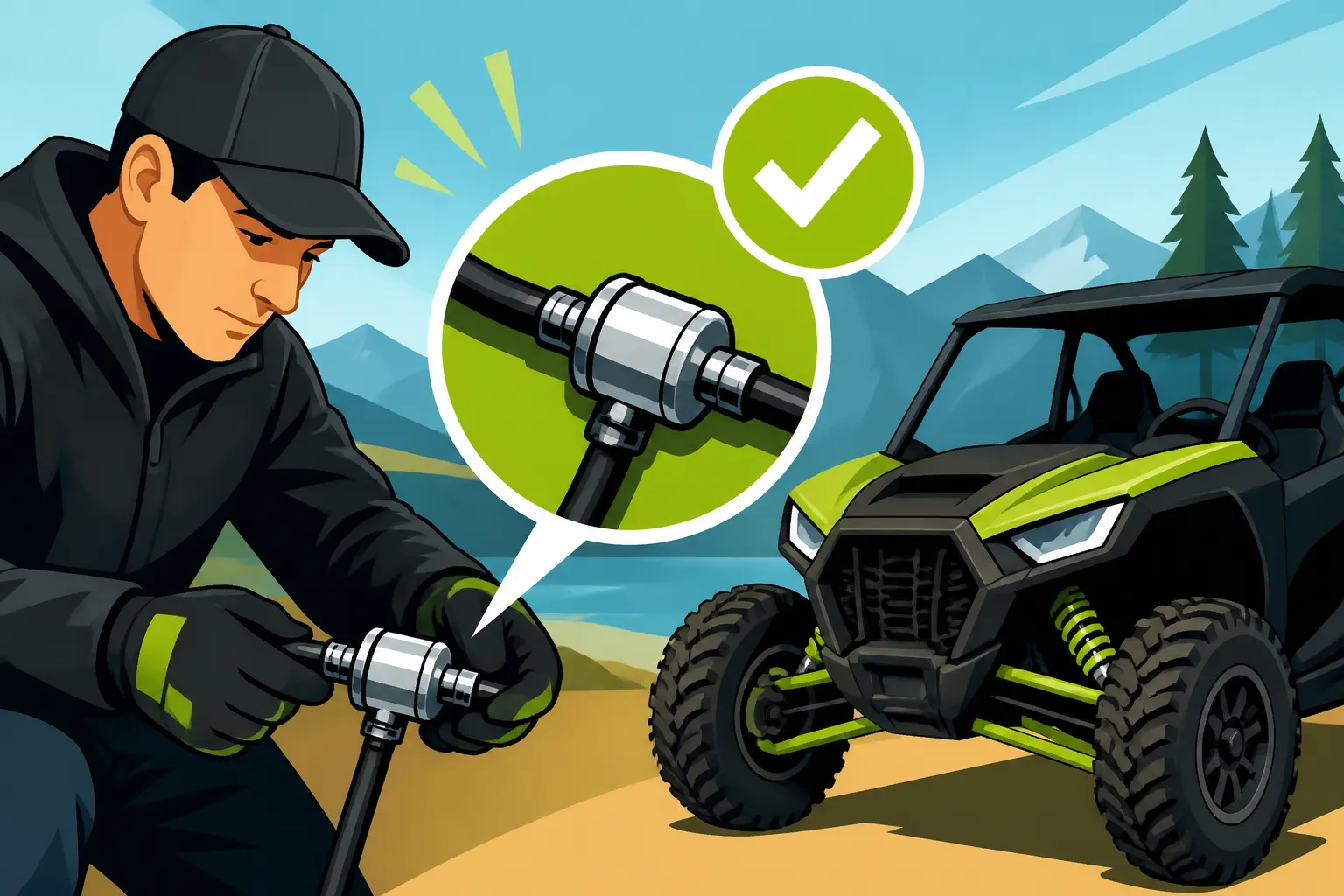
Checking an Arrestor Before a Ride
A spark arrestor is easy to forget until a ride is stopped by a failed inspection, a blocked exhaust, or a wildfire restriction. Before taking an ATV or UTV into the backcountry, check that the arrestor is present, secure, clean and suited to your machine. A few careful checks at home can help you avoid a preventable problem on the trail.
What to check before starting the engine
A spark arrestor is part of the exhaust system. Its screen or other design helps keep hot particles from escaping the exhaust and starting a fire. It does not make a machine fireproof, and it does not replace local fire restrictions or safe riding practices.
Start with your owner’s manual. It can show where the arrestor is located, whether it is removable, and how the manufacturer says to inspect or service it. The setup varies: some machines have a screen at the muffler outlet, while others have an arrestor built into the exhaust. If you cannot identify the component, ask a qualified mechanic or the machine’s dealer rather than removing parts to investigate.
Inspect the exhaust only when it is fully cool. A muffler can stay hot after the engine is shut off, so give it time and avoid touching the outlet until you are sure it is safe. Then look for these basic signs:
- The arrestor and its retaining hardware are present.
- The screen or outlet is not cracked, torn, burned through or badly deformed.
- The arrestor is seated properly, with no obvious gap around it.
- Fasteners, clips or other retainers are secure.
- The outlet is not packed with mud, debris or heavy carbon deposits.
- The exhaust has not been modified in a way that removes or bypasses the arrestor.
A quick glance may not reveal hidden damage. Use a light to inspect the visible screen, but do not force tools into the exhaust or try to pry out a component that is not designed to be removed. If part of the screen is obscured, damaged or inaccessible, check the manual or have a mechanic inspect it.
| Check | What you want to see | What to do if it fails |
|---|---|---|
| Arrestor present | The original or approved component is installed | Find the correct replacement or have the system inspected |
| Screen condition | No holes, splits or severe distortion | Do not ride until it is repaired or replaced |
| Fit and fastening | Component sits securely without a visible gap | Tighten or replace parts according to the manual |
| Outlet condition | No heavy blockage or foreign material | Clean it using the manufacturer’s procedure |
| Exhaust configuration | No bypass, missing parts or unapproved changes | Restore the required setup and confirm it is suitable |
If your machine has been modified, do not assume a different muffler or exhaust tip still meets the applicable requirements. A louder exhaust is not automatically an arrestor, and a part that looks similar may not be the correct component for your model. For help identifying the right specification, see Finding the Spec Stamped on Your Muffler and How a Spark Arrestor Screen Actually Works.
Cleaning and replacing an arrestor safely
Some arrestors can be removed for routine cleaning; others are not meant to be serviced by the owner. Follow the machine’s manual for the correct process. If it says to remove a screen, make sure the engine and exhaust are cool, work in a clear area, and keep fuel and other flammable materials away from the work.
Carbon can build up on a screen over time, especially if the machine is used for short rides or is not running as intended. A dirty screen may restrict exhaust flow. Do not respond by riding with the screen removed: that defeats the component’s purpose and may leave the machine non-compliant with requirements that apply where you ride.
Use only a cleaning method approved for the specific part. Avoid scraping or bending the mesh, which can create a hole or weaken it. Do not burn deposits off with a torch or use an improvised method that could damage the screen or ignite nearby material. If the screen is badly clogged, corroded or fragile, replacement may be safer than trying to restore it.
When replacing a part, match it to the machine and follow the manufacturer’s installation instructions. Check that the retaining hardware is installed and that the component does not rattle or shift. If it will not seat properly, stop and confirm that you have the right part; do not force it into place or seal a gap with an improvised material.
After service, inspect the exhaust again before riding. A loose component can vibrate free on rough ground, and a fastener left out can create a gap. If you are not confident that the arrestor is installed correctly, have a qualified mechanic check the work.
A few signs call for a closer look before the next ride:
- The machine has recently had exhaust work or a muffler change.
- You hear a new rattle from the exhaust.
- The machine has backfired or run unusually hot.
- The outlet appears unusually sooty or restricted.
- The arrestor is missing, damaged or difficult to identify.
- The machine has been stored outdoors and the exhaust may contain debris or nesting material.
Do not start the engine to clear a suspected obstruction. Check the manual and remove debris only as directed. If you find damage inside the exhaust, get the machine inspected rather than assuming the problem is limited to the visible end.
Check the rules where you plan to ride
A sound arrestor is a useful pre-ride check, but it does not by itself authorize access to a trail, Crown land, a forest service road or a managed recreation site. Different rules can apply depending on the location, current fire conditions and land manager. Review BC Spark Arrestor Requirements and What Exhaust Screen the Wildfire Rules Require to understand the requirements that may apply to your machine and riding area.
Also check current restrictions before leaving. Fire-related prohibitions can change, and a machine that passes a mechanical inspection may still be barred from an area during a closure. Check Checking a Fire Ban Before You Ride in BC and BC Fire Centre Closures for ORVs as part of trip planning. For managed trails, confirm any site-specific equipment rules with the organization responsible for the area.
An arrestor inspection is not the same as a fire-ban check. The first tells you whether the exhaust component appears intact and properly installed. The second tells you whether riding is allowed under current conditions. Neither replaces checking road or trail access, posted signs, or local restrictions.
If you ride across provincial or national borders, do not assume the requirements are identical. A component that is acceptable for one location may not meet the rules or site conditions in another. Confirm requirements with the relevant land manager before travelling, and carry any paperwork or permits required for your planned route. For BC-specific information, see BC Fire Centre Closures for ORVs and BC Wildfire Penalties for Riders.
It is worth checking more than the arrestor when fire danger is high. Look for dry grass or debris around the exhaust and under the machine, and avoid parking over combustible material while the exhaust is hot. Do not let the machine idle unattended. Carrying a suitable fire extinguisher and knowing how to use it can be sensible preparation, but it does not make restricted riding permissible.
A practical pre-ride routine
Make the arrestor check part of regular maintenance instead of waiting until the day of a long trip. Check it after exhaust repairs, after a hard ride through mud or debris, and whenever you notice a change in exhaust sound or performance. A simple routine is:
- Check the route and restrictions. Confirm that your planned riding area is open and that no current fire restriction prohibits your machine.
- Let the exhaust cool. Do not inspect or service a hot muffler.
- Confirm the component is present. Compare what you see with the owner’s manual or parts information for your model.
- Look for visible damage or blockage. Check the screen, outlet and retaining hardware without forcing tools into the exhaust.
- Service only as directed. Clean or replace the arrestor using the manufacturer’s instructions.
- Check the fit again. Make sure the part is secure before starting the engine.
- Recheck after significant work. If the exhaust has been changed or repaired, verify that the installed component is correct for the machine and the places you intend to ride.
If you cannot confirm that the arrestor is intact, do not treat “probably fine” as a reliable inspection result. Delay the ride until the part can be checked or replaced. That is usually less trouble than finding a defect at a staging area or discovering it after entering a restricted location.
A spark arrestor is one part of fire prevention, not a substitute for judgment. Follow current restrictions, obey signs, and ride in a way that avoids unnecessary heat, sparks and damage to dry vegetation. Those checks make for a more responsible departure—and help prevent an avoidable exhaust problem from becoming a much larger one.
Disclaimer
This article is for general informational purposes only and does not constitute professional advice. Laws, prices and regulations vary by location and change over time. Consult a qualified professional for guidance on your specific situation.