BC Riders From Washington Use Home Plates
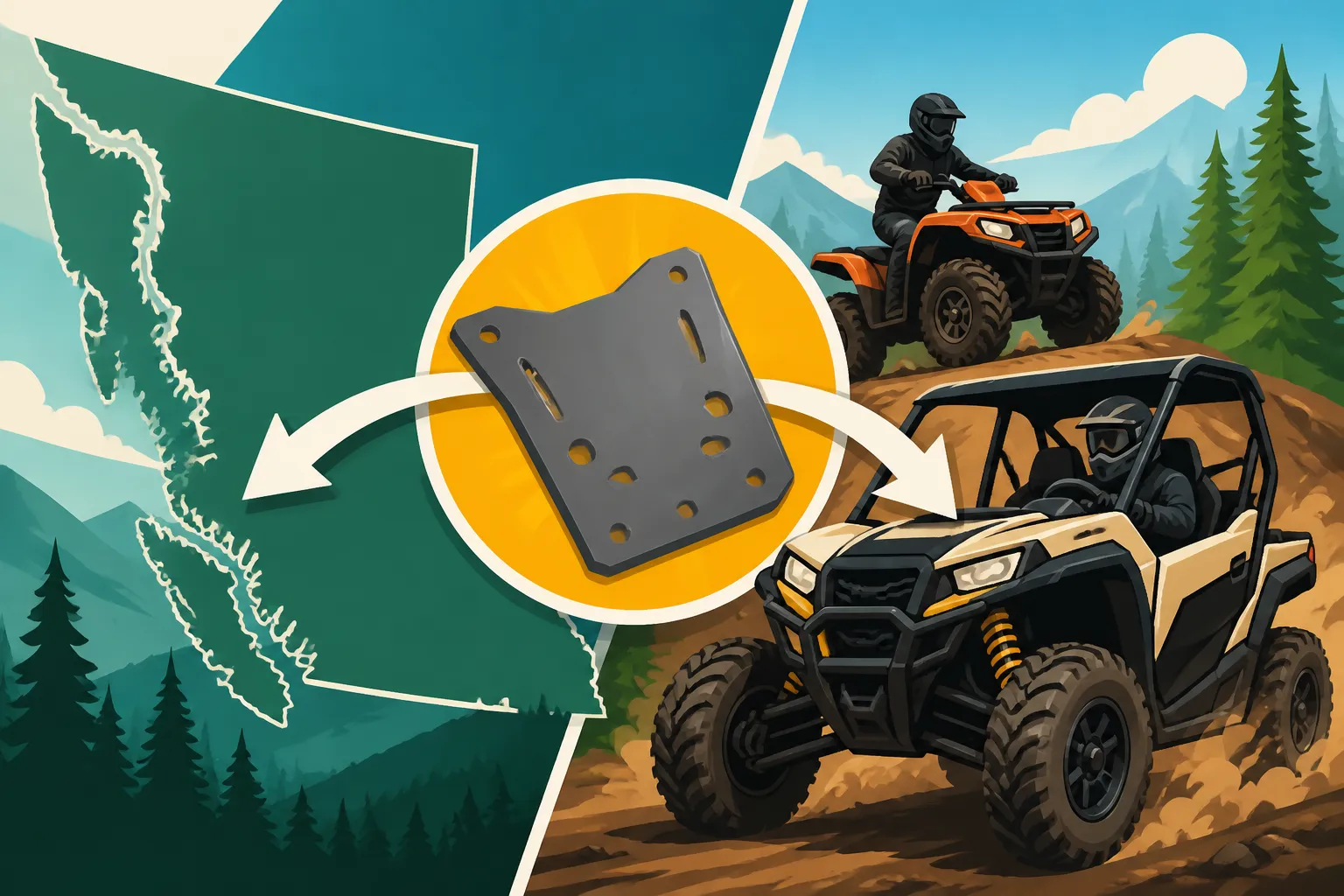
A Washington registration or plate can answer one important question when you bring an ATV or UTV into British Columbia: you generally do not need to register the visiting machine in BC. It does not, however, give you permission to ride everywhere. Here’s what to carry, where separate permits and insurance matter, and what to check before crossing the border.
How Washington registration works in British Columbia
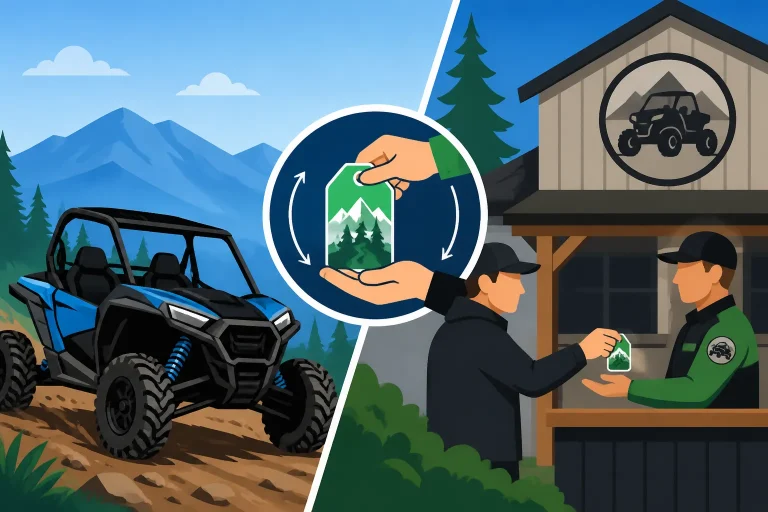
British Columbia does not require a visiting Washington ATV or UTV to be registered in BC just because it is being brought across the border for a ride. The province’s registration system applies differently to machines owned by BC residents and those visiting from elsewhere. For a Washington visitor, the practical approach is to keep the machine’s Washington registration and required identifiers current, and use the home-state documentation and plate or decal that applies to that machine.
This is a registration reciprocity issue, not a blanket riding permit. BC recognizes that visitors arrive with machines documented under the rules of their home jurisdiction. It does not mean that every machine from Washington automatically qualifies, or that a Washington plate gives the machine the right to travel on BC highways. If you are unsure what identification Washington requires for your machine, confirm that with the relevant Washington agency before you leave.
The distinction matters because “ATV” and “UTV” cover machines used in different ways. A quad, side-by-side, dirt bike and other off-road vehicle may have different identification or use requirements at home. Your Washington paperwork should match the actual machine and its intended use. A vehicle set up or registered for off-road use should not be treated as a highway vehicle simply because it has a plate or sticker.
| Situation | What to do |
|---|---|
| You are bringing a Washington ATV or UTV to BC for a visit | Keep its current Washington registration and required identification with you. |
| You are unsure whether your machine’s home-state documents are current | Check with the relevant Washington authority before travelling. |
| You plan to ride Crown land or a resource road | Check the route’s access rules, insurance requirements, closures and any local restrictions. |
| You need to cross or travel along a highway | Check the specific BC rules and whether a police-issued operation permit is available and required. |
| You are buying a machine in BC and taking it home | Treat that as a purchase and export/import question, not as ordinary visitor reciprocity. |
For background on the broader visitor rule, see BC Non-Resident Riding Rules. The key point is simple: a Washington visitor generally brings the machine’s valid home-state credentials rather than applying for BC ORV registration. More detail is available in BC Does Not Register Non-Resident Machines.
Keep home-state credentials with the machine
Carry the registration document or other ownership and registration evidence that applies to your machine in Washington. If the machine uses a plate, decal or other identifier rather than a standard road vehicle plate, make sure it is displayed as required at home and is legible. Keep documents accessible, not buried in a trailer or locked in a vehicle parked far from the trail.
It is also sensible to carry proof that connects you to the machine. That may be useful if an officer asks who owns it, especially if the registration is in someone else’s name, the machine is borrowed, or you are travelling as part of a group. For practical details on what can establish ownership for a visitor, see BC Proof of Ownership for Visitors.
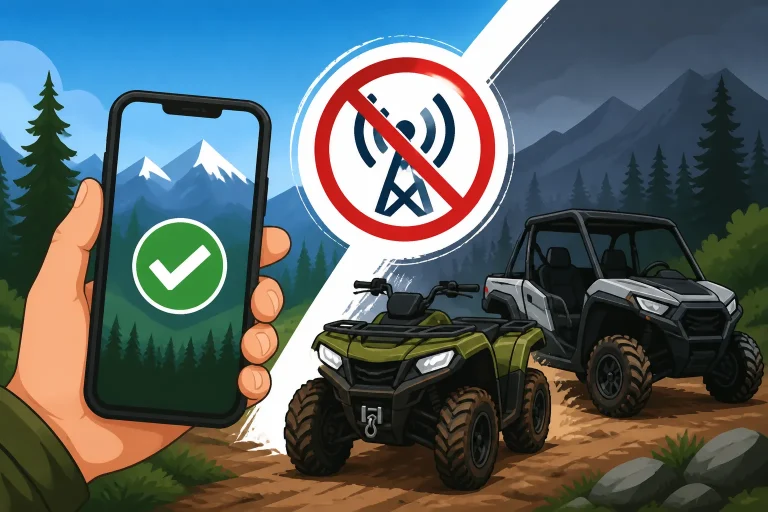
If your documents are digital, make sure you can open them without relying on a cellular connection. A saved copy on your phone is more useful than an email that requires a signal to load. For a remote trip, a printed copy is a straightforward backup. Keep a separate record of the machine’s identification number and a photo of it; a clear record can help resolve questions if the physical marking is hard to see.
Reciprocity does not replace other rules
The home plate or registration addresses only one part of the trip. BC has separate requirements for where an off-road vehicle may be operated, what insurance is needed on certain roads, what safety equipment riders must use, and whether a local permit is required for a particular kind of highway travel.
That is why it helps to plan from the route outward. First identify the trails, Crown land, resource roads or other areas you intend to use. Then check the rules that apply to each part. A route that appears continuous on a map may include a road segment, a closure, private land or a managed recreation site with its own conditions.
What to carry and check before riding
A smooth border crossing and a lawful ride depend on more than the plate. Before leaving Washington, gather your vehicle documents, confirm who owns the machine, review your insurance, and make sure everyone in the riding group understands the route and its restrictions.
Documents and basic checks
Use this checklist before the trip:
- Confirm the Washington credentials. Check that the registration and any required plate, decal or identifier are current and match the machine.
- Carry proof of ownership or permission. If the registered owner is not travelling, bring documentation showing that you have permission to use the machine.
- Record the machine’s identification number. Photograph it while the number is clean and visible. This can be helpful if a question comes up on the trip.
- Check insurance for the intended route. Ask your insurer whether the policy covers the machine in BC and whether it meets the requirements for any resource roads you plan to use.
- Map the route and verify access. Check for seasonal closures, posted restrictions, private property and managed-site rules.
- Prepare required safety equipment. Confirm helmets, lights, seat belts where fitted, and any equipment required for the machine and route.
- Plan for limited service. Save maps and documents for offline use, and tell someone where you are going and when you expect to return.
The right paperwork can differ depending on whether you own the ATV or UTV, are borrowing it, or are transporting several machines for a group. If the machine belongs to another person, do not assume that a verbal arrangement will answer every question about possession. Carry a clear record of the owner’s permission and keep the owner reachable if practical.
A visitor may also want to carry a copy of the vehicle identification number separately from the machine. If the number is covered in mud or difficult to read, a photo taken beforehand can help identify the machine. This does not replace the vehicle’s own marking, but it is a useful backup for your records.
Check the policy, not just the insurance card
An insurance card can show that a policy exists, but it may not make clear whether a particular machine or route is covered. Contact the insurer and ask specific questions: Is the ATV or UTV covered while it is being ridden in British Columbia? Does the policy cover liability on a Forest Service Road or other resource road? Are there exclusions for off-road use, passengers, commercial use or borrowed machines?
BC requires liability coverage on Forest Service Roads, and the applicable minimum can be different from what a rider carries for other Crown land. Do not assume that a Washington policy automatically satisfies BC’s requirements. Ask your insurer to confirm coverage for the exact machine and type of road, and check current provincial requirements before the trip. For a fuller overview, see BC ATV Insurance Requirements and BC Forest Service Road Requirements.
A policy can also have conditions that matter even when a machine is registered. For example, the coverage might depend on the machine being used as intended, the operator being authorized, or the vehicle not being used for a commercial activity. If you are renting or borrowing a machine, confirm who is responsible for insurance and what the policy actually covers.
Where you can ride and when you need another permit
Washington registration does not decide where you may ride in BC. Access depends on the land, the road and any posted rules. A trail may be open to motorized use, closed for a season, limited to certain vehicle types or managed under a local permit system. Some land is private, and some Crown land has restrictions or closures that riders must follow.
Crown land and managed riding areas
BC Crown land is not automatically open for every type of motorized use. Before riding, check the route and the area’s current restrictions. A closure may apply to a road, a recreation site, a wildlife area or a broader zone. It can also be temporary, for example because of fire danger, industrial activity, environmental protection or another management concern.
Start with the specific access information for the riding area rather than relying on an old map, an online track or a friend’s description. A route shown as a trail may cross land with different rules. A gate or sign may have been added since a map was made, and an open route on one side of a boundary may become restricted on the other.
For a more detailed explanation of the land-access issue, see BC Rules for Riding Crown Land. If you plan to use a managed trail system, check whether the site requires its own pass or proof of payment. A provincial visitor’s registration status does not replace a local trail pass where one is required.
Private property is different. Get permission before riding there, including where a route crosses a private parcel or where access is controlled by a landholder. Do not assume that a trail visible on a map, an informal track or a prior visit means current permission. For leased Crown land, posted access instructions and the leaseholder’s conditions can also matter.
Forest Service Roads and resource roads
Forest Service Roads and other resource roads can connect popular riding areas, but they are not simply trails with a wider surface. Industrial vehicles may be using them, and drivers may encounter logging trucks, heavy equipment, blind corners or changing road conditions. Confirm the current road status before heading out and follow posted restrictions.
Insurance requirements are especially important here. Check that the policy covers your machine on the type of road you intend to use and meets BC’s applicable liability requirement. Riders should also be prepared for the road’s operating conditions. A radio may be recommended or expected on some roads, but practices and posted requirements can vary. Follow the signage and local instructions, give industrial traffic room, and do not assume that an ATV’s small size makes it easy for a truck driver to see.
The road rules do not change because the machine is registered in Washington. A home-state plate is not proof that the road is open to recreational riding, nor does it replace required insurance or safe operating practices. See BC Resource Road Radio Practice for more on communicating around industrial traffic.
Highway travel and short crossings
An ATV or UTV with Washington registration is not automatically street legal in BC. The province does not provide a general route for ordinary off-road machines to use highways as road vehicles. Limited highway crossings or travel may be possible under specific rules, and local police may issue an operation permit for certain uses. The availability and conditions of a permit are not the same as permission to drive anywhere on pavement.
Before planning any paved segment, identify exactly where the machine would enter, cross or travel along a highway. Check the applicable rules and contact the local police detachment responsible for the area if a permit may be needed. Do not rely on a trail map’s line crossing a road as evidence that the crossing is lawful. See BC Rules for Crossing a Highway and BC Operation Permit Application Steps.
A permit, when available, may come with conditions. Follow those conditions exactly, including the route and timing described by the issuing authority. A permit does not turn an ATV or UTV into a highway-registered vehicle, and it does not remove requirements such as a valid driver’s licence or insurance where those apply.
Parking lots also deserve care. Loading or unloading a machine in a lot is not an invitation to ride it through the lot or use nearby roads. Use a trailer or other lawful transport method to reach the trailhead, and keep the machine off restricted pavement.
Safety rules still apply to visiting riders
A Washington plate does not exempt a visitor from BC’s riding and equipment rules. Riders should be ready to follow the requirements that apply to the machine, the location and the people on it. Before departure, check the current rules for helmets, passengers, lighting, youth operators and any special conditions on the route.
Helmets and passenger safety
BC helmet rules apply to visiting riders. A quad or other ride-astride machine generally requires an approved helmet for the operator and passenger. A side-by-side with a seat belt and protective structure may be treated differently under the rules, but riders should not assume that a roll cage alone settles the question. Confirm the requirements for the specific vehicle and ensure everyone uses the safety equipment correctly.
A helmet should fit securely and be in suitable condition. If the machine has a passenger seat, make sure the passenger is permitted by the manufacturer’s seating and capacity guidance. A rider should not carry someone simply because there is room to sit on the vehicle. On a UTV, everyone should use the provided seat belt and stay within the machine’s seating capacity.
For a closer look at the requirements, see BC ATV Helmet Law Explained. Follow the manufacturer’s guidance on passenger size and machine capacity as well as the legal rules.
Youth riders and supervision
If a young person is riding, check BC’s age, supervision and training requirements before the trip. The rules can depend on the rider’s age, the type of machine and who is supervising. Written permission may be relevant for some young operators, and there are restrictions on carrying passengers. A Washington parent’s understanding of the home-state rules is not enough to establish that the ride complies with BC requirements.
Plan supervision as part of the ride rather than as a last-minute arrangement. The adult responsible for a young rider should be able to keep the rider in view and give direction promptly where required. Choose a route suited to the child’s ability and the machine’s size, not just the group’s preferred distance.
Fire prevention and environmental care
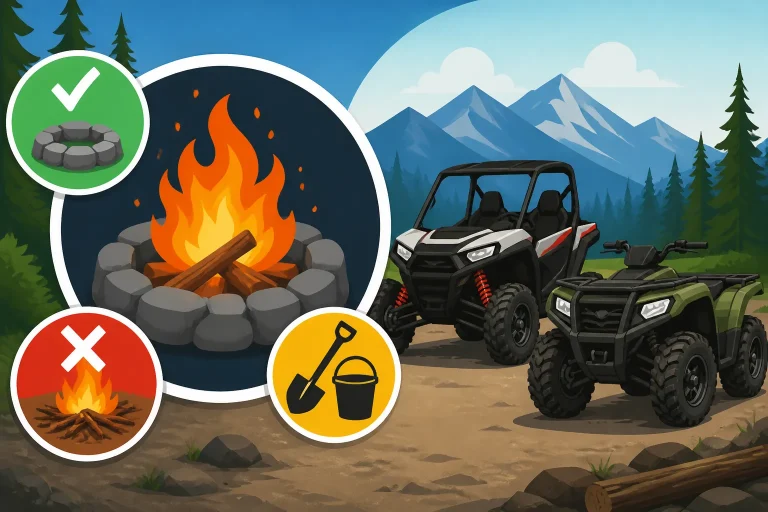
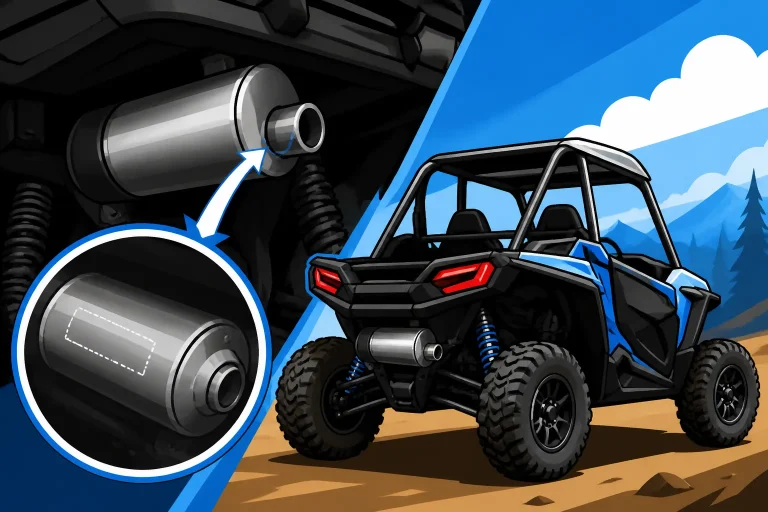
In dry conditions, an ATV or UTV can create a fire risk. Check whether restrictions or a fire-related prohibition applies to the area before riding. Where spark arrestors are required, confirm the machine’s equipment meets the rule and is in good working order. A muffler screen that looks present is not a substitute for checking the applicable requirement.
Riding can also cause lasting damage where ground is wet, steep or environmentally sensitive. Stay on routes open to motorized use, avoid cutting across fragile areas, and do not widen a trail to get around mud or an obstacle. If a route is blocked or closed, turn around rather than making a new path. Leave gates as you find them and respect signs, landholders and other trail users.
A practical plan for a Washington visit
Before you load the machine, make decisions in this order:
- Confirm the machine’s Washington status. Make sure its registration and required identifiers are current for its use.
- Gather the documents. Carry the registration, proof of ownership or permission, and insurance information.
- Choose a route that is actually open. Check the specific trail, access road and riding area, including closures and private-land boundaries.
- Confirm road insurance. Ask the insurer about BC coverage and the requirements for Forest Service Roads or other resource roads.
- Resolve any highway segment in advance. Check whether the route involves a crossing or travel that requires a police-issued operation permit.
- Review rider and equipment rules. Check helmets, passengers, youth supervision, lights and other requirements for your machine.
- Prepare for a remote ride. Save maps and documents offline, bring suitable emergency supplies, and share your plan with someone at home.
This order prevents a common planning mistake: focusing on the plate and assuming the rest follows from it. Registration reciprocity can simplify the paperwork, but access, insurance and road use still need separate attention.
If you are visiting with several machines, check each one rather than assuming that all vehicles in the group have the same status. A quad, dirt bike and side-by-side may have different home-state documentation, safety equipment and passenger arrangements. The person organizing the ride should also make sure that every operator knows the route, the planned stopping points and the rules for any road sections.
A final check shortly before leaving is worthwhile. Fire-related restrictions, road work, industrial activity and local closures can change. Use current information for the exact riding area, and follow signs encountered on the ground even if they differ from a downloaded map.
Frequently Asked Questions
Do Washington ATV and UTV riders need BC registration?
Generally, no. A visiting non-resident machine uses its valid home-state registration and required identification rather than BC ORV registration. Keep the Washington documents current and carry them while riding.
Does a Washington plate let an ATV ride on BC highways?
No. Home-state registration does not make an off-road vehicle street legal in BC. Limited highway use or crossings have separate rules, and a police-issued operation permit may be required in some situations.
What documents should I carry?
Carry the machine’s current Washington registration or applicable home-state documentation, proof of ownership or permission to use it, and insurance information. Keep offline or printed copies available in case there is no cell service.
Is my Washington insurance automatically enough for BC?
Not necessarily. Ask your insurer whether the policy covers the machine in BC and meets the requirements for the roads you plan to ride, particularly Forest Service Roads and other resource roads.
Can I ride any BC Crown land with my Washington registration?
No. Registration does not grant access. Check for closures, posted restrictions, private property, managed-site requirements and route-specific conditions before riding.
Disclaimer
This article is for general informational purposes only and does not constitute professional advice. Laws, prices and regulations vary by location and change over time. Consult a qualified professional for guidance on your specific situation.