BC Campfire Rules at a Staging Area
A campfire at an ATV staging area can seem like a simple end to a ride, but permission depends on more than finding a fire ring. Site rules, local restrictions and current wildfire conditions all matter. Here’s how to check whether a fire is allowed, what to do when rules are unclear, and how to leave the area safely.
Check both the staging-area rules and current fire restrictions
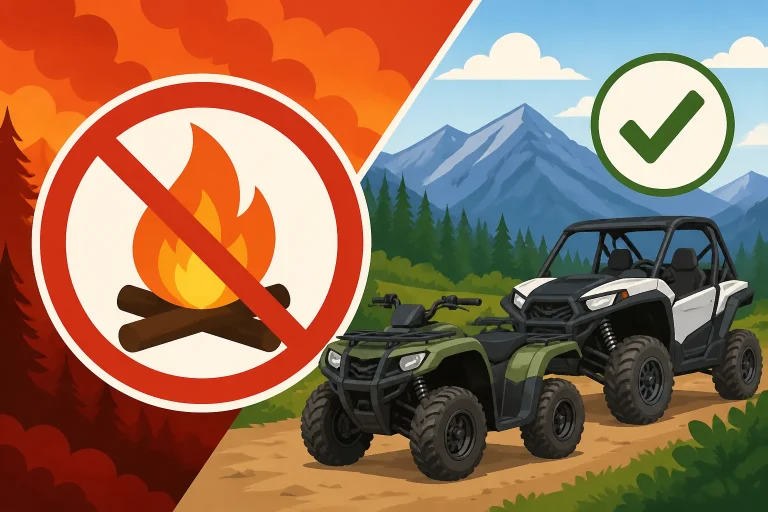
There is no single campfire rule that applies to every BC ATV staging area. Some sites have a designated fire ring and allow fires when conditions permit. Others prohibit fires, do not provide a place to have one, or are intended for parking and unloading rather than camping. A fire ring is not, by itself, proof that a fire is allowed today.
Before lighting anything, check two separate things:
- The rules for the site. Read signs at the entrance and around the staging area. Look for information from the site operator or land manager, and follow any posted direction about fires, overnight use and disposal of ashes. If the rules are unclear, contact the manager instead of assuming a campfire is permitted.
- Current fire restrictions. Check the BC Wildfire Service for restrictions in the area, and check for any additional restrictions from a local government, fire department or site operator. Local rules may be stricter than a broader regional restriction.
This matters because fire conditions and restrictions can change. A fire that was permitted when you planned your trip may not be allowed when you arrive. Check again before leaving home and, if possible, when you reach the staging area. For a broader explanation of area closures and riding restrictions, see BC Fire Centre Riding Bans and Checking a Fire Ban Before You Ride in BC.
| What to check | Why it matters | What to do if unclear |
|---|---|---|
| Site signage and operator rules | A site may prohibit fires or limit them to a specific area | Contact the site manager; do not rely on a fire ring alone |
| Current wildfire restrictions | A restriction may prohibit campfires even at a normally fire-friendly site | Check the BC Wildfire Service for the area |
| Local restrictions | A municipality or fire authority may set additional rules | Check the local authority’s notices |
| Type of cooking device | Some restrictions distinguish between open fires and devices that use fuel | Read the exact restriction; do not assume a stove is exempt |
| Overnight-use rules | A staging area may not allow camping or extended stays | Confirm that staying overnight is allowed separately |
Restrictions may cover different activities or equipment. A notice that prohibits campfires does not automatically tell you what is allowed for a fuel-burning stove, and a rule allowing a particular stove does not mean a wood fire is permitted. Read the restriction itself rather than relying on a general summary, a previous visit or another rider’s interpretation.
Also check for site-specific closures. A staging area or trail system may have restrictions that affect access even when a campfire is not the issue. BC Fire Centre Closures for ORVs explains why it is worth confirming both fire conditions and riding access before setting out.
Don’t assume every staging area allows a fire
“Staging area” usually describes a place to start or support a ride; it does not necessarily mean a campground. Some sites may offer camping facilities, while others may only provide parking or unloading access. Check whether overnight stays are permitted before planning a meal or camp setup around the site. BC Trails With Camping can help with planning a ride where camping is part of the trip.
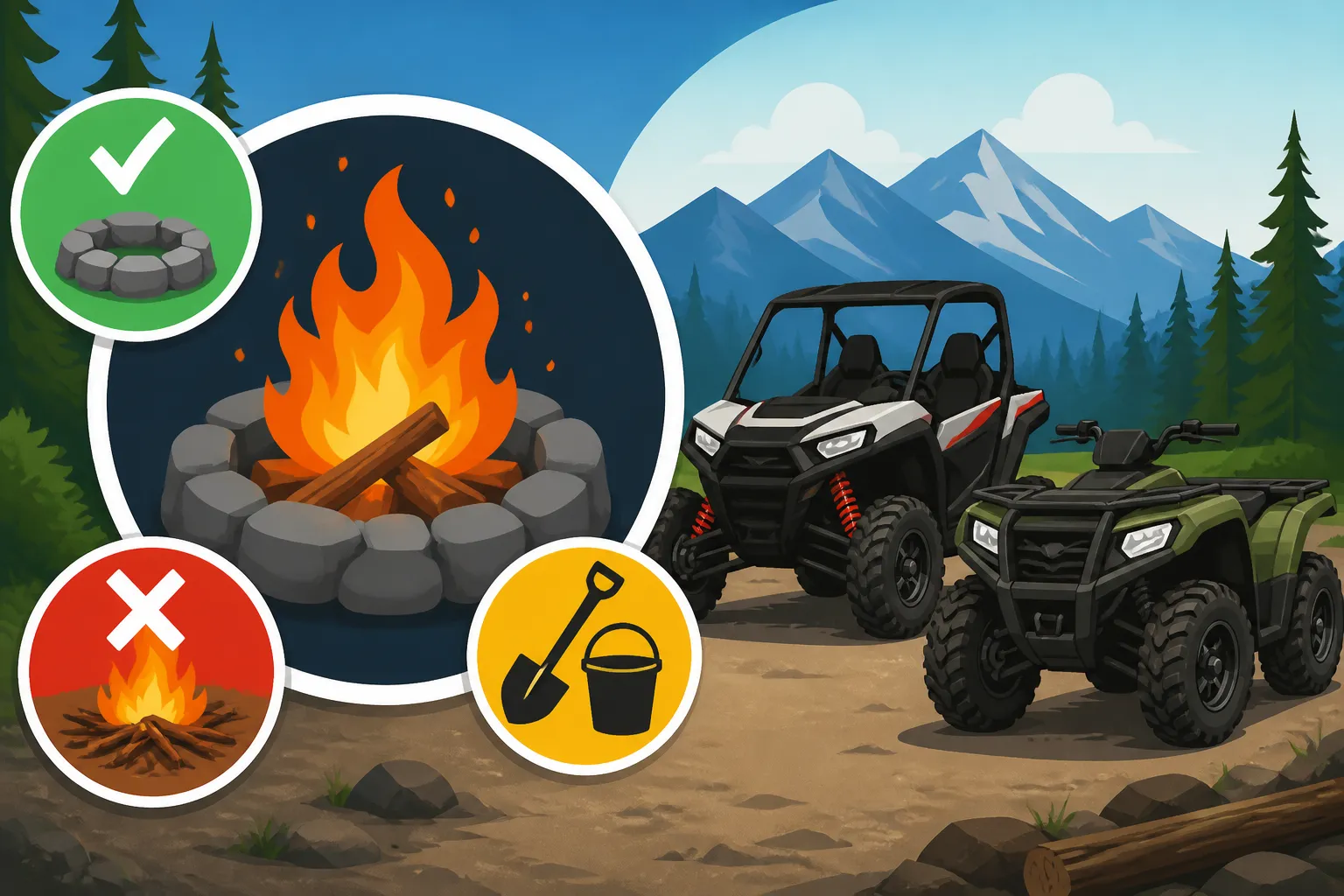
Even at a site where fires are normally allowed, use only the place the operator designates. Do not build a fire beside a vehicle, trailer, trail, road, tree or pile of dry vegetation. Do not create a new fire ring or burn directly on the ground because there is no official ring available. If the designated area is damaged, surrounded by dry material or visibly unsafe, skip the fire and tell the site operator.
Pay attention to signs and instructions at the entrance, not just the area beside the fire ring. A restriction may apply across the entire site, and a sign farther into the staging area may be easy to miss when arriving with a trailer. If you are riding somewhere unfamiliar, plan for the possibility that a fire will not be allowed. Bring food that does not depend on a campfire and a suitable alternative only if the current rules permit it.
A site pass or permission to use a managed recreation area is not the same as permission to have a fire. Access rules, camping permission and fire rules are separate questions. BC Passes Exist Only at Managed Sites offers useful context on why permissions can vary by location, while BC Crown Land Access Rules is relevant when your route or stopping point involves Crown land. Neither general access nor a riding permit should be treated as approval for an open fire.
If you are unsure whether a particular staging area is managed, or who sets its rules, look for the land manager’s contact details or ask a local club or recreation site operator for direction. Do not assume the same rules apply to nearby trailheads. Sites close to one another can have different operators, facilities and restrictions.
Use a permitted fire carefully
When the site permits a campfire and no restriction prohibits it, use the designated fire area and keep the fire small and controlled. Wind, dry grass, leaf litter and nearby forest can turn a modest fire into a serious hazard. If the wind is pushing sparks beyond the ring, conditions are unusually dry, or you cannot keep the fire safely contained, do not light it.
Stay with the fire and keep children, pets, fuel containers and riding equipment at a safe distance. Never leave the fire unattended while you ride, go to a vehicle or walk away from the site. Before starting, make sure you have enough water to extinguish it and a way to manage the fire safely. A water container and a compact shovel can be useful equipment to pack, but they do not make a fire legal when a ban or site rule prohibits one.
A portable cooking stove may be a practical alternative, but check the exact current restriction before using it. Restrictions can distinguish between different kinds of devices, and definitions matter. A stove that seems contained to you may not fit the wording of a particular restriction. When a restriction is unclear, do not guess: check with the authority responsible for it or choose a no-flame option.
Be especially cautious when arriving after a long ride. A hot muffler, exhaust or other equipment can ignite dry vegetation if it is parked over combustible material. Choose a safe parking spot, follow site directions and avoid driving through dry grass or brush. Do not use a campfire to dispose of garbage, food packaging or other waste; pack it out.
A simple routine can help:
- Confirm that the site allows fires and that no current restriction prohibits one.
- Use only the designated fire area and check nearby conditions before lighting.
- Keep water and suitable tools close by, and stay with the fire.
- Put the fire out completely before leaving the staging area.
- Check that the ashes and remaining material are cold, not merely covered or no longer visibly burning.
Leave the staging area with no fire left behind
A fire is not out just because the flames have disappeared. Hot embers can remain under ash and reignite when the wind picks up. Allow enough time to extinguish the fire properly before you need to leave, rather than trying to put it out in a hurry when the group is ready to ride.
If water is available and its use is allowed, add it carefully, stir the ashes and embers, and apply more water until everything is thoroughly wet and cold. Check beneath the surface and around the edges of the fire area for remaining heat. Do not leave smouldering material, and do not bury hot coals. If you cannot confirm that the fire is fully out, stay and continue extinguishing it.
Never dump ash or embers beside a vehicle, in vegetation or into a garbage container. Use the disposal method posted by the site operator. If the site has no instructions and you cannot safely dispose of the remains, ask the operator for guidance.
If you discover an unattended fire, a fire that has escaped its ring or smoke that appears to be spreading into nearby vegetation, respond according to the danger. Do not put yourself at risk trying to control a spreading wildfire. Move people and vehicles to safety, and contact emergency services or the appropriate fire authority. Give the location as clearly as you can, including the staging area name, nearby road or trail, and any visible landmarks.
Planning for fires is also part of planning a responsible ride. Confirm where you can legally stop, whether overnight use is allowed, and what restrictions apply along the route. If your ride involves public roads or Crown land, review BC Forest Service Road Requirements and BC Crown Land Riding Explained as separate access questions; neither replaces checking current fire rules.
When the rules are uncertain, the safest choice is straightforward: don’t light a fire until you have confirmed it is permitted. A missed campfire is a small inconvenience. A fire that escapes a staging area can put riders, communities and the landscape at risk.
Disclaimer
This article is for general informational purposes only and does not constitute professional advice. Laws, prices and regulations vary by location and change over time. Consult a qualified professional for guidance on your specific situation.