BC Game Retrieval by Machine
After a successful hunt, an ATV or UTV can make a heavy, difficult recovery more manageable. But being able to ride a trail does not automatically mean you can use a machine to retrieve game there. In BC, the answer depends on the hunting rules, the exact area and any motor vehicle restrictions in effect.
Check whether a machine is allowed where you hunted
Before planning a recovery route, identify the exact location of the animal and check the rules for that area. A road, trail or open-looking route may be subject to a motor vehicle closure, a hunting restriction or a land-access condition. Those rules can apply even when the machine is registered and the rider has permission to be on the land.
Start with the current hunting regulations for the species and management area, then check maps and notices for closures. The wording matters. A restriction may apply to particular vehicle types, roads, dates, distances from a road or activities such as hunting or transporting wildlife. Do not assume that permission to ride for recreation also covers game retrieval.
BC Hunting Access by ATV covers the access question, while BC Hunting Closed Areas for Vehicles and BC Motor Vehicle Closures and How to Find Them are useful when a route crosses a restricted area. If the boundaries or wording are unclear, ask the relevant land manager or a conservation officer before riding in.
| Situation | What to check before retrieving game |
|---|---|
| The route crosses a motor vehicle closure | Whether the closure applies to your machine, the season and transporting wildlife |
| The route follows a forest service road | Road access rules, active industrial traffic and any posted restrictions |
| The route crosses private or leased land | Whether you have permission for both access and retrieval |
| The route is on Crown land | Whether the area is open to motorized use and whether a separate hunting restriction applies |
| The animal is far from the road | Whether riding off the established route is prohibited or could cause damage |
A forest service road is not automatically an open ATV trail. The road may be open to some traffic but restricted to off-road machines, or conditions may change because of industrial activity, a closure or a posted sign. Review BC Rules for Riding a Forest Service Road before treating an FSR as a recovery route.
Also distinguish the hunting rule from the riding rule. A closure may restrict motor vehicle use for hunting, including access connected with a hunt, even if general recreational riding is allowed elsewhere. The rules can vary by location and season. If you are uncertain whether retrieving a legally harvested animal is allowed under a particular closure, do not test the boundary with a loaded machine.
Retrieval is different from hunting with a machine
Using an ATV or UTV to carry an animal after a lawful harvest is not the same as using a machine to find, pursue or shoot wildlife. That distinction matters, but it does not override access restrictions. The fact that the shot has already been taken does not give a rider automatic permission to enter a closed area or leave a road.
Do not use a machine to chase wildlife, push an animal toward a hunter or help locate an animal for an unlawful shot. Do not shoot from a machine or use it as a position for taking game. Firearm and hunting restrictions are separate from the rules for operating an ATV or UTV, so check the applicable regulations for both. BC Rules for Carrying a Firearm is relevant when planning how firearms will be transported during a ride.
A good practical approach is to plan the recovery before the hunt:
- Identify the hunt area. Confirm the management unit, species rules and any area-specific restrictions.
- Mark legal access routes. Check current maps and notices, and note gates, signs and areas where motorized travel is restricted.
- Set a recovery limit. Decide in advance how far the machine can go without leaving an allowed route.
- Prepare a non-motorized backup. If the animal is beyond legal machine access, plan for hand-carrying, a pack frame or help from other hunters.
- Confirm the animal’s condition and location. Avoid sending a machine into unsafe terrain or into a closed area just because the recovery is urgent.
BC Closed Areas Under the Wildlife Act explains why a familiar trail or a route used in a previous season may not be available for a new hunt. Closures can be location-specific and may change. Check the current rules rather than relying on memory, an old map or another rider’s account.
Tag and handle the animal before moving it
Once an animal has been lawfully harvested, take care of the required tagging and identification steps before transporting it. Requirements vary by species and licence, so follow the current instructions for the animal you harvested. In particular, confirm when the species tag must be completed and attached, and whether evidence of sex or other identification must remain with the carcass during transport.
Do not wait until you reach the truck or camp to work out the paperwork. A machine can make it easier to move an animal quickly, but it does not replace tagging, reporting or meat-salvage duties. Transporting Game by Machine addresses the transport question; check the relevant species rules as well, because requirements are not identical for every animal.
Keep the animal, tag and any required evidence of sex together in the way the regulations specify. If you are field-dressing or dividing the animal, take care not to discard parts that must be retained or presented. When rules are unclear, pause and confirm them before cutting or loading the carcass.
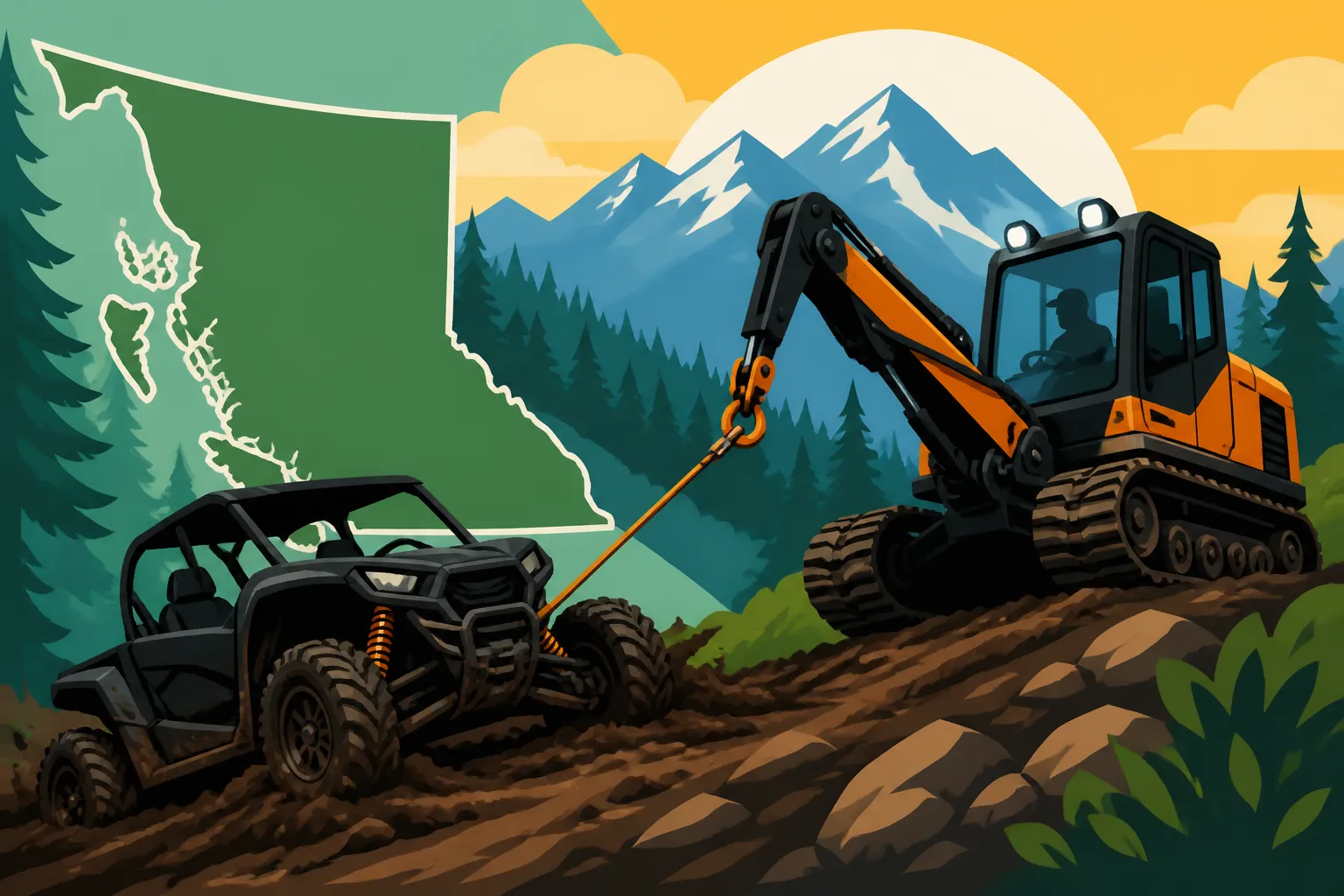
Think through the route and load before starting the engine. A heavy carcass shifts, and a high or uneven load can affect steering and braking. Use secure straps and a stable platform, keep the load within the machine’s rated capacity, and avoid carrying a person in a position not designed for passengers. A winch can help with a controlled pull, but it does not make steep, unstable slopes safe.
If you need equipment such as game bags, tie-downs or a compact winch, compare the specifications and intended use before buying; retailers such as Amazon list a wide range, but the item still needs to suit your machine and the terrain. Do not rely on a strap, rack or winch simply because it is marketed for off-road use. Inspect it, follow its working-load limits and secure the animal so that it cannot slide or obscure the rider’s controls or visibility.
Avoid turning a recovery into a land or safety problem
The shortest route is not always the right route. Riding off a trail can damage soil, vegetation, stream banks and sensitive habitat. It may also place you on private, leased or otherwise restricted land. BC Crown Land Access Rules is a useful starting point, but Crown land is not a blanket permission to travel anywhere by machine. Check any applicable restrictions and obtain permission before crossing private or leased land.
Keep the machine on routes where motorized travel is allowed. If the animal is down a steep slope, near a waterway or in fragile ground, consider whether a hand recovery is safer and less damaging. A machine should not be driven through a stream or across a wet area just to save time. The rider is responsible for the route and the effects of the recovery, not only for the animal’s transport.
On resource roads, make room for industrial traffic and expect changing conditions. A loaded truck may need the full road, and a quiet road can become active without much warning. Follow posted signs, use the road’s radio practices where required or advised, and do not stop in a blind corner to load game. Review BC Resource Road Radio Practice if your recovery route uses an industrial road.
Before leaving, make a final check:
- The machine and route are permitted for the place and activity.
- The animal is tagged and handled according to the current species rules.
- The load is stable, restrained and within the machine’s limits.
- No required identification or parts have been left behind.
- The route avoids closed areas, private property without permission and sensitive terrain.
- The machine can travel back safely with the added weight.
If you discover that the animal lies beyond a legal motorized route, stop and reassess. Carrying it out by hand may be slower, but it is safer than assuming that a difficult recovery creates an exception. When a closure’s wording is genuinely unclear, ask the responsible authority before proceeding.
Disclaimer
This article is for general informational purposes only and does not constitute professional advice. Laws, prices and regulations vary by location and change over time. Consult a qualified professional for guidance on your specific situation.