BC’s Written Permission Rule at 14 and 15
A 14- or 15-year-old in BC may be able to ride an ATV or UTV without an adult directly supervising—but written permission alone is not enough. The exception also depends on completing an accepted training course and choosing a machine the young rider can safely operate. Here’s how the rule works and what to sort out before a ride.
What written permission allows
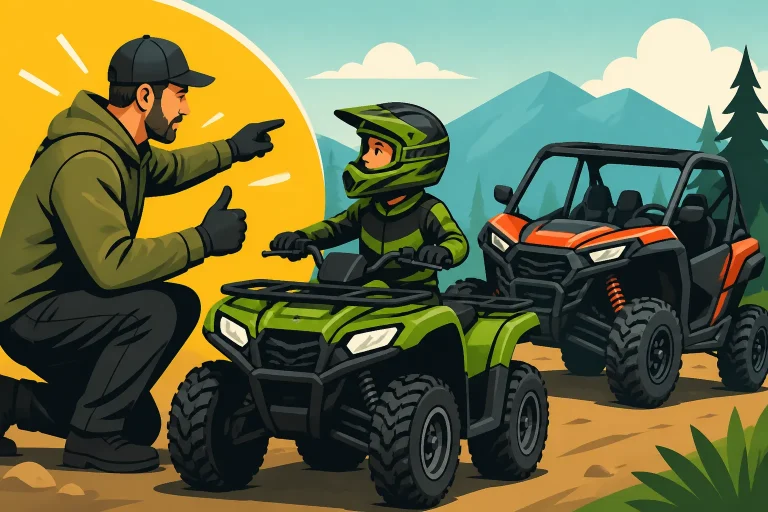
BC’s youth riding rules generally require a person under 16 to operate an off-road vehicle under the direct supervision of someone who is at least 19. A separate option is available to riders who are 14 or 15: they may operate without direct supervision if they meet the conditions for the exception, including having written permission from a parent or guardian and completing an approved training course.
That is the practical meaning of the written permission rule. It is not a general waiver of the youth rules, and a note from a parent does not by itself make an unsupervised ride lawful. The permission and the required training work together to allow a qualifying 14- or 15-year-old to ride without an adult continually supervising them. For the broader rules, see BC Supervision Required Under 16, BC Rules for a 14-Year-Old Rider and BC Rules for a 15-Year-Old Rider.
| Rider’s age | Usual supervision requirement | Route to riding without direct supervision |
|---|---|---|
| Under 14 | Direct supervision by a person at least 19 is generally required | The 14-and-15-year-old exception does not apply |
| 14 or 15 | Direct supervision is generally required unless the exception’s conditions are met | Complete the required approved training and have written parent or guardian permission |
| 16 or older | The under-16 supervision rule no longer applies | Other operating, land-access, equipment and safety rules still apply |
The exception is about supervision, not a blanket permission to ride any machine, anywhere, or in any way. The rider still needs to follow the rules that apply to the type of vehicle and the place they are riding. A site operator or land manager may also set conditions for access. Check those separately rather than assuming a parent’s letter covers them.
The 14-and-15-year-old exception also does not mean a young person is automatically ready to ride alone. It removes the legal requirement for direct adult supervision only when its conditions are met. A parent or guardian still needs to make a sensible judgment about the rider’s skill, maturity, route and ability to handle a problem far from help.
Who can give permission and what to put in the letter
The permission must come from a parent or guardian. A friend’s parent, an older sibling or a riding companion cannot substitute for that legal role simply because they are an adult. If guardianship or decision-making authority is shared, it is prudent to make sure the person giving permission has authority to do so and that any other relevant guardian understands the plan.
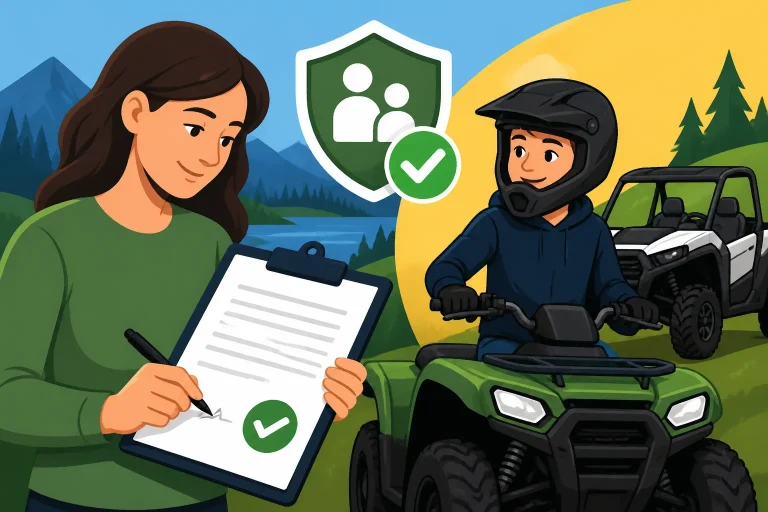
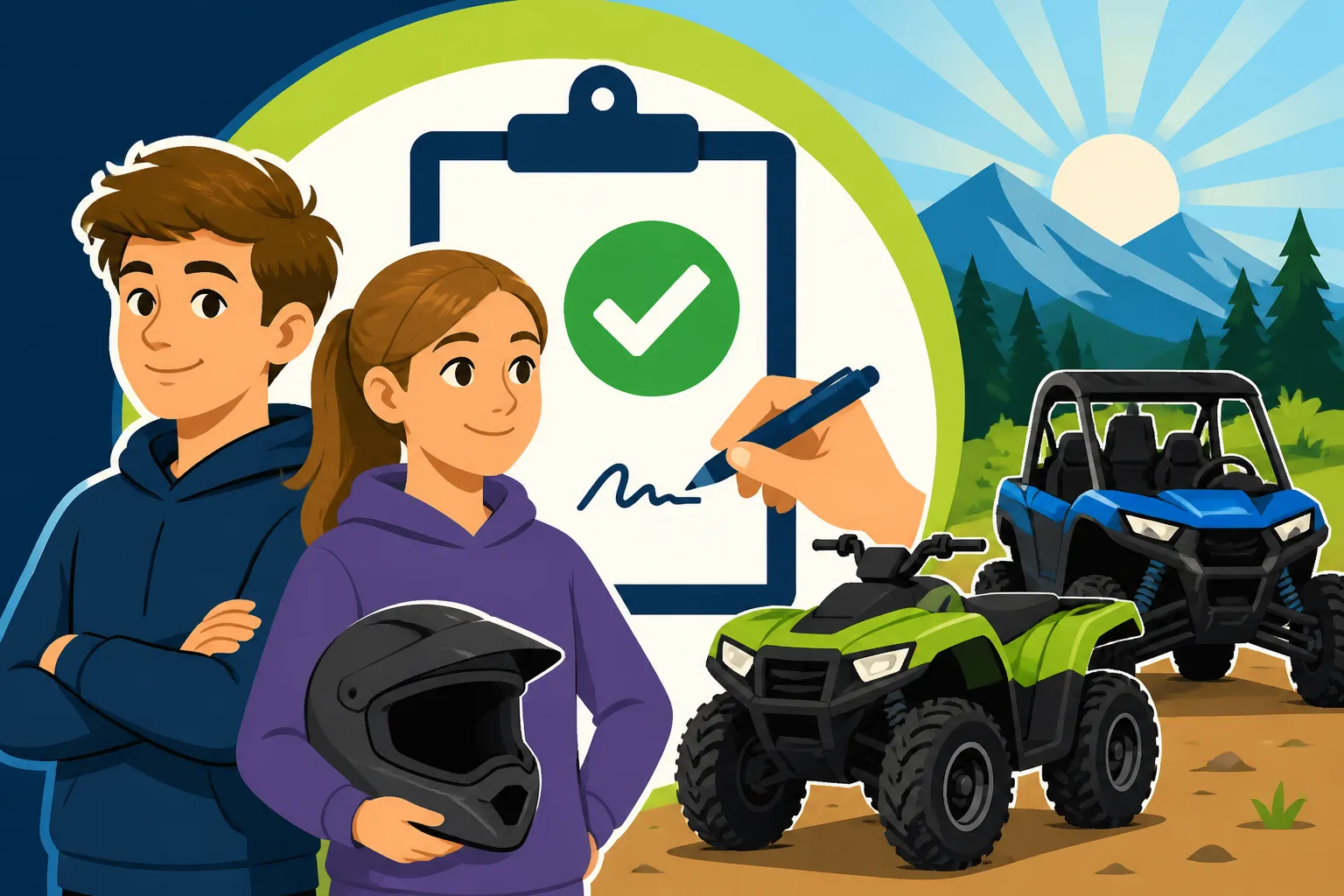
The rules are about written permission, not a special form that should be assumed to exist for every family or ride. A clear, signed letter is more useful than a casual text message because it can be shown if someone asks who authorized the ride. It should identify the young rider and make plain that the parent or guardian gives permission for that rider to operate an off-road vehicle without direct supervision under the applicable youth exception.
A practical letter can also include details that help avoid confusion, even if they are not all required elements of the legal permission. For example, it can name the machine or machine type, state the dates or period covered, and provide a way to contact the parent or guardian. Include the signing adult’s name and signature. If the rider has completed the qualifying course, keep the course certificate or other proof with the permission letter.
These extra details do not turn a family letter into a government-issued permit. Their purpose is to make the authorization understandable and easier to verify. A vague note that says “my child can ride” may leave questions about who is authorized, what permission was given, or whether the letter relates to the person holding it.
For guidance on preparing and carrying the written authorization, see BC Written Permission Letters. If the rider is relying on the exception, keep the documents accessible during the ride rather than stored at home or in a vehicle that is parked somewhere else. A paper copy avoids depending on cell service or a charged phone. A readable digital copy may be useful as a backup, but check what the person or site requiring proof will accept.
A simple preparation list is:
- Confirm that the rider is 14 or 15 on the day of the ride.
- Confirm that the rider has completed the training course required for the exception.
- Get written permission from the rider’s parent or guardian.
- Bring the permission and training proof along.
- Check that the particular machine, route and riding area are suitable and allowed.
Do not treat a permission letter as a replacement for registration documents, insurance proof, a trail pass, landowner consent or any other document that may apply. These serve different purposes. If the machine is being used where registration is required, the youth exception does not remove that requirement. See BC Registration Before Riding Crown Land for the registration question and BC Passes Exist Only at Managed Sites for the separate issue of site-specific passes.
The course requirement matters
A qualifying rider training course is part of the route that allows a 14- or 15-year-old to ride without direct supervision. Permission without the required training does not complete the exception. Nor should a parent assume that any online safety video, informal coaching session or course certificate automatically qualifies.
Before booking a course, check that the provider and course meet the current recognition requirements for the rule. Course recognition and machine-class coverage matter: a certificate for one type of vehicle may not necessarily establish that the young rider has completed training for every other type. For help checking the provider and course, see Which Rider Course Providers Are Actually Recognized and Certification for a Class of Machine.
A course is useful for more than satisfying a condition. It can help a young rider learn to inspect controls and equipment, understand safe stopping and turning, and make better decisions about terrain, speed and other trail users. Still, course completion is not proof that a rider can handle every machine or situation. A rider’s actual skills need to match the vehicle and the trip.
Keep whatever proof of successful completion the course provider issues. Check that the rider’s name is clear and that the document is legible. If a certificate is digital, download it in advance rather than relying on a connection at a trailhead. If the provider specifies how to verify or replace a certificate, follow those instructions.
If the course provider or a local authority gives you conflicting information about whether a course meets the exception, resolve that before the young person rides alone. Do not rely on a course being described as “ATV training” in general; confirm that it satisfies the relevant requirement and covers the machine the rider will use. For a young person who will not complete a qualifying course, the ordinary direct-supervision rule remains the safer planning assumption.
Permission does not make every machine or ride suitable
Even with the letter and course in hand, choosing the right vehicle is a separate responsibility. A machine may be too powerful, heavy or large for a young rider to control confidently. The vehicle manufacturer’s age and size guidance is an important starting point, not a minor detail to set aside because the young person has ridden before. See [BC Manufacturer Age and Weight Rules].
Check that the rider can reach and operate the controls, turn the vehicle, stop it predictably and manage its weight on the ground. A short, controlled practice ride on appropriate terrain is a better test than finding out on a steep, narrow or unfamiliar trail. A UTV’s steering wheel and seat belts do not automatically make it suitable for a young operator; its size, power, visibility and handling still matter.
The adult who signs permission should think through the ride itself. A route that is straightforward for an experienced adult may have hazards that are difficult for a young rider to judge: blind corners, loose descents, deep mud, water crossings, drop-offs, traffic, or a long distance from help. Plan a route that matches the rider’s ability and the machine’s capabilities. Agree on where the rider is going, who is riding with them, when they are expected back, and what to do if the group is delayed or separated.
“Without direct supervision” does not mean “without planning or support.” A young person riding with a group may have other riders nearby without one of them acting as the legally required direct supervisor. But the group should still know the young rider’s skill level and have a plan for breakdowns, injuries, changing weather or a route that becomes unsafe. On remote rides, limited cell coverage can make a small problem harder to resolve, so a route plan and suitable emergency preparation matter.
The permission exception also does not cancel passenger restrictions. A child operator cannot use the letter as permission to carry a passenger where the youth rules prohibit it. Check [BC Children Cannot Carry Passengers] and the vehicle manufacturer’s passenger guidance. A passenger’s presence changes the risk and the demands on the young rider, even where the machine is designed to carry more than one person.
Where the rule applies and what it does not replace
Before setting out, check which rules apply to the land and route. A permission letter deals with the parent or guardian’s authorization for the youth exception; it does not grant access to private land, open a closed road or override a trail manager’s restrictions. On private property, get the owner’s permission and check any site rules. On Crown land, confirm access, closures and any local restrictions. See BC Rules for Riding Private Land and BC Rules for Riding Crown Land.
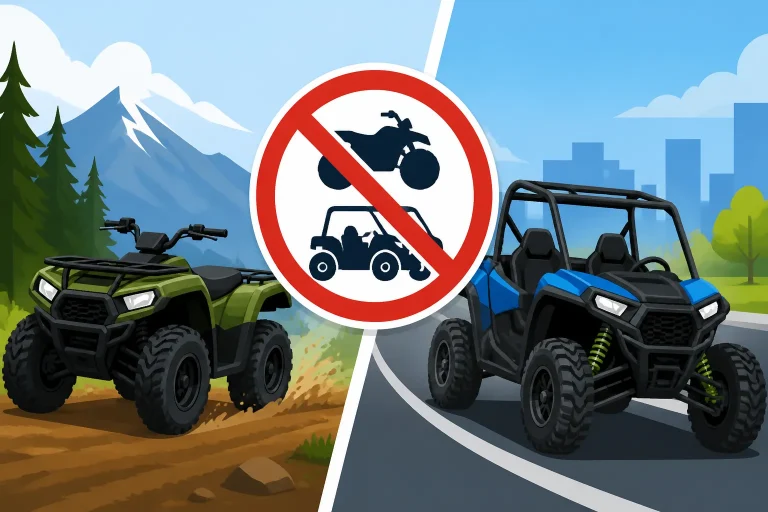
The type of road matters too. A Forest Service road can have industrial traffic and specific operating requirements. A youth’s permission letter does not replace any applicable road rules, equipment requirements or insurance obligations. Review BC Forest Service Road Requirements before planning a ride on one. Likewise, an ATV or UTV is not made road legal by a parent’s permission. The rules for highways and crossings are separate; see BC Has No Street-Legal Path for an ATV if the route includes public roads.
A rider must also comply with safety requirements that apply to the machine. For example, the youth exception does not remove helmet requirements for an ATV rider. Check BC Helmet Law Covers Every Rider and make sure the helmet fits properly and is in good condition. A UTV’s restraints and protective structure have their own relevance, but they should not be mistaken for a general exemption from the rules that apply to a particular vehicle or place.
A useful way to keep the paperwork straight is to separate the questions:
| Question | What to check |
|---|---|
| Can this 14- or 15-year-old ride without direct supervision? | Required training and written parent or guardian permission |
| Is this the right machine for the rider? | Controls, size, capability, manufacturer guidance and the rider’s actual skill |
| Is the route open and appropriate? | Land access, closures, site rules, terrain and road conditions |
| Are the vehicle and rider otherwise compliant? | Registration, insurance, helmet or restraint rules, and any road-specific requirements |
| Can the rider prove the exception? | Permission letter and evidence of course completion, carried during the ride |
If any part is uncertain, pause before the ride and confirm it with an appropriate official source, course provider or land manager. A parent’s letter can answer one narrow question; it cannot resolve every issue that comes with operating an off-road vehicle.
A practical check before riding alone
For a family, the cleanest approach is to complete the legal and safety checks in advance, not at the trailhead. Confirm the rider’s age, the training requirement and the permission document first. Then check the machine, the route and the other rules for that location. If the rider is not qualified for the unsupervised exception, arrange direct supervision by an adult who meets the age requirement instead.
Use this final check before the young rider operates without direct supervision:
- Age: The rider is 14 or 15.
- Training: They have successfully completed a course that qualifies for the exception, and the course is appropriate to the machine.
- Permission: Their parent or guardian has provided clear written permission.
- Proof: The rider has the permission and training evidence with them.
- Machine: The vehicle is suitable for the rider’s size, ability and experience.
- Passengers: The rider will not carry a passenger if youth rules prohibit it.
- Location: The land is open to riding, access is authorized, and local restrictions are understood.
- Safety: Required protective equipment is available, and the rider has a realistic route and emergency plan.
This checklist is not a substitute for the actual legal requirements. It is a way to catch common gaps before anyone starts the engine. The most frequent misunderstanding is treating parental permission as the whole exception. It is only one part: the rider must also meet the training condition, and the rest of the operating rules still apply.
Frequently Asked Questions
Can a 14-year-old ride an ATV alone in BC with a parent’s note?
Not on the note alone. The 14- or 15-year-old exception also depends on completing the required approved training. The rider must meet both conditions to operate without direct supervision under that exception.
Does the letter have to be on a government form?
Do not assume that a special government form is required. A clear written permission from a parent or guardian is the key point. Include enough information to identify the rider and make the authorization clear, and carry it with proof of course completion.
Can a 15-year-old ride without a supervisor after taking any ATV course?
Not necessarily. Confirm that the course and provider meet the recognition requirements for the exception and that the course applies to the machine involved. A general safety course should not be assumed to qualify.
Does written permission let the rider take a passenger?
No. The permission concerns the supervision exception; it does not cancel passenger restrictions or manufacturer guidance. Check the rules for youth operators and the specific machine before carrying anyone.
Disclaimer
This article is for general informational purposes only and does not constitute professional advice. Laws, prices and regulations vary by location and change over time. Consult a qualified professional for guidance on your specific situation.