Supervision by Someone Nineteen
A young rider may be ready to handle an ATV or UTV, but BC’s age rules still matter: in many cases, the rider needs supervision from someone at least 19 years old. The key is knowing who qualifies, what supervision means in practice, and when a narrow exception may apply—without assuming that adult presence alone makes every ride legal.
Who can supervise a young ATV or UTV rider in BC
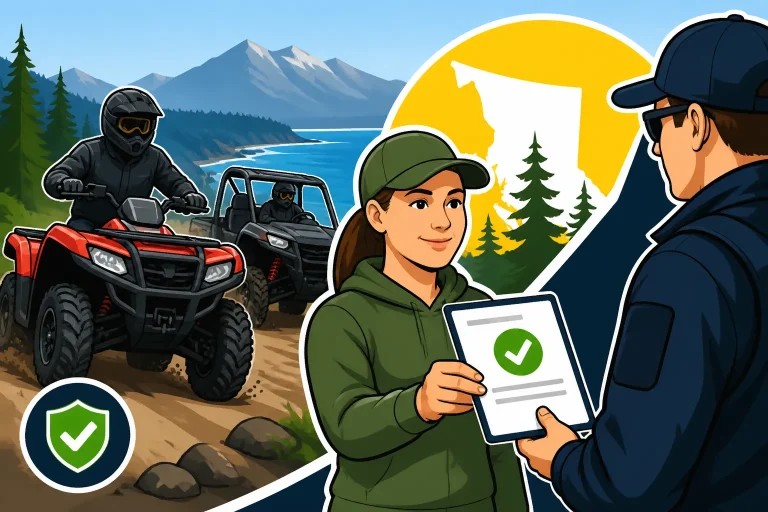
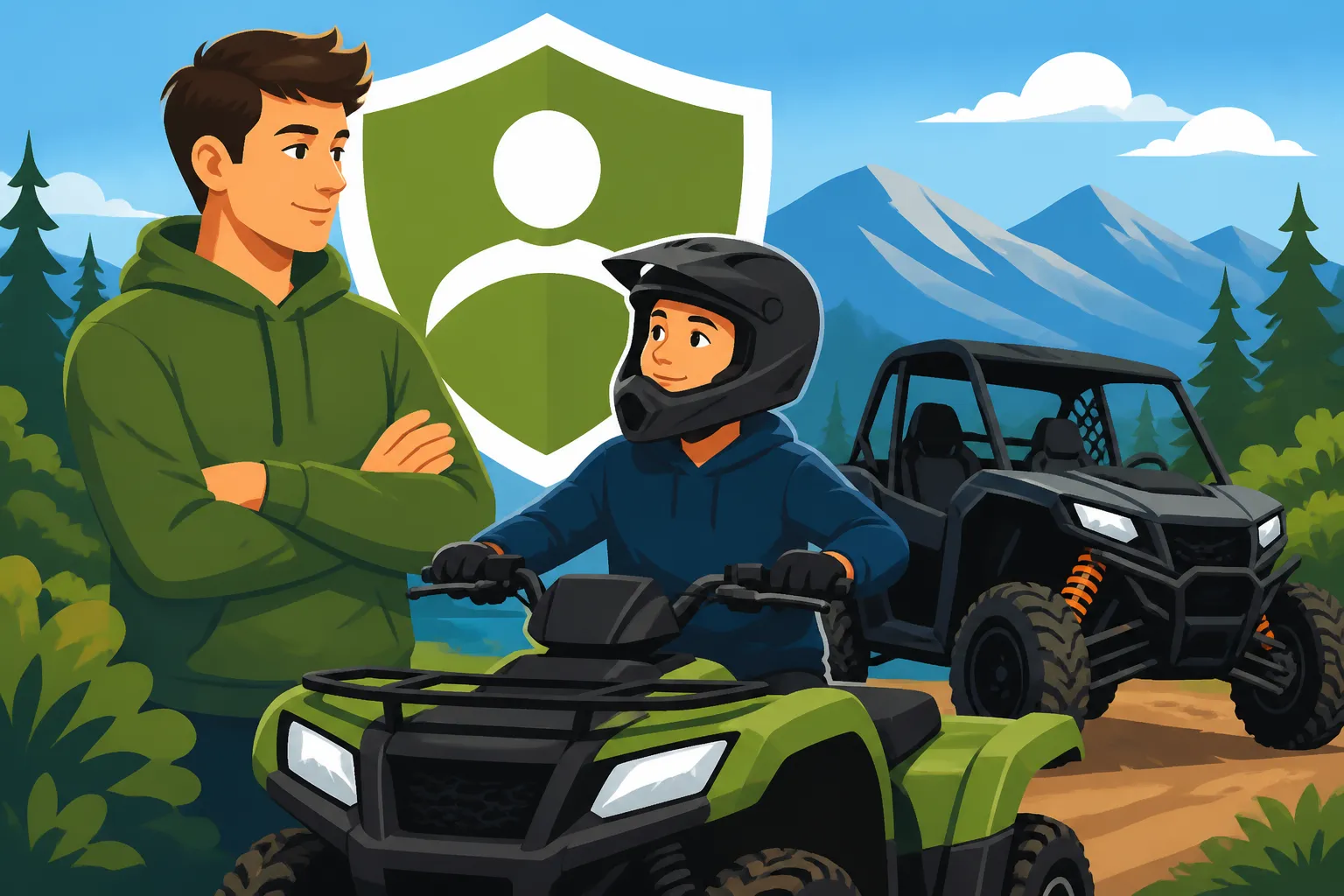
BC’s general rule requires a person under 16 to be supervised while operating an off-road vehicle by someone who is at least 19 years old. That age threshold is about the person supervising, not their relationship to the child. A parent, relative, family friend or other responsible adult may qualify if they meet the age requirement and can actually supervise the ride.
An adult who is 18 does not meet the 19-year threshold, even if they have years of riding experience or the young operator is their own child. Nor is it enough to appoint an adult who is 19 or older but leave them somewhere they cannot see or direct the rider. The rule is about active supervision, not simply having an adult on the property or in the riding group.
The general rule and its possible exceptions are covered in BC Supervision Required Under 16. The central practical question is whether the adult can keep the young operator within view and give direction promptly. A supervisor who cannot see the rider around a bend, through trees or across a large riding area may not be in a position to supervise them effectively. See BC’s Visible and Immediate Direction Test for more on what that means.
A supervisor should also be able to pay attention. If they are operating their own machine at speed, guiding another group, distracted by a phone or separated from the young rider, their age alone does not establish meaningful supervision. The adult should know where the child is, watch how they are riding and be able to intervene with clear instructions when needed.
Supervision does not mean that the adult can make an unsuitable machine safe, override a posted closure or give the child permission to use land they are not allowed to access. It is one part of the rules for youth riding, not a general authorization to ride anywhere. The young operator still needs a machine appropriate for their size and ability, and riders must follow the rules that apply to the place and type of machine.
| Situation | What to check |
|---|---|
| Rider is under 16 and does not qualify for an exception | A supervisor must be at least 19 and able to supervise effectively |
| Potential supervisor is 18 | They do not meet the general age threshold |
| Adult is 19 or older but out of sight | Their age alone does not satisfy the practical supervision test |
| Rider is 14 or 15 | Check whether the training and written-permission exception applies |
| Rider is 16 or older | The under-16 supervision rule no longer applies, but other requirements still do |
For a particular age, BC Rules for a Child Under 16 provides broader context. The details can differ depending on whether the rider is 13, 14 or 15, so it is worth checking the age-specific rules rather than treating every child as though the same exception applies.
What supervision means on the trail
In practical terms, supervision requires the adult to stay close enough and attentive enough to see the young operator and give directions right away. The adult does not necessarily have to be on the same machine. A supervisor may be riding another ATV or UTV, for example, provided the arrangement allows them to keep the child in view and direct them promptly.
Whether that works depends on the trail and the group. On an open, familiar route, an adult riding just ahead or behind may be able to watch a young operator. On a winding forest trail, a steep hill or a route with several forks, riders can disappear from view quickly. If the adult cannot tell where the child has gone, they cannot reliably supervise them.
A useful plan is to agree on who is supervising before starting, where the adult will ride in relation to the child, and what the group will do if someone loses sight of the rider. Keep the group together at intersections and do not let a young rider travel out of sight to catch up. If the terrain, dust, vegetation or group size makes supervision difficult, slow down or choose a route that is easier to manage.
Does the adult need to ride along?
Not necessarily. The important issue is whether the adult can provide effective supervision, rather than whether they are riding on the same vehicle. The arrangements still need to let the adult keep the young operator in view and give immediate direction. Does the Supervising Adult Have to Ride Along? addresses this distinction.
A young rider should not be left to travel independently on the assumption that an adult somewhere in the group is “in charge.” If the supervising adult is too far ahead, takes a different route or cannot see the child, the group’s general presence may not be enough. Make the supervision plan specific to the route and conditions.
Can a passenger act as the supervisor?
Do not assume that an adult sitting behind a young operator automatically makes the ride compliant. A passenger may be able to observe and direct the driver, but the question remains whether they meet the age requirement and can supervise in the circumstances. A passenger position also does not make a machine appropriate for a child who cannot safely reach or control its operating equipment.
Check the vehicle manufacturer’s minimum age, weight and passenger guidance before putting a child on a machine. These are separate safety considerations from the supervision rule. Manufacturer Age and Weight Guidance explains why the machine’s design and fit matter as much as the rider’s age.
The limited option for some 14- and 15-year-olds
Some riders aged 14 or 15 may qualify to operate without the usual adult supervision if they meet the applicable training and written-permission requirements. This is a limited exception, not a blanket rule that lets every teenager ride alone. A rider should not rely on verbal permission, informal lessons or the fact that they have ridden for years as a substitute for checking the required conditions.
Before using the exception, confirm what counts as acceptable training for the machine and situation, who must provide written permission, and what proof the rider should carry. Requirements and accepted documentation can matter when a young rider is checked. The details are explained in BC’s Written Permission Rule at 14 and 15, with additional guidance in BC Rules for a 14-Year-Old Rider and BC Rules for a 15-Year-Old Rider.
If the young operator has not met every condition for the exception, use the general rule: have a supervisor who is at least 19 and able to keep the rider in sight and direct them immediately. When you are unsure whether training or permission qualifies, confirm the requirements with an appropriate official source before the ride. Do not treat a parent’s approval by itself as proof that an exception applies.
Even when a teenager can ride without direct adult supervision under an exception, that does not remove other responsibilities. The rider still needs a suitable machine, permission to access the land, and any required registration or insurance. A parent or guardian should consider the rider’s judgment and experience, the route, weather and distance from help—not just whether the legal conditions appear to be met.
Before you ride: make a supervision and access plan
A short check before leaving can prevent confusion about who is supervising and whether the ride is allowed. Use this process:
- Confirm the rider’s age and status. If the operator is under 16, determine whether the general supervision rule applies or whether a 14- or 15-year-old meets the exception’s requirements.
- Choose a qualifying adult. For the general rule, make sure the supervisor is at least 19. Agree on who has responsibility for the young rider rather than assuming another adult will take over.
- Plan how to stay in view. Match the adult’s position and pace to the child’s ability and the route. Stop at turns or trail junctions and regroup if anyone loses sight of the rider.
- Check the machine and riding gear. Confirm the machine fits the operator, passengers are allowed, and each rider has the required protective equipment. BC Helmet Law Covers Every Rider explains the helmet requirement.
- Check access and registration separately. Supervision does not make a closed road or restricted area open to ORVs. For Crown land or a resource road, check the applicable access rules and confirm the machine is properly registered when required. See BC Registration Before Riding Crown Land.
- Carry any required documents. If relying on training or written permission, check what proof should be available during the ride and keep it accessible.
Choose a route the young operator can handle, not simply one the adult can ride. A supervisor who is trying to keep pace with an inexperienced child on challenging terrain may have less ability to watch and direct them. Lower speed, fewer riders and clear regrouping points make supervision more workable.
The age threshold is straightforward: for the general rule, the supervisor must be at least 19. The harder part is making sure the adult can genuinely supervise throughout the ride. Check the exception carefully if the rider is 14 or 15, and remember that supervision does not replace the separate rules for machine suitability, helmets, access and registration.
Disclaimer
This article is for general informational purposes only and does not constitute professional advice. Laws, prices and regulations vary by location and change over time. Consult a qualified professional for guidance on your specific situation.