Where a Young Rider Takes a Training Course
A young rider may need more than a few practice laps before riding an ATV or UTV in British Columbia. The challenge is finding training that fits the child, the machine and any age-based legal conditions—not just a course that hands out a certificate. Here’s where to look, what to ask before booking and how to keep training separate from permission to ride.
Where to look for a young rider course
Start with organizations that teach off-road vehicle safety, rather than assuming a general driving school or an online video course will qualify. In BC, useful leads may include local ATV clubs, safety-training organizations, and dealerships that can refer families to instructors. Some providers offer youth-focused or family sessions; others mainly train adults who operate machines for work.
A local club can be a practical first contact because members may know who teaches in the area and what kind of training is available. A dealer may also know of nearby instructors, but a referral is not proof that a course meets a legal requirement. Ask the instructor or course provider directly, and verify important eligibility details independently before you rely on a certificate.
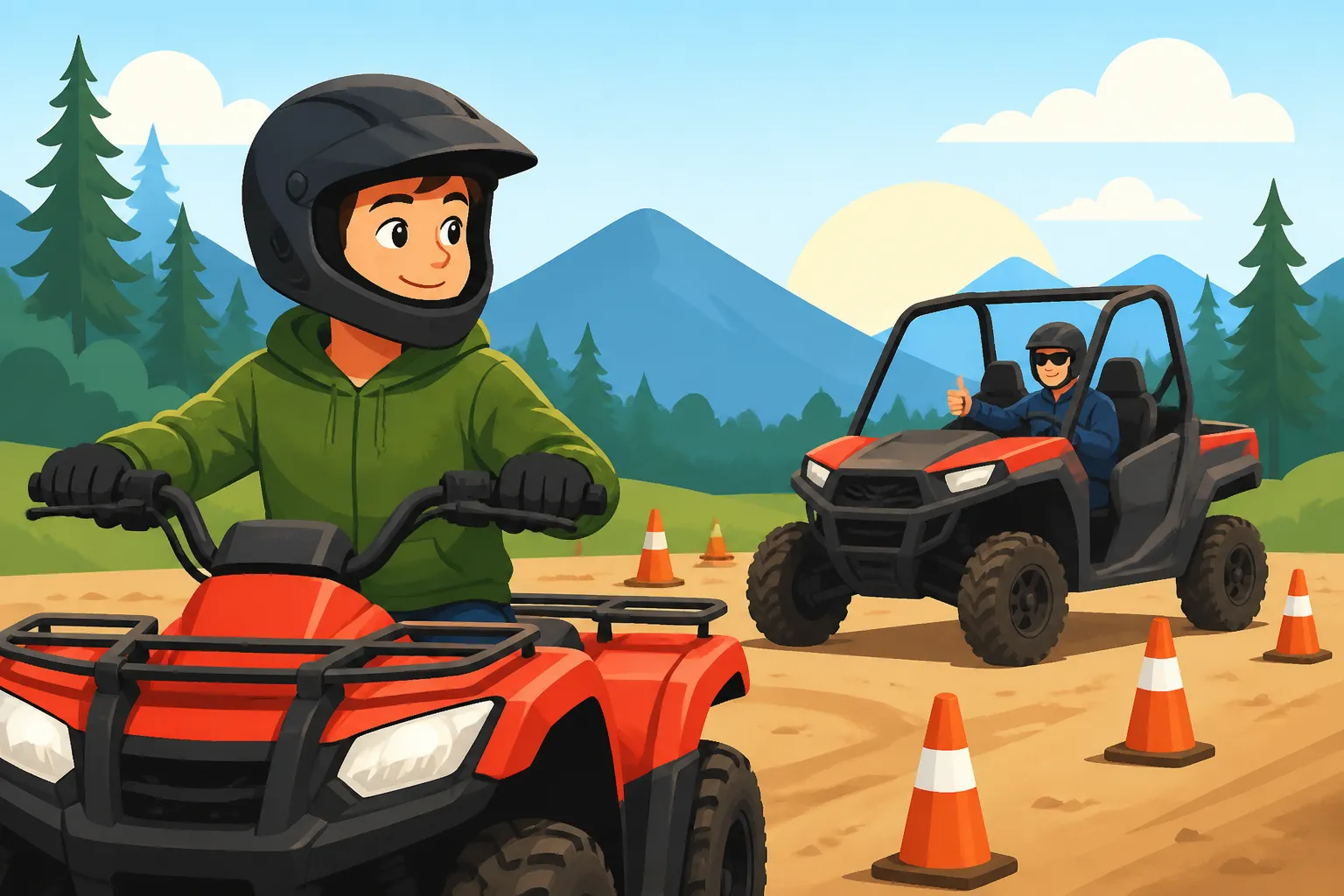
The course might take place at a training site, a managed riding area or another location selected by the provider. Don’t assume a public trail is a suitable training ground. A controlled area gives an instructor more opportunity to teach basic controls and safe habits without mixing a new rider into unfamiliar terrain or other trail traffic.
If you are comparing options, the broad overview in BC ATV Safety Training Options can help you understand the kinds of training available. For a young rider, though, the key question is narrower: Does this exact course count for the legal purpose you have in mind, for this rider and this type of machine? That is worth asking before paying or travelling.
| Where to ask | What the contact may help with | What to verify |
|---|---|---|
| Local ATV club | Names of instructors or nearby course locations | Whether the specific course meets any youth-related requirement |
| Safety-training organization | Course format, instructor qualifications and equipment expectations | Whether the course is accepted for the intended legal purpose |
| Dealership | Local referrals and machine-specific operating guidance | Whether the referral is for formal training, not just a demonstration |
| Course provider | Schedule, minimum age, machine class and practical content | Whether the provider can explain exactly what certification is issued |
A course that teaches useful skills is not automatically a course that satisfies a particular legal condition. The distinction matters if a family is considering whether a young rider can operate without an adult directly supervising them. For questions about providers and recognition, see Which Rider Course Providers Are Actually Recognized.
Check the age rule before you book
Course planning should begin with the rider’s age and the way they will be riding. BC has specific rules for people under 16 operating off-road vehicles. Adult supervision is a central part of those rules, and a course certificate should not be treated as a blanket substitute for supervision.
For some riders aged 14 or 15, written permission from a parent or guardian and qualifying safety training may form part of a route to operating without direct adult supervision. The exact conditions matter. A training card on its own may not be enough, and a provider’s certificate should not be assumed to meet the requirement just because the course covers ATV safety.
Before booking, review BC Supervision Required Under 16 and BC’s Written Permission Rule at 14 and 15. If the rider is 14, also check BC Rules for a 14-Year-Old Rider; for a 15-year-old, see BC Rules for a 15-Year-Old Rider. These distinctions can affect what a family needs to arrange before riding.
Ask the provider questions such as:
- Is this course intended for young riders, and what is the minimum age?
- Does it include supervised, hands-on practice, or is it classroom or online instruction only?
- What machine types or classes does the course cover?
- What document or certificate does the rider receive?
- Is the course specifically accepted for the youth requirement we are trying to meet?
- If you cannot confirm that, which official source should we check?
Get the answer in writing if the family plans to rely on the course for a legal condition. Keep the course record, but also keep any required parental permission and make sure the rider follows the applicable supervision rules. If the provider is uncertain about recognition, treat that as a reason to pause and verify—not as proof that the course will count.
Even where training is relevant to a youth rider’s legal options, it does not remove other responsibilities. The machine must suit the rider, and the adult responsible for the ride still needs to choose an appropriate area, set clear limits and make sure the child can follow instructions. BC Youth Riding Rules Explained provides more context on how these requirements fit together.
What a useful course should teach
A good course should help a young rider make sound decisions, not merely memorize where the throttle and brakes are. Training should be suited to the rider’s size, maturity and experience. A smaller youth quad and a full-size ATV or side-by-side do not present the same operating challenges, so ask whether the course content matches the machine the child will use.
Look for a course that combines clear instruction with practical exercises, when available. Depending on the program, useful subjects may include:
- Identifying controls and understanding how the machine responds
- Starting, stopping and turning at a controlled pace
- Choosing a safe riding position and handling slopes cautiously
- Recognizing hazards such as loose surfaces, ruts, blind corners and water
- Knowing when to stop rather than trying to push through a difficult section
- Communicating with an adult or riding group
- Basic pre-ride checks and protective equipment
A course may teach general skills without covering every local rule or every trail condition. Ask what it does not cover as well as what it does. For example, an introductory session may not prepare a child for a steep, narrow trail, deep mud, a creek crossing or interaction with industrial traffic. Training is a starting point; the first rides should still be simple and closely supervised.
Machine fit deserves particular attention. A young rider should be able to reach and use the controls comfortably, understand how to stop the machine and follow instructions consistently. Don’t choose a machine based only on age or appearance. The manufacturer’s guidance on minimum age, size or weight can be important; see BC Manufacturer Age and Weight Rules.
The course should also make clear that learning a skill does not mean a rider is ready to use it everywhere. A child who can complete a turning exercise in an open training area may still need an adult close by on an unfamiliar trail. The adult should choose conditions that match the rider’s current ability, not the rider’s confidence alone.
If the available course is workplace-oriented, ask whether it is appropriate for a recreational youth rider. Some programs may be designed around adult workers, particular equipment or job-site hazards. They can still teach useful principles, but the course’s audience and certificate may not match what a family needs. Rider Training From a Forest Safety Organization and Taking a Rider Course Through a Safety Council offer related context for comparing training routes.
Before the course and after it
Before registering, describe the rider honestly to the provider: age, experience, approximate size and the machine they will use. Ask what the family must bring and whether the provider supplies a machine and protective gear. If the course requires the rider to use a family machine, confirm that it is suitable and in good working order before the session.
A simple checklist can prevent avoidable problems:
- Confirm the rider meets the provider’s age and participation requirements.
- Verify whether the course is accepted for the specific legal purpose, if that matters.
- Ask about the course location, practical riding time and equipment requirements.
- Check that the machine is an appropriate size and type for the rider.
- Bring any requested paperwork, including permission documents if applicable.
- Keep the completion record and note exactly what course or machine class it covers.
After training, build confidence gradually. Start in a quiet, open area where the adult can observe closely and give immediate direction. Keep rides short enough that the child can stay focused. Add complexity only when the rider can control the machine reliably and make safe decisions without being rushed.
A certificate does not mean the child is ready for every route, nor does it automatically authorize riding in places where the vehicle is restricted. Registration, access rules, equipment requirements and supervision may still apply. Before taking a young rider onto Crown land or a forest service road, check the relevant rules and route conditions. The articles BC Rules for Riding Crown Land and BC Forest Service Road Requirements can help with that next step.
Keep the course record with the family’s riding documents, but don’t rely on a photo of a certificate as the only preparation. Make sure the adult knows the supervision conditions, the child understands the ride plan, and everyone knows when to stop. If a provider cannot clearly explain what its certificate does and does not establish, get confirmation from an appropriate official source before treating it as proof that the rider can operate unsupervised.
Disclaimer
This article is for general informational purposes only and does not constitute professional advice. Laws, prices and regulations vary by location and change over time. Consult a qualified professional for guidance on your specific situation.