Can a 14-Year-Old Ride Alone in BC?
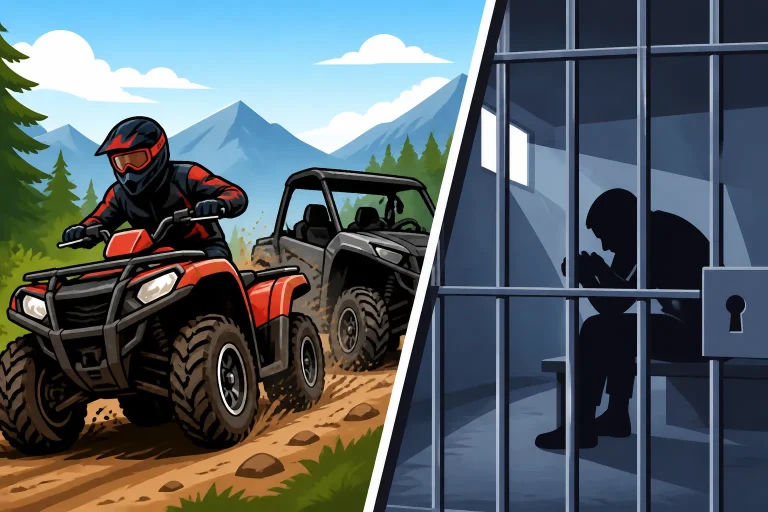
A 14-year-old can ride an ATV in BC without an adult supervising only if specific youth-riding conditions are met. Written permission and recognized training are central, but they do not make every machine, trail or road ride legal. Here’s how to understand “alone,” what to check before a ride, and when an adult must still supervise.
When a 14-year-old can ride without an adult supervising
In BC, a person under 16 generally needs supervision from an adult who is at least 19 while operating an off-road vehicle. There is an exception for riders who are 14 or 15: they may operate without that adult supervision if they meet the applicable training and written-permission requirements.
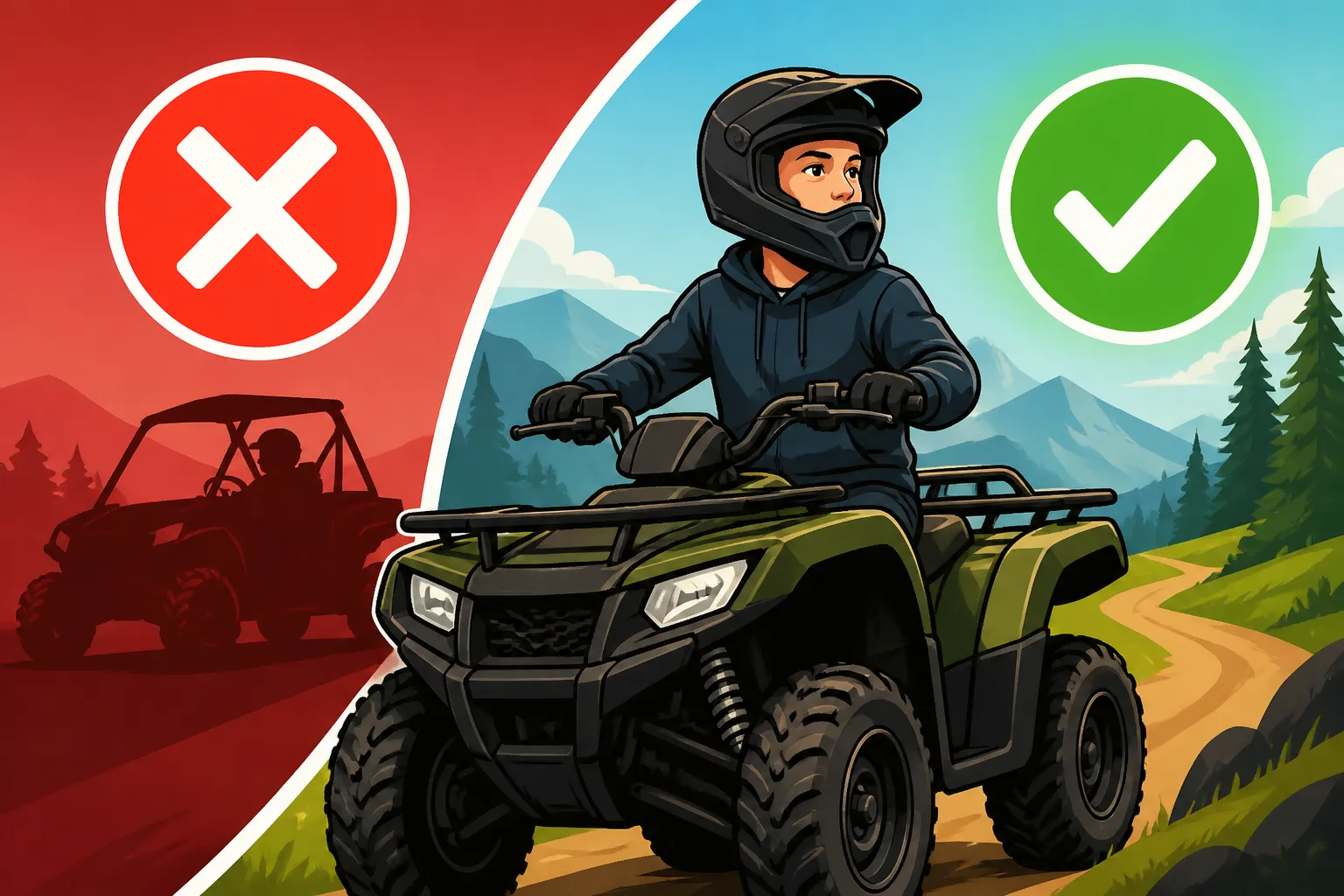
So the short answer is yes, a 14-year-old may be allowed to ride without an adult supervising, but age alone does not grant that permission. The rider must have written permission from a parent or guardian and must complete an approved safety course that applies to the class of machine they will operate. Check that the course is recognized for this purpose before enrolling; a general riding lesson or online safety video may not satisfy the rule. For the details, see BC Rules for a 14-Year-Old Rider and BC’s Written Permission Rule at 14 and 15.
“Alone” also needs a little unpacking. The exception concerns adult supervision of the rider. It does not override other requirements, give the rider permission to go anywhere, or change restrictions on passengers. Nor does it mean that riding far from help is a good idea. A young rider can meet the legal conditions and still be unready for a remote route or a demanding machine.
| Situation | What to check |
|---|---|
| 14-year-old riding without adult supervision | Written permission from a parent or guardian and the required recognized safety training |
| Rider under 16 without both parts of the exception | Supervision by an adult who is at least 19 |
| Any rider heading out on a machine | Appropriate machine, permission to access the land, and applicable registration, equipment and insurance rules |
| Any ride involving a highway or road | Separate rules; youth permission does not make an ATV street-legal |
The main distinction is between operating with supervision and qualifying to operate without it. If a 14-year-old does not have the required permission and training, the safer approach is to treat adult supervision as necessary, rather than assume that parental approval by itself is enough. The broader rules are covered in BC Youth Riding Rules Explained and BC Supervision Required Under 16.
What the permission and training conditions mean
Written permission is not the same as supervision
Written permission comes from a parent or guardian. It is one part of the exception for some 14- and 15-year-old riders; it does not replace the training requirement. A casual verbal “yes” is not a reliable substitute for written permission.
Before a ride, make sure the permission clearly identifies the young rider and is available to show if questions arise. Check the current official requirements for what the written permission must say and whether the rider should carry it. Don’t assume that a permission letter also grants access to private land, authorizes use of a managed trail, or satisfies a site-specific pass requirement. Those are separate questions.
The course has to count for the machine
The training requirement is not simply “has ridden before.” Confirm that the provider and course are recognized for the purpose of the youth-riding exception, and that the training covers the type or class of machine the 14-year-old plans to use. A course for one type of vehicle may not automatically qualify a rider to operate another. Which Rider Course Providers Are Actually Recognized and Certification for a Class of Machine can help you identify what to verify.
Useful questions to ask the course provider include:
- Is this course recognized for a 14- or 15-year-old to operate without adult supervision in BC?
- Does it qualify the rider for this particular class of machine?
- What proof of successful completion does the rider receive?
- Is there any minimum age, machine-size or other eligibility condition?
Keep the completion record somewhere it can be found, and check whether the course provider or relevant authority recommends carrying proof while riding. Do not rely on a course advertisement that promises general ATV experience without confirming that it meets the rule.
If the exception is not met, supervision still matters
For a rider under 16 who is not relying on the exception, supervision is not just having an adult somewhere in the group. The supervising adult must be at least 19 and able to keep the rider in view and provide immediate direction. A parent waiting back at the staging area, following in a vehicle on another route, or staying in touch by phone may not meet that practical test. The details of the supervision requirement are explained in BC’s Visible and Immediate Direction Test.
If there is uncertainty about whether a particular arrangement counts, don’t stretch the interpretation. Have the adult ride with the young operator, remain close enough to observe and direct them, or postpone the ride until the requirements for unsupervised operation are clearly met.
Permission does not override machine, land or riding rules
Meeting the youth exception answers only one question: whether the 14-year-old can operate without an adult supervising under the youth rules. It does not settle whether the machine can be ridden on a particular route or whether the rider’s setup is safe.
Choose a machine the rider can control
Match the vehicle to the rider’s size, strength and experience, not simply their age. A machine that is too heavy or powerful can be difficult to steer, stop or recover if it tips. Follow the manufacturer’s age, weight and passenger guidance for the exact model. A small youth quad is not automatically appropriate for every 14-year-old, and an adult-sized ATV is not automatically suitable just because the rider has completed a course.
Before leaving, the rider should be able to show that they can:
- Reach and operate the controls without shifting dangerously on the seat.
- Start, stop and turn smoothly on suitable ground.
- Control the machine at low speed and respond to changing terrain.
- Explain what to do if the machine stalls, tips or becomes stuck.
- Stop riding and seek help when visibility, weather or trail conditions deteriorate.
If they cannot confidently manage those basics in a controlled area, solo operation is a poor next step even if the legal conditions are satisfied.
A solo operator does not automatically have permission to carry someone
Passenger rules are separate from the right to operate without adult supervision. A machine must be designed for a passenger, and the rider must meet the applicable passenger and manufacturer requirements. A child operator may also face restrictions on carrying passengers. Do not add a sibling or friend simply because the machine has a second seat; check the rules that apply to both the operator’s age and the vehicle. See BC Rules for Passengers on a Quad or BC Rules for Riding a Side-by-Side.
For a first ride without an adult supervising, a single rider is usually the simpler arrangement to assess. Adding a passenger changes the handling and weight of the machine and can make an emergency harder to manage.
Check where the ride will take place
Land access and vehicle rules depend on the location. Private land requires the landowner’s permission. Public access does not mean every road, trail or recreation area is open to motorized use, and closures can change. Check current notices and local restrictions before setting out.
Registration requirements also depend on where and how the machine is being used. Before riding on Crown land, confirm that the machine’s registration and documents meet the applicable rules; BC Registration Before Riding Crown Land explains why that check matters. Managed sites may have their own passes or operating conditions, and a youth-riding exception does not waive them.
An ATV is not made street-legal by parental permission, safety training or an adult riding nearby. Highway travel and road crossings are governed by separate rules. If the route requires access to a road, confirm the permitted method before leaving the staging area; don’t let a rider continue onto a road on the assumption that an off-road permission covers it.
Do a simple readiness check before the ride
For a 14-year-old operating without adult supervision, a conservative plan matters as much as paperwork. Choose a familiar, appropriate route and make sure someone responsible knows where the rider is going and when they are expected back. Set a clear turnaround time and a rule for stopping if the rider loses the route, encounters an unexpected closure or has a mechanical problem.
Before departure, check:
- Eligibility: The rider’s age, written permission and recognized course completion meet the conditions for unsupervised operation.
- Machine: The model suits the rider, is in sound condition and is used within manufacturer guidance.
- Protective equipment: The rider has properly fitting required protective gear, including an appropriate helmet, and understands how to use it.
- Route: The trail or land is open to motorized use, and the rider has permission or any required site pass.
- Documents and coverage: Registration, insurance and any required proof are in order for the planned location.
- Communication and plan: The rider knows the route, check-in plan and what to do if the trip cannot continue.
A phone can help where there is coverage, but it is not a substitute for planning in areas where service is limited. For a young person riding without an adult beside them, start with a route where the risks and exit options are well understood. If conditions change, turn back rather than treating the plan as a promise to finish.
A practical answer for parents and young riders
A 14-year-old in BC may be able to ride an ATV without adult supervision, but only after meeting the written-permission and recognized-training conditions for the youth exception. If either condition is missing or uncertain, don’t assume the rider qualifies. Arrange supervision by an adult who is at least 19, can keep the young operator in view and can give immediate direction.
Even when the exception applies, check the machine, passenger restrictions, land access, registration, insurance and route rules separately. Legal permission is a starting point, not a guarantee that a particular ride is suitable. A cautious first ride, a manageable machine and a clear plan give a young operator a better chance of making sound decisions when conditions are not ideal.
Disclaimer
This article is for general informational purposes only and does not constitute professional advice. Laws, prices and regulations vary by location and change over time. Consult a qualified professional for guidance on your specific situation.