BC Resource Road Signage
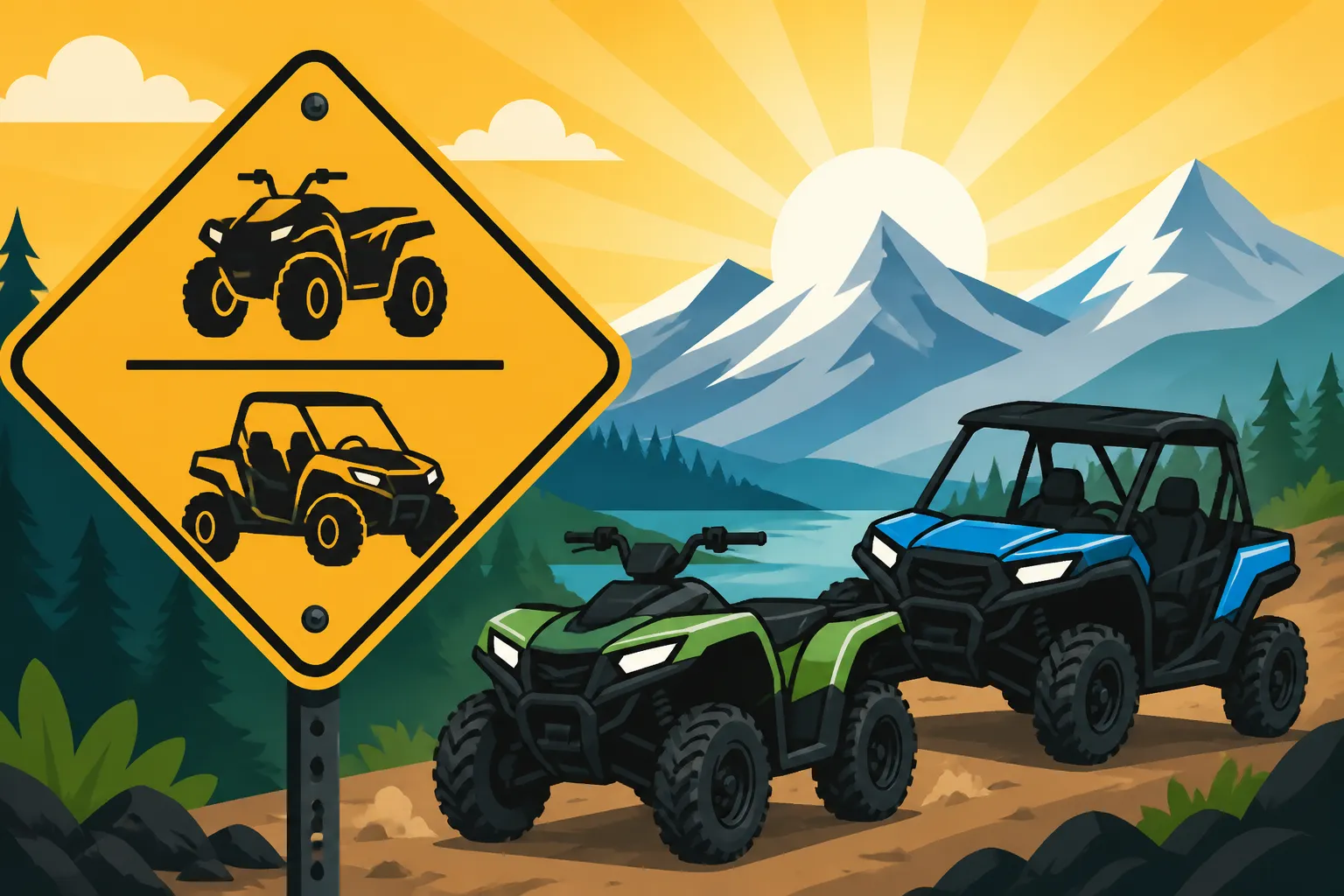
Resource road signs can be easy to miss when you are focused on the trail, but they may be the clearest warning that a road is closed, hauling is active or a radio procedure applies. In BC, knowing what signs tell you—and what they don’t—helps you decide whether to continue, slow down or turn around before a ride becomes unsafe or unlawful.
What resource road signs can tell you
A resource road may be used by industrial vehicles, local traffic and recreational riders. Signs can identify the road, warn about hazards, set out operating instructions or restrict access. The details vary from road to road, so don’t assume that a sign you saw on one route applies everywhere.
Common information includes:
- Road name or number: Useful for navigation and for identifying your location if you need help. Learn the names or numbers of the roads on your planned route before you leave.
- Kilometre markers: These help you estimate your position and describe it clearly over a radio or to emergency services. A marker may show distance along a road rather than distance from a town.
- Radio instructions: A sign may give a channel or ask road users to make calls at intervals. Follow the instructions posted for that road; a channel used elsewhere may not apply.
- Warnings about industrial traffic: Signs may alert you to logging trucks, road maintenance, blasting, construction or other work. Treat these as a reason to increase caution, not as a complete picture of current activity.
- Hazard information: Watch for warnings about steep grades, narrow bridges, rough surfaces, falling rock, limited visibility or other conditions that affect how you should travel.
- Restrictions and closures: A sign or gate may indicate that access is limited or prohibited. Don’t ride past a closure simply because the road looks passable or another vehicle has gone through.
- Bridge or road limits: Posted limits may apply to the structure, vehicle or load. A quad or side-by-side may fit physically, but that does not mean every bridge is suitable for it.
Signs are not always placed where a rider expects them. At junctions, gates and work areas, slow down enough to check for information before committing to a route. If vegetation, parked equipment or another vehicle blocks a sign, stop somewhere safe and look for a clear view rather than guessing.
A road may also have more than one kind of sign. A warning about active hauling, for example, is different from a sign that restricts access. The first tells you to travel with extra care; the second may mean you cannot proceed. For general riding obligations, see BC Forest Service Road Rules for ORVs and BC Rules for Riding a Forest Service Road.
How to interpret instructions and restrictions
Radio signs are road-specific instructions
Some resource roads use radio procedures to help road users share information about their location and direction of travel. A posted sign may identify the channel and describe when to call. Follow the sign as written and use the instructions for that road, rather than relying on a radio habit from another area.
A channel can be busy, out of range or unavailable if your equipment is not working. Carrying a radio does not guarantee that another road user will hear you, and silence on the channel does not prove the road is clear. A radio is a useful safety tool, not permission to travel faster or take blind corners without slowing down. For practical context, read BC Resource Road Radio Practice and BC Riders Meeting a Logging Truck.
If you don’t have a radio, don’t assume that the route is safe or that you can ignore a posted radio instruction. Check current road guidance before setting out and choose a route you can travel responsibly with the equipment you have. When signs or local directions require a particular procedure, follow that requirement or choose another route.
A warning is not the same as permission
A sign that warns about logging trucks does not automatically mean every vehicle is permitted on that road. Likewise, seeing another rider on a road is not proof that access is open. Access can depend on the road, posted restrictions, closures and other rules that apply to the area.
A gate is a clear reason to stop and check what it means. Some gates restrict access, while others may be connected with work or changing operating conditions. Don’t go around, under or through a barrier unless you have confirmed that access is allowed and the route is open to you. If the sign or gate is unclear, the safer choice is to turn back and verify before returning.
A road sign may also be only one piece of the access picture. Temporary restrictions, seasonal closures or local conditions may not be obvious from the road entrance. Check current information for the route and any relevant closure notices before riding; BC Motor Vehicle Closures and How to Find Them explains why closure checks matter beyond the signs you see on the ground.
| What you see | What it may mean | A sensible response |
|---|---|---|
| Road name or kilometre marker | A reference point for navigation or communication | Note it and use it to describe your location |
| Radio channel or call instruction | A procedure for sharing road-use information | Follow the posted instructions and keep listening |
| Logging or industrial traffic warning | Work vehicles may be using the road | Slow down, stay alert and yield safely |
| Bridge or road limit | The structure or route has a restriction | Don’t proceed if your machine or load exceeds the limit |
| Gate or closure notice | Access may be restricted or prohibited | Stop and confirm access; do not bypass the barrier |
| Hazard warning | A specific road condition needs attention | Reduce speed and reassess whether it is safe to continue |
Check whether the route is open today
Resource road conditions can change because of work, maintenance, weather, fire activity or other restrictions. A sign you passed on a previous trip may no longer describe today’s conditions. Conversely, an old online note or a rider’s account may not reflect a new closure.
Before leaving, identify the road you intend to use and check available current information. At the road entrance, read the signs again. If the posted information conflicts with your plan, follow the restriction and take another route. For a broader view of access on Crown land, see BC Crown Land Riding Explained. A resource road is not a guarantee of unrestricted access simply because it crosses public land.
Preparing for signs, traffic and changing conditions
A little preparation makes roadside signs more useful. Before loading the machine, review the route and note road names, junctions and any known restrictions. Make sure everyone in the group understands what the signs mean and agrees on a plan if the group is separated or encounters a closure.
Use this process before and during the ride:
- Check the route before leaving. Look for current closures or access restrictions, and confirm that the roads you plan to use are appropriate for your trip.
- Brief the group. Explain who will watch for signs, how you will communicate and what the group will do if the route is blocked.
- Read signs at entrances and junctions. Stop in a safe place when you need time to understand an instruction. Don’t make a quick turn based on a partial view.
- Use road references clearly. Road names and kilometre markers can help your group share its position. Use the names and procedures posted for that road.
- Travel for the conditions. Keep your speed low enough to stop within the distance you can see, especially near curves, hills, work areas and narrow sections.
- Reassess when conditions change. New equipment, traffic, damage or a closure sign may mean your original plan no longer makes sense.
- Turn back when access is uncertain. Don’t treat an unclear sign as an invitation to test the boundary.
Signs cannot cover every hazard. A road may be muddy, rutted, damaged or blocked by fallen material even if there is no warning. Weather and work can change conditions after you begin. Keep a map available, carry communication equipment suited to the trip and have a plan for getting back without relying on a single road.
If you use a radio, check its operation before the ride and make sure riders know how to use it. Keep calls brief and follow the road’s posted procedure. For everyday gear, a waterproof map sleeve or spare batteries may be useful; if shopping on Amazon, check that the item suits your equipment and conditions rather than assuming a general-purpose accessory will work in the backcountry.
Pay attention to other road users, especially large industrial vehicles. They may need more room to stop or manoeuvre than a quad or side-by-side. Give them space, avoid stopping in a blind spot and don’t assume the driver has seen you. If you cannot tell whether a road is clear, wait in a safe location until you can proceed without obstructing traffic.
Road rules and equipment requirements matter as well as signs. Registration, insurance and helmet requirements may apply to your machine and the type of road you are using. In particular, check the applicable insurance requirement before riding a Forest Service Road; see BC Resource Road Insurance of $200,000 and BC ATV Insurance Requirements for related information. For the wider access question, Checking a Road Before You Go is a useful companion read.
What to do when a sign is unclear
Don’t guess when a sign could affect access or safety. Stop somewhere visible and out of the traffic path, then read it fully. Look for a second sign, a map board, a gate notice or information at the road entrance. If a posted radio instruction is involved, use the channel and procedure stated on the sign rather than substituting a different one.
If you still cannot tell whether the road is open or whether a restriction applies, turn around and confirm the situation through a reliable current source before returning. A detour or shorter ride is inconvenient; riding into a closed work area or beyond a restriction can put you and others at risk.
If a sign is damaged, hidden or apparently inconsistent with another notice, take note of its location and what it says. Don’t remove or alter it. If you report the issue, include the road name or number and a nearby kilometre marker, if available. That gives the person receiving the report a useful location without requiring you to continue farther down an uncertain route.
The main rule is straightforward: treat resource road signs as instructions to interpret carefully, not as decoration or a complete map of access. Check conditions before the ride, follow posted requirements, travel defensively around industrial traffic and turn back when you cannot confirm that the route is open.
Disclaimer
This article is for general informational purposes only and does not constitute professional advice. Laws, prices and regulations vary by location and change over time. Consult a qualified professional for guidance on your specific situation.