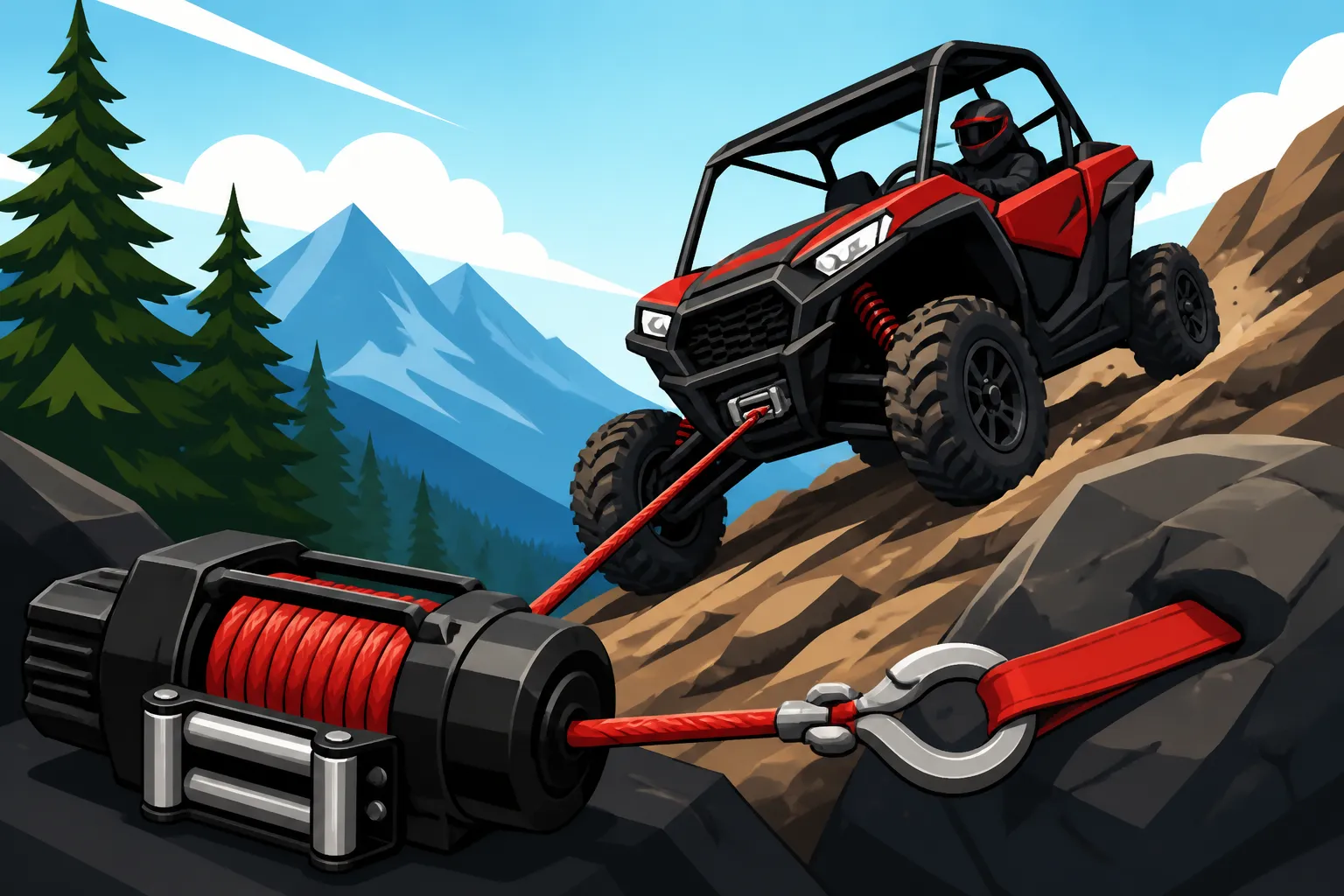
Winches for Steep Climbs
A steep climb can turn from a fun challenge into a stressful situation when your ATV or side-by-side loses traction, stalls, or slides off line. A winch can help you recover in a controlled way, but only when it is set up for the machine, attached to a sound anchor, and used with care. This guide explains how to choose and use one on BC trails.
When a winch helps on a steep climb
A winch is for recovery, not forcing a bad line
A winch is useful when your machine cannot safely continue under its own power. That might happen on a slick rock face, a muddy incline, or a tight climb where the tires have lost grip. It can also help you reposition a machine that has stopped at an awkward angle.
It is not a substitute for choosing a suitable route. If a hill is too steep, loose, narrow, or exposed for your experience and machine, turning around may be the safest decision. A winch can reduce the effort of recovery, but it cannot make an unstable slope, weak anchor, or dangerous approach safe.
Before committing to a climb, look for a place to stop or turn around, consider what lies below the machine, and check whether you have a realistic recovery option. If your group is unfamiliar with the area, pause to discuss the plan before anyone starts up. On trails around places such as Bear Creek or Chipmunk Creek, conditions can vary by route and weather, so don’t assume that a hill that looked manageable on a previous ride is still safe today.
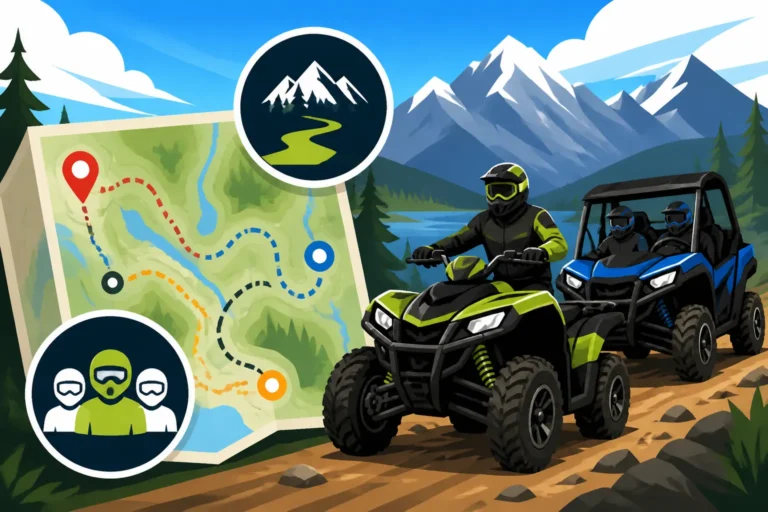
For route planning, check the status and access information for the area before you leave. A mapping tool such as onX Offroad may help you review routes and prepare for limited cell service, but a map is not a guarantee that a trail is open, passable, or suitable for your vehicle. Cross-check local closures and posted signs. See BC Motor Vehicle Closures and How to Find Them and BC Trail Difficulty Ratings for more on planning around access and terrain.
Know when to stop climbing
A wheel spinning without forward movement is a warning, not an invitation to apply more throttle. Continued spinning can dig a hole, reduce traction further, and make the machine harder to recover. On a side-by-side, a sudden sideways slide can also place the vehicle at risk of tipping.
Stop if the machine starts drifting sideways, the front end becomes light, the tires are digging in, or you can’t see a safe path ahead. Avoid making repeated attempts that churn up the trail or send rocks and debris downhill. If you can safely back down under control, that may be simpler than setting up a recovery. If backing down could cause a slide or rollover, keep the machine steady and assess the winch option.
A spotter can help identify the safest direction, but they should stand well clear of the machine’s path and never position themselves downhill from a vehicle that might move. Agree on simple signals before anyone operates the winch. If the group cannot communicate clearly or the machine is at risk of rolling, stop and reconsider the recovery rather than improvising under pressure.
Read the terrain and the machine’s position
A winch pull should move the machine toward a stable position, not blindly toward the top of a hill. A direct uphill pull may be inappropriate if the surface is loose or the machine is angled toward a drop, a tree, or a narrow trail edge. Sometimes the safest recovery is a short pull to a more level spot, followed by a reassessment.
Check for obstacles the cable could catch on, loose ground that may give way, and anything downhill that could be struck if the machine moves suddenly. On wet coastal clay, slick roots and ruts can change the line quickly. On rocky interior terrain, a tire can catch on a ledge while the rest of the machine shifts. Either way, leave room for the vehicle to move without putting people in its path.
If the route crosses a resource road or an area with industrial traffic, don’t set up recovery in a way that blocks traffic or exposes the group to approaching vehicles. For planning and riding considerations, review BC Forest Service Road Rules for ORVs and BC Resource Road Radio Practice.
Choosing a winch setup for an ATV or UTV
Match the winch to the machine and the job
Choose a winch designed for your machine and the kinds of recovery situations you expect. A larger side-by-side and a smaller ATV have different weights and recovery needs, and attachments such as cargo or accessories can affect the load. Check the vehicle and winch manufacturers’ guidance rather than choosing by appearance or assuming that a unit that fits physically is adequate.
Think about more than pulling a stuck machine straight up a hill. The line may need to redirect around an obstacle, or the machine may need a controlled pull to the side. A setup that works for a light ATV in a clear, level spot may not be appropriate for a loaded side-by-side on a steep incline.
A winch is only one part of a recovery kit. You also need compatible connection equipment, such as a suitable tree-saver strap or approved recovery attachment, and a way to protect the cable from damaging contact with sharp edges. Don’t use a strap, hook, or connection point unless it is intended for recovery and compatible with the load. Follow the equipment instructions, and replace gear that is damaged, frayed, bent, or otherwise compromised.
Check the mounting and electrical setup
A winch needs a secure mounting point approved for the vehicle. A poorly installed mount can shift or fail under load, even if the winch itself is capable. If you’re unsure about the mount, wiring, or connection points, have a qualified technician inspect the setup before relying on it in remote terrain.
Before a ride, check that the cable or rope is wound evenly and is not visibly damaged. Make sure the hook’s safety latch works, the controls respond, and the wiring is secure and free from obvious damage. Follow the manufacturer’s maintenance instructions, especially after a muddy or wet ride. A winch that has been sitting unused for months deserves a careful check before you count on it.
Carry gloves and use them when handling the line. Keep hands clear of the fairlead and never guide a moving cable with bare fingers. Don’t step over a taut line. If the winch starts to bind, the cable winds unevenly, or something seems wrong, stop and correct the issue rather than continuing to pull.
Pack recovery accessories before heading out
A useful recovery kit is one you can reach without unloading the machine or digging through wet cargo. Store the winch remote, gloves, straps, and other compatible recovery items in a known place. Keep them protected from mud and moisture, but don’t pack them so tightly that they’re difficult to retrieve when the machine is stopped on a slope.
The terrain helps determine what you should carry. A suitable tree-saver strap can protect a tree when it is permitted and appropriate to use as an anchor. A compatible pulley or snatch block may change the direction of a pull or help with a controlled recovery, but it also adds equipment that must be inspected and used according to its instructions. Do not assume that a convenient tree, rock, or vehicle is a safe anchor.
| Recovery item | What it helps with | Important check |
|---|---|---|
| Winch and secure mount | Pulling or repositioning the machine | Confirm the mount and winch are suitable for your vehicle |
| Gloves | Handling the line and recovery gear | Keep them accessible and in usable condition |
| Tree-saver strap | Spreading the load around a suitable tree | Use only where permitted and follow the strap’s instructions |
| Compatible pulley or snatch block | Redirecting a pull when appropriate | Check compatibility, condition, and the intended setup |
| Line dampener | Reducing line movement if a line fails | Place it as directed and keep people clear |
| Headlamp or flashlight | Seeing connections in low light | Check batteries before departure |
A mapping app such as onX Offroad can be part of your planning routine, especially when you want to review your intended route before reaching a low-service area. It does not replace a paper backup, local access checks, or judgment about changing trail conditions. Consider telling someone where you’re going and when you expect to return, particularly if your ride takes you away from regular traffic or cell coverage.
How to winch safely on a steep trail
Set up before tensioning the line
First, stop the machine and assess its position. Keep the operator in control, set the parking brake if appropriate for the vehicle, and follow the manufacturer’s instructions for securing it during recovery. If the machine is unstable, people should not crowd around it or stand where it could roll.
Choose an anchor that is solid, suitable for the direction of pull, and permitted for use. A tree can be damaged by an unsuitable connection, and a smaller or unhealthy tree may not hold. Never assume that a rock, another vehicle, or a trail feature is secure just because it looks substantial. If there is no safe anchor, don’t proceed with a pull that depends on one.
Attach the line to a manufacturer-approved recovery point on the machine. Do not attach it to a bumper, rack, suspension part, or other component unless the manufacturer identifies that point for recovery. Remove slack carefully, then check that the line is clear of sharp edges and is not likely to snag as the machine moves. Keep spectators well away, and place a suitable line dampener as instructed by its manufacturer.
Pull slowly and keep people out of the danger zone
Use the winch controls from a position that keeps you away from the line and out of the machine’s potential path. Apply tension gradually and watch how the machine responds. A controlled pull gives you a chance to stop if the anchor shifts, the line binds, or the vehicle begins to move in an unexpected direction.
No one should stand between the machine and the anchor, over the line, or downhill from a vehicle that could slide. Keep bystanders out of the working area, not merely a step or two away. If a spotter is needed, agree on signals and make sure that person can remain in a safe location while still being seen or heard.
Don’t jerk the line with the throttle or use the winch to pull against a moving vehicle. If the cable or rope becomes taut and starts to wind unevenly, stop, release tension as directed, and reset the line. If the recovery doesn’t work as planned, reassess the anchor and direction instead of increasing force without understanding what is resisting the pull.
Recover in stages and reassess
Once the machine has moved to a more stable position, pause. Check the ground, the line, the anchor, and the vehicle. A short controlled pull to level ground may be enough; continuing up a steep hill just because the winch is already connected can create another problem.
If you need to reposition the anchor, first make the system safe and release tension according to the equipment instructions. Don’t disconnect a loaded line. Before starting another pull, confirm that everyone is clear, the machine is stable, and the new direction won’t drag it across a person, another vehicle, or a trail edge.
When the recovery is complete, inspect the winch line and attachments before packing them away. Look for cuts, kinks, abrasion, damaged stitching, or bent hardware. Let equipment dry as needed, and deal with damage before the next ride. A small defect found at home is far easier to manage than a failed connection halfway up a remote climb.
Plan for recovery before you need it
Consider the route, weather, and group
A winch does not make every trail suitable for every machine. Before setting out, consider the slope, surface, width, weather, daylight, and your group’s experience. A route that feels straightforward in dry conditions can become slippery after rain or snowmelt. If the trail is beyond your group’s ability, turn around while you still have room to do so.
Use local information to check for closures, restrictions, and managed-site requirements. If you use onX Offroad to review a route, treat it as one planning aid rather than proof that the route is open or safe. Carry a backup way to navigate, and tell someone your general plan. For trail-specific preparation, see BC ATV Trail Map Downloads, BC Trail Closures After a Storm, and BC Riding After Heavy Rain.
Group planning matters too. Decide who will operate the winch, who will spot, and how the group will communicate before a difficult section. Keep passengers and less experienced riders in a safe place away from the recovery area. If the terrain requires equipment or skills your group doesn’t have, waiting for appropriate help may be the safer choice.
Protect the trail and respect access rules
Recovery can damage trees, ground cover, and trail edges, especially when a machine is dragged sideways or repeatedly pulled through soft ground. Use the least damaging safe option and avoid widening the route to create room for a recovery. Don’t remove vegetation or attach recovery gear to a feature unless that use is permitted and appropriate.
Follow signs and posted restrictions, and respect private land and managed recreation areas. A route shown on a map does not automatically grant access. If you encounter a gate, closure, or uncertain boundary, stop and confirm the rules rather than trying to winch around it. BC Crown Land Access Rules and BC ATV Trails: Where to Ride offer useful context for checking access and choosing riding areas.
After a recovery, look over the trail for damage you may have caused. If the surface has been badly churned or an obstacle has been displaced, avoid making it worse and report the issue through the appropriate local channel. Responsible recovery helps keep trails usable for other riders and reduces the chance that a difficult climb becomes a hazard for the next group.
Build confidence with practice
The best time to learn your winch is on stable, uncomplicated ground—not when your machine is stuck on a steep hillside. Practice unspooling and rewinding the line, using the controls, attaching compatible recovery gear, and communicating with a spotter. Review the vehicle and winch instructions together so every rider understands the system.
Practice doesn’t mean deliberately creating a dangerous situation. Keep the machine stable, choose a suitable anchor, and use only equipment intended for the task. If your group is unsure how to set up a pull or judge an anchor, get instruction from a qualified person before relying on the equipment in remote terrain.
Most importantly, treat a winch as one part of preparation. Good route choices, sensible riding, suitable recovery gear, and the willingness to turn around often prevent the difficult recovery in the first place. A calm decision made before the climb is usually easier than trying to solve a problem once the machine is sliding.
Disclaimer
This article is for general informational purposes only and does not constitute professional advice. Laws, prices and regulations vary by location and change over time. Consult a qualified professional for guidance on your specific situation.