BC Written Permission Letters
A written permission letter matters when a 14- or 15-year-old wants to ride an off-road vehicle in BC without an adult supervisor. It is easy to mistake that letter for a general riding permit. Here is what it does, what to put in it, and which safety, land-access and operating rules still apply.
What a written permission letter does in BC
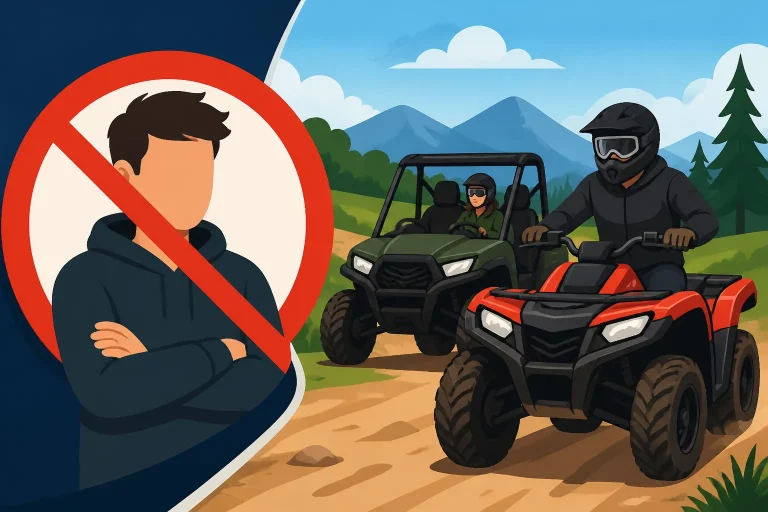
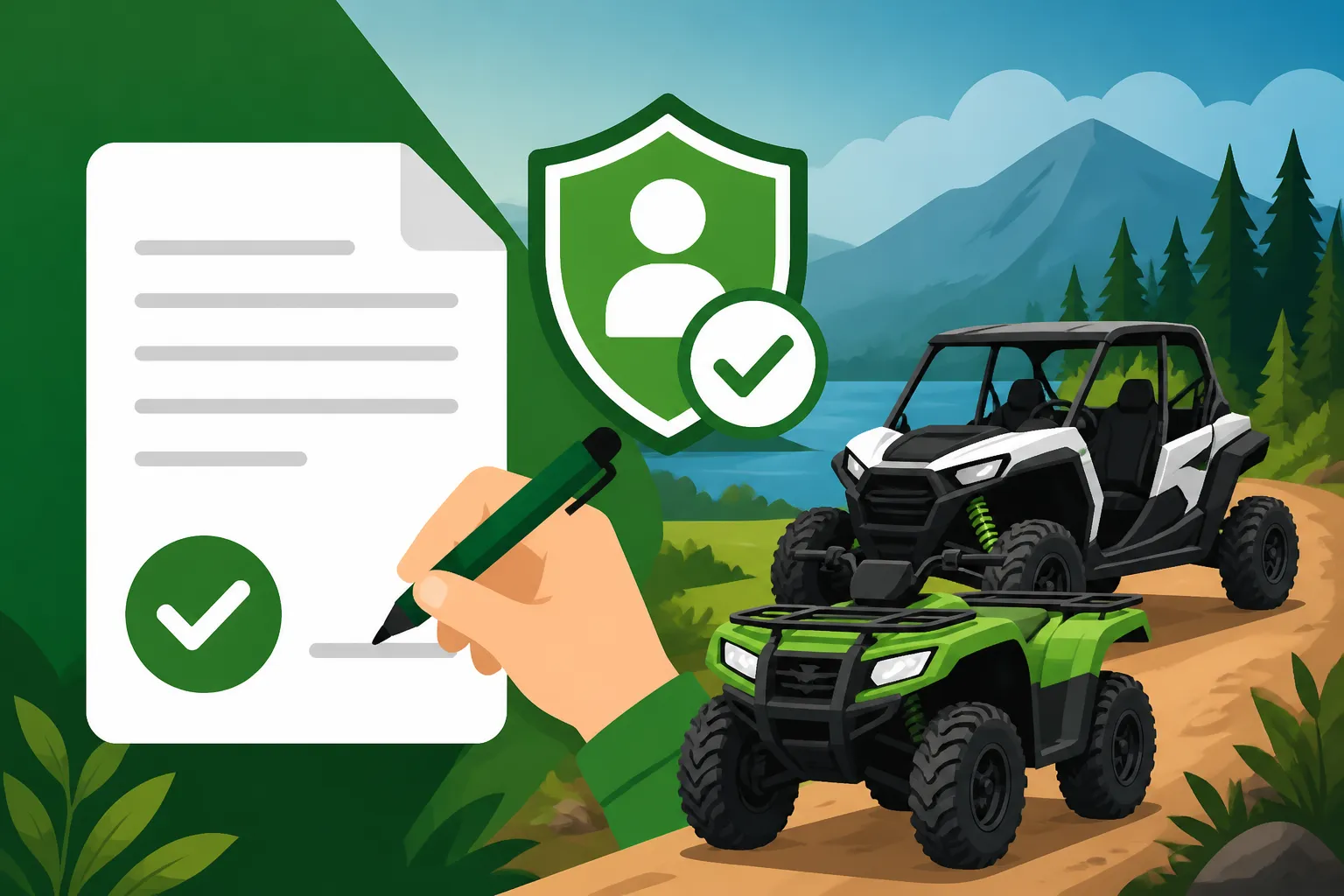
BC has a supervision rule for young off-road vehicle riders. In general, a rider under 16 must be supervised by someone who is at least 19. The exception for a 14- or 15-year-old depends on having written permission from a parent or guardian. The permission is relevant to the supervision rule; it does not make every ride lawful or safe by itself.
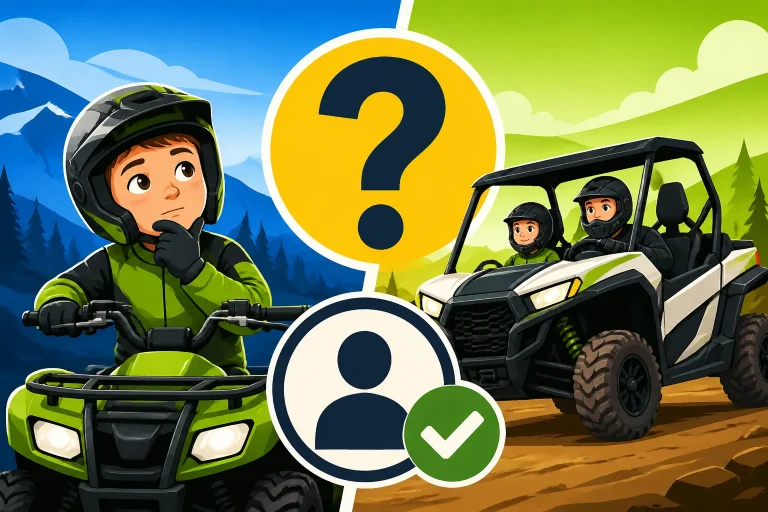
If the rider is 13 or younger, a parent’s letter does not replace the adult-supervision requirement. If the rider is 14 or 15, the letter may allow them to ride without that supervisor where the exception applies. For more on the age-specific rules, see BC Rules for a 14-Year-Old Rider and BC Rules for a 15-Year-Old Rider.
The distinction is important: written permission is not the same as permission to use a particular trail, private property, road or recreation site. A parent can authorize a young person to ride, but cannot grant access to land they do not control. Riders still need to respect posted closures, landowner requirements and other restrictions. BC Riding on Family Property explains the separate question of riding on private land.
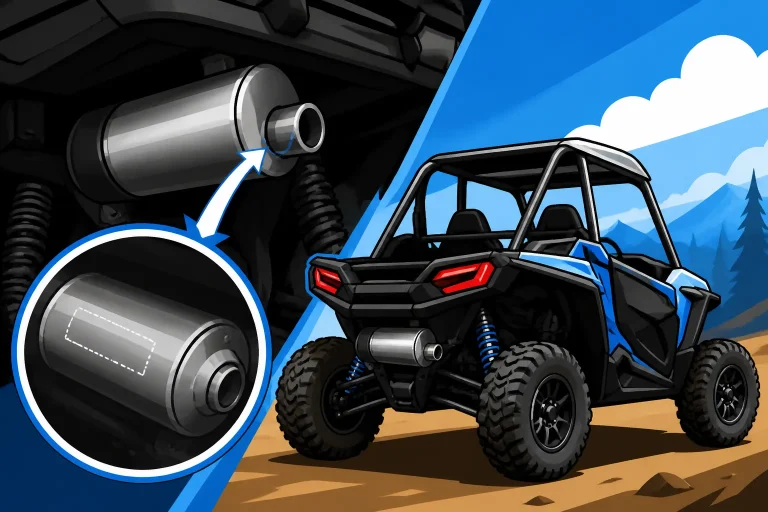
A letter also is not a driver’s licence, vehicle registration, insurance policy or police-issued operation permit. It does not authorize an ATV or UTV to travel along a highway, and it does not cancel the requirements that apply to a particular road or riding area. If your planned route includes a road, check the applicable rules before setting out.
The supervision rule is only one part of the picture. A young rider still needs a machine suitable for their age, size and ability. Review the manufacturer’s age and weight guidance, and do not assume that a permission letter makes an oversized or difficult-to-control machine appropriate. See BC Manufacturer Age and Weight Rules for more on matching the machine to the rider.
What to include in the letter
A permission letter should be clear enough that an adult or enforcement officer can understand who gave permission and which young rider it concerns. Do not rely on a vague note that simply says the rider is allowed to go out. Give the letter a date, identify the people involved and describe the permission plainly.
There may not be one wording that suits every family or riding situation. Confirm current requirements with an appropriate official source if you are unsure whether a particular format or detail is required. As a practical record, consider including:
| Detail | Why it helps |
|---|---|
| Parent or guardian’s full name and contact information | Identifies the person giving permission and makes it easier to confirm the letter if needed |
| Young rider’s full name | Shows clearly who the permission applies to |
| A direct statement of permission | Makes clear that the parent or guardian authorizes the young person to operate an off-road vehicle |
| Date the letter is signed | Helps show when permission was given |
| Parent or guardian’s signature | Makes the written permission more useful as a record |
| Any limits the parent or guardian wants to set | Can clarify the intended machine, riding area, dates or supervision arrangements |
Keep the wording straightforward. The central point is that the parent or guardian gives the named young person permission to operate an off-road vehicle under the applicable age rule. If the permission is limited to a particular machine, place or time, state that plainly. Those extra details are useful for family communication and clarity; do not treat them as a substitute for checking what the law specifically requires.
Make sure the person signing is legally able to give permission for the young rider. If there is uncertainty about guardianship or who has authority to consent, resolve that before the ride rather than relying on an informal note.
A signed paper copy is a sensible option because it can be shown even when a phone has no battery or service. A clear photo or digital copy can be useful as a backup, but do not assume a digital image will meet every formal requirement. Keep the document legible and make sure the rider knows where it is. Carrying it with other ride documents helps avoid confusion if someone asks about the rider’s age or supervision arrangements.
The letter should not make promises it cannot deliver. For instance, it should not claim that the young person has permission to ride on land unless the parent or guardian has the authority to grant that access. It should not suggest the rider is exempt from helmet, registration, insurance, passenger or road-use rules.
What the letter does not permit
Written permission addresses the youth supervision issue. It does not replace the other checks that determine whether the ride can go ahead.
- It does not remove supervision requirements for younger children. The written-permission exception concerns 14- and 15-year-olds. A letter does not let a younger rider ride alone where an adult supervisor is required. For the broader rule, see BC Supervision Required Under 16.
- It does not authorize access to land. Get permission from the landowner or other responsible party where required, and check for closures and restrictions on public land.
- It does not make highway travel legal. A private letter cannot authorize an ATV or UTV to be driven along a highway. Some road situations have separate rules and permit processes; check those before planning a route.
- It does not replace registration or insurance requirements. Check what applies to the machine and where it will be operated. BC ATV Registration Requirements covers registration, while BC ATV Insurance Requirements explains the separate insurance question.
- It does not waive equipment and safety rules. Riders still need to follow requirements for helmets and other applicable equipment. See BC Helmet Law Covers Every Rider.
- It does not override passenger restrictions. A young operator may not be allowed to carry a passenger, even if the parent’s letter says the rider has permission to do so. Review BC Children Cannot Carry Passengers and the machine manufacturer’s instructions.
- It does not guarantee the rider is ready. Legal permission is not a substitute for training, practice in an appropriate area, or a realistic assessment of the young person’s control and judgment.
A route can involve more than one set of rules. A ride that starts on private property may continue onto public land or a resource road, where access, equipment, insurance or operating requirements differ. The letter should not be treated as a blanket authorization for every part of that route. Check the conditions for the entire ride, not just the starting point.
If an adult does supervise the young rider, understand what supervision means in practice. The adult may need to be close enough to see the rider and provide direction promptly; simply being somewhere in the same riding area may not be enough. See BC’s Visible and Immediate Direction Test for a closer look at that standard.
Preparing the rider and the letter for a ride
A good approach is to settle the paperwork and the riding plan before the machine is unloaded. That gives the parent, rider and any supervising adult a chance to catch misunderstandings while there is still time to change the plan.
- Confirm the rider’s age and which rule applies. Do not assume that the same permission arrangement applies to every child under 16. Check the age-specific guidance and confirm any uncertainty before riding.
- Choose a suitable machine. Check the manufacturer’s age and weight guidance, controls, passenger capacity and condition. A letter cannot make a machine appropriate if the young person cannot operate it safely.
- Write and sign clear permission. Identify the rider and parent or guardian, state the permission directly, date it and add any limits that matter to the family.
- Check the riding location and route. Confirm access, closures and any rules for roads or managed recreation areas. Ask the responsible land manager or landowner if access is unclear.
- Confirm the other legal requirements. Check registration, insurance, helmet and equipment rules, and passenger restrictions for the machine and route.
- Make the document available. Keep a legible copy with the rider’s ride documents and ensure a parent or responsible adult can be contacted. A paper copy is useful where phones may not work.
- Set a practical safety plan. Agree on boundaries, meeting points, what to do if the rider gets separated, and when the ride must stop because of weather, fatigue, mechanical trouble or changing conditions.
If the plan changes during the day, pause and reconsider it. A signed letter for one young person does not automatically cover a friend, a different machine or a new riding area. Update the permission where appropriate, and verify access and operating rules for the new plan.
Families can also keep the letter with registration or insurance documents so it is easy to find before future rides. Check that the information is still accurate when circumstances change, such as a change in guardian contact details or a new machine. The aim is not to create a stack of paperwork for its own sake; it is to make the permission clear while keeping the rider within the rules that still apply.
A permission letter is a narrow but useful piece of the preparation. For a 14- or 15-year-old, it can address the adult-supervision exception where that exception applies. It cannot provide land access, replace the rest of the legal requirements or determine whether the rider is ready. Treat it as one item on the pre-ride checklist, not as an all-purpose pass.
Disclaimer
This article is for general informational purposes only and does not constitute professional advice. Laws, prices and regulations vary by location and change over time. Consult a qualified professional for guidance on your specific situation.