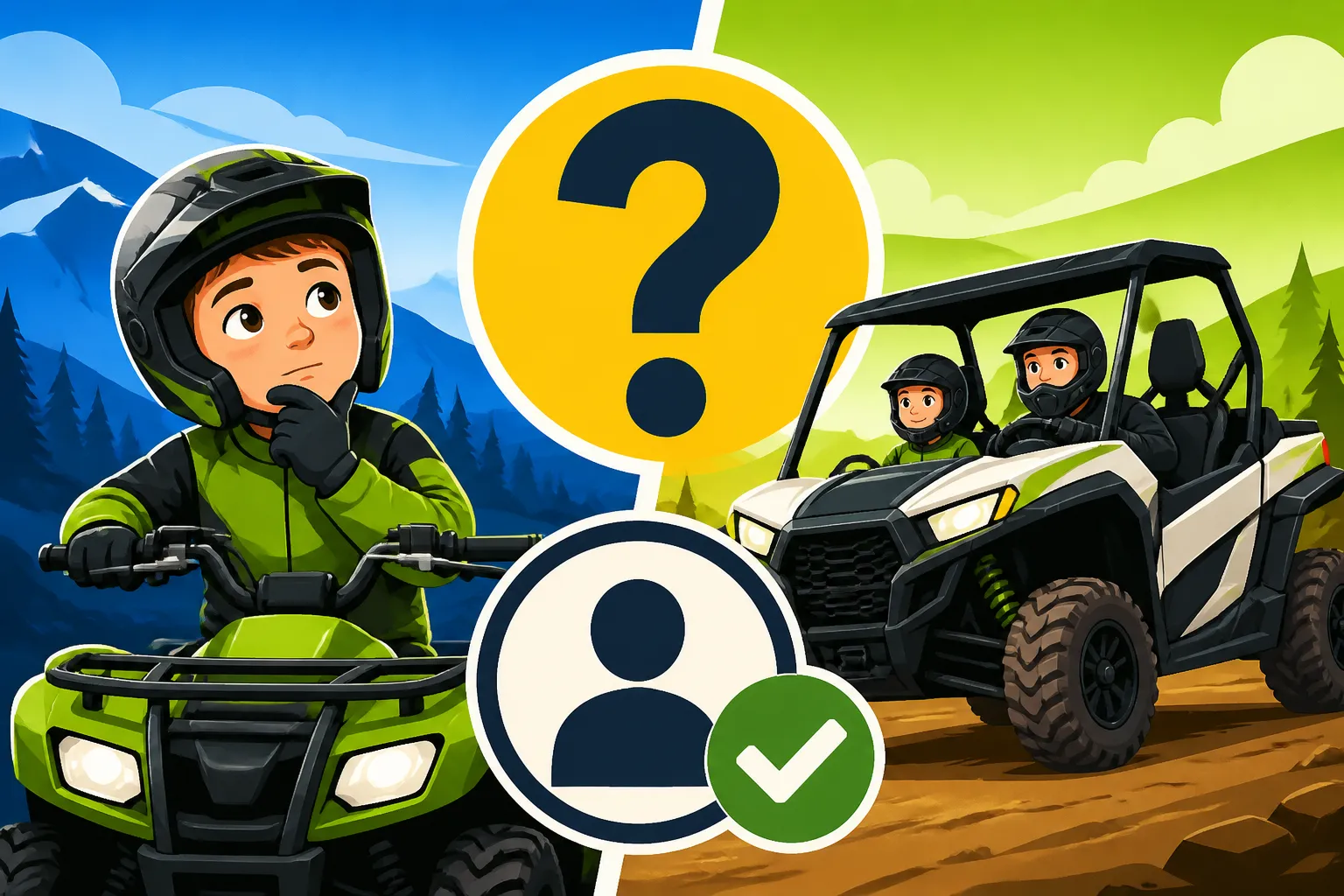
Do BC Kids Need Their Own Pass?
A family heading to ride in BC may find that “pass” means different things at different places. There is no province-wide ATV trail pass, and an adult’s pass may not cover a child or the child’s machine. The answer depends on the site’s rules and how its pass is issued. Here’s how to check before you load up.
The Short Answer: Check the Site’s Pass Rules
There is no single rule requiring every child in BC to buy a trail pass. Passes are generally associated with particular managed riding areas, not with riding anywhere in the province. A site or club may have its own pass system and decide whether a pass is needed for each machine, rider, or visit.
That means you should not assume a child is covered by an adult’s pass. You also should not assume every child needs a separate pass. Confirm the terms for the specific place you plan to ride, including how the site treats passengers, young operators, and multiple machines.
| What to check | Why it matters |
|---|---|
| Is the riding area managed or pass-based? | A site pass may apply at one managed area but not elsewhere. |
| Is the pass for a machine, rider, or visit? | This determines whether an adult’s pass could cover a child or a second machine. |
| Does a passenger need a pass? | The rules may treat a passenger differently from an operator. |
| Are youth passes available or required? | Some pass systems distinguish youth from adult users. |
| What proof must you carry? | A confirmation, receipt, or other proof may be required at the site. |
BC has no province-wide trail pass, but managed sites may require a pass to use their trails or facilities. Read BC Passes Exist Only at Managed Sites for the broader distinction, and check BC Day Passes at a Managed Site if you are visiting for a single ride.
A pass is also not the same as registration, insurance, or permission to operate an ATV. A pass may give access to a particular managed site under that site’s rules. It does not replace legal requirements that apply to the machine or rider, and it does not grant access to land where riding is closed or permission is needed.
For example, a family could have the correct pass for a managed site and still need to meet applicable registration requirements. A child who is allowed to ride at that site must also follow BC’s youth riding rules. The pass answers an access question; it does not settle every legal question about riding. See BC Youth Riding Rules Explained and BC ATV Registration Requirements for those separate issues.
Why a Child May Need a Separate Pass
The key question is not just how old the child is. It is what the pass covers. A pass might apply to a particular vehicle, an individual rider, a day’s access, or another arrangement set by the site. Where a site offers youth passes, the terms may differ from adult passes. The label alone does not tell you whether one pass covers the whole family.
The child is operating a separate machine
If a child will ride their own ATV or other ORV, ask whether the pass is issued per machine or per rider. If it is vehicle-based, the child’s machine may need its own pass even if an adult has one. If it is rider-based, the child may need an individual pass regardless of which machine they use.
Do not infer the answer from the way the pass is displayed or purchased. Check the site’s written rules or contact its operator. If the pass is sold through a local club, ask the club whether it covers one person, one machine, or another defined unit.
The child is riding as a passenger
A child riding as a passenger may be treated differently from a child operating a machine. The pass terms may cover the vehicle, the operator, all occupants, or only named riders. Confirm whether passengers need their own pass before assuming an adult pass covers everyone on the machine.
The pass question is separate from whether a child can safely and legally ride as a passenger. Machine design, manufacturer guidance, and applicable passenger rules all matter. A pass does not make an unsuitable passenger arrangement acceptable.
The child is riding on an adult’s machine
If an adult and child plan to take turns operating one machine, ask whether the pass follows the machine or the individual operator. A machine-based pass might be treated differently from a rider-based pass, but the site’s terms decide. Also check whether pass proof must identify the operator or vehicle.
For a family bringing more than one machine, make sure the answer covers each vehicle. One pass might cover a specific machine rather than every person in the group, or the site may offer a family or multi-machine option. Those arrangements are site-specific; do not rely on a general assumption.
The family is visiting for one day
A day pass may be structured differently from a longer-term pass. Check whether each child needs a separate day pass, whether a pass is tied to a vehicle, and whether a passenger is included. If the site requires proof of purchase, find out what form is accepted and whether it needs to be visible or available at the staging area.
For more on how site access can differ, see BC Annual Passes at a Managed Site. Annual and day-pass terms may not be interchangeable, so use the rules for the pass you are actually buying.
What a Trail Pass Does Not Replace
Families sometimes use “pass” to mean any document needed before a ride. It helps to separate site access from the other requirements that may apply.
It is not a province-wide riding permit
A pass for one managed riding area does not automatically authorize riding at another. It does not open a road, trail, park, or piece of land that is closed to ORVs. Before a trip, check the rules for the exact location, including any local access restrictions or closures.
If you are unsure whether a pass is required at a particular location, ask the site manager or the organization responsible for that area. A local pass may apply only within its managed area. BC Has No Province-Wide Trail Pass explains why a pass at one site should not be treated as a general BC riding pass.
It is not vehicle registration
Registration and a trail pass serve different purposes. Registration concerns the machine and its legal use under the applicable rules; a site pass concerns access under the managed area’s terms. A pass does not fix missing registration paperwork, and registration does not necessarily provide access to a managed site.
If you are preparing a child’s machine, confirm whether it needs to be registered and what documents must be carried. The requirements depend on the machine and where it will be operated. A useful starting point is How to Register an ATV in BC.
It is not insurance or a substitute for safe operation
A trail pass does not necessarily provide insurance, and it does not establish that the rider meets the rules for operating on the route. Check insurance requirements for the type of land or road where you intend to ride. Where rules apply to a young operator, make sure supervision, permission, and other requirements are met independently of the pass.
This distinction matters especially if your planned route includes more than a managed trail. Riding on a forest service road or other Crown land may raise separate questions about insurance, road access, and operating rules. A site pass should not be taken as proof that those requirements are satisfied.
How to Confirm the Right Pass Before You Ride
A quick check before leaving can prevent a child being turned away or a family discovering that it bought the wrong pass. Use the site’s own instructions where available, and ask directly if the wording is unclear.
- Name the riding area. Confirm the exact site, not just the nearest town or general region. Different areas can have different operators and pass terms.
- Describe your group. Say how many adults and children are coming, who will operate, who will ride as a passenger, and how many machines you are bringing.
- Ask what the pass is attached to. Find out whether it is for a rider, vehicle, visit, family, or another category.
- Ask about youth categories. If the site offers a youth pass, confirm who qualifies and what it covers. Do not assume “youth” means the same thing at every site.
- Confirm when and where it is valid. Ask whether the pass applies to the trails and facilities you plan to use, and whether there are separate restrictions or closures.
- Check how to show proof. Keep the confirmation or other required proof accessible, especially if cell service may be limited.
- Confirm the other requirements separately. Check registration, insurance, supervision, passenger rules, and any site-specific riding restrictions.
A short, specific question often gets the clearest answer: “We are bringing two adults and one child, with two machines. The child will operate one machine. Does the child need a separate pass, and is the pass issued per rider or per vehicle?”
If the child will ride only as a passenger, ask that question instead. If the child will take turns operating an adult’s machine, describe that arrangement too. These details can change how a site applies its pass rules.
Keep any answer in writing if the pass terms are not clear on the site’s page. A confirmation email or screenshot can help you remember what was agreed and provide proof of purchase, though it does not override the site’s current rules. For practical advice on what to carry, see Proof Carried on a Phone.
The safest takeaway is simple: an adult pass does not automatically cover a child, and a separate child pass is not automatically required everywhere. Check whether the specific managed site charges by rider, machine, or visit, then verify that the child’s planned role is covered. Handle the pass question alongside—not instead of—the rules for the machine, rider, and route.
Disclaimer
This article is for general informational purposes only and does not constitute professional advice. Laws, prices and regulations vary by location and change over time. Consult a qualified professional for guidance on your specific situation.