What a Local Club Trail Pass Gets You
A local club trail pass can make riding at a managed trail area possible, but it is not a province-wide permission slip. The key is knowing which site the pass covers, what it includes, and what it leaves out. Here’s how to check before you pay, avoid confusing a pass with club membership, and carry the proof you may need on the trail.
What a local club trail pass gets you
A local club trail pass generally gives you permission to ride within a particular managed trail system or recreation site, subject to that site’s rules. It may be a day pass, a seasonal pass, or another type of site-specific authorization. The exact access depends on the club or site operator and the conditions attached to the pass.
A pass may also help fund trail work, signs, staging areas, or other local recreation services. What it pays for varies. Do not assume that buying one means every trail is maintained, every facility is open, or staff will be available when you arrive.
Most importantly, the pass is not a general permit to ride anywhere in British Columbia. The province has no single trail pass that gives riders access across all riding areas. BC Has No Province-Wide Trail Pass explains that distinction, and BC Passes Exist Only at Managed Sites covers where site passes are typically relevant.
| What the pass may cover | What it usually does not establish |
|---|---|
| Riding at the named managed site during the pass’s valid period | Permission to ride at other clubs’ sites |
| Use of trails that are open under the site’s current rules | Permission to ignore a closure or posted restriction |
| Access for the machine or rider type listed by the operator | Proof of registration, insurance, or ownership |
| A contribution to local trail or recreation-site operations | A province-wide right to use Crown land |
Read the pass details as a boundary, not as a general statement that riding is allowed. Confirm the site name, dates, eligible machine types, rider conditions, and any areas that are excluded. A pass for one managed area does not automatically work at a nearby trail network, even if the same club helps maintain both.
Nor does a pass replace the rules that apply to the land itself. A route may cross Crown land, private land, a resource road, or a protected area, each with its own access conditions. Check the rules for your intended route as well as the pass terms. BC Crown Land Riding Explained offers useful context on why Crown land access is not the same thing as unrestricted access.
A trail pass is different from club membership
A common mix-up is treating club membership and a site pass as interchangeable. They can be connected, but they serve different purposes.
Membership generally supports or connects you with a club. Depending on the club, members may take part in meetings, volunteer work, organized rides, or other club activities. A trail pass, by contrast, is the permission or payment arrangement for riding at a particular managed site. Membership might include a pass, qualify you for a different pass option, or have no effect on site access. You have to check the individual club’s terms.
Why Club Membership Is Not the Same as a Pass explains the distinction in more detail. Before buying either one, ask whether membership is required to ride, whether a pass is included, and whether the pass is valid for the exact area you plan to use.
A useful way to separate the two questions is:
- Do I need to join the club? Check the club’s membership rules.
- Do I need a pass for this site? Check the site operator’s access rules.
- Does my pass cover this visit and machine? Check the pass conditions.
- Are there other legal requirements for this route? Check registration, insurance, closures, and land access separately.
The answers may differ. You could need a site pass without being a club member, or you could be a member but still need to buy a separate day pass. A membership card alone is not proof of site access unless the operator specifically says it is.
This distinction matters when riding with a group, too. One person’s membership or pass should not be assumed to cover everyone. Ask whether each rider needs an individual pass, whether a family or group option exists, and whether children require their own pass. Where conditions are unclear, get confirmation from the club before setting out.
Check the terms before you buy
Pass rules are local. There is no single set of conditions that applies to every club or managed site, so check the operator’s current information before travelling. If a pass is sold online, read the details on the seller’s own page rather than relying only on a short listing or an old social media post.
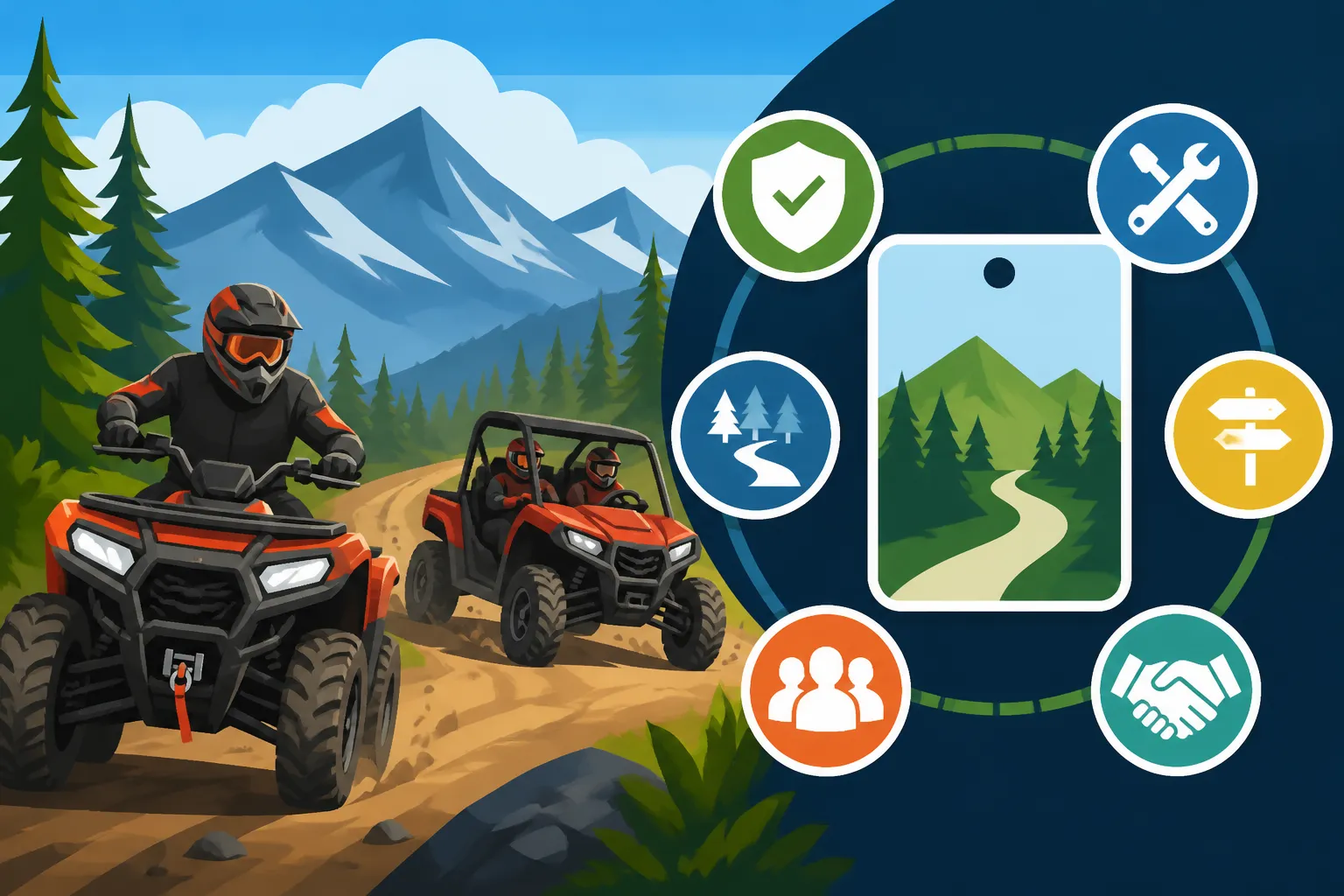
Look for these points:
- The covered area: Confirm the pass names the staging area or trail system you intend to ride.
- Validity dates: Check whether it applies to one day, a season, or another stated period, and note any time-of-day limits.
- Who needs a pass: Find out whether the requirement applies to each rider, each machine, or both.
- Eligible machines: Check whether your ATV or side-by-side is allowed and whether size or other equipment limits apply.
- Route and site restrictions: Look for closed trails, restricted areas, event-related limits, or routes that are not part of the pass.
- Proof requirements: Confirm what you must show if asked, and whether the proof needs to be visible on the machine or available to the rider.
- Refund and cancellation conditions: Ask what happens if weather, a closure, or a change in plans prevents your visit.
For a single visit, BC Day Passes at a Managed Site is a useful comparison point. If you plan to ride repeatedly at one location, see BC Annual Passes at a Managed Site. The right option depends on the site’s current offer and your riding plans; an annual pass at one location does not necessarily provide access to other managed areas.
Buy through the club or site operator when possible. Buying a Site Pass Straight From a Club can help you identify the kind of information to confirm before paying. Check whether a receipt, confirmation email, pass card, or other record is issued. If someone else buys the pass for your group, make sure you know how each rider is expected to show it.
A pass also does not settle every question about getting to the trail. Your route may use roads with separate operating rules, and a site may have requirements beyond the pass itself. For example, registration and insurance obligations are distinct from a recreational site fee. Make sure your machine and route meet the applicable requirements rather than treating the pass as a substitute for them.
Carry proof and follow the site’s rules
Once you buy a pass, keep its proof accessible for the whole ride. The operator may accept a printed confirmation, a pass displayed as directed, or another form of evidence. Do not assume a screenshot or a payment record is enough unless the site says it is. Carrying Proof of a Day Pass covers the practical side of keeping that evidence available.
If you rely on a phone, consider whether you will have signal at the trailhead and whether your battery will last. Saving the confirmation for offline viewing can help, but carry a printed copy if the site’s instructions call for one or you are unsure about connectivity. Keep proof in a place where it will not be damaged by rain, mud, or vibration.
A valid pass does not override closures. Trails can close because of maintenance, weather, fire risk, industrial activity, or other local conditions. Check for notices shortly before leaving and again at the site if information is posted there. A pass should be treated as permission to use the area under its current conditions—not a guarantee that every route will be open.
Follow any site-specific requirements for equipment, riding direction, speed, noise, camping, waste, and staging. Stay on routes that are open to your machine, respect signs and gates, and do not assume that an unmarked-looking road is available for recreational riding. If an instruction is unclear, contact the operator instead of guessing.
A quick pre-ride check can prevent a frustrating trip:
- Confirm the pass covers the exact site and the date of your visit.
- Verify that each rider and machine in your group meets the pass conditions.
- Check current closures and any notices from the site operator.
- Carry the required proof in the form the operator accepts.
- Review separate registration, insurance, and route-access requirements.
- Follow posted rules once you arrive, even if you have visited before.
The practical takeaway is simple: a local club trail pass is valuable when it clearly covers the site you want to ride. It can provide access to a managed trail area and help support local recreation work, but it is not club membership by default, not a pass for every BC trail, and not a replacement for other legal requirements. Confirm the details with the operator before you travel.
Disclaimer
This article is for general informational purposes only and does not constitute professional advice. Laws, prices and regulations vary by location and change over time. Consult a qualified professional for guidance on your specific situation.