BC Alcohol Rules While Riding
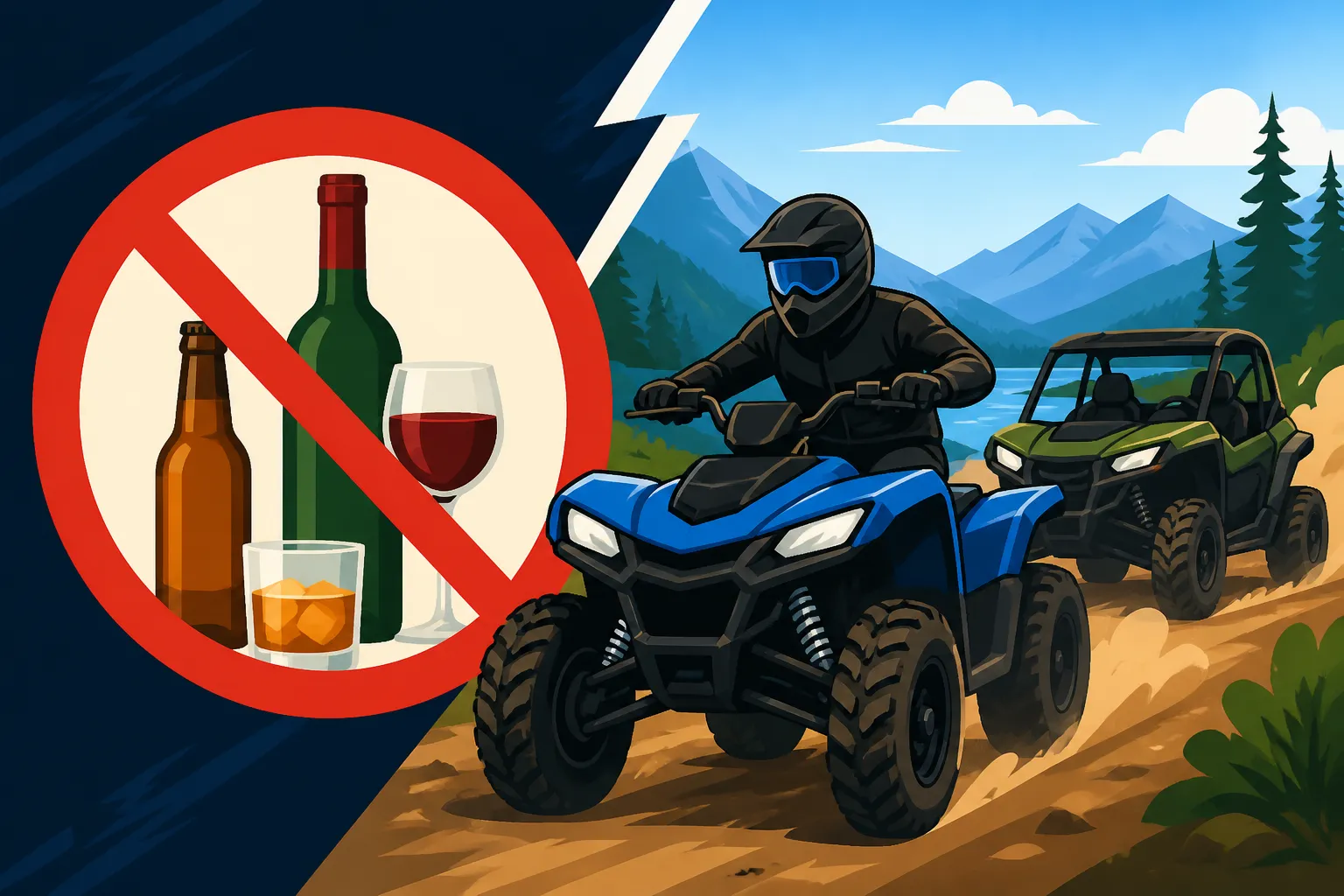
Alcohol and an ATV or side-by-side can be a dangerous combination, but riders may be unsure whether the rules change off road. In British Columbia, operating an off-road vehicle while impaired by alcohol is illegal under provincial and federal law. Here’s what that means in practical terms, where the rule matters, and how to plan a ride so nobody has to guess whether they’re safe to drive.
BC’s alcohol rule applies to off-road vehicles
An ATV or side-by-side does not become exempt from impaired-driving laws just because it is being used for recreation. According to the Province of British Columbia, operating an off-road vehicle while impaired by alcohol is illegal under both provincial and federal laws in B.C. The province also says off-road vehicles used on Forest Service Roads are subject to the same impaired-driving standards as standard motor vehicles under the BC Motor Vehicle Act and Criminal Code.
That makes the practical decision straightforward: if alcohol could affect your ability to operate safely, do not ride. A trail, staging area or resource road is not a place to test your judgment or rely on someone else to decide whether you seem impaired.
The rule concerns operating the vehicle while impaired. The available information does not specify a blood-alcohol threshold or say that any particular amount of alcohol automatically makes a rider legally impaired. Don’t treat that absence as permission to calculate a personal limit. Impairment can affect attention, judgment, coordination and reaction time, and it can make changing terrain, obstacles and other traffic harder to handle.
This is also not just a question of whether you feel confident. Riders may underestimate how alcohol is affecting them, especially when the ride involves fatigue, rough ground, poor visibility or unfamiliar routes. If there is any doubt, leave the machine parked and arrange another way back.
For a broader look at the legal distinction between riding off road and using public roads, see Can You Ride an ATV on the Road in BC?. The short answer to the alcohol question does not change with the vehicle’s size or recreational purpose: an off-road vehicle is still a motorized machine, and riding it while impaired can have serious consequences.
Don’t confuse alcohol rules with registration rules
Registration, insurance and permits are separate from the prohibition on impaired operation. Completing the paperwork does not make it legal to ride while impaired, and being sober does not remove other requirements that may apply to the route.
For example, the Province of British Columbia requires owners to register prescribed off-road vehicles used on Crown land and display the ICBC number plate or sticker. The operator must carry a copy of the Certificate of Registration or Transfer of Ownership. Those requirements concern permission and identification for the machine; they are not an alternative to safe, unimpaired operation. See BC Registration Before Riding Crown Land for more on that separate obligation.
Likewise, an operation permit for highway travel does not give a rider permission to drive while impaired. The province says police may authorize off-road vehicle travel on a highway within the limits set out in an operation permit. Any such authorization is about where and how the machine may travel, not whether impaired operation is allowed.
Where riders need to be especially careful
The rule matters wherever you operate an off-road vehicle in B.C. Forest Service Roads deserve particular attention because they can feel like remote trails while also carrying industrial and other vehicle traffic. The Province of British Columbia specifically says ORV operators on Forest Service Roads are subject to the same impaired-driving standards as standard motor vehicles under the BC Motor Vehicle Act and Criminal Code.
A Forest Service Road is not simply a private trail because it is unpaved or far from town. Roads may be used by logging trucks and other industrial traffic, and the province notes that resource roads are not built or maintained to the same standards as public highways. Alcohol can make it harder to react to an oncoming vehicle, read road conditions or make a safe decision at a blind corner. For route-specific preparation, see BC Rules for Riding a Forest Service Road and BC Resource Road Radio Practice.
Crown land also requires riders to check more than the alcohol rule. Access may be prohibited or restricted in some places, and temporary ORV prohibitions can apply during wildfire conditions. Registration does not guarantee that a route is open. Before setting out, confirm that the intended area is available for motorized use and that any signs or restrictions are being followed. BC Rules for Riding Crown Land explains the access question in more detail.
| Riding situation | Alcohol and safety takeaway | Other issue to check |
|---|---|---|
| ATV or side-by-side on a recreational trail | Do not operate while impaired. The Province of British Columbia says impaired ORV operation is illegal under provincial and federal law. | Confirm the trail is open and permitted for your vehicle. |
| ORV on a Forest Service Road | The Province of British Columbia says the same impaired-driving standards as for standard motor vehicles apply. | A valid driver’s licence and required liability insurance apply on Forest Service Roads. |
| ORV intended to travel on a highway | An operation permit does not authorize impaired driving. | Check the permit conditions and applicable insurance requirements. |
| Machine parked after a ride | Keep it parked if the intended operator has been drinking or may be impaired. | Arrange a sober ride or a safe place to leave the machine. |
Forest Service Road requirements are worth planning for before the ride, not at the trailhead. According to the Province of British Columbia, an ORV operator travelling on a Forest Service Road must hold a valid driver’s licence and carry at least $200,000 in third-party liability insurance. Those are separate requirements from the impaired-driving rule; meeting them does not make it safe or lawful to operate while impaired. More detail is available in BC Forest Service Road Requirements and BC ATV Insurance Requirements.
Highway use has its own restrictions as well. An ORV cannot simply be taken onto a road because it connects two trail areas. The Province of British Columbia allows travel on a highway only where local police authorize it within the limits of an operation permit, and certain crossings may be made without a permit when controlled by a stop sign or traffic light. None of those provisions changes the alcohol rule.
Possible consequences and why the risk is bigger than a ticket
According to the Province of British Columbia, penalties for operating an off-road vehicle while impaired can include licence suspensions, fines and criminal charges. The exact outcome depends on the circumstances and the applicable law. It would be misleading to assume that a remote setting, a short ride or an off-road machine will make the consequences minor.
A criminal charge can affect more than the ride in progress. It may have consequences beyond the immediate penalty, and a licence suspension can disrupt ordinary travel and work. The province identifies these potential consequences but does not provide a single penalty amount or outcome that applies to every case. If you are facing a specific allegation, seek qualified legal advice rather than relying on a general description.
There is also the immediate risk of a collision or injury. An impaired rider may have less ability to judge a steep descent, a rut, a water crossing, an unexpected trail user or a vehicle approaching on a resource road. A side-by-side’s seat belt or a helmet does not eliminate those risks. Safety equipment can reduce some injury hazards, but it cannot compensate for impaired judgment or delayed reactions.
The consequences can extend to other people, too. A passenger may trust the driver to make safe decisions, while other trail users and road workers may have little warning before an impaired operator makes a mistake. Choosing not to drive after drinking protects more than the operator.
It is useful to separate two questions:
- Is the machine allowed on this route? Check registration, closures, permits, signs, access rules and route-specific requirements.
- Is the operator fit to drive? If alcohol may be affecting the operator, the machine stays parked.
Both questions need a safe answer. A valid registration document, a helmet, insurance or permission to use a route cannot cancel out impairment.
Plan the ride so alcohol does not become a decision at the trailhead
The easiest time to solve the problem is before anyone drinks. Decide who will operate, where the machines will be left if plans change, and how the group will get home. If the ride includes a meal or gathering where alcohol may be served, set up a sober driver or other transportation in advance. Do not make the plan depend on a quick judgment after drinking.
A practical plan can include:
- Agreeing that no one will operate after drinking or when they may be impaired.
- Choosing a sober operator before the group leaves.
- Making sure the route and access rules are checked in advance.
- Arranging transportation for people who cannot safely operate or drive home.
- Leaving a machine parked rather than pressuring someone to ride it back.
- Keeping the group together if the original plan has to change.
If someone has already been drinking, don’t try to solve the problem by switching to a different ORV or choosing a route that seems easier. A side-by-side, ATV, dirt bike or snowmobile still requires the operator to be capable of controlling it. The Province of British Columbia’s rule is about impaired ORV operation, not a particular style of machine.
It is also unwise to use a personal alcohol test or a friend’s opinion as the only basis for deciding to ride. The key question is not whether someone can produce a reassuring number or persuade the group they feel fine. The prudent choice is to avoid operating whenever alcohol could affect safe driving. A legal threshold is not a target for planning a ride.
If the ride plan changes
Groups sometimes find that the designated operator has been drinking, a return ride is delayed, or the route takes longer than expected. In that situation, stop and make a new plan rather than allowing pressure, darkness or the distance back to influence the decision.
Depending on the setting, options may include leaving the machine secured in an appropriate place, arranging a sober pickup, asking a sober member of the group to handle transportation, or staying put until a safe arrangement is available. Do not assume that a friend is fit to operate simply because they drank less than someone else.
If a vehicle has to remain behind, consider whether it can be left without blocking a road or trail, creating a hazard or violating local rules. The facts about access and parking can vary by location, so check the site rules and use judgment. For general route preparation, see BC Trail Etiquette Locals Expect.
If an impaired rider causes an incident or an immediate danger arises, prioritize people’s safety and contact appropriate emergency services. The province says Conservation Officers enforce motor vehicle laws and regulations, but an emergency situation may require a different response. Do not move an injured person or vehicle in a way that creates further danger unless necessary to protect someone from immediate harm.
The most reliable rule for a group is simple: decide before the first drink that an impaired person will not operate an ORV. That avoids arguments about how far the machine must travel, whether the trail looks easy, or whether the rider feels capable. When alcohol and riding are both part of the day, arrange the transportation plan first and keep the keys with the sober operator.
Sources
- Province of British Columbia — Motor Vehicle Prohibitions – Province of British Columbia (checked November 3, 2026)
- Province of British Columbia — Improved road access for ORVs – Province of British Columbia (checked November 3, 2026)
- Insurance Corporation of British Columbia — incidental_access_mv1445.pdf (checked November 3, 2026)
Disclaimer
This article is for general informational purposes only and does not constitute professional advice. Laws, prices and regulations vary by location and change over time. Consult a qualified professional for guidance on your specific situation.