What Happens on a Fall Poker Ride
A fall poker ride can sound simple until you’re wondering whether you need to know the route, bring playing cards, or ride at a certain pace. These organized ATV and UTV outings usually combine a marked ride with stops where participants draw cards and compete for a hand. Here’s what to expect in BC, how to prepare, and how to keep the day enjoyable when autumn weather changes quickly.
What a Fall Poker Ride Is Like
The ride combines checkpoints and a card hand
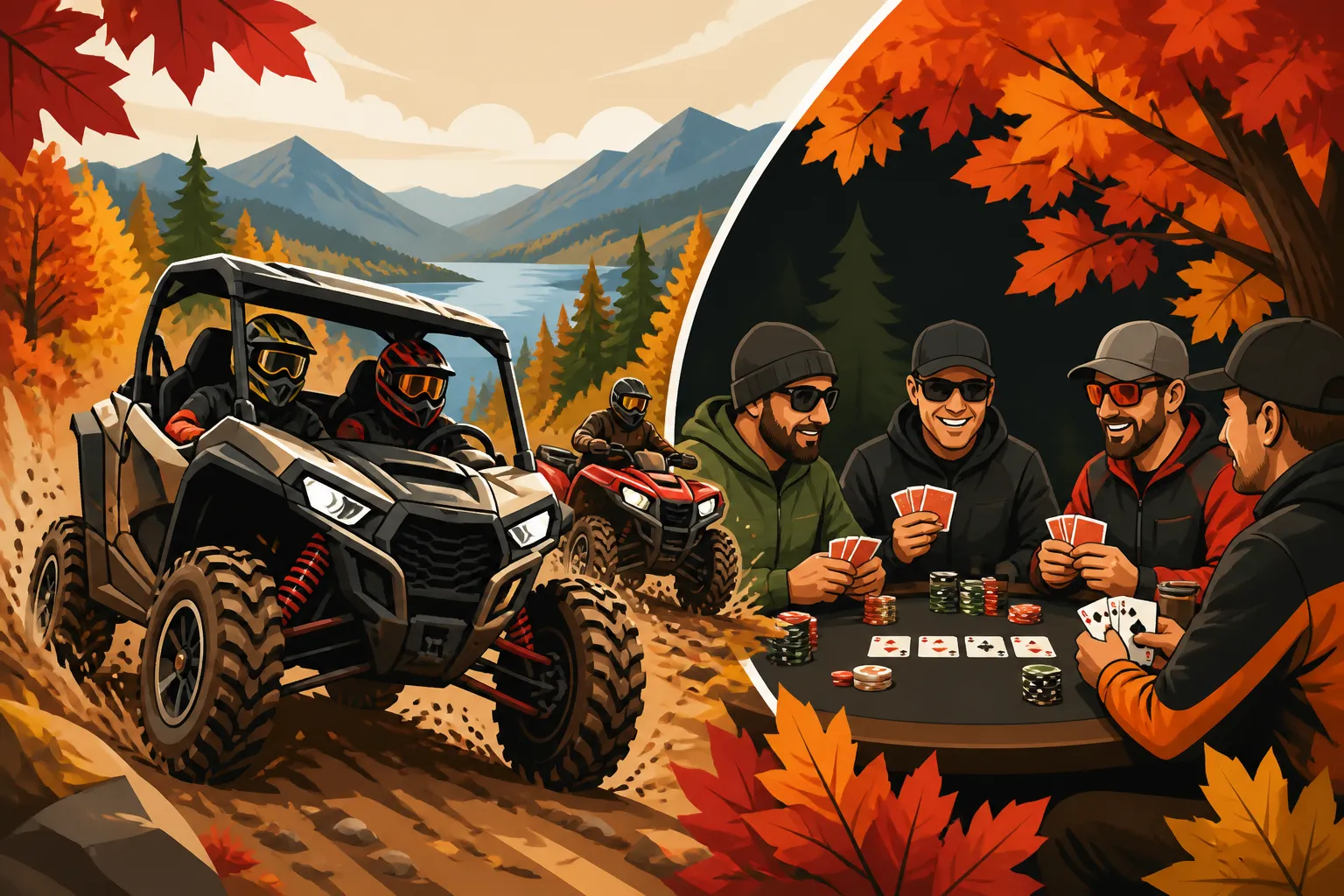
A poker ride is generally a group event organized by an ATV or off-road club. Participants follow a planned route and stop at designated checkpoints to draw or receive cards. At the end, the cards are assembled into a hand, and the event’s rules determine how the winning hand is chosen. Some rides may also include door prizes, food, or other activities, but those details depend on the organizer.
The “poker” part is usually about chance, not playing a full game of poker on the trail. You don’t need to know poker strategy, and you normally won’t be sitting around a table between riding sections. The fun is in the shared route, the suspense of seeing what cards you collect, and catching up with other riders at the stops.
Before you leave, the organizer should explain how cards are collected, whether each checkpoint is mandatory, and where participants meet at the finish. If the instructions are unclear, ask before the group disperses. It’s much easier to sort out the rules in the staging area than halfway down a forest road.
Expect a social pace, not a race
A poker ride is usually designed as a recreational outing, so the emphasis is on completing the route and enjoying the day rather than setting a fast pace. Riders may travel in a group, in smaller groups, or at intervals, depending on the organizer’s plan and the route. Follow the event instructions, and don’t assume that a rider ahead of you is setting the official pace.
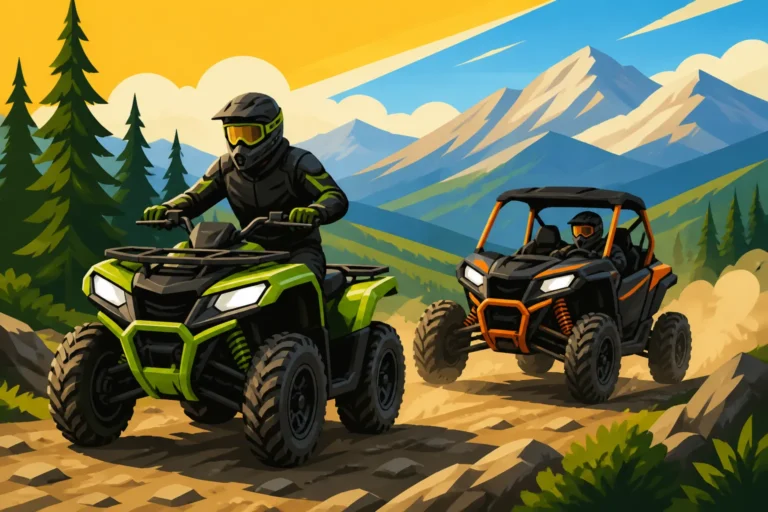
The group may include different experience levels and machine types. A side-by-side might move differently from a quad on a narrow trail, while a new rider may appreciate more time at turns and obstacles. Leave room between machines, be patient at bottlenecks, and give other riders space to stop safely.
If you’re new to organized rides, it’s worth reading BC Group Ride Planning before the event. For general trail etiquette, BC Trail Etiquette Locals Expect is useful background. Being considerate makes a real difference when a dozen machines are sharing a route, especially around blind corners, staging areas, and narrow trail sections.
How the Day Usually Unfolds
Check in before the group starts
The event may begin with registration or check-in at a staging area. Organizers can confirm who’s attending, explain the route and checkpoint process, and share any event-specific safety instructions. They may also identify a lead rider, a sweep rider at the back, or a way to contact the group if someone has a problem. Don’t skip this briefing just because you’ve ridden the area before; the event route or access conditions may be different.
Ask where the ride starts and finishes, how checkpoints are marked, and what to do if your machine breaks down or you become separated. Find out whether the route includes a return along the same trail or continues through a loop. If you’re joining friends, agree on a simple regrouping plan before engines start. “We’ll figure it out later” can turn into a frustrating search when cell reception is patchy.
Check whether the event has any special requirements, such as a pass for a managed riding site or specific equipment. A club ride and a managed recreation site can have separate rules, so don’t assume that participating in the event automatically covers every access requirement. BC Passes Exist Only at Managed Sites explains why it’s sensible to check what applies to the particular place you’ll be riding.
Follow the route and stop where directed
Once underway, stick to the organizer’s route and the posted access rules. At a checkpoint, wait your turn, follow the instructions for drawing or collecting a card, and make sure you understand where to continue. If you’re unsure whether you’ve reached a checkpoint, don’t guess by cutting down an unmarked spur or following a track that appears to head in the right direction. Ask an event volunteer or regroup with the ride.
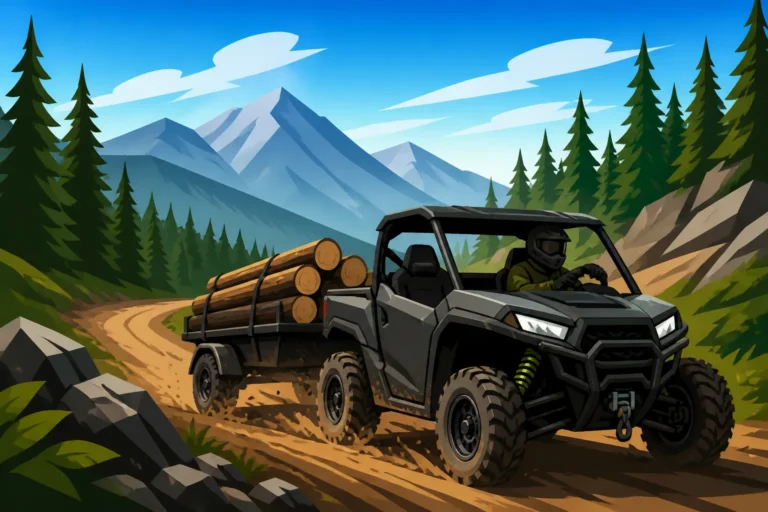
Some routes use forest roads or Crown land, where other people may be working, travelling, or recreating. A poker ride doesn’t give participants permission to ignore signs, gates, or closures. Keep an eye out for industrial traffic and leave enough room for a larger vehicle to pass. BC Resource Roads With Active Hauling offers helpful context for riding where logging or other work may be underway.
At the finish, the organizer will usually explain how hands are checked and how prizes or recognition are handled. Keep your cards together and follow the event’s procedure rather than comparing results in the middle of the trail. If you’re riding with a group, make sure everyone has returned before heading home. A head count at the end can catch a missing rider before the staging area empties.
| Part of the ride | What to expect | What to do |
|---|---|---|
| Check-in | Event instructions and route details | Ask about checkpoints, communications, and the finish |
| Riding section | A planned route shared with other machines | Ride within your ability and leave space between machines |
| Checkpoint | A card draw or other event check-in | Follow volunteer directions and confirm where to go next |
| Finish | Hands are collected or compared | Stay for the organizer’s instructions and confirm your group is back |
Preparing for a BC Fall Ride
Plan for changing weather and shorter daylight
Autumn conditions can shift over the course of a ride. A cool morning may warm up, then turn damp or chilly as clouds move in or the sun drops behind a ridge. Coastal routes can feel wet and muddy, while Interior and Cariboo areas can have sharp temperature changes. Dress in layers you can adjust, and bring rain protection even if the forecast looks promising when you leave home.
Daylight is another practical concern. A late start, a slow section, or a mechanical problem can stretch the day. Check the organizer’s schedule and estimate how long you may be out, but avoid treating an estimated finish time as a guarantee. Carry suitable lights, and make sure the machine’s lighting works before the ride. BC Lighting Rules in Low Visibility is a useful read if you’re uncertain about lighting expectations.
Navigation is worth thinking about before you reach the trailhead. Some areas have confusing junctions, limited signage, or weak cell reception. Save the route information the organizer provides, and don’t rely on a phone signal as your only way to find your group. A mapping app such as onX Offroad can help you review an area and prepare offline navigation where the available map features support it. Still, use it as a backup and follow posted restrictions and event directions.
Do a practical machine and gear check
A quick inspection can prevent a small issue from becoming a long walk back. Check tires, controls, brakes, lights, fuel, and any protective equipment your machine needs. If you’re riding a side-by-side, make sure seat belts and other safety equipment are in working order. Bring the tools and basic supplies you’re comfortable using, but don’t take on a repair beyond your ability in a remote spot.
Pack for the length and remoteness of the route, not just the time you expect to be riding. Water, a snack, a first-aid kit, a charged phone, and a way to contact someone can all be useful. If you’re travelling somewhere with limited service, consider how you’ll get help if your group becomes separated. Limited Cell Service at a Staging Area is a good reminder to make plans before leaving reception behind.
It’s also helpful to check your map before the event and understand the main area you’ll be riding through. onX Offroad may help you prepare by reviewing trail information and saving maps when those options are available, but a digital map isn’t a substitute for the organizer’s current route instructions. Confirm that your chosen route is allowed, stay on permitted roads and trails, and don’t use a map line alone as proof that access is open.
Safety, Etiquette, and Common Surprises
Fall riding may overlap with hunting activity
Fall is a busy season in many BC backcountry areas. Hunters, hikers, local residents, and industrial traffic may be using the same general area as the ride. Wear visible clothing where appropriate, keep noise and speed under control, and be alert at trail junctions and road crossings. Avoid assuming that every person you encounter is part of the event.
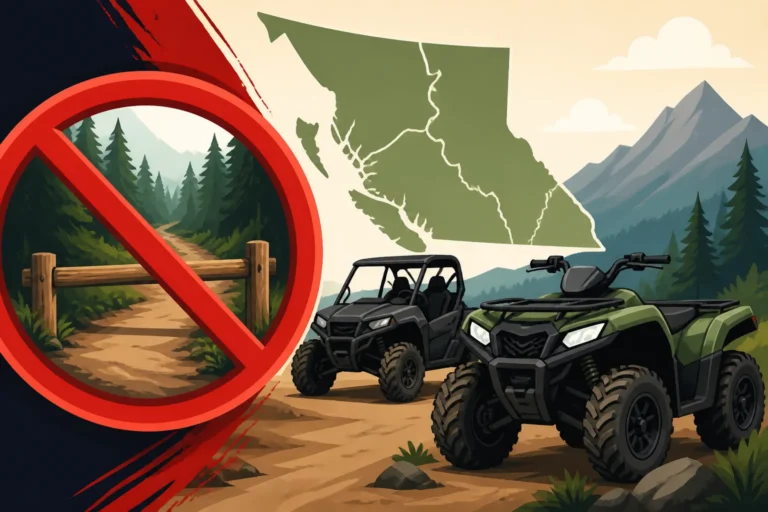
Seasonal restrictions can also affect where motorized vehicles may travel. Check the event organizer’s information and the applicable closures before setting out, especially if the ride is near a hunting area. BC Trail Closures in the Hunting Synopsis can help explain why a familiar route may have restrictions during certain periods. Don’t ride around a gate or posted closure to stay with the group; stop and ask the organizer how to proceed.
Weather can change trail conditions as well. Wet leaves, mud, standing water, and loose gravel can make familiar sections more demanding. Keep a speed that gives you time to react, and don’t follow another machine through an obstacle unless you can see that it’s safe for your own vehicle. For background on riding responsibly when conditions are damp, see BC Riding After Heavy Rain.
Know what to clarify before you arrive
Event details differ, so a few direct questions can prevent confusion. Ask whether you need to register in advance, whether passengers are allowed under the event’s rules, what machine types can use the route, and whether you need a site pass. Check whether food or refreshments are provided, or whether you should bring your own. Don’t assume every poker ride includes the same amenities or route difficulty.
If the ride is organized by a local club, you can ask whether non-members are welcome and whether the club expects participants to follow additional ride procedures. Finding a Club Near Your Town can help you locate local riding groups to ask about events and area conditions. You can also review BC Trails Closed in Fire Season when planning an autumn trip, since seasonal access information can matter even outside the heart of summer.
A final practical check is to confirm the meeting location and parking arrangements. Some staging areas have limited space, and arriving late can mean missing the safety briefing or delaying the group. Set up your machine before check-in if possible, keep your paperwork and essentials accessible, and arrive with enough time to listen rather than rushing through instructions.
Disclaimer
This article is for general informational purposes only and does not constitute professional advice. Laws, prices and regulations vary by location and change over time. Consult a qualified professional for guidance on your specific situation.