Finding a Club Near Your Town
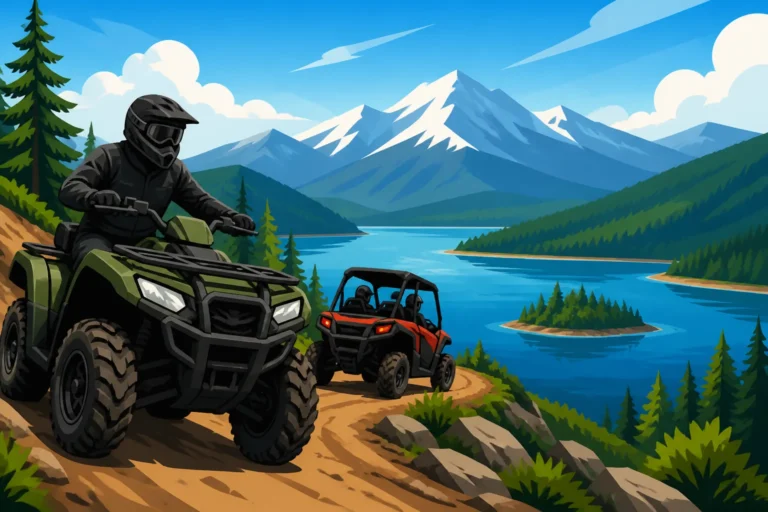
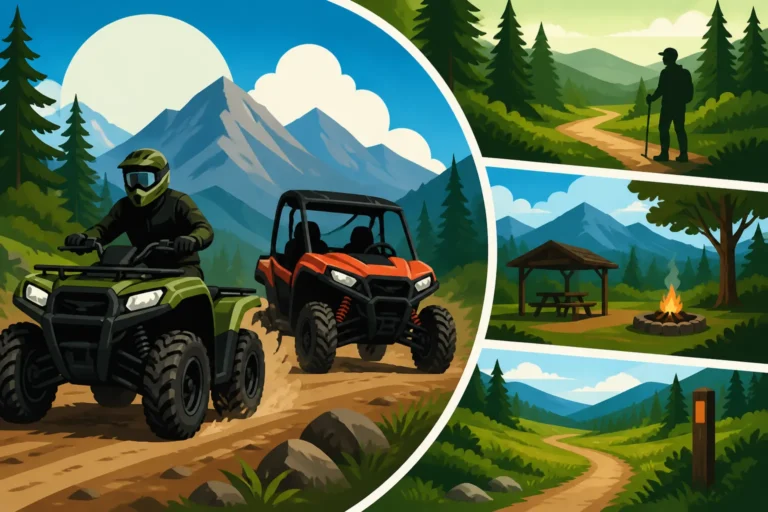
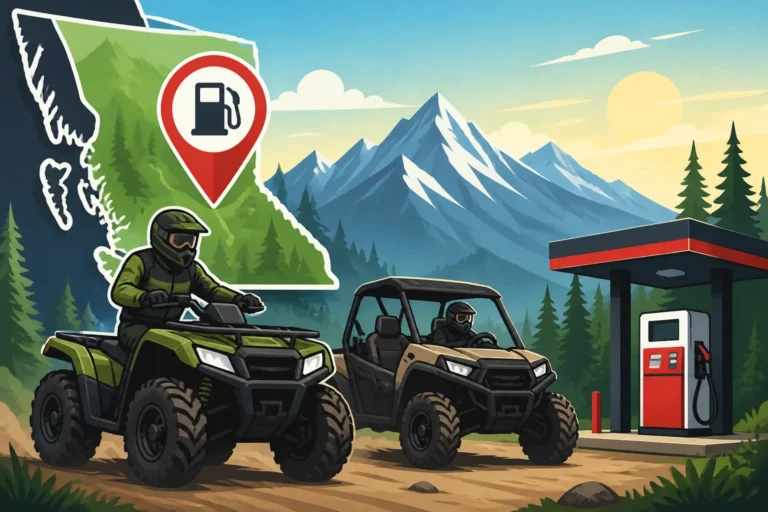
Finding an ATV or UTV club near your BC town can feel harder than it should: club names may be unfamiliar, trail information can be scattered, and a membership does not always mean you have permission to ride every trail. This guide explains how to find nearby clubs, compare what they offer, and choose one that fits your machine, experience, and riding plans.
Why an ATV club can make local riding easier
Local knowledge is often the biggest benefit
A nearby club can help you get oriented before you unload your quad or side-by-side. Members may know which staging areas suit trailers, which trails are appropriate for newer riders, and where conditions tend to change quickly. That knowledge can save you from arriving at a locked gate, choosing a route that is too technical for your group, or discovering that there is nowhere convenient to turn around.
Local knowledge is especially useful in BC, where riding conditions can differ substantially between coastal forests, the Interior, the Kootenays, and the Cariboo. A route that is manageable in dry weather may become slippery after rain or spring melt. A logging road may also have industrial traffic, temporary restrictions, or a closure that is not obvious from an old map. A local club can point you toward the right places to check before a trip, while the rider remains responsible for confirming access and current restrictions.
A club can also make a first ride less intimidating. If you are new to a region, you may not know where people usually meet, how to interpret local trail signs, or what to expect at a staging area. Going out with someone who understands the area can turn a stressful first outing into a practical learning experience.
Clubs can connect you with riders at a similar pace
Not every rider wants the same day out. Some people prefer a relaxed family loop with frequent stops. Others want longer days, rougher terrain, or a large group ride. A club can help you find people whose expectations are closer to yours, which makes group riding more enjoyable and safer.
Before joining a ride, ask how the group handles different machine types and experience levels. A side-by-side may have different width and turning considerations from a quad, while a beginner may need more time on steep or uneven sections. A thoughtful group will be open about the planned route and pace rather than expecting everyone to keep up without discussion.
If you are still learning about the area, a club ride is not a substitute for checking trail access. Read up on [BC ATV Trail Etiquette Locals Expect] before you go, and ask the organizer what equipment and experience are appropriate. Shared trail access depends on riders behaving predictably and respecting other users, wildlife, private property, and posted restrictions.
How to find a club near your town
Start with your town and the nearest riding region
Search using your town’s name along with phrases such as “ATV club,” “OHV club,” “quad club,” or “UTV club.” Try nearby communities too. A club may be based in one town but organize rides or trail work across a broader region, so searching only your municipality can miss a useful option.
BC examples listed among regional riding resources include Okanagan Trail Riders, the Prince George ATV Club, the Kootenay Rockies ATV Club, and Quad Squad in the South Cariboo. Treat these as starting points for research rather than assuming that any club’s membership, ride schedule, or trail projects remain the same. Check the club’s own information and look for recent signs of activity before making plans.
It is also worth asking at local outdoor businesses, recreation groups, and community events. A person who rides nearby may know which club is active, whether it welcomes new members, or where its public updates appear. When you ask, be specific: mention your town, machine type, experience level, and the kind of riding you are hoping to do.
Search club listings and social channels carefully
A club may use a website, social media page, newsletter, or a combination of these. Look for recent posts about meetings, organized rides, trail work, safety information, or membership. A page with an old event announcement and no newer activity does not necessarily mean the group is gone, but it is a reason to contact the club directly before relying on it for a planned trip.
Try searching for both the club name and the region. A club’s public page may be easier to find through a phrase such as “ATV trails near [town]” than through a broad search for “BC ATV club.” You can also check whether local tourism or recreation pages mention an organization, but confirm details with the club itself because directories can lag behind.
Digital mapping tools can help you understand distances and terrain while you investigate. For example, onX Offroad can be useful for exploring route context and planning what questions to ask. Do not treat a map app as confirmation that a road is open or that riding is permitted: check official notices, posted signs, land-access information, and local guidance before riding.
Use regional examples as leads, not guarantees
The best-known club near you may not be the closest one, and the closest one may not organize the kind of riding you want. A regional organization might focus on trail maintenance or advocacy, while a smaller local group may primarily arrange informal rides. Those are both useful roles, but they answer different needs.
For example, someone in the South Cariboo might look into Quad Squad, while a rider in the Prince George area could investigate the Prince George ATV Club. In the Okanagan, Okanagan Trail Riders may be a relevant lead; in the Kootenays, the Kootenay Rockies ATV Club is another name to check. Confirm the group’s current area of activity, machine compatibility, and membership process directly.
It is also possible that a club is not based in your town but still covers the riding area you use most. If your regular destination is a staging area outside town, search by that recreation area as well as by your home community. Regional trails and clubs do not always follow municipal boundaries.
Compare clubs before joining
Match the club’s activities to what you want
A useful first question is not just “How much is membership?” but “What does this club actually do?” Look for information about group rides, trail maintenance, local access work, safety education, community events, and communication with land managers. The right club depends on what you want from membership.
If your priority is meeting other riders, ask how often organized rides take place and whether beginners are welcome. If you mainly want to contribute to local trails, ask whether there are volunteer days or maintenance projects. If you ride with children, find out whether the club provides family-oriented events or guidance about age-appropriate riding. A group’s public description may not answer every question, so a short conversation with a club contact can be more informative than a long stretch of scrolling.
Membership also has limits. Joining a club does not automatically give you permission to ride every trail, remove a closure, or replace a site pass where one is required. Read [Why Club Membership Is Not the Same as a Pass] before assuming that dues cover access at every managed site. Check the specific trail or recreation area for its own requirements.
Check machine fit, pace, and group expectations
Ask whether the club welcomes your type of machine. Some groups may include both ATVs and side-by-sides, but the routes they choose can still be more suitable for one type than another. Trail width, tight turns, bridges, obstacles, and staging logistics can affect whether a route works for your machine.
Ask about the usual ride length and pace, too. “Beginner friendly” can mean different things to different organizers. Find out whether the ride includes steep climbs, creek crossings, narrow sections, or long stretches without services. If you are riding with a passenger or a younger operator, clarify whether the planned outing is appropriate for them and what supervision or equipment expectations apply.
A club’s approach to communication matters. Before a group ride, you should know where to meet, what time to arrive, what to bring, and how the group handles a mechanical problem or a rider who needs to turn back. If those details are unclear, ask. A good organizer will generally welcome practical questions rather than treating them as a nuisance.
Compare support and communication, not just membership perks
Some clubs communicate regularly through public posts; others rely on member emails or meetings. Ask how members hear about ride dates, trail work, access changes, and cancellations. If you rarely check social media, a club that shares essential details only through a platform you do not use may not be a comfortable fit.
Think about how you prefer to participate. You might want to attend a few group rides and learn the area, or you may be ready to help with volunteer work. Some riders are happy to join events without taking on a regular role. Be clear about the time you can offer, and ask whether occasional help is useful. It is better to choose a club that fits your actual schedule than to join based on an expectation you cannot maintain.
| What to compare | Questions to ask | Why it matters |
|---|---|---|
| Riding area | Which towns, staging areas, or trail systems does the club focus on? | A club may be nearby but not active where you ride |
| Machine types | Are ATVs, UTVs, or both included in rides? | Route width and obstacles can affect fit |
| Ride style | Are rides relaxed, technical, family-oriented, or long-distance? | Helps match the group to your experience |
| Communication | Where are dates, closures, and meeting details shared? | You need a reliable way to receive updates |
| Volunteer work | Are there trail days or other ways to contribute? | Useful if stewardship is a reason you want to join |
| Access requirements | Are passes or separate permissions needed at the sites? | Membership alone may not authorize access |
| New members | Can you attend a meeting or introductory ride first? | Makes it easier to judge the fit before committing |
Ask the right questions before your first ride
Confirm access and trail conditions
Before following a club route, ask where the route goes and how access is confirmed. Does it use a managed recreation site, Crown land, a forest service road, or a mixture? Are there posted restrictions, gates, seasonal closures, or local rules to check? These questions are not nitpicking; they help you avoid a frustrating drive and reduce the risk of riding somewhere you should not be.
Conditions can change after a storm, during wildfire activity, or when industrial work is underway. Even when a route is familiar to club members, check for current notices and signs on the ground. A map or saved track can show a road without telling you whether the road is open to recreational use that day. For background on access questions, see [BC Crown Land Riding Explained] and [BC Motor Vehicle Closures and How to Find Them].
If you use onX Offroad or another mapping app to prepare, treat it as one planning aid among several. Compare route information with official closure notices, local signage, and the club organizer’s latest information. Keep an offline map or another way to navigate if cell service is unreliable, but do not let a saved route persuade you to pass a gate or ignore a restriction.
Clarify preparation, equipment, and group rules
Ask what to bring before you set out. Your needs may include fuel, water, food, clothing layers, a first-aid kit, recovery equipment, and tools appropriate to your machine and route. The organizer may also have specific expectations for helmets, communication, or vehicle condition. A ride that looks short on a map can take much longer if it includes rough ground, stops, or a mechanical issue.
For resource roads, ask whether the group uses radios and what road-sharing practices it follows. Industrial traffic can be much larger and heavier than recreational machines, so riders need to understand how the group communicates and yields. Review [BC Forest Service Road Requirements] before planning a ride that includes these roads, and confirm what applies to the specific route.
Ask whether there are limits on passengers, children, or machine size for the ride. A family outing should not leave a young rider in a group that is moving too quickly or tackling terrain beyond the child’s ability. Likewise, a side-by-side may need more room to turn or pass than the route allows. The organizer should be able to describe the outing clearly enough for you to decide whether it suits your group.
Plan for poor signal and changing plans
Do not assume that you will be able to call for directions from every trail junction. In remote areas, cell service may disappear, and a group can become separated if someone stops or takes a wrong turn. Agree on a meeting point, a procedure for regrouping, and what to do if a rider has to leave early. Make sure everyone knows the expected route and has enough supplies to handle a delay.
If the group shares a digital route, save what you need before leaving service. A tool such as onX Offroad may help with advance route familiarization, but carry a backup navigation plan and keep the group’s instructions clear. Your map should support sensible decisions, not replace communication with the organizer or attention to posted signs.
Have a plan for cancellations as well. Weather, road work, wildfire restrictions, or an unexpected closure may change the day’s route. Ask how the club shares last-minute updates and whether the group has an alternate destination. If the ride changes, make a fresh decision about whether the new plan still suits your machine, passengers, equipment, and experience.
Make your first club connection with confidence
Introduce yourself with useful details
When you contact a club, make it easy for someone to respond. Say where you live or usually ride, whether you have an ATV or UTV, and what kind of outing you are looking for. You do not need to write a long biography. A few details can help the club point you toward the right contact, event, or local riding information.
For example: “I’m near Kamloops, ride a mid-size ATV, and am looking for relaxed group rides where a newer rider can learn the local trails. Is there a meeting or ride I could attend?” That gives the person answering a clear idea of your interests and experience. If you ride with a passenger or a child, mention that too so they can advise whether an event is suitable.
If you do not hear back immediately, try another contact method or ask locally whether there is a better way to reach the group. Volunteer organizations can be busy, and a delayed reply does not necessarily mean the club is unfriendly or inactive. Still, get confirmation before driving a long distance to a meeting or staging area.
Try a meeting or ride before deciding
If the club allows visitors at a meeting or introductory event, use that opportunity to see how members communicate and welcome newcomers. Notice whether people answer practical questions, explain the route, and make space for riders at different experience levels. You are not looking for a perfect organization; you are trying to judge whether its style and expectations work for you.
For a first group ride, arrive early enough to check your machine and listen to the briefing. Ask about the route, likely duration, regrouping points, and what to do if you cannot continue. Pay attention to whether the organizer gives clear instructions and whether riders follow them. Feeling comfortable asking a question is a good sign; feeling pressured to ride beyond your ability is not.
Afterward, think about what worked. Did the pace suit you? Were the trails and distances appropriate? Did you learn something useful about the area? Those answers can help you decide whether to join that club, contact another one, or keep looking for a group with a different riding style.
Stay involved without relying on the club for every answer
A club can be a valuable source of local knowledge, but it cannot monitor every road, trail, and closure for every rider. Keep checking signs and official information, ride within your ability, and confirm site-specific requirements. If you find a new route through a club conversation or mapping tool, verify access before treating it as an open riding opportunity.
Good members also help keep information useful. Share clear updates about hazards or changing conditions through the club’s preferred channels, and respect any request not to post sensitive locations publicly. Be considerate around other trail users, avoid damaging wet or fragile ground, and leave gates and staging areas as you found them. [BC Trail Etiquette Locals Expect] is a helpful companion for thinking through those everyday responsibilities.
If your first club is not the right fit, you have not failed. It may focus on a different region, machine type, or style of riding. Use what you learned to ask more targeted questions elsewhere. The goal is not simply to find the closest club; it is to find a reliable local community that helps you ride thoughtfully and enjoy BC’s trails with fewer surprises.
Disclaimer
This article is for general informational purposes only and does not constitute professional advice. Laws, prices and regulations vary by location and change over time. Consult a qualified professional for guidance on your specific situation.