Customs Paperwork at a BC Border Crossing
Bringing an ATV or UTV across the Canadian border into British Columbia can feel like a daunting task, full of mystery and potential headaches. Many riders dream of finding that perfect machine south of the border, or perhaps they're moving to BC and bringing their trusty quad with them, only to be hit with a wall of questions about paperwork. This guide is here to demystify the customs process, breaking down exactly what documents you’ll need and what to expect when you arrive at a BC border crossing with your off-road vehicle.
Understanding the Lay of the Land: Why Customs Matters for Your ORV
It's easy to think of a border crossing as just a quick check, but when you're importing a vehicle, even a recreational one like an ATV or UTV, it becomes a much more involved process. The stakes are higher, and the requirements are more stringent than just bringing a suitcase full of clothes.
More Than Just a Drive-Through: The Role of CBSA
The Canada Border Services Agency (CBSA) isn't just looking for illicit goods or making sure you declare that bottle of duty-free liquor. When it comes to vehicles, they have a critical role in ensuring that everything entering Canada meets our laws and regulations. This includes collecting appropriate duties and taxes, verifying ownership, and confirming that the vehicle complies with Canadian safety standards. For them, an ATV isn't just a toy; it's a "motor vehicle" with specific import requirements. They differentiate between importing for personal use versus commercial use, but for most riders, it’s a personal import. Still, that doesn't mean you can skip any steps. Being upfront and having all your ducks in a row is the best way to ensure a smooth, quick passage. They're looking for accuracy and completeness, and any discrepancies can lead to delays.
The Fear of the Unknown: What Happens if You're Unprepared?
That knot in your stomach as you approach the border, wondering if you have everything just right, is a completely valid feeling. It's not uncommon for people to be caught off guard by the sheer volume of paperwork or the specific requirements. The consequences of showing up unprepared can range from frustrating delays to far more serious issues. Imagine being turned back to the United States after a long drive, facing unexpected fines, or even having your cherished machine confiscated because you missed a crucial step. This isn't just a theoretical worry; it happens. Proper preparation isn't just about ticking boxes; it's about safeguarding your time, your money, and your peace of mind. Moreover, if you don't get the import process right, you’ll run into major hurdles later when you try to register your ORV in British Columbia. [BC Registration for an Imported Machine] The customs paperwork forms a crucial part of the ownership chain that BC Autoplan brokers require.
The Core Documents You'll Absolutely Need at the Border
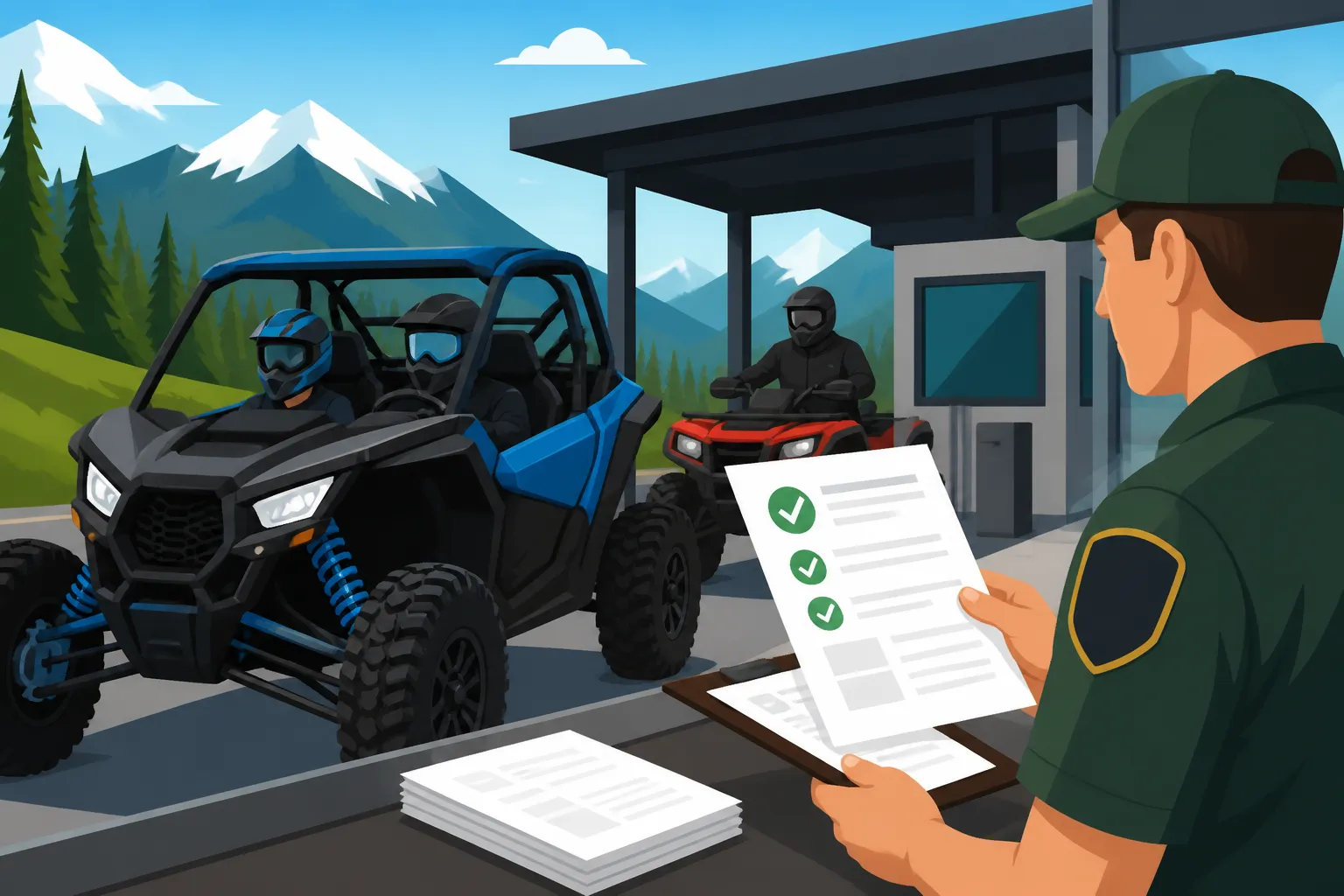
When you pull up to the customs booth with your ATV or UTV in tow, the officer will expect a very specific set of documents. Think of these as your machine's passport and visa – without them, it’s not going anywhere.
Proof of Ownership: The Foundation of Your Import
This is arguably the most critical piece of documentation you'll present. You need to unequivocally prove that you own the ATV or UTV you are bringing into Canada.
-
Bill of Sale or Title: For any machine you've purchased, a clear, detailed bill of sale is paramount. If you're importing from the United States, it's also common to have a "title" document, which is a state-issued certificate of ownership. Even though [Why BC Does Not Title an ATV], this US title document is incredibly important for establishing ownership history and value at the border. The bill of sale should clearly state the full legal names and addresses of both the buyer and the seller, the date of the sale, the actual purchase price in the currency used, and a complete description of the vehicle, including its make, model, year, and crucially, its Vehicle Identification Number (VIN). Customs officers will meticulously review this for accuracy and to establish a fair market value for taxation. Any missing information or suspicious details can raise red flags and cause significant delays.
-
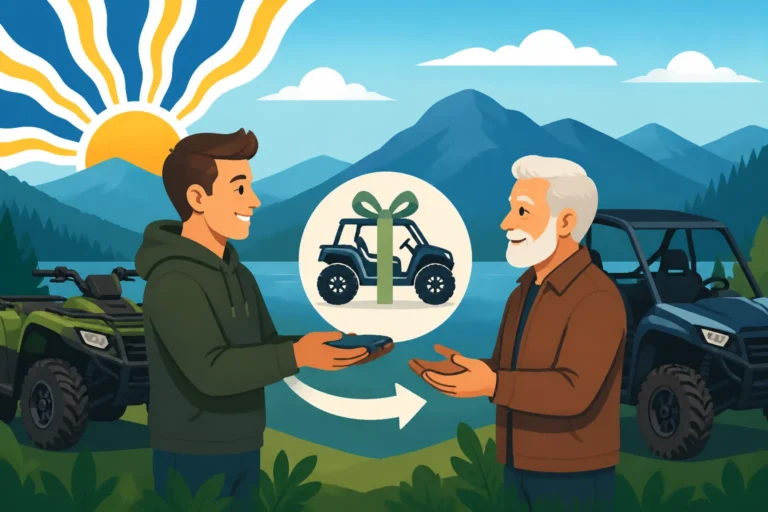
Gift Letters: Perhaps you received the ATV as a gift from a family member or friend. In this scenario, you'll need a formal gift letter. This letter should clearly state that the vehicle was transferred as a gift, including all the machine's details (make, model, VIN), and the full names and contact information of both the giver and the recipient. While it might seem simpler because no money changed hands, customs still needs to establish a value for tax purposes. They typically use an estimated fair market value for similar machines. Remember, even gifts are subject to taxes based on their appraised value, so clarity in this document is essential. [BC Gift Letters Between Family] can guide you on the specific content often required for such transfers.
Import Forms and Declarations: Your Official Introduction to Canada
Beyond proving ownership, you'll need to make formal declarations to the Canadian government about your import.
-
Form 1: Vehicle Import Form: This form is integral to the Registrar of Imported Vehicles (RIV) program. While you won't fill this out at the border yourself, understanding its role is important. When you present your vehicle for import, the CBSA officer will issue you a Form 1. This document confirms that your vehicle has entered Canada and begins the RIV process, which ensures imported vehicles meet Canadian safety and emissions standards. It's a critical piece of paper you'll need later for provincial registration, so keep it safe!
-
Customs Declaration Card (E311 or CBSA Declaration App): This is the standard declaration you fill out when entering Canada, but in your case, you'll also be declaring the vehicle. You'll need to state the value of the ORV you're bringing in, and it's imperative to be honest and accurate. Attempting to undervalue the machine to reduce taxes is considered a serious offence and can lead to hefty fines or seizure. Transparency is always the best policy here.
-
Proof of Identity: While not strictly about the ORV, you will, of course, need your personal identification. This typically includes a valid passport for crossing the international border, along with your driver's license. The customs officer will need to verify who you are as the importer of the vehicle.
Valuation for Duties and Taxes: Don't Get Caught Off Guard
This is where many riders experience a bit of sticker shock. Even if you got a fantastic deal on your ATV or UTV, the Canadian government will want its share.
-
The Sticker Shock: When you declare the value of your ORV, the CBSA officer will calculate any applicable duties and taxes. They might also have their own resources to determine the fair market value if they suspect the declared value is too low. Don't be surprised if the final tally is higher than you anticipated. It's always best to budget for these costs well in advance.
-
Provincial Sales Tax (PST): As you're bringing your machine into British Columbia, you will be required to pay British Columbia's Provincial Sales Tax (PST) at the border, typically on the fair market value of the vehicle or the purchase price, whichever is higher. This is a significant expense that many new importers overlook. [BC PST on an ATV Purchase] provides more details on how this tax is applied.
-
Duties: Whether duties apply depends largely on where your ATV or UTV was manufactured and existing trade agreements. For example, under agreements like the USMCA (United States-Mexico-Canada Agreement), many North American-made vehicles are exempt from duties. However, if your machine was manufactured outside of North America, duties might be applicable, typically a percentage of the vehicle's value. It's wise to research the country of origin of your specific machine model beforehand.
Navigating the RIV Program and Other Considerations
Clearing customs is a major hurdle, but there are other important programs and rules you need to be aware of, especially concerning vehicle safety and prior notice.
The Registrar of Imported Vehicles (RIV) Program: A Necessary Hurdle
The RIV program is a Canadian initiative designed to ensure that vehicles imported into Canada meet stringent Canadian safety standards. While it can seem like an extra layer of bureaucracy, its purpose is to protect consumers and ensure road (and trail) safety.
-
What it means for your ORV: Not all ORVs fall under the RIV program in the same way. Some are exempt, while others require specific modifications or inspections. It's absolutely crucial to check the RIV website (riv.ca) before you even consider buying an ATV or UTV for import. You'll need to input the make, model, and year of the specific machine to determine if it's eligible for import into Canada and what, if any, modifications or inspections will be required. Many modern ATVs and UTVs are designed to meet North American standards, but older or less common models might pose issues.
-
RIV Fees: If your ORV is subject to the RIV program, there will be fees associated with it. These fees cover the cost of administering the program, including data processing and the mandatory inspection that eligible vehicles must undergo once in Canada. Budget for these fees as part of your overall import cost.
Bills of Lading and Shipping Documents: If You're Not Hauling It Yourself
While many recreational riders haul their own ORVs across the border, some opt to use a third-party shipping company. If this is your situation, additional documentation will be required.
-
Bills of Lading: If a commercial carrier is transporting your ATV or UTV, they will have a bill of lading or a cargo control document. This document details the contents of the shipment, the shipper, the consignee (you), and the destination. The carrier will present this to customs, along with proof of your ownership, at the time of import. You'll still be responsible for the duties and taxes, and often the carrier will facilitate this payment on your behalf, or you'll need to arrange payment directly with CBSA.
-
Pre-notification: For large commercial imports or certain types of regulated goods, pre-notification to CBSA is sometimes required. For a personal import of a single ORV, this is less common, but it's always good practice to check if there are any specific requirements that apply to your situation, especially if you're using a freight forwarder.
What About Used Machines? The 72-Hour Rule and Recall Clearances
Importing a used ATV or UTV, especially from the United States, has an extra layer of complexity.
-
The 72-Hour Rule (for US Exports): This is absolutely critical if you're importing a used vehicle from the US. Before you attempt to cross the border into Canada, you must provide at least 72 hours' advance notice to US Customs and Border Protection (CBP) at the specific port of exit you intend to use. This usually involves presenting the vehicle's title and bill of sale to the US CBP office at that border crossing. They stamp your documents, signifying their approval for export. Without this stamped proof of export, US CBP can (and often will) turn you back, even if Canadian customs is ready for you. Don't skip this step; it's non-negotiable for used vehicles from the US.
-
Recall Clearances: For used vehicles, particularly those from the US, you generally need to provide proof that the vehicle is not subject to any outstanding safety recalls in Canada. The easiest way to do this is to get a letter from the manufacturer (e.g., Polaris, Honda, Can-Am, Yamaha) stating that there are no outstanding recalls for the specific VIN of your machine in Canada. This can sometimes take time to acquire, so start early. If you can't get an official letter, or if the manufacturer no longer exists, you might need to use a formal declaration. Resources like LawDepot can be invaluable for drafting statutory declarations or affidavits that can sometimes satisfy this requirement, attesting under oath that to your knowledge, there are no outstanding recalls.
After the Border: What Happens Next in BC
Successfully navigating the customs process is a huge win, but your journey isn't quite over. The customs paperwork you just acquired is essential for the next crucial step: registering your ORV in British Columbia.
The Journey Doesn't End at the Gate: Getting Ready for BC Registration
Once you've cleared customs and paid your duties and taxes, you'll be handed a stack of very important documents. These aren't just receipts; they are proof that your ATV or UTV has legally entered Canada and that all federal import requirements have been met. This paperwork, including your stamped Form 1 (if applicable) and your customs payment receipts, forms a vital part of the ownership chain needed for [BC Registration for an Imported Machine]. Without these documents, provincial authorities will not be able to process your registration. They act as a bridge, connecting your import journey with your local registration requirements, ensuring a seamless transition from federal clearance to provincial compliance.
Connecting the Dots: From Customs to an Autoplan Broker
Your next stop after customs will be a BC Autoplan broker. These are the folks who handle ORV registration in British Columbia. When you go, you'll need to bring everything from the border crossing: your original bill of sale, your passport and driver's license, and crucially, all the documents you received from the CBSA, including proof that you paid all applicable duties and taxes. [BC Autoplan Brokers Handle ORV Registration] are experienced in this process and will need to verify that your machine has been properly imported and all federal and provincial taxes have been settled. If you show up without proof of PST payment at the border, they will collect it then. If any part of your ownership documentation, or the customs import papers, is unclear or missing, the broker might require a statutory declaration to verify ownership or import details. Again, LawDepot offers templates and services for creating such formal declarations, which can be essential for bridging gaps in your paperwork. [BC Statutory Declarations Cost $15] and are sometimes a necessary step.
Keeping Everything Organized: Your Future Self Will Thank You
Once your ATV or UTV is registered in British Columbia, it's tempting to shove all that paperwork into a drawer and forget about it. However, keeping all your customs documents organized and accessible is incredibly important. Think of it as your machine's life story. These documents are not just for initial registration; they're valuable for future reference, such as when you eventually decide on [Selling a Registered Machine in BC]. Prospective buyers, or even authorities, might want to see the complete history, including how the machine entered Canada. Store these papers with your Certificate of Registration, bills of sale, and any other important ORV documents in a secure, dry place, ensuring they are protected from damage or loss. A clear, well-maintained paper trail saves you immense hassle down the line.
Here’s a quick overview of the essential documents:
| Document Category | Specific Item | Purpose at Border & Beyond | Notes |
|---|---|---|---|
| Proof of Ownership | Bill of Sale | Establishes ownership, purchase price, and vehicle details for customs and BC registration. | Must be detailed, include VIN, buyer/seller info. |
| US State Title (if applicable) | Legal ownership proof from US, aids in value assessment, critical for US export. | Required for US CBP 72-hour export rule. | |
| Gift Letter | Proves transfer of ownership without purchase for gifted vehicles. | Used for customs valuation for taxes; needs full details. | |
| Import Forms | Passport & Driver's License | Personal identification for entry and import declaration. | Essential for all border crossings. |
| Customs Declaration Card (E311) | Declares the vehicle and its value to CBSA. | Be accurate to avoid fines for undervaluation. | |
| Form 1 (RIV) | Issued by CBSA, initiates RIV program to ensure Canadian safety standards are met. | Keep safe; needed for RIV inspection and BC registration. | |
| Financial/Compliance | Proof of PST/Duties Paid | Confirms federal and provincial taxes were remitted at the border. | Critical for BC registration; brokers will collect if not paid at customs. |
| Manufacturer Recall Letter | Confirms no outstanding safety recalls for the specific VIN in Canada. | Required for used vehicle imports; allows use of statutory declaration if not available. | |
| Shipping (if applicable) | Bill of Lading | Details commercial shipment of the ORV. | Provided by carrier, presented by carrier to customs. |
Disclaimer
This article is for general informational purposes only and does not constitute professional advice. Laws, prices and regulations vary by location and change over time. Consult a qualified professional for guidance on your specific situation.