Trailers and Their Own Plates
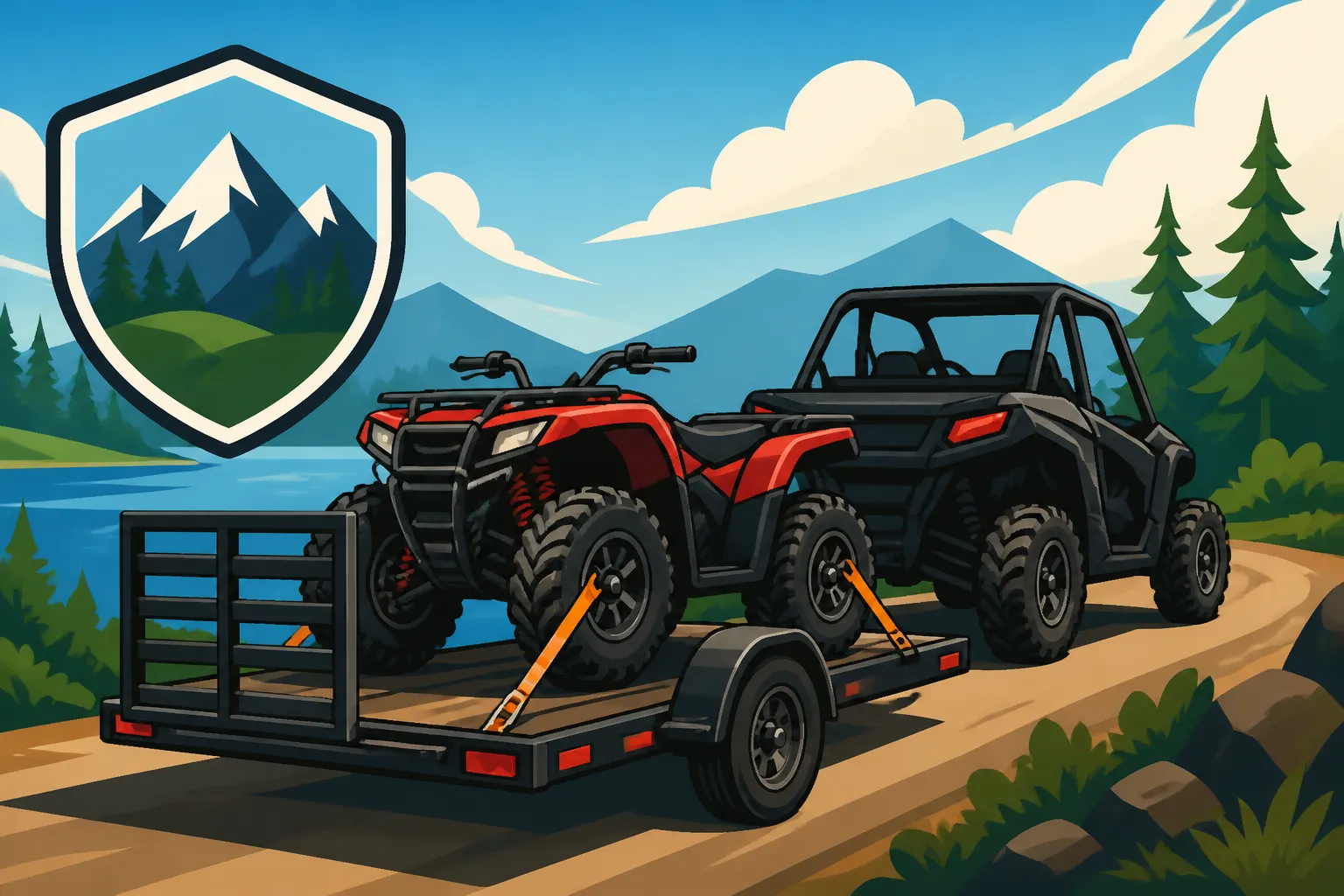
Many BC ATV and UTV riders focus so much on registering their beloved machine that they completely overlook another crucial piece of the puzzle: the trailer they use to haul it. It’s a common frustration, thinking you’ve got all your ducks in a row for your quad, only to discover the trailer has its own separate, distinct set of rules and requirements for being on the road. This guide will clarify why your trailer needs its own plate in British Columbia, what paperwork you'll need, and how to navigate the registration process.
The Dual Identity: Why Your Trailer Isn't Just an Extension of Your ATV
It's easy to assume that if your ATV or side-by-side is registered, insured (even voluntarily for Crown land!), and ready to hit the trails, the trailer it sits on automatically falls under some umbrella coverage. After all, they're a package deal, right? You haul your machine, so surely the rules are intertwined. This is where a lot of riders get caught off guard, and it's a completely understandable assumption to make. You're thinking about the use of the machine, but the province sees vehicles – and trailers – as separate entities on the public roads, each with their own legal obligations.
Trailers Are Vehicles Too Legally Speaking
In British Columbia, a trailer, regardless of what it's carrying, is considered a separate vehicle when it's being towed on any public road. This includes highways, municipal streets, and even those short stretches of paved road you might use to get to a [BC Forest Service Road] or a staging area. The law doesn't care if it's a fancy enclosed toy hauler or a basic utility trailer you picked up used; if it has wheels and is being pulled by another vehicle on a public thoroughfare, it needs to be registered and have its own valid licence plate. This is a fundamental distinction from your ORV itself, which, while needing [BC ORV Registration You Pay Once] to operate on Crown land, doesn't need to be registered for highway use in the same way your car or truck does. The trailer is firmly in the "motor vehicle" category when it comes to road use.
Think about it this way: your truck has a plate, and your ORV has a plate for off-road use. The trailer, being another piece of equipment that occupies public road space, also needs to be identified. This ensures accountability, helps with theft recovery, and contributes to road maintenance funds. It's not about what's on the trailer, but about the trailer itself being on the road. This is why you'll never see a single plate covering both your ATV and the trailer it's on; they are distinct.
The ORV Act Versus the Motor Vehicle Act
This brings us to a crucial legal nuance that can be a real head-scratcher for many. Your ATV or UTV falls under the Off-Road Vehicle Act when you're riding it on Crown land or designated trails. That's why you get a [BC's Certificate of Registration Explained] for your machine, which is different from a typical vehicle title. But your trailer? That's squarely under the Motor Vehicle Act, just like your tow vehicle. This means it has to comply with all the regulations for road-going trailers, including registration, licensing, and displaying a valid plate.
This dual-system can feel like an unnecessary layer of bureaucracy, especially when you're just trying to enjoy the outdoors. However, understanding that these are two different legal frameworks applying to different aspects of your recreational setup is key to staying compliant. The ORV Act manages how and where you ride your machine, while the Motor Vehicle Act governs how you transport vehicles on public roads. So, while you're busy making sure your quad is properly registered for the trails, don't forget that the trailer is operating in a whole different legal arena until you unhitch it. You might even want to check out [What the Off-Road Vehicle Act Covers in BC] for a refresher on your ORV.
Navigating BC Trailer Registration: The Process and Requirements
So, your trailer needs its own plate. What's next? The process for registering a trailer in BC is very similar to registering a car or truck, but with some specific considerations, especially if you're buying a used utility trailer from a private seller or building one yourself. It's handled by ICBC through their network of [BC Autoplan Brokers Handle ORV Registration], which is convenient if you're already going there for your ORV or car insurance.
Proof of Ownership for Your Trailer
Just like with your ATV, the cornerstone of trailer registration is proving you actually own it. For a brand-new trailer from a dealer, this is usually straightforward: you'll get a New Vehicle Information Statement (NVIS) or a manufacturer's certificate of origin, along with a bill of sale. Dealers are generally well-versed in handling this paperwork. However, if you're buying a used trailer from a private individual, you'll need a proper bill of sale. This isn't just a scribble on a napkin; it needs to clearly identify the trailer (make, model, VIN if applicable), the seller, the buyer, the date of sale, and the purchase price. Getting a clear, detailed bill of sale is critical, and resources like LawDepot can help you create a professional, legally sound document if you're doing a private sale.
If your trailer doesn't have a Vehicle Identification Number (VIN) – which is common for older or homemade utility trailers – the broker will assign one during the registration process, or you might need to get an inspection to have one assigned beforehand. This can add a step, but it's not insurmountable. The goal is to establish a clear chain of ownership, much like what's needed for [BC Bills of Sale for Every Prior Owner] when registering an ORV. Don't underestimate the importance of meticulous paperwork; it saves headaches down the line.
Fees, Taxes, and the Plate Itself
When you register your trailer, you'll pay a one-time registration fee, a licence plate fee, and any applicable provincial sales tax (PST) on the purchase price if it's a new acquisition or a transfer of ownership. Unlike your ORV's registration, which is paid once and lasts as long as you own it, trailer plates, like vehicle plates, have an annual renewal fee. This is often a point of confusion. You pay for your ORV registration once, but your trailer plate needs to be renewed annually. This annual renewal typically includes basic insurance for the trailer, though you'll want to confirm the specifics with your broker.
The plate itself is fairly standard – a rectangular licence plate that needs to be securely mounted on the rear of the trailer, clearly visible, and kept clean. [BC Plate Placement on Front, Back or Left] applies to ORVs, but for trailers, it's almost universally the rear. This allows law enforcement to easily identify the trailer and check its registration status. Remember, the goal is always clear identification on public roads. Your broker can give you the exact current costs for the registration and annual fees, as these can change.
| Feature | BC Off-Road Vehicle (ORV) Registration | BC Trailer Registration (for road use) |
|---|---|---|
| Governing Act | Off-Road Vehicle Act | Motor Vehicle Act |
| Authority | ICBC (via Autoplan brokers) | ICBC (via Autoplan brokers) |
| Purpose | Legal operation on Crown land/designated trails | Legal operation on public roads/highways |
| Plate Type | ORV-specific plate (small, square) | Standard BC licence plate (rectangular) |
| Plate Placement | Front, back, or left side of ORV | Rear of trailer |
| Registration Fee | One-time fee, lasts as long as you own it | One-time registration fee at initial setup |
| Annual Renewal | No annual renewal sticker or fee | Annual renewal fee for plate/basic insurance |
| Insurance | Voluntary liability for Crown land (recommended) | Basic liability included with annual plate renewal |
| Proof of Ownership | Bill of Sale, Statutory Declaration, NVIS, etc. | Bill of Sale, NVIS, MCO, Statutory Declaration (rare) |
| PST Application | Yes, on purchase price | Yes, on purchase price |
| VIN Requirement | Yes, or assigned if imported/homemade | Yes, or assigned if homemade/lacks one |
| Documentation to Carry | [BC Riders Must Carry the Certificate] and photo ID | No specific document required on the trailer; linked to tow vehicle's registration |
Specific Scenarios and What to Watch Out For
Registering a trailer can have its quirks, especially depending on its history or how it was acquired. It's not always a straightforward new purchase from a dealership. Understanding these specific scenarios can help you avoid delays and frustrations at the broker's office.
Homemade or Unidentified Trailers
If you've built your own trailer, or perhaps you've inherited or bought a very old one that simply doesn't have any identifying numbers or paperwork, the process will involve a few extra steps. You can't just slap a plate on something without any official identity. In these cases, you'll need to apply for a VIN assignment. This typically involves an inspection by an authorized facility to ensure it meets basic safety standards for road use and to officially record its dimensions and characteristics. Once a VIN is assigned, you can proceed with registration as a new or rebuilt vehicle. This might feel like a hurdle, but it's a critical safety and identification measure. The broker will guide you on the specific inspection requirements for homemade trailers in your area.
For situations where previous ownership documents are completely absent for an older, unidentified trailer, it can become quite complicated, similar to the challenges faced when trying to register [BC Machines With No Paperwork]. In such cases, you might be looking at needing a [BC Statutory Declaration for an ORV], adapted for a trailer, to swear under oath that you are the rightful owner. Always check with an Autoplan broker first, as they deal with these unique situations regularly and can advise on the least painful path forward. LawDepot can provide templates for declarations, but always confirm with your broker if it's acceptable for a trailer in your specific situation.
Trailers from Out-of-Province or Out-of-Country
Bringing a trailer into BC from another province or country introduces an additional layer of complexity. If it's coming from another Canadian province, you'll typically need its current registration and a bill of sale. The process will involve cancelling its out-of-province registration and re-registering it in BC. For trailers imported from outside Canada, you'll need to clear it through Canada Border Services Agency (CBSA) and comply with import regulations, which often include a Registrar of Imported Vehicles (RIV) inspection if it's a vehicle built for highway use. Make sure you have all your customs paperwork in order from the border crossing; it's essential proof of legal importation.
Just like with your ORV, if you're bringing a machine into the province, the origin matters. A trailer from [BC Registration for a Machine From Alberta] might be easier than one from [BC Registration for a Machine From Washington] due to differing regulations and import duties. Don't assume the rules are the same; always do your homework before you cross the border with a trailer you intend to register here. It's much easier to address paperwork deficiencies while you're still in the originating jurisdiction than after you've arrived in BC.
The Cost of Overlooking Trailer Registration
Ignoring the need for trailer registration can lead to some unwelcome surprises. If you're pulled over while hauling an unregistered or unlicensed trailer on a public road, you could face fines for operating an unregistered vehicle. These fines are usually separate from any penalties for your ORV itself. Moreover, if you're involved in an accident while towing an unregistered trailer, your insurance coverage for that trailer could be null and void, leaving you financially responsible for damages. This risk alone should be enough motivation to ensure your trailer is properly plated.
It's tempting to think "it's just a trailer," but legally, it's a separate entity on the road. The small annual fee and initial registration cost are a minor expense compared to the potential fines and liabilities of non-compliance. Don't let your excitement about riding your ATV overshadow the practical necessities of hauling it safely and legally. Taking the time to properly register your trailer at an Autoplan broker is just as important as ensuring your ATV is ready for the trail. Your local broker is always the best resource for current requirements and can walk you through any unique situations, whether you're registering [Registering a Side-by-Side in BC] or just its trusty carrier.
Disclaimer
This article is for general informational purposes only and does not constitute professional advice. Laws, prices and regulations vary by location and change over time. Consult a qualified professional for guidance on your specific situation.