BC Registration With Two Owners
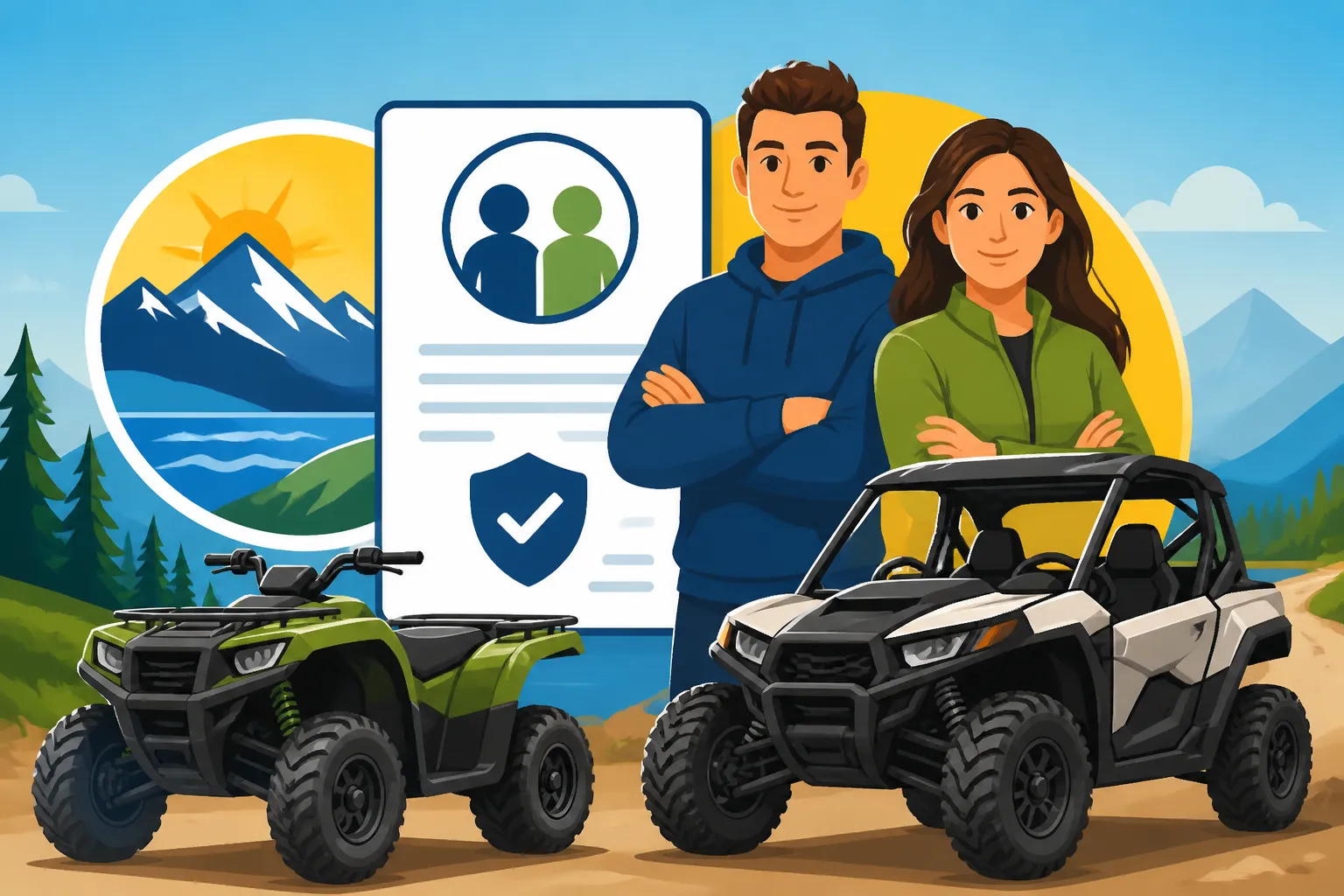
Co-owning an off-road vehicle in British Columbia with a friend, family member, or partner can seem like a fantastic idea for sharing the fun and splitting the costs. However, navigating the registration process and understanding the legal implications when more than one name is on the ownership can quickly turn exciting plans into a confusing maze. This guide is here to untangle the complexities of BC ORV registration when your machine has two owners, ensuring you're both legally sound and ready to hit the trails with peace of mind.
The Basics of Co-Ownership for Your BC Off-Road Vehicle
When you decide to share the joy (and responsibility!) of an ATV or UTV, it’s not just about splitting the purchase price. British Columbia’s Off-Road Vehicle Act has specific ways of handling ownership, and understanding them from the outset can save a lot of headaches later on. It’s a bit different than registering a car, mainly because ORVs don’t have titles in BC, but rather a Certificate of Registration. [Why BC Does Not Title an ATV]
Why Two Names on the Registration Matters
Putting two names on your ORV’s Certificate of Registration isn't just a formality; it has significant legal weight. Both individuals listed are considered owners, sharing responsibility for the machine’s legal operation, maintenance, and any liabilities that might arise. Imagine you and your buddy, Chris, decide to go halves on a rugged side-by-side for exploring the Kootenays. If only one of you is on the registration, the other has no official claim to the machine, which can become a huge problem if disagreements surface or if the registered owner decides to sell it without the other's consent.
Beyond the shared financial and legal responsibility, having both names ensures that both owners have the right to operate the machine and are protected by any associated insurance policies. It means that should you be pulled over on a resource road by a conservation officer, both registered owners have clear legal standing regarding the machine. This clarity is crucial for everyone involved, preventing disputes about who has the right to use the quad on any given weekend or whose signature is needed for future transactions.
Moreover, if there's ever an incident on the trails, and the machine is involved, clear multi-owner registration helps in determining liability and simplifies any insurance claims. While [BC Insurance Bought With Registration] provides basic coverage, ensuring both owners are correctly noted on all documents gives both parties an undeniable connection to the asset, making legal processes much smoother if something unfortunate were to happen. It acts as a foundational layer of protection for both your investment and your riding adventures.
How BC Registration Handles Multiple Owners
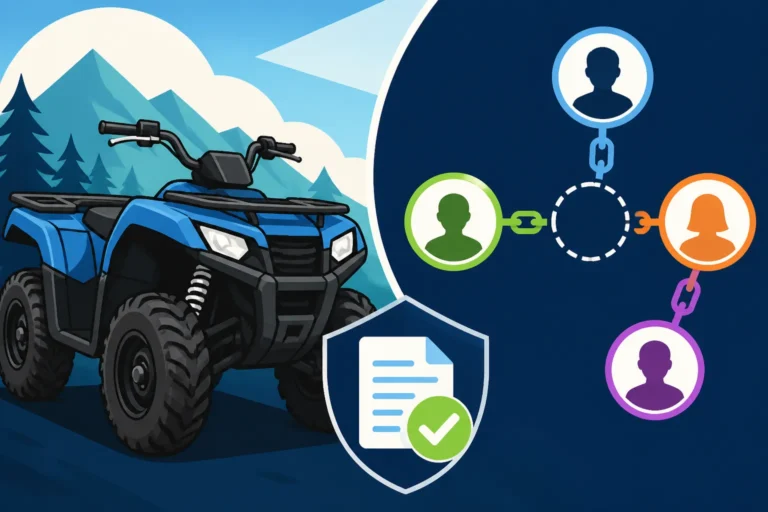
In British Columbia, when an ORV is registered with two owners, the Certificate of Registration typically lists both names, often connected by "and" or "or." This seemingly small conjunction makes a big difference. If the names are joined by "and," it means both owners must agree and sign off on any future transactions, like selling the machine. This provides a strong safeguard for both parties, ensuring neither can act unilaterally. It's a common setup for married couples or close partners who want equal say.
If the names are joined by "or," it usually implies that either owner can perform transactions related to the ORV independently. This offers more flexibility but less protection if one owner decides to sell the machine without consulting the other. It's crucial to understand which method the Autoplan broker uses and what that means for your specific situation. Discuss this explicitly with your co-owner and the broker when you're filling out the paperwork.
Regardless of "and" or "or," the core principle is that the Province of British Columbia recognizes both individuals as having a legal interest in the ORV. This recognition is vital for everything from updating contact information to handling the machine's eventual sale. The system is designed to provide a clear record of ownership, and when two names are on it, it solidifies the shared legal standing. [What the Broker Hands You After You Register] will clearly show how your names are listed, so make sure to review it carefully.
What Happens if One Owner Is Not Present at Registration
Life happens, and sometimes getting both owners to the Autoplan broker's office at the exact same time just isn't feasible. Perhaps one owner works out of town, or a partner is away on vacation. Thankfully, there are ways to manage the registration process even if only one owner can physically be present. The most common solution involves a power of attorney or a proxy form. This legal document grants one owner the authority to act on behalf of the absent owner for the specific purpose of registering the ORV.
It's absolutely critical that any power of attorney or proxy form is properly drafted, signed, and witnessed according to legal requirements. A simple handwritten note won't cut it. The Autoplan broker needs to see a valid legal document to proceed, as they are essentially ensuring the province's records are accurate and legally sound. Without proper authorization, the broker simply cannot add the absent owner's name to the Certificate of Registration, which would defeat the purpose of co-ownership.
Alternatively, if a formal power of attorney feels too complex for your situation, coordinating schedules to ensure both parties can be present is always the safest and most straightforward option. Both individuals must present valid photo identification. This direct approach eliminates any potential confusion or delays related to proxy documentation. Remember, the goal is to get your names correctly on the [BC's Certificate of Registration Explained] so you can enjoy your machine without future complications.
Essential Paperwork and Agreements for Co-Owners
Beyond just showing up with your machine, successful co-ownership of an ORV in BC hinges on having the right paperwork in place and, ideally, a clear understanding codified in an agreement. This isn't just about satisfying provincial requirements; it's about protecting your investment and your relationships.
The Importance of a Co-Ownership Agreement
While BC registration will list both your names, it won't detail how you and your co-owner plan to share the machine, who pays for what, or what happens in specific scenarios. This is where a formal co-ownership agreement becomes invaluable. Imagine you and your sibling, Alex, buy a dirt bike together. Who pays for the tires? What if Alex wants to lend it to a friend, and you don’t approve? What if one of you needs to sell their share due to an unexpected expense? Without a written agreement, these questions can lead to serious arguments and even legal battles.
A co-ownership agreement acts as a rulebook for your shared ORV. It can cover vital aspects like how to split the cost of maintenance, fuel, insurance, and storage. It should also outline usage schedules, responsibilities for cleaning and repairs, and clear procedures for handling disputes. Think about potential friction points: what if one owner wants expensive upgrades and the other doesn't? Or what if one rider gets a ticket for careless operation? Spelling these things out upfront prevents misunderstandings and resentment down the line.
You might consider using a platform like LawDepot to draft a comprehensive co-ownership agreement. These services often provide customizable templates that address common scenarios, helping you create a legally sound document without starting from scratch. Having a formal agreement, even between family members or close friends, adds a layer of professionalism and clarity that informal arrangements simply can't match. It transforms abstract understandings into concrete, enforceable terms, making your shared ownership much more stable.
Documents Needed for Joint Registration
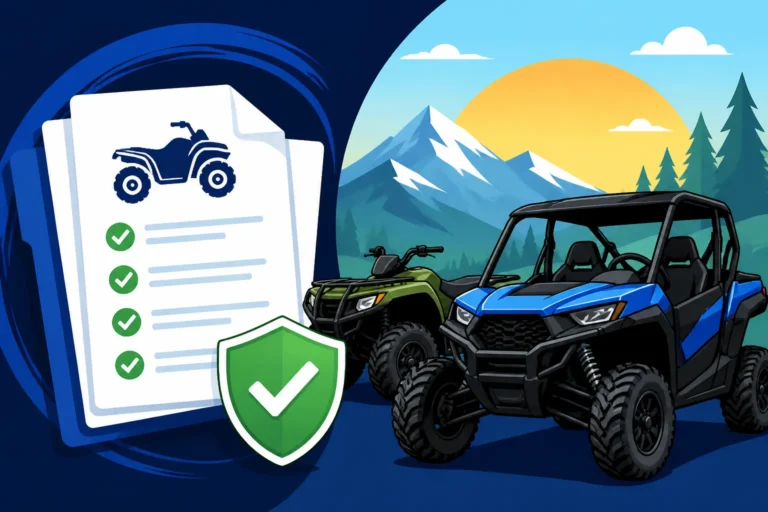
Registering an ORV in BC, especially with two owners, requires a specific set of documents to prove the machine's history and the identities of its new custodians. First and foremost, you’ll need the original bill of sale from the previous owner (or dealer) to prove your purchase. If the machine has changed hands multiple times, the Autoplan broker will need to see [BC Bills of Sale for Every Prior Owner] to establish a clear chain of ownership. This can sometimes be a challenge, especially for older machines where paperwork might be scarce.
For co-owners, both individuals must provide valid government-issued photo identification, such as a driver's license or passport. This verifies who you are and ensures that the names on the registration match your legal identities. If one owner is absent, as mentioned earlier, properly executed legal documents like a power of attorney are crucial. Without these, the broker cannot complete the joint registration.
What if there's a missing bill of sale in the ownership chain, or if the ORV was inherited or gifted? In such cases, a [BC Statutory Declaration for an ORV] might be required. This is a sworn statement, signed in front of a commissioner for oaths (often found at Service BC centres or notary publics), declaring ownership and explaining any gaps in documentation. It's a crucial piece of the puzzle for many older or informally acquired machines and is often necessary to complete the transfer into two names.
Preparing for Your Autoplan Broker Visit
Your trip to the Autoplan broker's office is the final step in getting your co-owned ORV legally registered in British Columbia. To make this process as smooth as possible, preparation is key. Ensure both owners (or one owner with the necessary legal proxy) are ready with all required documentation: original bills of sale, valid photo ID for each owner, and any statutory declarations or co-ownership agreements you might have drafted. It's a good idea to have photocopies of everything, just in case.
Before you go, it's wise to call your chosen [BC Autoplan Brokers Handle ORV Registration] to confirm their specific requirements and perhaps even book an appointment. While many brokers are familiar with ORV registration, some may handle more of these transactions than others. They can also advise on any specific regional nuances or documents they prefer to see. This proactive step can save you a wasted trip and ensure you have everything needed on hand.
When you're at the broker's office, don't hesitate to ask questions. Confirm how both names will appear on the Certificate of Registration (e.g., "and" versus "or") and what that implies for future transactions. Inquire about the associated fees, including the registration fee and any applicable provincial sales tax if you just purchased the machine. [BC PST on an ATV Purchase] applies to private sales as well, so be prepared for that. Understanding these details upfront ensures there are no surprises and that your co-owned machine is fully compliant and ready for your adventures.
Navigating Changes and Disagreements as Co-Owners
Co-ownership is a dynamic relationship, and over time, circumstances or perspectives can change. Addressing potential shifts in ownership or resolving disputes is much easier with foresight and planning.
When One Owner Wants to Sell or Transfer Their Share
Life plans can shift, and one co-owner might decide they no longer want to be part of the ORV ownership. Perhaps they're moving out of the province, or their interest in riding has waned. When this happens, the process for one owner to sell or transfer their share to the other owner (or to a new third party) needs to be clearly defined. If your Certificate of Registration lists both names with an "and," both signatures will be required for any transfer of ownership. This protects the remaining owner from an unwanted new partner.
If the transfer is to the other co-owner, you’ll still need a new bill of sale detailing the transaction and likely a visit to an Autoplan broker to update the registration. The broker will remove the name of the departing owner and issue a new Certificate of Registration to the sole remaining owner. This is similar to [BC Transfer of Ownership Explained], but instead of a full transfer to a new person, it's a transfer of one half-share to the other half. It's essential that this is done formally to reflect the true legal ownership.
This is another situation where a well-drafted co-ownership agreement, perhaps created with assistance from services like LawDepot, proves its worth. Such an agreement should outline the procedures for one owner to exit the partnership, including valuation methods for the ORV, terms of sale, and dispute resolution mechanisms. Without it, determining the fair market value of one's share or agreeing on payment terms can become a contentious and drawn-out process, complicating what should be a straightforward change.
Dealing with Disputes Over Usage, Maintenance, or Costs
Disagreements are almost inevitable in any shared arrangement, and co-owning an ORV is no exception. What if one owner feels they're using the machine more and thus should pay more for fuel, while the other disagrees? Or what if a major repair is needed, and one owner can't afford their share, or believes the other owner caused the damage? These kinds of conflicts can quickly sour a friendship or family relationship if not handled properly.
This is precisely why that co-ownership agreement you drafted at the beginning is your best friend. Having clearly defined clauses on usage, cost-sharing, and repair responsibilities can provide a neutral framework for resolving disputes. You simply refer back to the agreed-upon terms, removing emotion from the discussion. For example, if the agreement states maintenance costs are split 50/50 regardless of usage, then the argument is settled.
If your agreement doesn't cover a specific dispute, or if one party is unwilling to adhere to the agreement, informal negotiation is the first step. Open, honest communication can often resolve minor issues. If that fails, consider mediation—a neutral third party can help facilitate a discussion and guide you towards a mutually acceptable solution. Legal action should always be a last resort, but having a written agreement (even one from LawDepot) strengthens your position significantly if it ever comes to that.
What Happens if a Co-Owner Passes Away
The passing of a co-owner is a somber event, and it brings with it legal implications for the jointly owned ORV. How the ORV is handled depends largely on how the names were joined on the Certificate of Registration and whether a co-ownership agreement was in place. If the registration specifies "joint tenancy with right of survivorship" (often implied if just "and" is used in certain legal contexts, but not always explicit on ORV registrations), the surviving owner typically inherits the full ownership of the ORV.
However, if the ownership was structured as "tenants in common," the deceased owner's share would pass to their estate and be distributed according to their will, or by intestate succession if there is no will. This could mean that the surviving owner ends up co-owning the ORV with a beneficiary from the deceased's estate, which might be an unexpected and complicated situation. This is why addressing succession planning in your co-ownership agreement is so important.
Regardless of the specifics, the surviving owner will need to visit an Autoplan broker with proof of death (a death certificate) to update the ORV’s registration. The broker will guide them through the process of removing the deceased owner's name and issuing a new Certificate of Registration. This ensures that the provincial records accurately reflect the current ownership, preventing any future issues with the machine. For more on this, you can refer to [BC Registration After the Owner Dies].
Key Documents for Co-Owned ORV Registration
When multiple owners are involved in registering an off-road vehicle in British Columbia, having the right documentation ready is crucial. Here's a quick overview of what you'll typically need to prepare:
| Document Type | Purpose | Important Note for Co-Owners |
|---|---|---|
| Bills of Sale | Proves the purchase history and transfer of ownership. | Required from every prior owner. Both current owners' names should appear on the latest bill of sale. |
| Photo Identification | Verifies the identity of the person registering the ORV. | Both owners must present valid ID, or one owner with a legal proxy for the other. |
| Co-Ownership Agreement | Outlines responsibilities, usage, costs, and dispute resolution for shared ownership. | Highly recommended to prevent future disagreements, even if not strictly required for registration. Platforms like LawDepot can help. |
| Statutory Declaration | A sworn statement to explain missing ownership documents or confirm ownership in unique situations (e.g., inherited, no bill of sale). | May be required if there are gaps in the ownership chain for either owner. |
| Power of Attorney/Proxy | Grants one owner legal authority to act on behalf of an absent co-owner during registration. | Must be legally drafted and executed; a simple note is insufficient. |
| Original Certificate of Registration | If transferring an already registered ORV, this document from the previous owner is essential. | Ensure previous owner has provided this, and that it matches the bill of sale. |
This article is for general informational purposes only and does not constitute professional advice. Laws, prices and regulations vary by location and change over time. Consult a qualified professional for guidance on your specific situation.