BC Rules for Riding in a Provincial Park
It's a common dream for many of us who love the roar of an ATV or the versatility of a UTV: imagining cruising through the stunning landscapes of a BC Provincial Park. You envision taking in the pristine wilderness, the towering trees, and serene lakes. But the reality often hits hard when you discover that most, if not all, of these incredible natural spaces are strictly off-limits to off-road vehicles. This guide is here to untangle the often-confusing web of regulations, explain why these rules are in place, and help you understand where you can and cannot ride your machine within BC's beloved provincial parks.
Understanding Why Provincial Parks Restrict ORVs
The desire to explore British Columbia’s natural beauty on an ATV or UTV is totally understandable. We live in a province blessed with incredible wilderness! However, provincial parks operate under a different set of guidelines than, say, a sprawling tract of Crown land. These parks are designated for specific purposes, often involving conservation and passive recreation, which means motorized vehicles like ours usually aren't part of the plan. It can be frustrating when you've invested in a fantastic machine and want to take it everywhere, but these restrictions are in place for very important reasons.
Protecting Fragile Ecosystems and Wildlife
Think about a delicate alpine meadow, a quiet marshland where migratory birds nest, or a winding stream that's home to fish. These ecosystems are incredibly sensitive to disturbance. The heavy tires of an ATV or UTV, especially in wet conditions, can cause significant erosion, compact soil, and damage vegetation that takes years, if not decades, to recover. This isn't just about a few plants; it can disrupt entire food chains and habitats. The noise from our machines can also stress out wildlife, causing animals to abandon nests, alter feeding patterns, or avoid crucial mating grounds. Park management aims to preserve these natural processes and provide a sanctuary for the creatures that call these places home, far from the impact of motorized recreation. When you consider the long-term health of these irreplaceable natural treasures, the rationale behind these restrictions starts to make more sense.
Minimizing Conflicts with Other Park Users
BC Provincial Parks are incredibly popular, attracting a diverse range of visitors. You'll find hikers seeking solitude on quiet trails, families enjoying a peaceful picnic by a lake, birdwatchers with binoculars patiently observing wildlife, and campers looking for a tranquil night under the stars. The presence of ATVs and UTVs, with their associated noise and dust, can significantly detract from the experience these visitors are seeking. Imagine the jarring sound of an engine breaking the silence of a forest, or the dust cloud from a passing quad covering a peaceful trail. Park rules are designed to create a harmonious environment for all users, ensuring that those seeking quiet enjoyment and a connection with nature can do so without interruption. It's about shared spaces and respecting everyone's outdoor experience.
What the BC Parks Act Says About Motorized Vehicles
Navigating the rules for riding in BC Provincial Parks really comes down to understanding the BC Parks Act and its associated regulations. Unlike broader Crown land where the [BC Crown Land Riding Explained] rules apply more generally, provincial parks have their own specific set of directives. If you're hoping to ride your ATV or UTV in one of these beautiful areas, it's crucial to know that the default position is usually one of prohibition. This can be a hard pill to swallow, especially when you see wide, open spaces.
General Prohibitions and Designated Areas
The general rule of thumb for BC Provincial Parks is that off-road vehicles (ORVs) like ATVs, UTVs, and dirt bikes are not permitted on park trails, in campgrounds, or most other areas within park boundaries. The legislation is clear that motor vehicles, with some very specific exceptions like highway-legal vehicles on designated park roads, are generally excluded. While some parks might have specific designated roads or corridors where certain types of motorized access is allowed – usually for maintenance or very specific purposes, and almost never for recreational ORV use – these are the rare exceptions, not the rule. It's not like a vast network of [BC ATV Trails] you might find in other areas; these are strictly protected zones. You'll find that for the vast majority of provincial parks, the answer to "Can I ride my quad here?" is a firm "no." We've even got a whole article dedicated to explaining [BC Provincial Parks That Ban Machines].
How to Find Specific Park Rules
Because each provincial park can have slightly different operational guidelines based on its unique ecosystem, visitor numbers, and management plan, it's absolutely vital to check the specific rules for the park you intend to visit. Never assume that just because you've seen a vehicle somewhere else, it's allowed in your chosen park. The best way to do this is to visit the official BC Parks website. Each park has its own dedicated page where you'll find detailed information on permitted activities, closures, and specific regulations regarding vehicles. You can also often find signage at park entrances, visitor centers, or information kiosks. Don't be shy about calling the park operator directly if you have specific questions. Taking the time to do your homework beforehand can save you a lot of hassle, potential fines, and disappointment. It's all about [Checking a Park's Management Plan] well in advance of your trip.
Types of Vehicles and Their Exemptions (or lack thereof)
When we talk about "off-road vehicles," it's easy to lump everything together, but provincial park rules often draw distinctions, even if those distinctions still result in a prohibition for most recreational machines. Understanding these categories is key, even if it confirms your machine isn't welcome. It highlights the park system's focus on non-motorized recreation.
ATVs, UTVs, and Dirt Bikes Within Parks
For the traditional ATV, UTV (side-by-side), and dirt bike crowd, the news isn't great when it comes to provincial parks. As touched upon, these machines are overwhelmingly prohibited within park boundaries. This isn't usually about whether your machine is registered under the [What the Off-Road Vehicle Act Covers in BC] or if you have insurance; it's about the fundamental purpose and management objectives of provincial parks. Even if your rig is perfectly set up with robust aftermarket parts, perhaps from a brand like SuperATV, for tackling challenging terrain, provincial parks simply aren't the place for that kind of activity. The emphasis is on preserving the natural state and providing experiences that don't rely on motorized access. There are very few, if any, designated areas for recreational ATV or UTV use within the BC Provincial Park system. If you want to understand why a particular type of park is closed to you, consider reading [Why a Glacier Park Shuts Out ATVs] for a specific example of conservation priorities.
E-Bikes and Their Evolving Status
Now, here's where things get a little more nuanced and, frankly, a bit confusing for many park users. E-bikes exist in a grey area that is still evolving. Historically, anything with a motor was considered a "motor vehicle" and therefore subject to the same prohibitions as ATVs. However, many parks and jurisdictions are beginning to differentiate between e-bikes and heavier, more powerful ORVs. Some BC Parks may allow certain classes of e-bikes (e.g., pedal-assist only, with limited speed and power) on trails where traditional bicycles are permitted, while still banning more powerful e-bikes (like those with throttle-only operation). The rules are not uniform across all parks, and they are definitely subject to change as technology evolves and park management adapts. It's absolutely crucial to check the specific park's regulations regarding e-bikes before you head out, as misunderstanding these rules can still lead to fines. Generally, if you're looking for [BC ATV Trails] for high-powered machines, you need to look outside provincial parks.
Consequences of Violating Park Rules
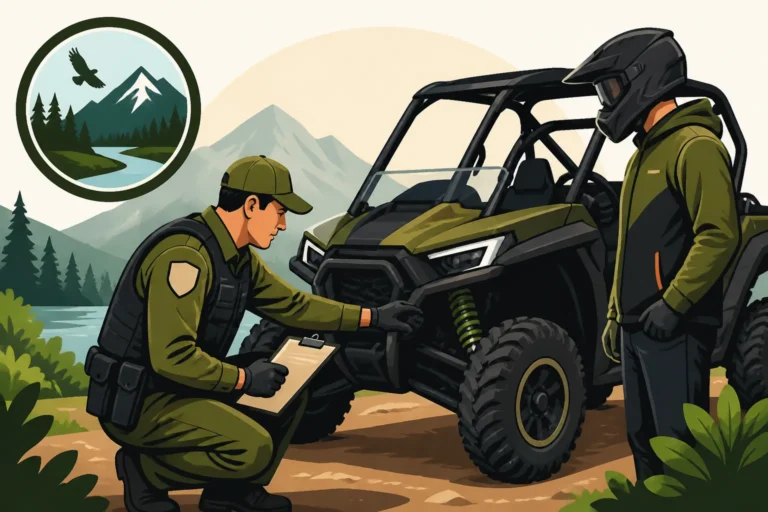
Ignoring provincial park regulations regarding off-road vehicles isn't just a minor infraction; it can lead to some pretty significant headaches and financial penalties. Park rangers and conservation officers are authorized to enforce these rules, and they take their job of protecting these natural spaces very seriously. It's not worth the risk, no matter how tempting a scenic trail might look.
Fines and Penalties
If you're caught riding your ATV, UTV, or dirt bike in a prohibited area within a BC Provincial Park, you can expect to face substantial fines. These aren't just small tickets; they can quickly add up, especially if you're found to be in an ecologically sensitive zone or causing damage. The fines are designed to be a strong deterrent, reflecting the provincial government's commitment to preserving these areas. Furthermore, these fines can sometimes be combined with other violations, such as [BC Fines for Careless Operation] or even more serious environmental infractions, depending on the circumstances. It's far better to enjoy your machine in designated riding areas, like those found on [BC Forest Service Road Rules for ORVs], rather than risk a hefty penalty in a park.
Machine Seizure and Further Action
Beyond financial penalties, one of the most severe consequences of violating park rules is the potential for your machine to be seized. Park rangers and conservation officers have the authority under various acts, including aspects that align with the [BC Seizure Powers Under the ORV Act], to impound off-road vehicles found in prohibited areas. This means your ATV or UTV could be towed away, and you would then be responsible for all towing and storage fees, which can accumulate rapidly. Retrieving a seized machine can be a lengthy and expensive process, often requiring court appearances or administrative hearings. In some cases, repeated or severe infractions could even lead to bans from park property. It's a stark reminder that these rules are not to be trifled with, and it's always best to know [BC Motor Vehicle Closed Areas] before you embark on your adventure.
Summary of Typical Provincial Park Restrictions for ORVs
To help visualize the common restrictions you'll encounter in BC Provincial Parks, here's a quick overview. Remember, always verify with the specific park you plan to visit.
| Feature / Area | ATV/UTV/Dirt Bike (Recreational) | E-Bike (Consult Park Specifics) |
|---|---|---|
| Designated Trails | Generally Prohibited | Varies by Park; often Class 1 permitted |
| Wilderness Areas | Strictly Prohibited | Prohibited |
| Campgrounds | Prohibited (unless registered and used for transit on paved roads) | Often Prohibited |
| Paved Park Roads | Prohibited (unless highway legal) | Generally Permitted |
| Backcountry Access | Prohibited | Prohibited |
| Maintenance Roads | Restricted (Permit Only) | Restricted (Permit Only) |
| Environmental Impact | High risk of damage | Lower risk, but still a concern |
| Noise Impact | Significant | Minimal |
| User Conflict | High | Low to moderate |
Disclaimer
This article is for general informational purposes only and does not constitute professional advice. Laws, prices and regulations vary by location and change over time. Consult a qualified professional for guidance on your specific situation.