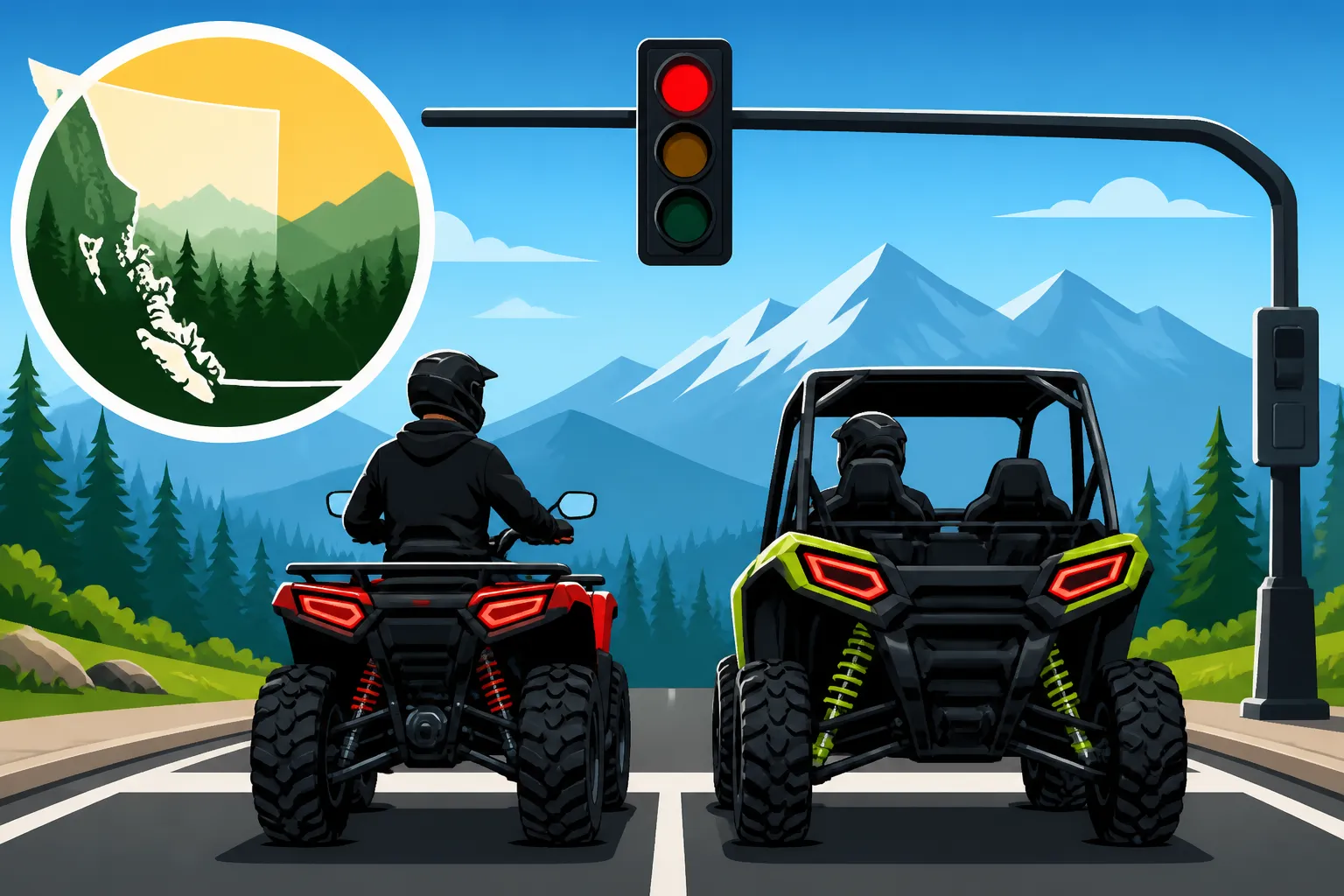
BC Crossings at a Traffic Light
It’s a scenario many of us BC off-road vehicle (ORV) enthusiasts have encountered: you're out exploring some incredible trails, the sun is shining, and you're making fantastic progress… until you hit a paved road. Maybe it’s a quiet rural highway, or perhaps a busier connector, and looming large ahead is a traffic light, demanding a decision. Navigating these moments can feel like trying to solve a puzzle while riding a quad, especially with the ever-present worry about breaking the rules or, worse, putting yourself in harm's way. This guide is here to walk you through everything you need to know about legally and safely crossing a highway at a traffic light in British Columbia, ensuring your ride stays smooth and stress-free.
The Fine Line: ORVs and Paved Roads in BC
Riding an off-road vehicle in British Columbia is an unparalleled experience, offering access to some of the most breathtaking backcountry in the world. However, the thrill of the trail often comes with the practical reality of intersecting with our paved road network. It’s a point of confusion and frustration for many riders, and for good reason: the rules aren't always immediately obvious, and the consequences of getting it wrong can be significant.
The Disconnect Between Trail and Tarmac
In British Columbia, there's a pretty clear legal distinction between where an ORV is welcome and where it's generally not. Your ATV, side-by-side, or dirt bike is primarily designed and legislated for off-highway use. Think Crown land, dedicated trails, forest service roads (FSRs), and private property where you have permission. These are your playgrounds. The moment you introduce pavement, you're stepping into a different legal realm, one governed predominantly by the Motor Vehicle Act, which largely considers ORVs a different class of vehicle entirely. This disconnect means that simply rolling from a dirt track onto a paved road as if it's an extension of the trail is a big no-no. It's not about being a killjoy; it's about road safety, traffic flow, and the design limitations of many ORVs that aren't built for highway speeds or interactions. We all understand the desire for seamless travel, but the law draws a hard line here, and understanding that line is the first step to riding responsibly.
Why Crossing is Sometimes Unavoidable
Despite the legal separation, it's virtually impossible to enjoy the vast network of BC's off-road trails without eventually encountering a paved road that needs to be crossed. Maybe your favourite staging area is on one side of a highway, and the trail network begins on the other. Perhaps you're connecting two distinct trail systems that are only separated by a short stretch of pavement. Sometimes, it’s simply the most direct, or even the only, way to get from point A to point B on your route. Imagine you're out in the Cariboo, exploring old gold rush trails, and you suddenly find a paved road cutting through your path, or you're on [BC Forest Service Road Requirements] and it spits you out onto a numbered highway. It's not always about convenience; sometimes it's a geographic necessity. The frustration often stems from feeling cornered – you're doing everything right on the trail, but the moment you touch asphalt, you feel like you're breaking the law. Acknowledging these real-world scenarios is crucial because it helps us understand why clear rules for crossings are so important.
Navigating the ORV Act and Highway Rules
When it comes to ORVs and roads in British Columbia, you're essentially dealing with two major pieces of legislation that, at times, seem to be at odds: the Off-Road Vehicle Act and the Motor Vehicle Act. Understanding how these two acts interact, especially at an intersection controlled by a traffic light, is fundamental for any rider. It's not just about knowing "what to do," but understanding the legal framework that dictates why you do it.
What the ORV Act Says About Pavement
The Off-Road Vehicle Act, which came into full effect in 2015, primarily governs the operation, registration, and use of ORVs off-highway. Its entire premise is built around distinguishing these machines from conventional highway vehicles. So, when it comes to pavement, the ORV Act is pretty clear: it generally prohibits ORVs from operating on a "highway" as defined by the Motor Vehicle Act, except in very specific circumstances. One of those key exceptions, which we're diving into today, is for direct crossings. The Act doesn't want you cruising down the highway, but it recognizes that sometimes you need to get from one side to the other. It's a pragmatic allowance, not a blanket permission slip. This is why you'll see specific rules for [BC Rules for Crossing a Highway] outlined in the regulations – they're designed to manage this interface safely. The underlying principle is to minimize ORV exposure to highway traffic while still allowing access to off-road areas.
The Motor Vehicle Act's Authority
While the ORV Act handles your quad or side-by-side on the dirt, the Motor Vehicle Act is the absolute ruler of our paved roads, highways, and intersections. This act dictates everything from speed limits and lane usage to vehicle registration (for highway vehicles), driver licensing, and traffic control devices like, you guessed it, traffic lights. For an ORV, operating on a highway, even for a brief crossing, means you are temporarily entering the Motor Vehicle Act's domain. This is why certain requirements, like having a valid driver's licence and basic insurance, suddenly become relevant, even if only for those few seconds you're on the pavement. The Motor Vehicle Act doesn't "recognize" an ORV as a typical highway vehicle in the same way it does a car or truck, which means ORVs are often treated as an anomaly that needs strict regulation when they briefly cross into highway territory. Understanding its overarching authority helps to explain why certain rules, like stopping at a traffic light, are non-negotiable for all vehicles, including ORVs, that enter a controlled intersection.
Defining "Highway" in BC
This might seem pedantic, but the legal definition of a "highway" in British Columbia is absolutely critical for ORV riders. Many people mistakenly think "highway" only refers to multi-lane freeways, but in BC, the definition is much broader. According to the Motor Vehicle Act, a "highway" includes "every road, street, lane or right of way designed or intended for use by the general public for the passage of vehicles, and includes every private road, street, lane, or right of way that has been dedicated to the public use." This means paved public roads, gravel public roads, city streets, municipal lanes, and even some public parking lots can all fall under the definition of a "highway" for the purposes of the Act. This expansive definition is why [BC Has No Street-Legal Path for an ATV], and why even crossing a small, quiet paved road at an uncontrolled intersection requires adherence to specific rules, let alone one with a traffic light. The implication for ORV riders is clear: assume any public paved surface is a "highway" unless explicitly told otherwise, and therefore, apply the crossing rules diligently. This understanding helps avoid those "I didn't know!" moments that can lead to tickets or even accidents.
The Mechanics of a Traffic Light Crossing
Alright, so you’ve established that crossing at a traffic light is sometimes a necessary evil, and you understand the legal landscape. Now, let’s get down to the practical steps. This isn't just about waiting for a green light; it's about a systematic approach to safety and compliance that reduces risk for you and for other road users. Think of it as a mini-mission: short, focused, and requiring full attention.
Approaching the Intersection Safely
The moments leading up to a traffic light crossing are just as important as the crossing itself. You can't just blast out of the trees and onto the pavement. First and foremost, you need to slow down significantly as you approach the paved road. This isn't just a suggestion; it’s a critical safety measure. You need to be ready to stop completely, even if the light looks green from a distance, because conditions can change rapidly. Check your surroundings for any approaching traffic – both on the highway and any cross-traffic or vehicles turning onto your intended path. Signal your intent to cross by using appropriate hand signals, as many ORVs don't have turn signals that are easily visible on pavement. Look for a safe, clear spot to pull over to the shoulder or edge of the pavement, ensuring you're not obstructing traffic or creating a hazard. This brief pause allows you to assess the light, traffic, and your plan. If you're riding with a group, ensure everyone understands the plan and is ready to execute it together, maintaining appropriate spacing. Being predictable and visible are your best assets here. Consider what kind of visibility your machine offers; a well-equipped machine with bright lights, maybe even aftermarket SuperATV LED light bars, will make you much more noticeable to highway traffic, especially at dawn, dusk, or in poor weather.
Executing the Crossing: Step-by-Step
Once you've safely approached and assessed the intersection, it's time to execute the crossing. This sequence needs to be precise and deliberate:
- Stop Completely: This is non-negotiable. Treat a traffic light with the same respect any other vehicle would. Come to a full stop behind the white stop line.
- Observe the Light: Wait for a solid green light in your intended direction of travel. Do not proceed on a flashing green, a yellow, or, of course, a red light.
- Scan for Traffic (Again): Even on a green light, always do a final visual scan for any vehicles running the light, turning against your path, or emergency vehicles. Remember, you're on a less visible machine, and other drivers might not anticipate an ORV. This is crucial for your safety.
- Proceed Directly Across: When it's clear and safe, proceed directly across the highway at a right angle. Do not travel down the highway, even for a short distance, unless specifically authorized by an [BC Operation Permit Application Steps] or local bylaw. The goal is to minimize your time on the pavement. Maintain a steady, safe speed that allows you to control your machine and react if needed, but don't dawdle. The faster you can safely clear the intersection, the better.
- Maintain Awareness: Keep your head on a swivel. Your focus needs to be 100% on the crossing until you are completely off the paved surface and safely on the other side.
This is a scenario where [BC Rules for Crossing a Highway] apply, and following them precisely can prevent accidents and tickets.
Post-Crossing Protocol
You’ve made it across! Great. But the job isn't quite done yet. As soon as your ORV is entirely off the paved surface and onto the trail, dirt shoulder, or whatever awaits on the other side, take a moment to regroup. Don't immediately accelerate to trail speed. If you're in a group, ensure everyone has successfully crossed and is accounted for. Check your mirrors or turn your head to make sure no one is lagging behind or has encountered an issue. This is also a good time to take a deep breath and readjust your mindset from "highway crossing" back to "off-road adventure." If you've briefly used high-visibility equipment like specific flags or strobes for the crossing, you can now safely stow them if they are not needed for trail riding. The transition back to the trail should be as smooth and deliberate as your approach to the pavement, ensuring continuous safety for everyone.
Safety First: Mitigating Risks at Intersections
Crossing a highway on an ORV, even for a short distance at a traffic light, introduces a unique set of risks. Unlike a car, you're smaller, less protected, and often less anticipated by other drivers. Therefore, adopting a defensive, safety-first mindset is paramount. It's not just about following the letter of the law; it's about protecting yourself and your passengers.
Visibility is Your Best Friend
Being seen is half the battle when you're briefly interacting with highway traffic. Many stock ORVs, while perfectly adequate for trail riding, might not have the same level of passive or active visibility as a street-legal vehicle. This is where you, as the rider, need to take proactive steps.
- Lights: Ensure all your lights are functioning – headlights, taillights, and any additional running lights. For increased visibility, especially if you anticipate evening or low-light crossings, consider adding auxiliary lighting. Products from brands like SuperATV offer a range of powerful LED lights and light bars that can significantly boost your presence. A bright, white light facing forward and a red light to the rear are not just good ideas, they are often required under [BC Lighting and Seat Belt Requirements] if you're on a highway. Even in broad daylight, having your lights on makes you more noticeable.
- Reflectors: Check that your machine's factory reflectors are clean and intact. You can also add reflective tape to your helmet, machine, or gear for extra conspicuity.
- Clothing: Wear brightly coloured riding gear. Fluorescent colours like neon yellow, green, or orange stand out much better than camouflage or dark colours, especially against varied backgrounds. A reflective vest worn over your jacket can also make a huge difference.
- Positioning: As you approach the intersection, try to position your machine where drivers are most likely to see you without blocking their view. Sometimes this means being slightly to the right of the lane to allow cars to pass, but still in a position to be clearly observed. Never hide behind larger vehicles.
Remember, most drivers aren't expecting to see an ATV or side-by-side at a traffic light, so anything you can do to make yourself more prominent helps overcome that initial blind spot in their perception.
Anticipating Driver Behavior
One of the biggest differences between trail riding and highway interaction is the sheer unpredictability of other drivers. On a trail, you're usually dealing with fellow ORV enthusiasts who understand the dynamics. On the highway, you're among a diverse group of drivers, some of whom may be distracted, in a hurry, or simply unfamiliar with ORVs.
- Assume You're Invisible: This is a classic defensive driving mantra, and it applies even more so to ORV riders. Don't assume other drivers see you, even if you're brightly lit and wearing neon. Make eye contact if possible.
- Expect the Unexpected: Be prepared for cars to turn left in front of you on a green light, for vehicles to run a red light, or for drivers to suddenly change lanes. Always have an escape route or a braking plan in mind.
- Give Space: Maintain ample space between your ORV and any vehicles in front of you, and try not to get boxed in by vehicles beside you. This buffer zone gives you more time to react to sudden movements or changes in traffic flow.
- Predict Turners: At a traffic light, pay special attention to vehicles in opposing lanes that have their turn signal on for a left turn. They might misjudge your speed or presence and initiate a turn across your path. Similarly, watch for vehicles turning right on a red light (where permitted), as they might not see you coming from the side.
By anticipating these common highway scenarios, you can react more quickly and avoid potential collisions.
Essential Gear for Brief Highway Exposure
While the focus of ORV riding is typically off-road, any time you touch pavement, even for a quick crossing, certain gear becomes even more critical.
- Helmet: This is non-negotiable in British Columbia. [BC Helmet Law Covers Every Rider] when operating an ORV. On a highway, a helmet is your primary protection against head injuries in the event of an impact, whether with another vehicle or the pavement itself. Ensure your helmet meets recognized safety standards and is properly fitted.
- Eye Protection: Goggles or a full-face helmet visor are essential. Debris, wind, or even insects can impair your vision, and clear vision is paramount at an intersection.
- Protective Clothing: Long pants, a long-sleeved shirt or jacket, gloves, and sturdy, over-the-ankle boots are always recommended for ORV riding. On the pavement, these layers provide crucial abrasion protection if you were to fall or be involved in a low-speed incident.
- Driver's Licence: While you don't need a driver's licence to ride an ORV off-highway, if you're operating on a "highway" (even for a crossing), [BC Requires a Driver's Licence on a Highway]. Ensure you have a valid BC driver's licence with you.
- Registration and Insurance: Your ORV must be registered in BC, and you must carry your [BC Riders Must Carry the Certificate] of registration. Furthermore, while basic liability insurance isn't mandatory for all off-road use, if you're crossing a highway, you need to ensure you have at least basic insurance coverage. Check with your insurance provider to understand your policy's specifics for brief highway exposure. Often, private insurers offer policies that cover [BC Insurance Bought With Registration] and some liability for such crossings.
Having the right gear isn't just about avoiding tickets; it's about making a conscious choice to minimize personal risk in an environment where mistakes can have severe consequences.
Understanding Consequences: Penalties and Enforcement
Nobody wants to get a ticket, let alone face more serious repercussions, especially when you're just trying to connect two legal riding areas. However, operating an ORV improperly on a highway, even for a crossing, falls under the purview of law enforcement. Knowing the potential penalties is a strong motivator to ensure you follow all the rules precisely.
Violation Tickets for Improper Crossings
If you fail to follow the rules for crossing a highway at a traffic light, you could be issued a violation ticket by the RCMP or a local bylaw officer. Common infractions could include:
- Failing to Stop at a Red Light: This is a serious offence for any vehicle, and your ORV is no exception. The fine for this is substantial, and it carries demerit points against your driver's licence, just as if you were in a car.
- Operating an Unregistered ORV on a Highway: While your machine might be registered for off-road use, if you don't carry your certificate or if the registration isn't current, you could face a fine. Don't forget, [BC ORV Registration Became Mandatory in 2015].
- Operating an ORV Without a Driver's Licence: If you don't have a valid driver's licence, or if it's suspended, riding your ORV on a highway (even for a crossing) will result in a ticket.
- Improper Operation on a Highway: This is a broad category that could cover things like not yielding to traffic, unsafe speeds, or not proceeding directly across.
- Lack of Required Equipment: Failing to have proper lights, or not wearing a helmet, can also lead to fines. [BC Fines for Careless Operation] can be hefty, and police often don't differentiate between an ORV and a car when it comes to traffic safety offences.
These tickets aren't just an inconvenience; they can impact your wallet and your driving record. It's always cheaper and less stressful to take the extra minute to cross legally and safely.
Machine Seizure and Impoundment Risks
Beyond a simple fine, more serious infractions can lead to your ORV being impounded. This is particularly true if you are caught operating the machine:
- While Prohibited or Suspended: If your driver's licence is suspended or you are prohibited from driving, and you're caught crossing a highway on your ORV, your machine can be seized and impounded.
- Without Insurance: Operating any vehicle on a highway without basic insurance coverage is a serious offence in BC and can lead to impoundment.
- In an Impaired State: If you are found to be operating your ORV while under the influence of alcohol or drugs, not only could you face criminal charges, but your machine will almost certainly be impounded. [BC Impaired Riding and the Criminal Code] treats an ORV as a "conveyance" just like a car.
- Repeated Violations: If you're a repeat offender for serious traffic violations on your ORV, police have more discretion to impound your machine.
An impoundment means significant towing and storage fees, in addition to any fines and legal penalties. It can easily cost you hundreds, if not thousands, of dollars to get your machine back, not to mention the hassle and disruption to your riding plans. Sometimes, the police may even exercise [BC Warrantless Seizure of a Machine] if there's a belief it was used in an offence.
Insurance Implications of an Incident
If you are involved in an accident while crossing a highway at a traffic light, the insurance implications can be complex and costly if you haven't followed the rules.
- Coverage Voided: If you were operating your ORV illegally at the time of an accident (e.g., without a valid driver's licence, without required insurance, or in a prohibited manner), your insurance policy could be voided. This means you would be personally responsible for any damage to your ORV, injuries to yourself, and, critically, any damages or injuries you caused to other vehicles or people.
- Liability: Imagine you run a red light on your ORV and collide with a car. If your insurance is voided, you could be facing claims for the other driver's medical expenses, vehicle repairs, lost wages, and more. These costs can quickly escalate into the tens or hundreds of thousands of dollars, potentially leading to financial ruin.
- Increased Premiums: Even if your insurance covers the incident, an accident on your record, especially one involving a traffic violation, will almost certainly lead to significantly higher premiums for all your vehicles in the future.
It's crucial to understand your [BC ATV Insurance Requirements] and ensure you have adequate coverage, especially for any potential highway interactions. When in doubt, always err on the side of caution and adhere strictly to the rules of the road. Your financial well-being, and indeed your life, could depend on it.
Beyond the Crossing: Limited Highway Use and Permits
While our focus today has been on the often-necessary act of crossing a highway at a traffic light, it's important to understand that there are other, albeit highly restricted, ways an ORV can legally interact with paved public roads in British Columbia. These exceptions are specific and are not a green light for casual highway riding.
Operation Permits for Controlled Highway Travel
For those specific, limited instances where an ORV might need to travel a short distance along a highway rather than just directly across it, there is a mechanism: the Operation Permit. This isn't something you get at your local Autoplan broker; these permits are issued by a police officer, often from your local RCMP detachment or municipal police force.
- Strict Conditions: An Operation Permit is not a right; it's a privilege granted under very specific conditions. These conditions are attached directly to the permit and can include restrictions on time of day, specific routes, maximum speeds, and duration of validity. For example, a permit might allow you to travel 2 km down a rural highway to access a different FSR, but only during daylight hours, and only if you have a valid driver's licence and minimum liability insurance.
- Why You Might Need One: Scenarios for needing a permit could include moving agricultural machinery short distances between fields, accessing a remote work site where no alternative route exists, or participating in a permitted parade or event. It's almost never for recreational purposes to simply shorten a route.
- Application Process: You typically apply for these permits at a police detachment, explaining your need and the specific route and conditions. The police officer assesses the request based on public safety and the necessity of the proposed travel. These permits are typically free and can be valid for up to two years. [Getting a Free Operation Permit From Your Local Detachment] means understanding that it comes with a responsibility to adhere to all attached conditions.
It's vital to remember that an Operation Permit is for very specific, controlled circumstances and does not grant general permission for ORV highway travel.
Designated ORV Routes and Municipal Bylaws
While rare, some municipalities or regional districts in BC might have specific bylaws that designate certain low-traffic roads or short stretches of pavement as legal ORV routes. These are typically in very rural or remote areas where ORVs are a common form of transportation, and the designated route might connect a community to a major trail network.
- Local Specificity: These are highly localized exceptions. You absolutely cannot assume such routes exist without verifiable information. You won't find these on major highways.
- Check Local Authorities: Before ever considering using a paved road based on a supposed local bylaw, you must contact the specific municipal or regional district office to confirm the exact routes, conditions, and any requirements (like specific signage, speed limits, or times of use).
- Clear Signage: Legally designated ORV routes will always be clearly marked with official signage indicating that ORVs are permitted. If you don't see such signage, assume it's prohibited.
These exceptions are few and far between and should never be assumed. Always do your homework if you think you've found one.
Loading and Unloading in Parking Lots
Finally, it's worth noting that using parking lots, even paved ones, to load or unload your ORV onto a trailer is generally permissible. A parking lot is typically considered private property or a distinct area from the main flow of traffic, even if it's publicly accessible.
- Not Operating, Just Staging: The key here is that you're not operating your ORV on the highway; you're using the parking lot as a staging area. You might briefly drive your ORV from your truck/trailer to a safe spot in the lot, or vice-versa, to secure it.
- Due Care: Even in a parking lot, you still need to operate your ORV with due care and attention, respecting other vehicles and pedestrians. Keep speeds low, watch for children, and proceed directly to your loading/unloading point.
- Connects to the Trail: Often, these parking lots are specifically designed as staging areas for ORV trails, with direct access to the dirt. This helps keep ORVs off the main roads as much as possible.
This seemingly minor point is actually quite important, as it provides a safe, legal interface between your transport vehicle and your ORV, without triggering the full strictures of highway operation. It's a common sense allowance that helps riders access the trails they love.
| Rule/Area | Off-Road Vehicle (ORV) Act | Motor Vehicle Act (Highway) | Controlled Crossing (Traffic Light) |
|---|---|---|---|
| Primary Use | Off-highway riding | Paved public roads | Brief, direct connection |
| Registration | Mandatory (BC ORV Reg) | N/A (ORV not street legal) | Mandatory (BC ORV Reg) |
| Driver's Licence | Not always required for ORV | Required for all vehicles | Required for ORV operator |
| Insurance | Voluntary for Crown Land* | Mandatory (Basic Autoplan) | Basic liability coverage advised* |
| Helmet | Mandatory | Mandatory | Mandatory |
| Lights | Advised (often required) | Mandatory | Mandatory (day and night) |
| Speed Limit | Varies by trail/site | Posted limit | Safe, controlled speed |
| Duration | Continuous | Continuous | Minimal, direct passage only |
| Permits | N/A | N/A (except specific ORV OP) | N/A (unless using OP for longer stretch) |
| Penalties | Fines, seizure | Fines, impoundment, points | Fines, impoundment, points |
Note: While basic liability insurance is voluntary for ORV operation on Crown land, it's strongly advised to have at least $200,000 in third-party liability coverage, especially when near resource roads or areas with mixed-use traffic. For any highway interaction, even a crossing, basic insurance becomes crucial to protect against liability in an accident. Always verify your coverage with your provider for specific scenarios like [BC Insurance Bought With Registration].
Disclaimer
This article is for general informational purposes only and does not constitute professional advice. Laws, prices and regulations vary by location and change over time. Consult a qualified professional for guidance on your specific situation.