BC Registration for a Farm Quad
It's a common and understandable frustration for farmers here in British Columbia: you've got a quad or side-by-side that's a workhorse on your property, not a toy for recreational trails, and yet the rules still seem to say you need to register it. It can feel like an unnecessary bureaucratic hurdle for a machine that's essential to your livelihood. This guide is here to untangle the specifics of BC's Off-Road Vehicle Act and clarify exactly why and how your farm quad needs to be registered, and what steps you need to take to keep things above board.
Why Your Farm Quad Needs BC Registration Just Like Any Other ORV
Many folks who use an ATV or UTV primarily for farming tasks are genuinely surprised, and often a little annoyed, to learn that their machine isn't exempt from registration. It's a natural assumption: if it's for work, on the farm, why does it need the same paperwork as someone's weekend trail machine? This misconception stems from how we think about "farm equipment" versus "recreational vehicles," but the BC Off-Road Vehicle Act draws a very specific line.
The Common Misconception About Agricultural Exemption
Let's be real, you're not out there tearing up single-track trails with your hay hauler or spraying rig. Your quad is a tool, an extension of your farm operations. You might be using it to check fences, move irrigation lines, transport feed, or inspect crops across your fields. In many other contexts, vehicles used purely for agricultural purposes are often treated differently by regulations. This leads to the very logical assumption that your farm quad, being a bona fide piece of farm equipment, would fall under some kind of agricultural exemption for registration.
However, the BC Off-Road Vehicle Act doesn't create a broad exemption based on the purpose for which the machine is used. Instead, it focuses on the type of machine and where it's being operated. Many heavy-duty farm machines like tractors, combines, or large loaders are generally exempt from ORV registration because they are explicitly excluded from the definition of an "off-road vehicle" within the Act, or they are registered under the Motor Vehicle Act for limited highway use. An ATV or UTV, regardless of its attachments or how it's being used on a farm, still fits the core definition of an off-road vehicle. This means that if your farm operations take your quad off your private land and onto certain public lands, registration becomes mandatory.
What the BC Off-Road Vehicle Act Actually Says
The BC Off-Road Vehicle Act defines an "off-road vehicle" quite broadly. It includes any motor vehicle designed to be operated exclusively or almost exclusively off highways. This definition perfectly encompasses ATVs, UTVs (side-by-sides), dirt bikes, and snowmobiles, regardless of whether they have a plow attached, a sprayer rig, or a utility box full of tools. The Act focuses on the inherent design of the machine.
The critical trigger for registration is actually where you operate your farm quad. While you don't need to register your quad if you only use it on your own private property, the moment it touches certain public lands, the rules kick in. This is where the concept of "Crown land" becomes vital. In BC, registration for an ORV became mandatory in November 2015 for any machine operating on Crown land. This includes not only obvious recreation trails but also:
- Forest Service Roads (FSRs) / Resource Roads: These are public roads maintained by the government, often used for industrial purposes, but they are still Crown land. Many farm properties border or are accessed via FSRs. Even a brief crossing or short stretch of riding on an FSR means your farm quad needs to be registered. [BC Resource Roads Count as Crown Land]
- Public access points, easements, or unused road allowances: If your property access involves any sliver of public land, you could be triggering the registration requirement.
- Leased Crown land: While you might lease land for agricultural purposes, it remains Crown land, and using your ORV on it still generally requires registration. You also need to ensure you have permission from the province as the land owner, and any other leaseholders.
So, while your farm quad might feel like a tractor, legally speaking, if it's an ATV or UTV and you plan to operate it anywhere beyond the boundaries of your completely private land, it's considered an ORV and falls under the Act. Ignoring this can lead to [BC Tickets for an Unregistered Machine], which no farmer wants to deal with on top of everything else.
Navigating the Registration Process for Your Farm Quad
The thought of more paperwork can be daunting, especially when you're busy with farm tasks. However, registering your farm quad in BC is a relatively straightforward, one-time process once you have your documents in order. It's not an annual renewal like vehicle insurance or some other permits; it's a permanent registration that lasts as long as you own the machine.
Gathering Your Essential Paperwork
Before you head to an Autoplan broker, you'll need to gather a few key documents. This is often the part that gives farm quad owners the most grief, especially if the machine has been in the family for ages or purchased privately without meticulous record-keeping.
First and foremost, you'll need proof of ownership. This means a bill of sale, or a series of bills of sale, that traces the machine's ownership history right up to you. Yes, for every single prior owner. If you bought your quad from a dealership, they usually provide all the necessary paperwork. However, if you bought it privately, you need that original bill of sale from the seller. If that seller also bought it privately, you need their bill of sale, and so on. The chain of ownership needs to be complete. If you've owned the machine for decades and the original bill of sale is long gone, or if you inherited it, don't despair.
This is where a statutory declaration comes in. A statutory declaration is a sworn legal document where you declare under oath that you are the rightful owner of the machine and explain the circumstances of its acquisition. You can often find templates for statutory declarations online, including on platforms like LawDepot, which provides easy-to-use legal document templates. You'll need to sign this in front of a commissioner for taking affidavits (often found at ICBC locations, Service BC offices, or notary publics). This document can effectively replace a missing bill of sale in the ownership chain. Remember, a [BC Statutory Declarations Cost $15] to have processed at Service BC, plus any fee for the commissioner.
You'll also need proof of identity (like a valid driver's licence) and proof of your BC address. Make sure your identification is current and matches your current residential address.
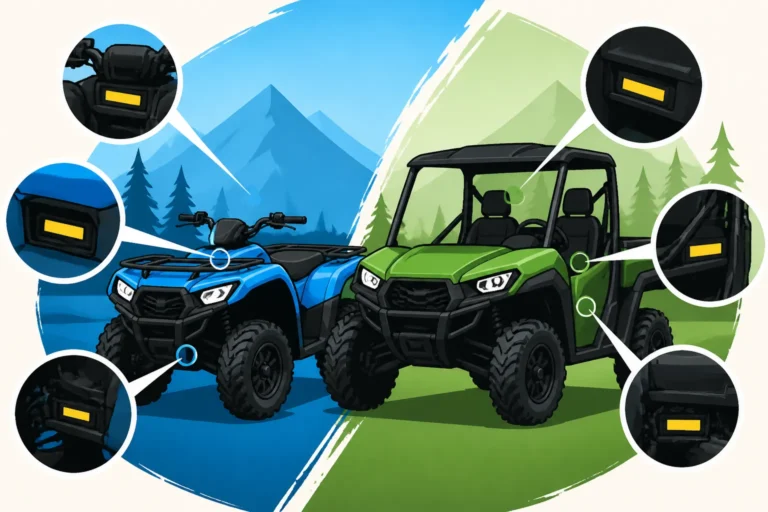
Finally, you need the Vehicle Identification Number (VIN). This unique 17-character code is crucial. It's usually stamped on the frame of the quad, often near the front suspension, under the seat, or on a crossmember. Take a clear photo of it or write it down accurately, as the broker will need it. If the VIN is obscured or missing, that creates a different set of challenges, so make sure you locate it first.
What Happens at the Autoplan Broker
Once you have all your ducks in a row – your proof of identity, proof of address, and the complete chain of ownership (or statutory declaration(s) to fill any gaps) – you can head to any ICBC Autoplan broker. That's right, the same place where you renew your car insurance. [BC Autoplan Brokers Handle ORV Registration] for everything from dirt bikes to farm quads.
When you arrive, simply tell them you're there to register an off-road vehicle. The broker will review your documents carefully. They'll verify your identity and address, and most importantly, they'll scrutinize your ownership papers. If there are any missing links in the chain of ownership and you haven't brought a statutory declaration, they will guide you on what you need to do next.
The registration itself is a one-time fee. Currently, the [BC ORV Registration Cost] is a relatively small amount for the initial registration. There are no annual renewal fees for the registration itself, which is a relief. You pay it once, and it's good for as long as you own the machine. The broker will process the paperwork, enter your machine's details into the provincial system, and take your payment.
Receiving Your Certificate of Registration and Plate
After the broker has successfully processed your application and payment, they will hand you two critical items:
- The Certificate of Registration: This is a physical document, much like your car's vehicle registration. It contains all the pertinent information about your farm quad, including its VIN, make, model, and your details as the registered owner. [BC's Certificate of Registration Explained] is not a "title" like you might get for a car in some jurisdictions, so don't expect a large, fancy document. It's a certificate proving your machine is registered. Keep this document safe, perhaps laminated, but accessible, as you'll need to carry it with you when riding.
- The ORV Number Plate: This is a small, rectangular metal plate, similar to a motorcycle plate but specific for off-road vehicles. It will have a unique number that identifies your registered farm quad. You'll need to affix this plate to your machine. [BC ORV Number Plates and Decals] must be visibly displayed.
The broker will explain the requirements for plate placement. Generally, the plate must be securely attached to the front, back, or left side of your ORV, horizontally mounted, and kept clean so that it's clearly visible and legible. For a farm quad with racks or specialized equipment, you'll need to find a spot where it won't be easily obscured.
Ongoing Responsibilities and Rules for Farm Quad Owners
Once your farm quad is registered, it's not a "set it and forget it" situation. There are ongoing responsibilities and rules you need to be aware of, especially concerning carrying your documents, insurance, and specific operational restrictions on various types of land. Adhering to these rules ensures you don't face penalties or run into issues while using your essential farm machinery.
Carrying Your Documents and Displaying Your Plate
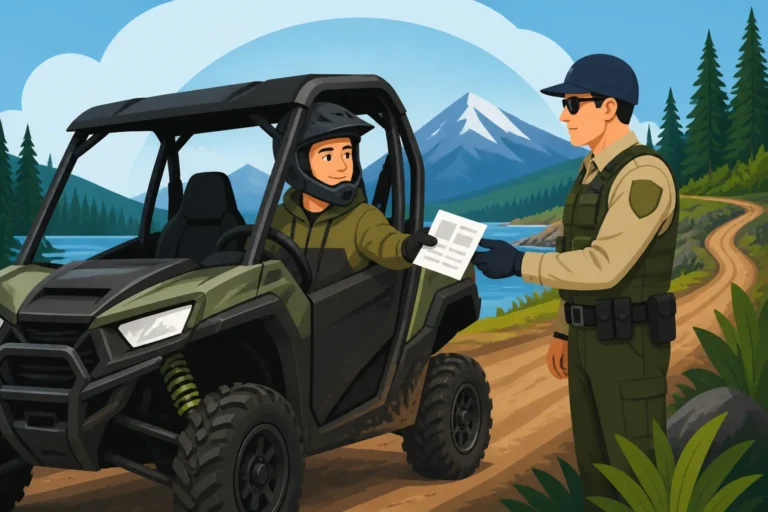
This is a simple but crucial rule: whenever you are operating your registered farm quad off-road, you must carry your Certificate of Registration with you. It's the proof that your machine is legally registered. An officer may ask to see it at any time. Think of it like carrying your driver's licence when you're driving your truck. [BC Riders Must Carry the Certificate] to avoid fines.
In addition to the certificate, you must also carry valid photo identification. This is so an enforcement officer can confirm you are the registered owner or a legally authorized operator of the machine. [BC Riders Must Carry Photo ID] is a standard requirement for any motorized vehicle operation. It's a good idea to keep these documents in a waterproof pouch on your quad, perhaps in a storage compartment, so they are always with the machine and protected from the elements.
As for the number plate, its visibility is paramount. It must be securely attached, unobstructed, and kept clean. If you're using your quad for farming tasks that might involve mud, dust, or hauling items that could obscure the plate, you need to make sure you periodically check and clean it. An obscured or missing plate can lead to fines, even if your machine is registered.
Understanding Insurance Requirements for Farm Use
Registration is one thing, but insurance is another layer of protection that often causes confusion. Your BC ORV registration does not automatically include insurance coverage for liability or damage. This is a crucial distinction.
Here's a breakdown of insurance requirements for your farm quad:
- Crown Land (General): For general operation on Crown land (like recreational trails or unmanaged public land), liability insurance is voluntary. However, it's highly recommended. Imagine an incident where your farm quad causes damage to Crown property or injures another person while you're operating it. Without liability insurance, you'd be personally responsible for those costs, which could be astronomical. Many private insurance companies offer specialized ORV policies.
- Forest Service Roads (FSRs) / Resource Roads: This is where it gets mandatory. If you operate your farm quad on a Forest Service Road, you are legally required to have at least $200,000 in third-party liability insurance. This coverage protects you financially if your quad causes injury or damage to another person or property while on an FSR. This is a significant requirement for many farmers whose operations rely on access via FSRs. [BC ATV Insurance Requirements] vary, so it's vital to discuss your specific farm usage with an insurance provider.
- Private Property: On your own private land, insurance is generally not legally mandatory. However, your existing farm liability insurance might cover certain aspects, or you may need a separate policy for the quad itself. It's a good idea to check with your agricultural insurance provider to understand what is covered and what isn't, especially if employees or family members also operate the machine.
When you go to get your ORV registration, the Autoplan broker can also help you arrange for the necessary liability insurance. You might find that your existing auto or farm insurance provider also offers competitive rates for ORV coverage. It's worth exploring your options to ensure you have adequate protection.
Specific Rules for Operating on Roads, Highways, and Leased Land
While your farm quad might be registered and insured, it's absolutely critical to understand the limitations on where you can operate it.
- Public Roads and Highways: A registered farm quad, like any other ORV, is generally not street legal on paved public roads and highways in BC. This means you cannot simply drive it from one field to another if it involves a stretch on a highway. The BC Off-Road Vehicle Act specifically excludes highways from its purview; highway rules fall under the Motor Vehicle Act. There are strict penalties for operating an ORV on a highway.
- Highway Crossings: There are very limited exceptions for crossing a highway at a controlled intersection (with a stop sign or traffic light) when moving between two off-road areas. Even then, you must meet specific conditions, including having a valid driver's licence, basic ICBC Autoplan for the highway portion, and proceeding directly across. [BC Rules for Crossing a Highway] are precise and should be reviewed carefully.
- Police Operation Permits: In some specific, limited circumstances, local police detachments can issue Operation Permits that allow an ORV to travel on a highway for a short distance, typically to access an otherwise unreachable off-road area. These permits are free, usually valid for up to two years, and come with specific conditions. This might be relevant for some farm operations, but it's not a universal solution. You'd have to [Asking Police for an Operation Permit] at your local detachment.
- Leased Crown Land: Many farmers lease Crown land for grazing or other agricultural activities. While this land is used for your farm, it remains Crown land, and thus, your registered ORV will still need to adhere to the provincial ORV regulations when operating there. Critically, you also need to ensure you have specific permission from the province as the landowner, and from any other existing leaseholders, to operate your ORV on that leased land. This is in addition to simply having your machine registered. Unauthorized riding on [BC Leased Crown Land and Permission] can lead to trespass issues.
- Private Land: As mentioned, if you only ever use your farm quad strictly on your own private land, you technically don't need to register it. However, given how often farm operations might require crossing an FSR, moving between parcels of land via an easement, or even briefly touching a public road, registering it proactively is often the most practical and legally sound approach. It saves you the headache of potential fines and ensures you're covered for any scenario that takes you off your completely private acreage.
Being a farm owner means balancing countless responsibilities, and adding ORV registration to that list can feel like another burden. However, understanding these rules and completing the one-time registration process will prevent future headaches and ensure your essential farm quad can continue to serve you effectively and legally throughout British Columbia.
Disclaimer
This article is for general informational purposes only and does not constitute professional advice. Laws, prices and regulations vary by location and change over time. Consult a qualified professional for guidance on your specific situation.