BC Machines With No Paperwork
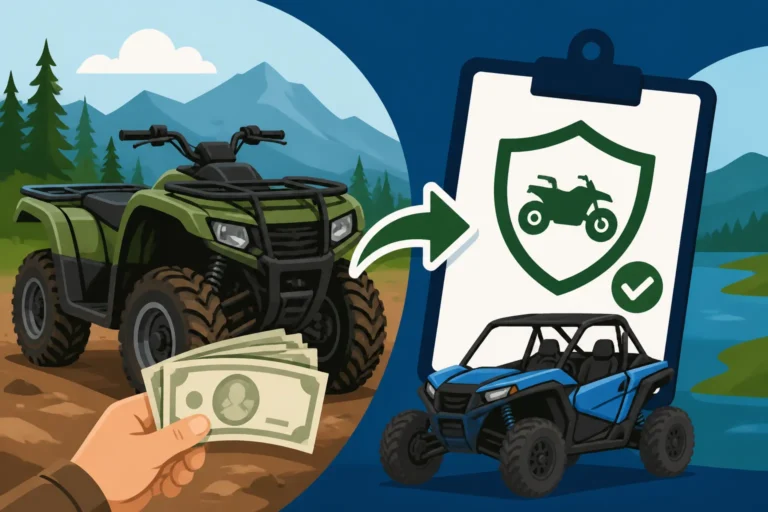
It's a frustratingly common scenario: you've found a sweet deal on a used ATV or UTV in beautiful British Columbia, only to realize the seller has misplaced all the ownership paperwork. Or maybe you've unearthed an old quad from the back forty that's been in the family for ages, but nobody can find hide nor hair of a bill of sale or registration. This guide is here to walk you through exactly what you need to do when your BC off-road machine comes with a missing or incomplete paper trail, so you can get it legally registered and hit the trails.
The Head-Scratching Reality of Missing ATV Paperwork in BC
Let's face it, dealing with paperwork is rarely anyone's favourite pastime, and when it comes to off-road vehicles in BC, missing documents can feel like a genuine roadblock. Many riders just want to get out and enjoy the incredible wilderness BC has to offer, not spend their days playing detective. But the reality is, since BC made off-road vehicle (ORV) registration mandatory in November 2015, the rules around proving ownership have become a critical hurdle, especially for older machines or those bought informally years ago.
The core challenge revolves around something called the "continuity of ownership." Unlike a car where a simple transfer of title often suffices, BC wants to see a clear, unbroken chain of ownership for your ATV or UTV, all the way back to the manufacturer or the last legally registered owner. This means every single sale, every single transfer, needs to be documented. Imagine buying a quad from a buddy who bought it from another friend, who got it from a farmer a decade ago – suddenly you need a paper trail spanning years, possibly involving people who are long gone or impossible to track down. This is where the frustration really sets in, because it's not always practical or even possible to gather all those historical documents.
For many years, off-road vehicles weren't tracked in the same rigorous way as highway vehicles. People bought quads with cash, maybe a handwritten receipt, or often just a handshake. Nobody thought twice about keeping every scrap of paper. Now, that lack of historical record keeping can come back to bite you. You might have a perfectly legitimate machine, acquired fairly, but without that paper proof, the process of getting it registered can feel like an impossible quest. It's a common dilemma for passionate riders who just want to do things by the book but are stuck with a legacy of informal transactions. This is why understanding the alternatives, like the statutory declaration, is so important.
Navigating the Maze: What BC Registration Really Requires
When you head to an [BC Autoplan Brokers Handle ORV Registration] office to register your ATV or UTV in BC, they're primarily looking for two things to establish your ownership: proof of purchase and, if it's been previously registered, the old Certificate of Registration. If you're lucky enough to have bought a brand-new machine, the dealer will typically handle all the initial paperwork for you, making it a breeze. But for most of us buying used, it gets a bit more complicated.
The ideal scenario is that you have a formal bill of sale from the person you bought the machine from, detailing the buyer, seller, date, price, and most importantly, the vehicle identification number (VIN). If the machine was already registered in BC, you'd also get the original [BC's Certificate of Registration Explained] signed over to you. The broker then uses these documents to process the transfer of ownership. [BC Transfer of Ownership Explained] is fairly straightforward when all the papers are in order.
However, the minute any of those key documents are missing, the alarm bells start to ring for the broker. They can't just take your word for it, even if you're the most honest person on the planet. This isn't because they don't trust you, but because they have a legal obligation to ensure the continuity of ownership and to prevent the registration of stolen machines. Imagine trying to [BC Registration Without a Bill of Sale] or when the [BC Registration When the Seller Has No Papers]. It creates a major headache. Without that clear chain, there's a risk of registering a vehicle that might belong to someone else, or that was acquired under dubious circumstances. This is why they are so stringent about the documentation, even if it feels overly bureaucratic at times. It's all about protecting legitimate owners and maintaining a clean record system.
Why Every Link in the Ownership Chain Matters
The Provincial government’s Off-Road Vehicle Act and its associated regulations mandate that an unbroken chain of ownership must be established. This isn't just about the current sale; it's about every prior sale. If you're the fifth owner of a quad, the broker needs to see proof of sale from owner one to owner two, owner two to owner three, and so on, right up to your purchase. This is where the [BC's Continuity of Ownership Problem] really hits home.
Think of it like building a bridge; each section needs to be properly connected to the last for the entire structure to be sound. If there's a missing section, the whole bridge is compromised. Similarly, if there's a gap in your ownership paperwork, the broker can't simply skip it. They need to see how the machine legally moved from one person to the next. This means that [Why Every Past Sale Has to Be Documented] isn't just a suggestion; it's a hard rule for registration. This can be especially challenging for [BC Registration for an Older Machine] that pre-date the mandatory registration requirement, when people were far less formal about these kinds of transactions. For instance, if your grandfather bought a quad in 1985 and passed it down to your father, who then sold it to you, you'd ideally need a record of the original purchase, a [BC Gift Letters Between Family] for the transfer to your father, and a bill of sale from your father to you. Each step needs to be accounted for.
| Document Type | Purpose | When It's Needed |
|---|---|---|
| Bill of Sale | Proof of purchase from seller to buyer | For every private sale, new or used |
| Certificate of Registration | Proof of prior registration and transfer | If the machine was previously registered in BC |
| Gift Letter | Documenting a transfer as a gift, often between family | If the machine was given to you, rather than sold |
| Statutory Declaration | Sworn statement of ownership when other papers are missing | When a bill of sale or Certificate of Registration is gone |
| Import Documentation | Proof of lawful import into Canada | For machines brought into BC from another country |
Your Lifeline: The Statutory Declaration and How It Works
So, what do you do when you've scoured every drawer, called every past owner you can find, and you're still missing a critical piece of the paper puzzle? This is where the [BC Statutory Declaration for an ORV] becomes your absolute best friend. It's essentially a formal, sworn statement of facts, made under oath, declaring that you are indeed the rightful owner of the off-road vehicle.
A statutory declaration isn't just a casual note you scribble on a napkin. It's a legally binding document where you attest to the truthfulness of your statements, knowing that making false claims can carry serious penalties. It's used when a crucial document, like a bill of sale or a Certificate of Registration, is simply unavailable. This could be because the original owner lost it, the seller vanished after the sale, or the machine has been in the family for generations with no formal paper trail ever created. For example, if you bought a quad from a private seller who genuinely lost their bill of sale, you might use a statutory declaration to cover that specific missing link in the chain.
The declaration needs to include all the pertinent details about the ATV or UTV, such as the make, model, year, and crucially, the Vehicle Identification Number (VIN). It also needs to explain how you came into possession of the machine – whether it was bought, gifted, or inherited – and why the standard documentation isn't available. You'll sign this document in front of a Commissioner for Oaths or a Notary Public, who will then also sign and stamp it, adding that official weight. Many legal document providers, like LawDepot, offer templates for statutory declarations that you can adapt to your specific situation, which can be a huge help in ensuring you include all the necessary legal language. This process of [Declaring Ownership Under Oath] provides a formal, legal substitute for the missing paper trail.
Drafting a Statutory Declaration: What to Include
When preparing your statutory declaration, precision is key. You're trying to convince a broker and, by extension, the government, that you are the legitimate owner, despite the lack of conventional documents. So, every detail counts.
Here's a breakdown of what your statutory declaration absolutely must contain:
- Your Full Legal Name and Address: Clearly identify yourself as the declarant.
- Detailed Vehicle Information: This is critical. Include the make, model, year, colour, and the full VIN of the ATV or UTV. Double-check this against the physical machine itself.
- How You Acquired the Machine: Explain the circumstances. Did you buy it? Were you gifted it? Did you inherit it? Be as specific as possible.
- Date and Location of Acquisition: When and where did this transaction or transfer take place?
- Name of Previous Owner (if known): If you bought it from someone, state their name. If you don't know, state that.
- Reason for Missing Documents: This is the core of the declaration. Explain why you don't have the original bill of sale, Certificate of Registration, or other required papers. Was it lost? Destroyed? Was the seller unreachable? Was it an informal transaction decades ago?
- Statement of Rightful Ownership: Clearly state that you are the sole and rightful owner of the vehicle, and that to your knowledge, it is not stolen or encumbered by any liens.
- An Acknowledgment of Penalties: A standard legal phrase acknowledging that you understand making false statements is a serious offense.
You can often find templates for these declarations online, sometimes through resources like LawDepot or by checking with a local notary public. Having a professionally structured template can simplify the process immensely, ensuring you don't miss any critical components. Remember, this document is a substitute for the original papers, so it needs to be robust and comprehensive to satisfy the requirements for [BC Registration Paperwork Checklist] when documents are missing.
Getting It Signed: Commissioner for Oaths or Notary Public
Once you've carefully drafted your statutory declaration, the next step is to have it formally commissioned. This means taking it to a qualified individual who can witness your signature and administer the oath. In British Columbia, this will typically be a Commissioner for Oaths or a Notary Public.
You'll need to present valid photo identification to the Commissioner or Notary. They will watch you sign the document, and then they will sign and stamp it themselves, signifying that you have sworn or affirmed the truthfulness of the contents. There's usually a small fee for this service, but it's a necessary step to make your declaration legally valid. The cost for [BC Statutory Declarations Cost $15] is quite reasonable, considering its importance in getting your machine registered.
Once commissioned, this document becomes a powerful tool to bridge those gaps in your ownership chain. If you're struggling with [BC Registration When the Seller Has Vanished], a detailed and sworn declaration explaining the situation can often be accepted by the broker as sufficient proof for that specific missing link. It’s crucial to understand that while a statutory declaration is powerful, it doesn't automatically guarantee registration. The broker still needs to be satisfied that, in combination with any other available documents, the continuity of ownership is reasonably established. They might ask additional questions or request further information, but the declaration provides a solid foundation.
What to Do When the Paper Trail Goes Cold (Even With a Declaration)
Sometimes, even with the best intentions and a meticulously prepared statutory declaration, the ownership puzzle can still be incredibly complex. There are situations where a single declaration isn't enough, or where the gaps are simply too extensive. This is a common pain point for riders dealing with BC Machines With No Paperwork that have been out of circulation for decades, or machines that have passed through many hands informally.
One of the biggest hurdles is when there's an entire missing link in the ownership chain, not just a missing bill of sale for your immediate purchase. For example, if you bought a quad from someone, but they themselves can't prove how they acquired it from the previous owner, that's a deeper problem. Your declaration can cover your acquisition, but it can't speak for the prior missing links. Brokers are trained to spot these gaps, and they'll politely but firmly explain that the chain needs to be complete.
Another challenge arises when the previous owner is deceased. While a statutory declaration can explain how you acquired the machine from the estate, you still need documentation proving the deceased owner's legal right to the machine. This usually involves probate documents or a will, showing the machine was part of their estate and legally transferred to you. This can be complex, and you might need to consult with legal professionals or an estate executor to get the necessary supporting documents.
Scenarios and Solutions: Dealing with the Toughest Cases
Let's look at some common "no paperwork" scenarios and the paths you might need to take:
- You bought it, but the seller lost their papers: This is a classic. Your seller can provide a statutory declaration stating how they acquired the machine, why their bill of sale is missing, and then issue you a bill of sale for your purchase. If the seller is unavailable, you can issue a statutory declaration for your acquisition, explaining why you don't have a bill of sale from them. This is often the primary use case for [BC Registration When the Seller Has No Papers].
- You inherited the machine: You'll need the will or letters of administration from the estate, proving you are the rightful inheritor. If those aren't available, a statutory declaration from you, witnessed by a Commissioner for Oaths, detailing how you inherited the machine and why the formal estate documents are missing, can sometimes work. It helps immensely if you have an [BC Gift Letters Between Family] from the estate executor, or a similar document.
- The machine has been in the family forever, no papers ever existed: This is common for [BC Registration for an Older Machine]. In this case, the oldest living family member who can attest to continuous ownership should complete a statutory declaration. This declaration would state when and how the family first acquired the machine (e.g., "bought new from a dealer in 1978, receipt lost over time") and that it has been continuously owned by the family since. Each subsequent transfer within the family would then need to be documented with a gift letter or further declarations.
- You found the machine (or suspect it might be stolen): If you've come into possession of a machine with no history and you can't trace the previous owner, do not proceed with registration. You should contact local law enforcement to report it. Attempting to register a potentially stolen vehicle, even unknowingly, can lead to serious legal trouble. The broker will often perform a stolen vehicle check, so it's always best to be transparent.
In truly convoluted cases, such as when [BC Registration When the VIN Is Gone] or significantly damaged, registration might become impossible without specialized police investigation to verify ownership. The VIN is the unique identifier, and without it, proving which machine is yours is exceptionally difficult.
When the Broker Says No: What Are Your Options?
If you've gathered everything you can, including statutory declarations, and the Autoplan broker still can't complete the registration for your BC Machines With No Paperwork, don't despair immediately, but understand you might have hit a wall. Their job is to follow strict guidelines set out by ICBC and the provincial government. If they can't establish that clear chain of ownership, they have to decline the registration.
In such a scenario, you have a few limited options:
- Seek a Second Opinion: Different brokers might have slightly different interpretations or levels of experience with complex ORV registration cases. It might be worth visiting another [Where to Find an Autoplan Broker Near You] to see if they can offer a solution or suggestion you hadn't considered. Sometimes, a fresh pair of eyes can make all the difference. [BC Registration Questions Brokers Hear] are often quite varied, and some brokers specialize more in ORV.
- Contact ICBC Directly: While brokers are the front line, you can try contacting ICBC's ORV registration department directly. Explain your situation in detail, emphasizing all the steps you've taken and the documents you've gathered. They might be able to provide specific guidance or suggest an alternative process for exceptionally challenging cases that fall outside the typical broker's purview.
- Legal Advice: If the machine has significant value and you genuinely believe you are the rightful owner but are still being stonewalled, consulting a lawyer specializing in property law might be an option. They could advise on legal avenues to establish ownership, though this can be a costly and time-consuming process.
Ultimately, if you cannot establish a clear chain of ownership, even with statutory declarations, the machine might be relegated to private land use only. [BC Private Land and the Registration Question] clarifies that if you only ever ride your machine on your own private property and never venture onto Crown Land, you are not legally required to register it under the Off-Road Vehicle Act. This isn't ideal for most riders who want to explore BC's vast backcountry, but it's an important distinction.
Registering an off-road vehicle in BC without perfect paperwork can be a challenging journey, but by understanding the rules, diligently pursuing available documentation, and leveraging tools like the statutory declaration (often available through sites like LawDepot), you significantly increase your chances of getting your machine legally on the trails.
Disclaimer
This article is for general informational purposes only and does not constitute professional advice. Laws, prices and regulations vary by location and change over time. Consult a qualified professional for guidance on your specific situation.