BC Lighting and Seat Belt Requirements
Riding an off-road vehicle in beautiful British Columbia is one of life's great pleasures, but nothing puts a damper on a fantastic day out quite like a run-in with the law because of equipment issues. It can be incredibly confusing trying to figure out if your ATV or UTV needs specific lights or if you and your passengers are required to wear seat belts, especially when the rules seem to shift depending on what you're riding and where. This guide is here to untangle the complexities of BC's lighting and seat belt requirements for ATVs and UTVs, ensuring you understand exactly what you need to have to ride safely and legally.
The Foundation: BC's Off-Road Vehicle Act and Equipment Standards
Before we dive into the nitty-gritty of lights and seat belts, it's crucial to understand the legal framework that dictates these requirements. British Columbia's Off-Road Vehicle Act (ORV Act) and its accompanying regulations are the rulebooks we're playing by when we take our machines off pavement. This legislation came into full effect in 2015, bringing a new era of accountability and safety to the province's vast network of trails, resource roads, and Crown land. It shifted how we think about registration, insurance, and yes, even the basic equipment on our machines.
Why Equipment Rules Matter on Crown Land
The ORV Act primarily governs the operation of off-road vehicles on Crown land and designated provincial recreational trails. This is where most of us spend our time riding, exploring the incredible backcountry that BC has to offer. The moment your wheels touch publicly managed land – be it a forest service road, a multi-use trail, or simply open Crown land – you become subject to these rules. It’s not just about avoiding a ticket; it’s about contributing to the safety of all users and protecting the environment. Well-equipped machines are safer, more visible, and less likely to cause accidents or distress.
Think about it: you're out on a remote trail in the Cariboo, perhaps exploring some old Gold Rush country. The sun is starting to dip, or maybe a sudden rain shower rolls in, bringing with it a thick fog. If your machine isn't equipped with proper lighting, you're not just a danger to yourself, but to any other riders, hikers, or even wildlife that might be sharing that space. The rules are designed to prevent these kinds of scenarios, ensuring that every rider has the basic tools to navigate safely and predictably. The ORV Act really sets the stage for responsible riding, emphasizing that even off the beaten path, there's a certain standard of operation expected. For a deeper dive into the legal framework, check out [What the Off-Road Vehicle Act Covers in BC].
Who the Rules Apply To: Riders and Machines
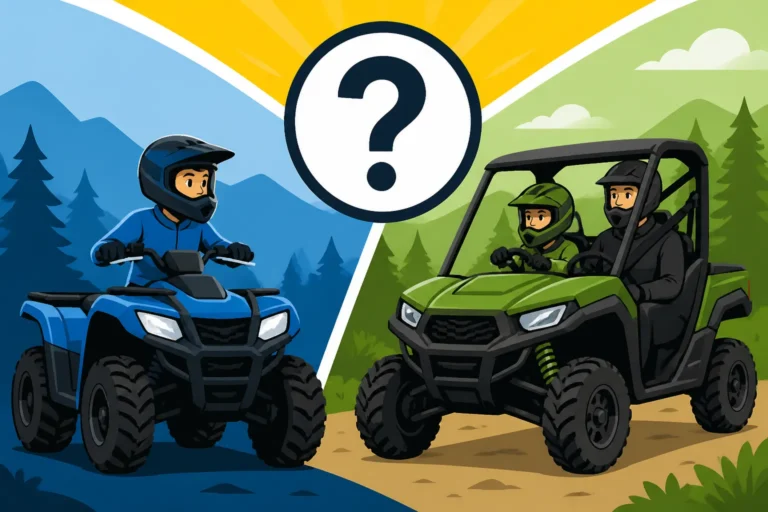
The beauty, and sometimes the confusion, of the ORV Act is its broad scope. It applies to all "off-road vehicles," which is a pretty wide umbrella term. This includes your typical ATVs (all-terrain vehicles or quads), UTVs (utility terrain vehicles or side-by-sides), dirt bikes, snowmobiles, and even some specialized vehicles not intended for highway use. If it's motorized and designed to go off-road, chances are the ORV Act has something to say about it.
It's not just the machine itself; it's also about who's riding it and who's a passenger. For instance, a child operating a youth ATV might have different supervision requirements, but the machine still needs to meet the basic equipment standards for lighting. Similarly, if you're riding a two-up ATV with a passenger, both of you are covered by safety gear regulations. The Act aims for universal safety standards for the machines, recognizing that various types of vehicles and riders share the same trails and face similar risks. Whether you're a seasoned veteran on a powerful side-by-side or a casual rider enjoying a family outing on a quad, the foundational safety requirements apply to your machine.
Shedding Light: BC's ATV & UTV Lighting Requirements
When it comes to visibility, especially in BC's diverse terrain and often unpredictable weather, proper lighting isn isn't just a suggestion—it's a critical safety feature and a legal mandate. The rules are designed to ensure you can see where you're going and, just as importantly, that others can see you. This helps prevent collisions, whether with other recreational users, industrial traffic on resource roads, or even wildlife.
Front Lights: Seeing and Being Seen
Every off-road vehicle operating in BC on Crown land, especially during periods of low visibility or after dark, must be equipped with at least one headlight. This isn't just any light; it needs to be capable of illuminating the trail ahead sufficiently to allow safe operation. For most modern ATVs and UTVs, this means a factory-installed headlight that provides adequate forward illumination. While the Act doesn't specify a lumen count, it implies a practical level of brightness. Many machines now come with high and low beam settings, which is excellent for adapting to different conditions – high beam for open stretches, low beam when approaching others or in denser bush.
The requirement for front lights extends beyond just being able to see. It's also about being seen by others. Imagine cresting a blind hill on a dusty resource road. A visible headlight can make all the difference in alerting an oncoming logging truck or another ORV rider to your presence, giving everyone precious seconds to react. Even in daylight, having your headlight on, much like a daytime running light in a car, can increase your visibility, especially on shaded trails or during overcast days. It's a simple, effective safety measure.
Rear Lights: Signalling Your Presence
Just as important as seeing where you're going is ensuring that riders behind you know you're there. This is where rear lighting comes into play. The ORV Act requires off-road vehicles to have at least one tail light that is visible from a reasonable distance to the rear. This tail light serves as a continuous indicator of your presence. Additionally, a brake light that illuminates when the brakes are applied is often a standard feature and a crucial safety device, providing an immediate warning to anyone following your machine that you are slowing down or stopping. Many machines also come with rear reflectors, which offer a passive but effective way to be seen if your lights fail or if the machine is parked.
Visibility distances are key here. A dimly lit, mud-splattered tail light might technically be "on," but if it can't be seen from a safe following distance, it's not fulfilling its purpose. Regular cleaning of your lights, both front and rear, is a small maintenance task that has a huge impact on safety. Especially after a muddy ride through the Fraser Valley or a dusty excursion in the Okanagan, those lights can quickly become obscured. Remember, the rules are in place to prevent rear-end collisions and ensure clear communication between riders on the trail.
When Lights Are Mandatory: Low Visibility and Night Riding
The ORV Act is quite clear that lights are mandatory "during the period from 1/2 hour after sunset to 1/2 hour before sunrise" and "at any other time when, due to insufficient light or unfavourable atmospheric conditions, persons or vehicles on the highway are not clearly discernible at a distance of 150 m." While the latter part refers to highway rules, the spirit of that visibility standard generally applies to ORVs operating on Crown land. This means if you're riding at dusk, dawn, in heavy fog, pouring rain, or even thick dust kicked up by other riders, your lights need to be on and fully functional.
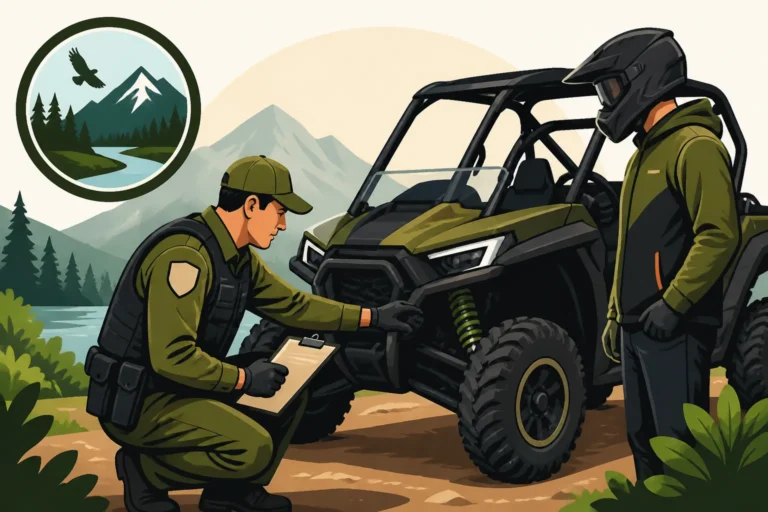
Failure to comply with these lighting requirements can result in violation tickets. Enforcement officers, whether it's the RCMP, Conservation Officers, or Forest Service personnel, are looking for safe and responsible operation. An ORV with no lights or faulty lights during these mandatory periods is a clear breach of the Act and can lead to fines. It's not just about getting caught; it's about the inherent danger you pose to yourself and others. Always err on the side of caution: if in doubt, turn your lights on. [BC Lighting Rules in Low Visibility] provides more details on specific scenarios.
The Role of Auxiliary Lighting and Aftermarket Upgrades
Many riders choose to enhance their machine's lighting beyond the factory standard, and for good reason. Auxiliary lights, such as LED light bars, fog lights, or additional spot beams, can dramatically improve visibility, especially when tackling challenging night rides or venturing into dense forest. These upgrades can be a fantastic way to customize your machine and make it safer, but there are a few considerations.
First, ensure that any auxiliary lights don't interfere with your machine's primary lighting system or its electrical components. Overloading your electrical system can lead to issues. Second, be mindful of how you use these lights. While a powerful light bar might be perfect for blazing a trail in the deep woods, it can be blinding to oncoming riders. Always dim or switch off high-intensity auxiliary lights when approaching other people or vehicles. Companies like SuperATV offer a wide range of aftermarket lighting solutions, from simple LED pods to robust light bars, designed to integrate seamlessly with various ORV models, providing riders with enhanced visibility options for those demanding conditions. Always check local regulations to ensure your aftermarket additions comply with any specific brightness or aiming restrictions, although these are more commonly seen for highway-legal vehicles than dedicated ORVs.
Buckle Up: BC's Seat Belt Requirements for ORVs
While helmets tend to get a lot of attention in off-road safety discussions, seat belts are equally vital, particularly for certain types of off-road vehicles. For riders of side-by-sides (UTVs) with their enclosed cabs and roll-over protection systems (ROPS), seat belts are an indispensable part of the safety equation, designed to keep you securely within the vehicle's protective structure in the event of an incident.
When Seat Belts Are Required: Enclosed Cabs and ROPS
The requirement for seat belts primarily applies to off-road vehicles that are designed with a full or partial enclosure and a Roll-Over Protection Structure (ROPS), which essentially means UTVs or side-by-sides. Unlike an ATV where the rider sits astride the machine and is designed to move with it, a UTV operator and passengers are seated within a cabin, much like a car. In such a configuration, being restrained by a seat belt is critical. In a rollover situation, the ROPS is designed to create a survival space around the occupants. However, that survival space is only effective if the occupants remain within it. Without a seat belt, riders can be ejected from the vehicle or tossed around inside the cab, potentially hitting hard surfaces or even being crushed by the vehicle's frame.
The ORV Act stipulates that if an off-road vehicle is manufactured with seat belts, those seat belts must be worn by all occupants whenever the vehicle is in operation. This isn't optional; it's a direct reflection of the vehicle's design and intended safety features. This means every time you hop into your side-by-side, regardless of how short the ride or how slow the speed, buckling up is a non-negotiable step.
Seat Belts vs. Helmets: Which Rule Applies When?
This is where some confusion often arises. In BC, for off-road vehicles, it's generally one or the other: either you wear a helmet (for ride-astride machines like ATVs and dirt bikes) or you wear a seat belt (for machines with ROPS and manufacturer-installed seat belts, like UTVs). You don't typically need to wear both on a side-by-side, unless specified by the manufacturer or specific park rules, though some riders opt to for added protection.
The rationale is that the ROPS and seat belts in a UTV are designed to protect you in a rollover. A helmet, while offering head protection, is less effective if you're ejected from the vehicle or if your body is unrestrained within the cabin. Conversely, on an ATV, where you're fully exposed and actively shifting your weight to control the machine, a helmet is your primary head protection. The [BC Seat Belts Instead of Helmets] article further clarifies this distinction, emphasizing the importance of understanding which piece of safety gear is mandated for your specific type of ORV. Always consult your vehicle's owner's manual and the provincial regulations to be sure.
Understanding Manufacturer Specifications for Seat Belts
When it comes to seat belts, adhering to the manufacturer's original specifications is paramount. The seat belts installed by the factory are an integral part of the vehicle's safety system, engineered to work in conjunction with the ROPS and other design elements. These belts undergo rigorous testing to meet specific safety standards. Replacing them with unapproved aftermarket belts or making modifications to the mounting points can compromise their effectiveness in an accident.
For instance, if your side-by-side came with a three-point harness, that's what's expected. Upgrading to a four- or five-point racing harness might seem like an enhancement, but ensure it's installed correctly and doesn't interfere with other safety systems or vehicle operation. Similarly, never remove or disable a factory-installed seat belt system. The integrity of the system is key to its performance. If a seat belt is damaged, frayed, or otherwise compromised, it needs to be replaced immediately with a part that meets or exceeds the original manufacturer's specifications. This is not an area for shortcuts or improvisation, as your life, or the lives of your passengers, could literally depend on it.
Helmets: The Other Side of the Safety Coin
While we've discussed seat belts for UTVs, helmets remain a foundational piece of safety gear for a vast majority of off-road vehicle riders in British Columbia. For anyone on a ride-astride machine, wearing a certified helmet isn't just a good idea – it's the law, reflecting the inherent risks associated with these types of vehicles.
Helmet Mandates for Ride-Astride Machines
The ORV Act clearly states that any person operating or riding as a passenger on a ride-astride off-road vehicle (which includes ATVs, dirt bikes, and snowmobiles) must wear an approved helmet. This is a non-negotiable rule designed to protect against head injuries, which are among the most serious and potentially life-threatening injuries in off-road accidents. Unlike UTVs, ride-astride machines offer no structural protection in a rollover or impact scenario. The rider is fully exposed, and direct impact to the head is a significant risk.
This mandate applies to all ages. Whether it's a seasoned adult carving through trails or a young rider just starting out on a youth quad, everyone needs to be helmeted. There are no exemptions based on speed, terrain difficulty, or proximity to home. If you're on a quad or dirt bike on Crown land, your helmet needs to be securely fastened. For a comprehensive look at this rule, check out [BC Helmets on Ride-Astride Machines]. It underscores the absolute necessity of this vital piece of gear for all riders of these specific ORV types.
Certified Helmets: What to Look For
Not just any helmet will do. The ORV Act requires the use of an "approved helmet." This generally means a helmet that meets recognized safety standards established by organizations such as the Canadian Standards Association (CSA), the US Department of Transportation (DOT), or the Snell Memorial Foundation. These certifications indicate that the helmet has undergone rigorous testing to ensure it can withstand impacts and protect your head effectively.
When purchasing a helmet, always look for the certification sticker. It's usually found on the back of the helmet or inside the liner. Beyond certification, proper fit is crucial. A helmet that's too loose can shift during an impact, failing to provide adequate protection, while one that's too tight can be uncomfortable and distracting. Helmets should be replaced after any significant impact, even if there are no visible signs of damage, as the internal structure designed to absorb impact can be compromised. Similarly, older helmets can degrade over time, so check the manufacturer's recommended lifespan. [BC Helmet Standards in the Regulation] offers a more detailed look at the specifics of what constitutes an approved helmet.
The Interplay Between Helmets and Seat Belts in BC
As discussed earlier, for ORV use in BC, it typically boils down to a clear distinction: helmets for ride-astride machines and seat belts for side-by-sides with ROPS. This dual approach to safety equipment is tailored to the specific design and risks associated with each type of off-road vehicle. The goal is maximum protection for the occupant given the vehicle's inherent characteristics.
It’s important to reiterate that while you might wear a helmet on a UTV for personal preference or if specific park rules dictate it, the mandate under the ORV Act leans towards the seat belt being the primary restraint device for these types of machines. Conversely, a seat belt on a traditional ATV is neither required nor, in most cases, practical or effective, given the dynamic riding style required. Understanding this distinction is key to being compliant and, more importantly, genuinely safe on BC's trails. Always be informed about the specific requirements for your machine before you head out.
Specific Scenarios and Common Questions
The rules around ORV equipment can sometimes feel like a moving target, especially when you consider the vast array of machines and riding environments in BC. Let's tackle some specific scenarios and frequently asked questions to clear up any lingering confusion.
Riding a Side-by-Side: Dual Requirements
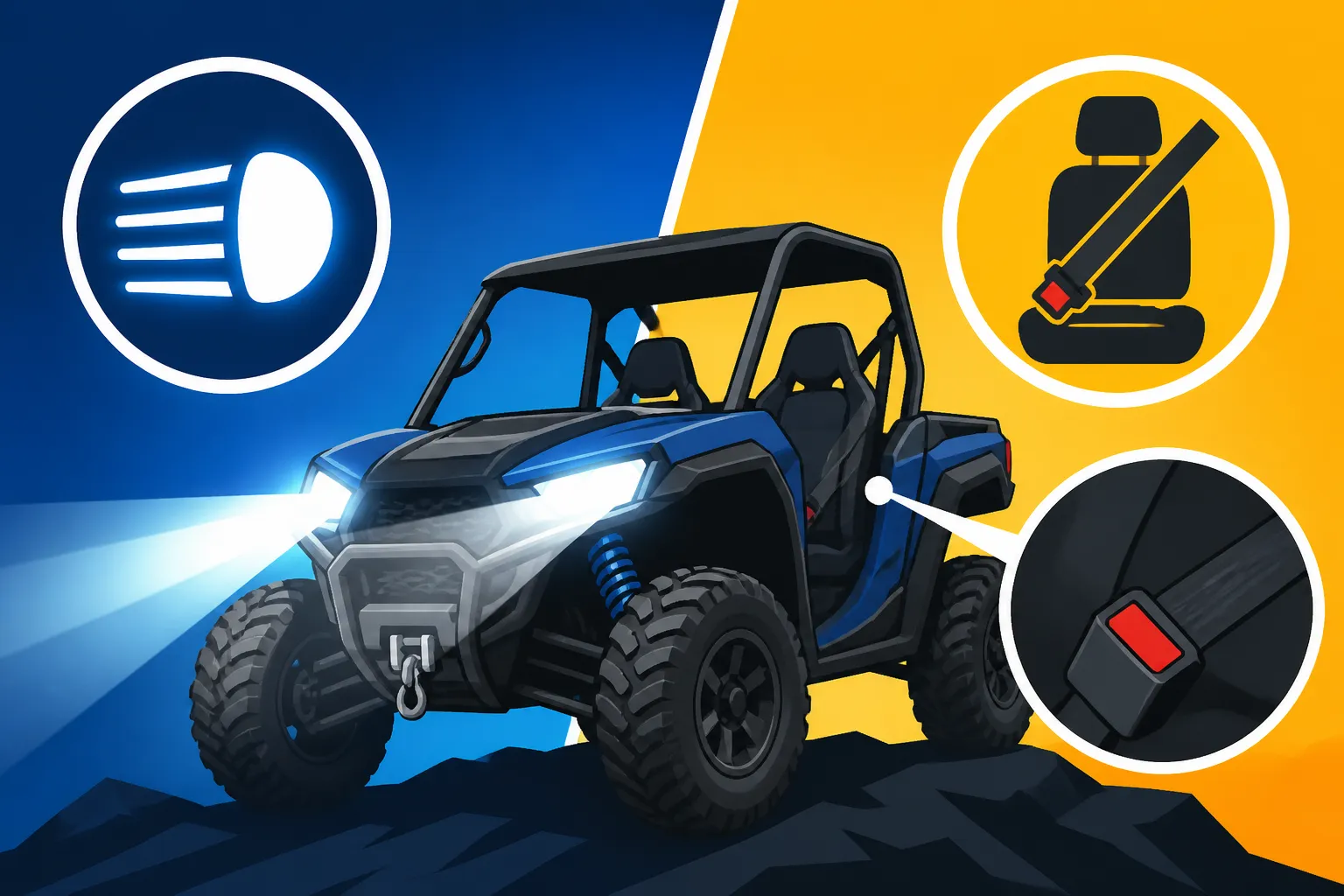
When you're piloting a side-by-side, or UTV, you're essentially dealing with a blend of requirements that touch on both lighting and occupant restraint. As we've established, your UTV needs proper front and rear lighting for visibility, especially in low light or at night. This includes headlights and taillights, and ideally, brake lights. Many side-by-sides come with additional features like turn signals, which while not universally mandated for ORV use on Crown land, are a welcome safety addition, especially if you anticipate riding on shared resource roads where industrial traffic might be present.
Crucially, every occupant in a side-by-side must be securely fastened with a seat belt that meets the manufacturer's specifications. This applies to the driver and all passengers. If your UTV is a two-seater, two people need to be buckled in. If it's a four-seater, all four occupants must wear their seat belts. This dual requirement for lights and seat belts makes the side-by-side a unique case in the ORV world, reflecting its car-like design and the need for both visibility and occupant containment. Always ensure your machine is fully equipped and everyone is buckled before starting your engine.
Aftermarket Modifications and Compliance
It's common for ORV owners to customize their machines, and aftermarket modifications can significantly enhance performance, comfort, or utility. When it comes to lighting and seat belts, however, it's vital that these modifications adhere to safety standards and legal requirements. Adding auxiliary lighting, as mentioned, is generally fine as long as it doesn't obstruct primary lights or blind other users. For example, a quality LED light bar from a reputable brand like SuperATV can boost your visibility significantly, but ensure it's wired correctly and used responsibly.
The trickier area is with seat belt modifications. As emphasized, factory seat belts are designed as part of a comprehensive safety system. If you're considering replacing factory seat belts with different types of harnesses, ensure they are certified for off-road use and installed by a qualified professional according to the manufacturer's guidelines. Improper installation or using uncertified components can actually degrade safety. Always ask yourself if the modification truly enhances safety or if it might introduce unforeseen risks. If in doubt, consult with your dealer or a certified ORV mechanic.
Penalties for Non-Compliance
Ignoring the lighting and seat belt requirements in BC can lead to more than just a stern talking-to. Enforcement officers have the authority to issue violation tickets, and the fines can quickly add up. For example, riding an unregistered machine or operating an ORV without proper lighting during mandatory periods can result in substantial penalties. The specific fine amounts can vary, but generally, they are designed to be a deterrent, reflecting the seriousness of these safety violations.
Beyond financial penalties, there's the much greater cost of personal injury or harm to others. An accident that might have been prevented by functional lights or proper seat belt use can have devastating consequences, including serious injuries, long-term disability, or even fatalities. In the event of an accident where equipment mandates were ignored, there could also be insurance implications, potentially affecting coverage for damages or injuries. These rules aren't arbitrary; they're in place to protect riders and contribute to a safer off-road environment for everyone. Understanding [BC Fines for Careless Operation] can provide further insight into the potential consequences of neglecting safety regulations.
Staying Safe and Legal: Best Practices
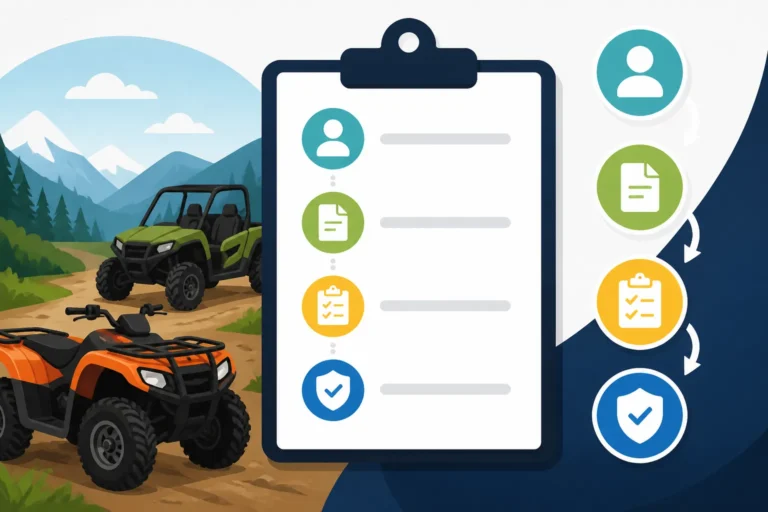
Compliance with BC's ORV equipment rules isn't just about avoiding fines; it's fundamentally about ensuring your safety and the safety of everyone else you encounter on the trails. Adopting a proactive approach to equipment checks and responsible riding habits can make all the difference.
Pre-Ride Checks for Lights and Belts
Before every ride, take a few minutes to conduct a quick but thorough check of your machine's essential safety equipment. For lighting, this means:
- Headlights: Turn them on. Are both high and low beams working? Are they clear of mud or debris?
- Taillights: Step behind your machine. Is the taillight visible and fully functional?
- Brake Lights: Have a friend or family member stand behind you while you apply the brakes. Does the brake light illuminate clearly? If you're alone, you can often test this by backing up to a wall or window and checking the reflection.
- Reflectors: Are they clean and intact?
For seat belts (on UTVs):
- Buckle Functionality: Do all seat belts buckle and unbuckle smoothly?
- Condition: Are the webbing and buckles free of fraying, cuts, or damage?
- Retractors: Do the retractors pull the slack out of the belt properly?
- Mounting Points: Are the seat belts securely fastened to their anchor points?
These checks are quick, easy, and can literally save lives. Make them a habit, just like checking your fuel level or tire pressure.
Planning Your Ride: Visibility and Terrain Considerations
Your equipment needs can often be influenced by your ride plan. If you're heading out for a short afternoon spin on familiar trails, your basic equipment might suffice. However, if you're planning an extended journey, a multi-day trip, or a ride into challenging, remote terrain, you might want to consider additional safety measures. For example, if you anticipate riding into the evening or through areas with dense tree cover, having robust auxiliary lighting beyond the minimum can significantly improve your experience and safety.
Consider the time of year and weather forecasts. Riding in the coastal mountains in autumn might mean unexpected fog or heavy rain, requiring your lights to be operational much earlier in the day. Winter riding brings shorter daylight hours and often requires snowmobile-specific lighting, if applicable to your machine. Always factor in potential changes in visibility due to weather or time of day, and ensure your equipment is up to the task.
Keeping Up-to-Date with Regulations
ORV regulations, while generally stable, can sometimes see updates or clarifications. Local bylaws in specific communities or the rules for operating on managed recreation sites might also have unique requirements. Staying informed is key to continued compliance.
Here are a few ways to stay current:
- Official BC Government Websites: The provincial government's pages related to the ORV Act are your primary source for legal information.
- Local ORV Clubs: Clubs like the Okanagan Trail Riders or the Quad Squad often have members who are very knowledgeable about local rules and any recent changes. They're also great resources for sharing best practices and group rides.
- Dealers and Retailers: Reputable ORV dealers can often provide up-to-date information on equipment requirements and local regulations.
- Online Forums and Groups: Engage with other BC riders in online communities. While not official sources, these can be excellent places to hear about changes or get practical advice from experienced riders.
By staying proactive and informed, you can ensure your machine is always properly equipped, making every ride safer and more enjoyable.
The Bigger Picture: Your Machine and the Law
Understanding the specifics of lighting and seat belt requirements is one piece of a much larger puzzle when it comes to operating an off-road vehicle in British Columbia. These equipment rules are woven into the fabric of the entire ORV Act, aiming to create a comprehensive framework for responsible and safe riding across the province's diverse landscapes.
Where the ORV Act Applies: Crown Land and Resource Roads
It bears repeating that the vast majority of these equipment requirements, along with registration and insurance mandates, primarily kick in when you're operating your ORV on Crown land. This includes the extensive network of forest service roads (FSRs) that crisscross the province, provincial parks (where ORVs are permitted), designated multi-use trails, and any other public land not considered a "highway" under the Motor Vehicle Act. For instance, [BC Forest Service Road Requirements] details the specific rules that apply when you're navigating these industrial arteries.
Private land is generally a different story. If you're riding exclusively on your own private property, or on private land with the owner's explicit permission, the provincial ORV Act's registration, insurance, and equipment mandates typically do not apply. However, that doesn't mean safety goes out the window. It's always prudent to equip your machine with proper lighting and use seat belts or helmets, regardless of jurisdiction, as safety is paramount everywhere. Always be sure to clarify land ownership and any specific rules or permissions required before riding.
Dealer Information and Initial Compliance
When you purchase a new ATV or UTV from a licensed dealer in British Columbia, the machine will almost certainly come equipped with all the necessary factory-installed safety features to comply with the ORV Act's basic requirements for lighting and seat belts (if applicable). Dealers are responsible for selling compliant vehicles. During the sales process, they should also provide you with information regarding registration, insurance, and often, a general overview of operating requirements.
However, it's ultimately your responsibility as the owner and operator to ensure your machine remains compliant throughout its lifespan. This means maintaining lights, ensuring seat belts are in good condition, and understanding any additional requirements that might arise, such as a [BC ORV Number Plates and Decals] if your machine is registered. Don't assume that because it was compliant when new, it will always be. Regular checks and staying informed are critical.
Disclaimer
This article is for general informational purposes only and does not constitute professional advice. Laws, prices and regulations vary by location and change over time. Consult a qualified professional for guidance on your specific situation.