BC Forest Service Road Helmet Rules
A Forest Service road can feel like an ordinary gravel road, but riding an ATV or UTV there still brings specific safety and legal responsibilities. The helmet rule depends partly on the kind of machine you’re operating and the restraint system it has. Here’s how to think through the requirement, what can change for a side-by-side, and what to check before setting out.
When a helmet is required on a Forest Service road
In British Columbia, riders on a Forest Service road should not assume they can skip a helmet just because the surface is gravel or the road is used by logging trucks. The relevant question is what kind of vehicle you’re riding and whether it qualifies for a seat-belt exception—not whether the road looks like a highway or a trail.
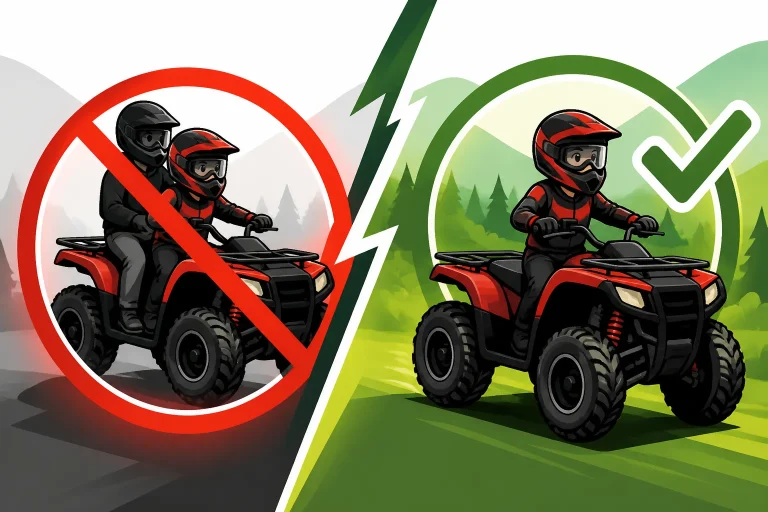
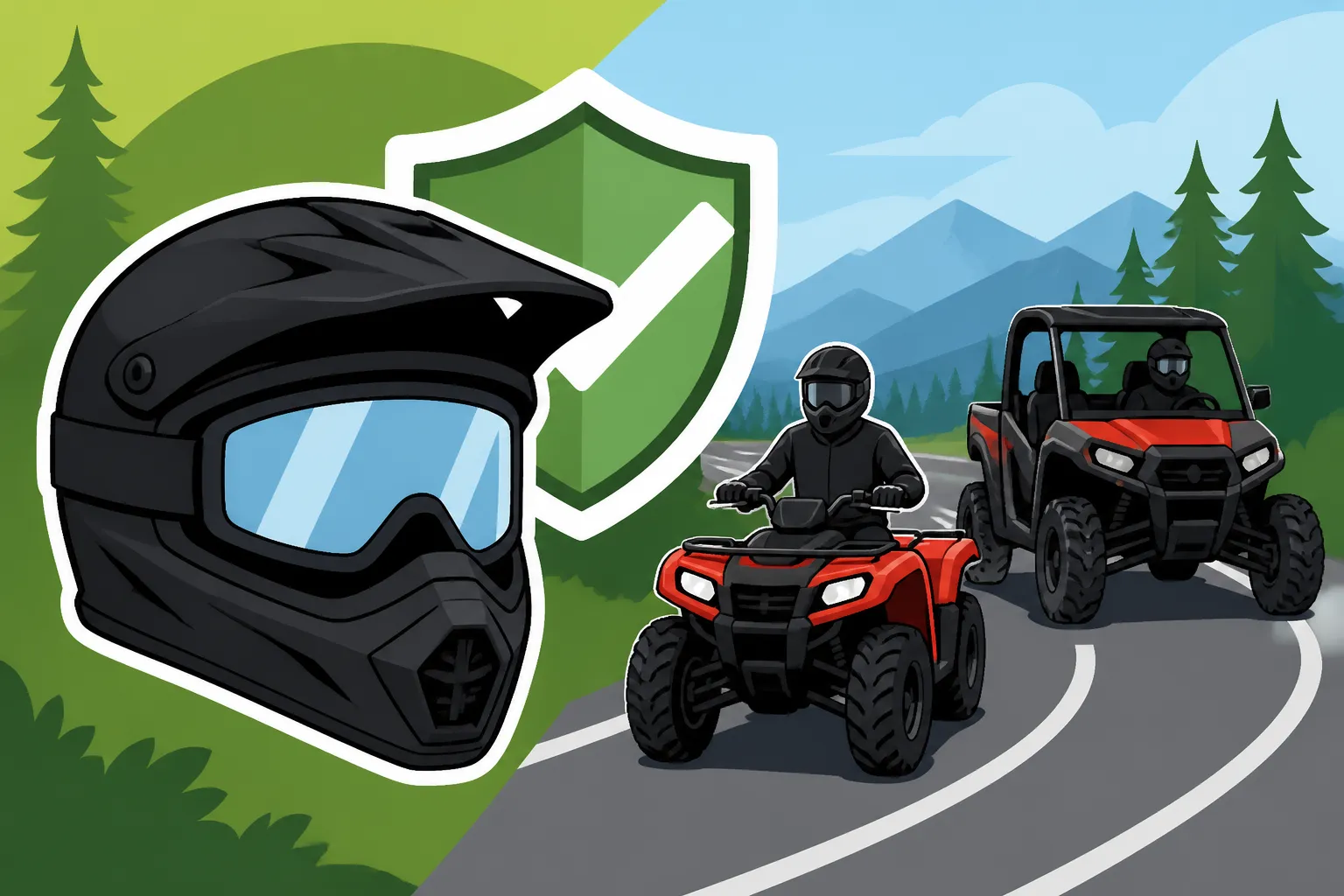
For an ATV or another ride-astride off-road vehicle, the practical rule is straightforward: the operator and any passenger must wear a properly secured helmet. That applies to adults as well as young riders. A helmet carried on a rack, resting loosely on your head, or left unfastened does not provide the same protection as one worn correctly.
The requirement matters on Forest Service roads because they are shared routes, not closed riding areas. You may meet industrial traffic, encounter loose gravel or potholes, or need to react quickly to a blind corner. A crash at road speed can have serious consequences even when the machine is travelling a relatively short distance.
The law and the road’s status are separate issues. A road that looks like a resource road is not automatically a designated Forest Service road, and different routes can have different access restrictions. Check road signage and current access information before riding. For the broader road rules, see BC Rules for Riding a Forest Service Road and BC Forest Service Road Requirements.
What counts as wearing a helmet
Wear a helmet that meets the applicable requirements, fits the person who will use it, and can be fastened securely. A helmet should sit level and snug rather than shifting around when the rider moves their head. The chin strap needs to be fastened as designed; a helmet that is loose or unfastened can come off during a collision.
Do not assume that any hard hat, bicycle helmet, or fashion-style helmet is an acceptable substitute. The rules specify recognized safety helmet standards, and the standards that apply should be checked against current provincial requirements. For more detail on the legal standard, see BC Helmet Standards in the Regulation and BC ATV Helmet Law Explained.
A helmet can also be unsuitable even if it once met the right standard. Check the manufacturer’s guidance for damage, age, fit, and replacement. A helmet that has taken a significant impact, has a cracked shell, or no longer fits properly should not be treated as reliable protective equipment.
Who has to wear one
On a ride-astride machine, the helmet rule applies to the operator and any passenger. Carrying a passenger does not transfer responsibility for safety to the passenger alone: the driver should confirm that everyone is properly equipped before moving.
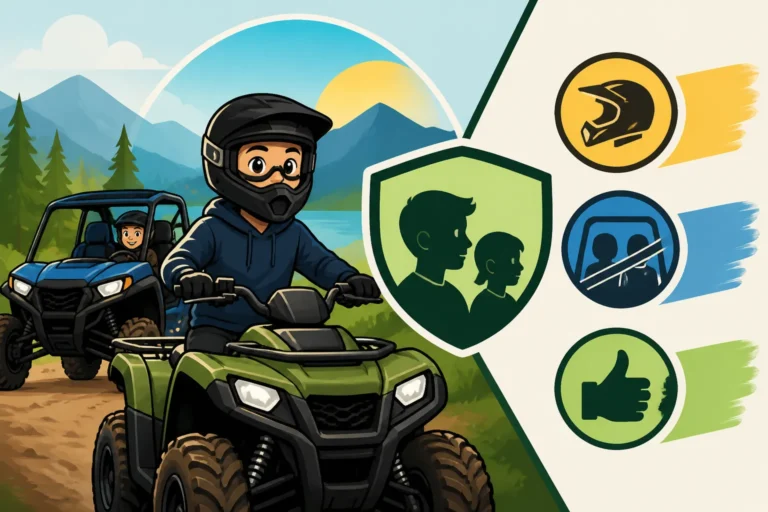
That includes a child riding with an adult. A child’s helmet needs to fit that child; an adult helmet that is too large is not a safe workaround. Passenger eligibility is a separate issue from helmet use, so check the machine’s seating and manufacturer guidance as well as the riding rules. BC Rules for a Child Passenger explains the passenger considerations.
How the rule differs for a UTV or side-by-side
A UTV or side-by-side is different from a quad because occupants sit in seats and may be protected by a rollover structure and seat belts. Under the applicable exception, occupants in a qualifying vehicle can generally rely on the vehicle’s seat-belt protection instead of wearing helmets, provided they wear the seat belt as required.
That distinction is about the vehicle’s design and the occupant’s restraint, not simply what the machine is called in an advertisement. Do not assume that a roof, windshield, doors, or a roll bar by itself makes a vehicle exempt from the helmet requirement. Nor should you assume that every machine marketed as a UTV has the same safety equipment or legal classification.
When the vehicle is equipped with seat belts, occupants should use them. A seat belt that is present but left unfastened does not provide the intended protection and may not meet the condition for relying on the exception. Follow the manufacturer’s instructions for the belt and any other restraints in the machine. See BC Seat Belt Rules on a Side-by-Side and BC Rules for Riding a Side-by-Side for related requirements.
| Machine and occupant setup | Practical approach to the helmet rule |
|---|---|
| ATV or other ride-astride ORV | Operator and passenger should wear properly secured, compliant helmets |
| Side-by-side with qualifying seat belts and rollover protection | Occupants should use the seat belts; confirm the vehicle fits the applicable exception |
| UTV without the expected restraint or protective structure | Do not assume the exception applies; check the vehicle and current rules before riding |
| Any machine with unclear classification or equipment | Treat the helmet as necessary until the requirement is confirmed |
This table is a practical summary, not a substitute for checking the vehicle’s classification and current requirements. If you are unsure whether a machine qualifies for the seat-belt exception, the safest approach is to wear a helmet and confirm the rule before the trip.
Seat belts and helmets are not interchangeable in every situation
The exception for a properly equipped side-by-side should not be read as a general choice between a helmet and a seat belt. It is tied to the kind of machine and the safety equipment it has. A rider on a conventional quad cannot treat a backpack or a loose belt as a substitute for a helmet. Likewise, an occupant in a side-by-side should not treat a helmet as permission to ignore a seat belt.
Use the full occupant-protection system designed for the machine. That may include seat belts, doors or nets, a rollover protective structure, and helmets where required. Keep passengers seated in designated positions and follow the manufacturer’s directions for each seat. If a passenger cannot sit properly or use the restraint as intended, do not carry them in that position.
If the machine has been modified, or if it is missing original safety equipment, do not rely on its appearance to decide whether the exception applies. A removed belt, altered cage, or non-standard seating arrangement can change the safety picture and may affect whether the exception is available. Check the vehicle’s documentation and ask a qualified source if the legal classification is unclear.
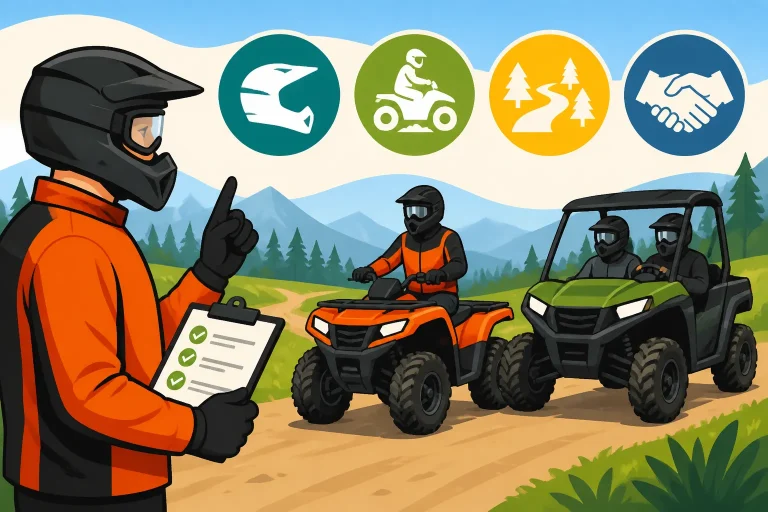
Before you ride: a practical helmet and road checklist
A few checks before leaving can prevent confusion at the trailhead and make it easier to respond to changing road conditions. Helmet compliance is only one part of preparing for a Forest Service road. These roads may be used for active industrial work, and access, insurance, lighting, and traffic practices can matter too.
- Identify the machine. Confirm whether it is a ride-astride ATV or a side-by-side, and check what restraints and protective structure it has.
- Fit and fasten helmets where required. Make sure every operator and passenger who needs a helmet has one that fits and is securely fastened.
- Use seat belts in a side-by-side. If the vehicle has belts, use them as designed. Do not count on a helmet to replace the restraint.
- Check passengers before moving. Confirm each person is seated in an approved position and has the required protective equipment.
- Check the road and its restrictions. Look for posted closures, industrial activity, or other notices that could affect access.
- Review the other road requirements. Helmet compliance does not replace insurance, lighting, driver, or operating requirements that may apply.
A road trip can involve sections with different conditions. A route may connect a staging area to a trail, pass through active work areas, or join other public roads. Keep the machine compliant throughout the trip rather than assuming the helmet rule stops once you leave a trailhead. BC Rules for Riding a Forest Service Road covers broader road-use considerations, while BC Forest Service Road Insurance addresses a separate requirement that riders should not confuse with protective equipment.
Buying or replacing a helmet
Choose a helmet that meets the applicable standard and fits the intended rider. Try it on if possible, or use the manufacturer’s sizing and fit instructions carefully. Fit matters: a helmet that is too large can move in a crash, while one that is painfully tight may not be worn correctly.
If shopping online, including on Amazon, verify the model’s certification and fit details rather than relying only on a product title or a general claim that it is “ATV” or “off-road” equipment. Check that the specific helmet, not just the brand or product family, meets the standard required for the rider’s use. Confirm the return policy before buying if the fit cannot be assessed in person.
Inspect the helmet before every ride. Look for visible damage, loose or worn straps, missing parts, and signs that it has been dropped or impacted. Follow the manufacturer’s instructions for cleaning and storage; harsh chemicals, heat, or improper storage can affect materials. Replace a helmet when the manufacturer directs or after a significant impact, even if the outside looks undamaged.
When the road is not clearly a Forest Service road
The name people use for a road does not always establish its legal status. Some resource roads are privately managed, some are subject to posted limits, and some may connect to public roads with different rules. A gate or sign can also indicate that access is restricted even if the road appears open.
If the route is uncertain, check the road authority’s current information and any posted signs. Do not treat a lack of a helmet sign as permission to ignore a general equipment rule. Equally, do not assume that a road’s gravel surface makes it a Forest Service road or that every rule is identical across road types.
The safest habit is to wear a suitable helmet on an ATV and to use the complete restraint system in a side-by-side. That gives you a clear baseline while you verify the route, vehicle, and applicable requirements. For the broader rules that apply to these machines on public routes, see BC Forest Service Road Requirements and What the Off-Road Vehicle Act Covers in BC.
Disclaimer
This article is for general informational purposes only and does not constitute professional advice. Laws, prices and regulations vary by location and change over time. Consult a qualified professional for guidance on your specific situation.