Where Kids Can Ride in the Chilliwack Valley
Taking kids riding in the Chilliwack Valley takes more than finding a trailhead: route difficulty, active road use, weather, closures and age-related rules all matter. This guide explains where families can start planning, how to choose a suitable ride, and what to check before unloading. The goal is a day that feels manageable for young riders—not a stressful scramble once you reach the trail.
Chilliwack Valley riding areas families can consider
Start by researching the Chipmunk Creek area
Chipmunk Creek is one of the main riding areas families may come across when looking for ATV and UTV riding in the Chilliwack Valley. It offers a network of off-road routes, but that does not mean every trail will suit every child. A short, easy-looking stretch can still become challenging because of loose rock, ruts, steep grades, mud, water or poor visibility around a corner.
Treat the area as a place to plan a ride, not as a promise that a particular route is open or child-friendly. Check current access information, signs at the staging area and any posted restrictions before riding. Conditions can change after heavy rain, logging activity, wildfire restrictions or trail damage. A route that felt comfortable on a previous visit may be rougher after a storm or during a busy riding weekend.
Families can learn more about the local riding context in Chilliwack Area Riding in BC and Chipmunk Creek’s 60 BC Kilometres. Use those as starting points for research, then check the details that matter for your specific outing: where you can stage, whether your machine fits the route, how long you expect to be out and whether the trail connects to roads used by other traffic.
Look at the Rapids staging area as a possible launch point
A staging area can make the start of a family ride easier. It gives you a place to unload, check helmets and machines, talk through the plan and decide whether the group is ready to head out. The Rapids staging area is another local point to consider when researching a Chilliwack Valley outing. Before you go, confirm the access and facilities available for the day rather than assuming a site will have everything you need.
Arriving with a plan is especially useful with children. If a young rider is nervous, you can take time to get settled and make a conservative decision before joining a route. If the area feels crowded or the weather has turned, you can reconsider without having already committed the group to a long ride. Read Six Sites at the Rapids Staging Area for related planning context, and verify current site conditions before travelling.
Do not assume a staging area is a play area or that every route leaving it is appropriate for a beginner. Check posted rules, stay clear of loading vehicles and keep children close while machines are being unloaded or moved. The safest first outing is often a short, familiar loop or an out-and-back ride that lets the group turn around before anyone is tired.
Treat Chilliwack Lake Road and nearby resource roads with care
Routes near Chilliwack Lake Road and Foley Lake Forest Service Road may appear in local riding plans, but a resource road is not the same thing as a quiet family trail. Logging trucks, service vehicles, changing road conditions and limited sightlines can make shared roads demanding, particularly for a child who is still learning to judge speed and distance.
Before including a resource road, decide whether the young rider has the experience and equipment for that environment. Check road restrictions and traffic information, follow any radio or signage requirements, and keep the group together. If you are unsure whether a road is appropriate, choose a route that avoids it rather than hoping traffic will be light. Foley Lake Forest Service Road and 25 Kilometres of Chilliwack Lake Road provide useful local context, but they should not replace checking current conditions and access rules.
A useful rule for family planning is to choose the route for the least experienced rider, not the most confident adult. A parent who is comfortable with a steep climb may underestimate how intimidating it feels from a smaller machine. Leave room for frequent stops, and be ready to turn around if the route becomes rougher, busier or more exposed than expected.
| Planning point | Family-friendly approach | Why it helps |
|---|---|---|
| Route choice | Pick a short, conservative route with a clear turnaround option | Children can build confidence without feeling trapped |
| Road exposure | Minimize shared-road sections, especially for new riders | Industrial traffic and blind corners add complexity |
| Conditions | Check access, weather, closures and posted signs before leaving | A familiar route can change after storms or work activity |
| Group size | Keep the group small enough to supervise closely | Adults can respond quickly if a child needs help |
| Ride length | Plan for breaks and an early return | Fatigue can affect judgement and control |
How to choose a route that suits a child
Match the route to the rider, not just the machine
A child may be legally allowed to operate a machine but still lack the experience, strength or confidence for a particular trail. Consider how the rider handles starting, stopping, turning, uneven ground and unexpected obstacles. If a child is tense on a gentle slope or struggles to control speed, a longer or rougher route is not the right next step.
Trail difficulty can be deceptive. A route marked as easy may include sections that are difficult for a small machine, a first-time rider or a child who has not ridden in mud. Before setting out, talk through what the group might encounter. Explain that the rider can stop and ask for help, and that turning around is a normal part of making a good decision—not a failure.
Use BC Trail Difficulty Ratings as one part of your planning, while remembering that ratings cannot account for every rider or the day’s conditions. A capable adult may find a rocky section simple, while a child on a smaller quad may need to walk the machine through it or avoid it altogether. For more family-specific ideas, see BC Trails for Kids.
Keep the first ride short and easy to change
For a new or younger rider, a short outing offers more flexibility than a full-day route. You can see how the child responds to the trail, the noise, the pace and the group before committing to more distance. A simple out-and-back plan also makes it easier to head back if someone becomes tired, anxious or uncomfortable.
Avoid scheduling the day so tightly that turning around feels like a problem. Build in time for a snack, water and a quick machine check. Children may need more breaks than adults, and fatigue can show up as impatience, poor concentration or repeated mistakes—not only as a complaint that they are tired.
Make the turnaround point clear before riding. Tell the child that anyone can ask to stop, and agree that the group will pause when a rider signals a problem. If the trail becomes too difficult, do not pressure the child to continue just because the staging area is still a long way away. A calm, early change of plan is safer than pushing through a route that no longer feels manageable.
Check for closures and changing conditions
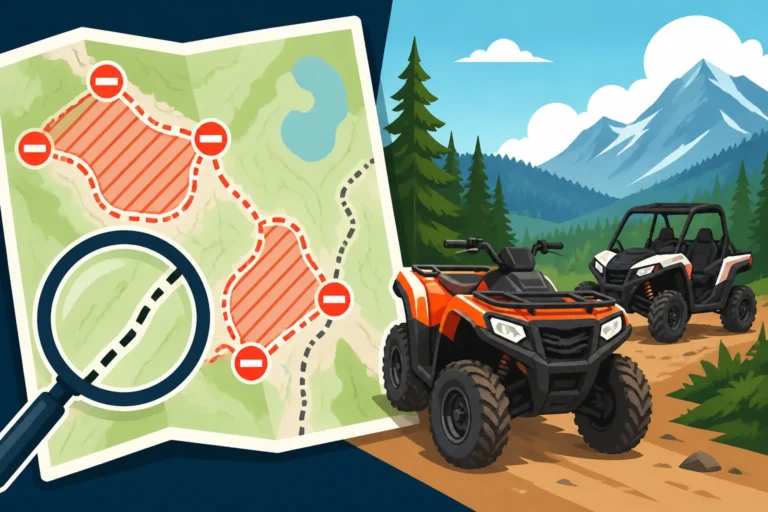
Conditions around Chilliwack can shift with weather, maintenance and seasonal restrictions. A trail can be muddy or rutted after rain, while fire conditions or land-management decisions can restrict access. Active work or a closure sign may also mean a route that appears on a map is not available for riding.
Check the applicable road and area information before the trip, then pay attention to signs when you arrive. If a route is closed, do not ride around a gate or assume the restriction applies only to vehicles larger than yours. BC Trail Closures After a Storm is a helpful related read for thinking about changing trail conditions.
Offline mapping can help you understand where you are and avoid losing track of the group when cell service is unreliable. Tools such as onX Offroad can help with route planning, but a digital map is not permission to ride somewhere, and it may not reflect a new closure. Use it alongside current local information, posted signs and your own judgement. Share the plan with another adult before leaving, including where you expect to ride and when you plan to return.
Rules and supervision for young riders in BC
Understand the supervision rules for riders under 16
BC has specific requirements for young off-road vehicle riders. A child under 16 must be supervised by someone who is at least 19, and supervision involves more than being somewhere in the same general area. The adult needs to keep the child in view and be able to provide direction promptly. Plan your group so the supervising adult can actually focus on the young rider rather than riding far ahead or managing a large group from a distance.
Rules can depend on the child’s age and the machine being operated. In particular, 14- and 15-year-old riders have written-permission requirements. Check the details that apply to your child and machine before the trip rather than relying on what another family did. BC Youth Riding Rules Explained, BC Rules for a Child Under 16 and BC Rules for a 14-Year-Old Rider offer related information to review.
Supervision should also shape your route choice. Keep the child close enough that you can see how they are handling each section and give immediate direction if needed. A long gap between the adult and child is a poor fit for young riders, even on a route that seems straightforward. Agree on simple signals for stopping, slowing down or needing help before the engines start.
Choose a machine that fits the child
Age alone does not tell you whether a machine is suitable. Review the manufacturer’s minimum age, height, weight and operating guidance for the specific model. A machine that is too large or heavy can be difficult for a child to control, while an undersized machine may also be inappropriate for a rider’s size or ability.
Do not let a child operate a machine simply because they can reach the controls while it is parked. Have them demonstrate that they can understand the controls, start and stop safely, steer at a manageable pace and respond to instructions. If they cannot do those things confidently in a controlled setting, wait and practise before taking them onto a trail.
BC rules also restrict children from carrying passengers when they operate an off-road vehicle. Confirm the applicable requirements for your machine and do not treat an adult riding behind a child as a substitute for proper supervision. For more detail on the age and passenger considerations, see BC Rules for Passengers on a Quad and [BC Manufacturer Age and Weight Rules].
Make helmets and protective equipment non-negotiable
A child riding an ATV or another ride-astride machine needs a properly fitted, approved helmet. The helmet should sit securely, fasten correctly and stay in place when the rider moves their head. If it rocks, slides over the eyes or feels uncomfortable, it is not a good fit for a long ride.
Protective clothing matters too. Closed-toe boots, gloves, long sleeves and long pants help reduce scrapes and exposure to debris. Eye protection is useful on dusty routes, and layers help children stay comfortable when conditions change. Pack water and snacks where they can be reached safely during a stop, not while the machine is moving.
Check the child’s gear before every outing, even if it was fine last time. Children grow, straps loosen and equipment can get damaged in storage. BC ATV Helmet Law Explained is a useful reference for the helmet rule. Keep the inspection simple: helmet secure, goggles or eye protection ready, boots fastened, and no loose clothing that could catch on the machine.
A practical family ride plan for the Chilliwack Valley
Before leaving home
Choose the area and route with the youngest or least experienced rider in mind. Check access, closures, weather and road conditions, and decide on a short route with a clear turnaround point. Confirm that each machine is appropriate for its rider and that required documents and protective equipment are ready.
Tell another adult where you are going and when you expect to be back. Bring a first-aid kit, water, snacks, basic tools and a way to communicate if cell service is limited. Make sure the group knows what to do if it gets separated: stop in a safe place, stay together and use the agreed contact plan instead of continuing in different directions.
A quick family briefing prevents avoidable confusion. Explain who rides first, who follows the child, how the group signals a stop and what happens if someone wants to turn back. Keep the rules short enough for a child to remember. For example: stay in sight, do not pass the lead adult, stop when signalled and speak up if the route feels uncomfortable.
At the trailhead and on the route
Take a few minutes at the staging area to inspect the machines and gear. Check tyres, controls, brakes, fuel and any protective equipment that needs fastening. Keep children away from moving vehicles and give them a clear place to wait while adults load or unload.
Begin at an easy pace. Leave enough space between machines to see the trail without riding into dust or debris from the person ahead. On a narrow or uneven section, stop in a safe place and decide whether the child can manage it before proceeding. Do not let a group’s momentum make that decision for you.
Keep watching the young rider’s energy and attention. If they become quiet, frustrated or inconsistent with their controls, take a break. If the route is harder than expected, turn around. A shorter ride that ends with the child feeling successful is often a better foundation than a long ride that leaves them frightened or exhausted.
After the ride
Before loading up, check that everyone is accounted for and that no gear or personal items have been left behind. Look over the machines for obvious damage or problems that should be handled before the next outing. If you encountered a closure, hazard or damaged section, note it so you can avoid relying on outdated assumptions next time.
Ask the child what felt easy and what felt difficult. Their answer can help you choose a better route for the next ride, but avoid turning the conversation into a test of bravery. Confidence grows through practice, supportive supervision and sensible route choices—not through pressure to keep up with adults.
The Chilliwack Valley can be a rewarding place for a family ride when the plan is built around the child’s ability and the day’s conditions. Research local options such as Chipmunk Creek and the Rapids staging area, verify access before travelling, and be ready to change plans. If the route, traffic or weather does not feel right, choosing a different day is part of riding responsibly.
Disclaimer
This article is for general informational purposes only and does not constitute professional advice. Laws, prices and regulations vary by location and change over time. Consult a qualified professional for guidance on your specific situation.