Staging a Big Group at Bear Creek
A large ATV or UTV group can turn a fun Bear Creek ride into a frustrating morning if trailers arrive at once, riders are unsure where to meet, or the group discovers a trail restriction after unloading. A little coordination makes staging calmer and safer. This guide covers how to choose a meeting point, organize arrivals, plan routes, and keep a big group moving together.
Choose a staging plan before you leave
Confirm the meeting point and access
“Meet at Bear Creek” is too vague when riders are coming from different directions and some are towing long trailers. Agree on a specific staging area and share clear directions before the day of the ride. Bear Creek has more than one recognizable access and staging point, so make sure everyone knows which one you mean, rather than relying on a name or pin that could be interpreted differently.
Aspen and Burke are named staging points in the Bear Creek area. Decide which is appropriate for your route and group, then send the same location information to every driver. A shared pin in a navigation app such as onX Offroad can help people find the intended place, but it should supplement—not replace—written directions and a clear meeting plan. Mobile coverage can be limited at trailheads, so do not assume a late arrival will be able to call for help or download the route.
Before setting out, check access notices, site rules, and any current pass requirements for the specific area you plan to use. A staging area may have rules that differ from a nearby road or trail. If you are unsure which organization manages a site or what access applies, review Recreation Sites and Trails and What They Manage and Bear Creek Trail Passes in BC before the ride.
Match the staging area to your vehicles
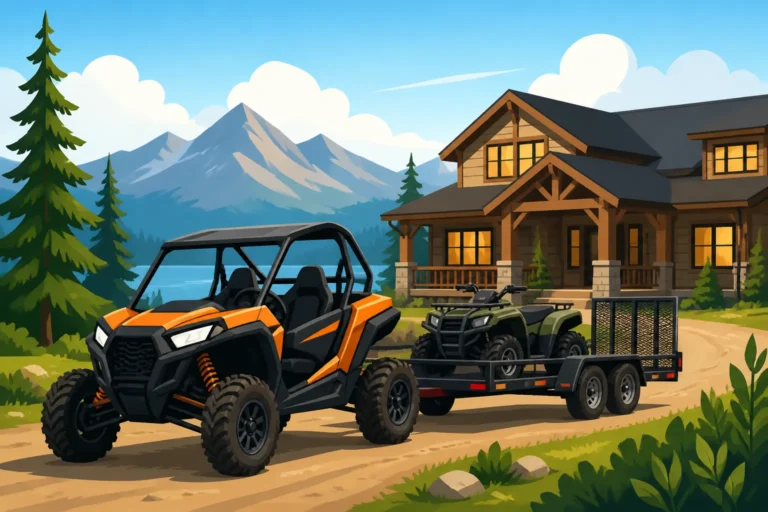
A staging point that works for a couple of pickups may be awkward for a large convoy with enclosed trailers, side-by-sides, and several vehicles arriving together. Consider the size of your group and the space needed to park and unload without blocking other visitors. Never assume there will be room for everyone to line up at the same time. If the area looks crowded when you arrive, avoid forcing the group into an unsafe or obstructive arrangement.
For a bigger outing, identify a primary meeting point and a backup plan. For instance, the ride leader can arrive early, check conditions, and message the group to use the planned location—or wait at a safe, agreed alternative if the staging area is full. Do not create a second gathering point on a narrow road, at a gate, or where parked vehicles could obstruct industrial or emergency access.
Make it clear where trailers should be parked and where machines should be unloaded. Keep access lanes open and leave enough room for vehicles to maneuver. If anyone is unsure whether a vehicle can fit or turn around, have them stop in a safe place rather than attempting a tight turn in a crowded staging area.
Coordinate arrivals and unload safely
Avoid a trailer convoy bottleneck
When everyone aims to arrive at the same time, the first delay can ripple through the entire group. A simple arrival window is usually easier to manage than a single exact time. Ask people to arrive in small waves, and have one or two designated organizers reach the staging area first. They can check the parking situation, choose a meeting spot, and give late arrivals one consistent update.
Share practical details in advance: the staging-area name, the best approach for towing vehicles, what to do if the lot is full, and who to contact if someone is delayed. If the group uses a digital map, ask riders to download or save relevant information before they lose service. onX Offroad may help riders compare routes and mark a meeting location, but do not rely on any app as the only source of directions or access information. Use posted signs and on-the-ground instructions as well.
Keep the arrival plan flexible. A driver who is delayed should not race down a resource road to catch up. Tell the group that arriving safely matters more than arriving at the same minute. If you need to regroup, choose a safe place that does not interfere with traffic or block a trail entrance.
Set a clear unloading routine
Unloading is easier when everyone knows the order and the boundaries. Park vehicles first, then unload only when the area around the trailer is clear. Keep bystanders away from ramps and moving machines, and ask riders to wait for the ride leader’s direction before starting or repositioning their ATVs and UTVs. A crowded lot is not a place to test a machine, warm it up at speed, or weave between parked trailers.
Before leaving the staging area, do a quick count of people and machines. Check that everyone has essential gear, fuel, water, and any required documents. For general trail preparation, use BC Group Ride Planning and BC Trail Etiquette Locals Expect as prompts for the conversation—not as substitutes for the rules that apply to your specific route.
Agree on simple signals for “stop,” “slow down,” and “problem ahead.” The lead rider should not assume the last person has seen a hand signal, especially where machines are spread out or visibility is poor. A sweep rider at the back can confirm that nobody is left behind. If a machine has a mechanical problem, the group should stop in a safe place rather than leaving one person to manage the issue alone.
Plan a route a large group can actually ride
Choose for the least experienced rider
A route that feels easy to a regular Bear Creek rider may be stressful for someone new to the area, a first-time UTV driver, or a rider on a different machine. Ask about experience honestly before the day, then choose a route that leaves room for the least experienced person to ride comfortably. A large group should not set its pace around the fastest machine.
Plan a shorter first section with a natural chance to regroup. If conditions are good and everyone is comfortable, the group can decide whether to continue farther. If not, you have a straightforward way to return without making the least confident rider feel pressured to keep up. Consider machine width, turning space, ground conditions, and whether the route is suitable for every ATV or UTV in the group.
Use a current map to discuss the general route and possible alternatives before leaving. onX Offroad can be useful for viewing and sharing a proposed route, but verify that the intended trails are open and appropriate for your machines. Do not treat a line on a map as proof that a route is legal or passable. For more route-planning ideas, see BC ATV Trail Map Downloads and BC Trails That Allow Side-by-Sides.
| Group situation | Practical staging and route choice |
|---|---|
| Mixed experience levels | Choose a conservative route, set a manageable pace, and regroup often |
| Several trailers arriving together | Use arrival waves and have an organizer reach the staging area early |
| Riders with limited cell service | Share directions and save maps or route notes before departure |
| A large mix of ATVs and UTVs | Confirm trail suitability and allow extra room for wider machines |
| Uncertain conditions or access | Check notices and signs, and keep a shorter backup route available |
Keep the group together without crowding the trail
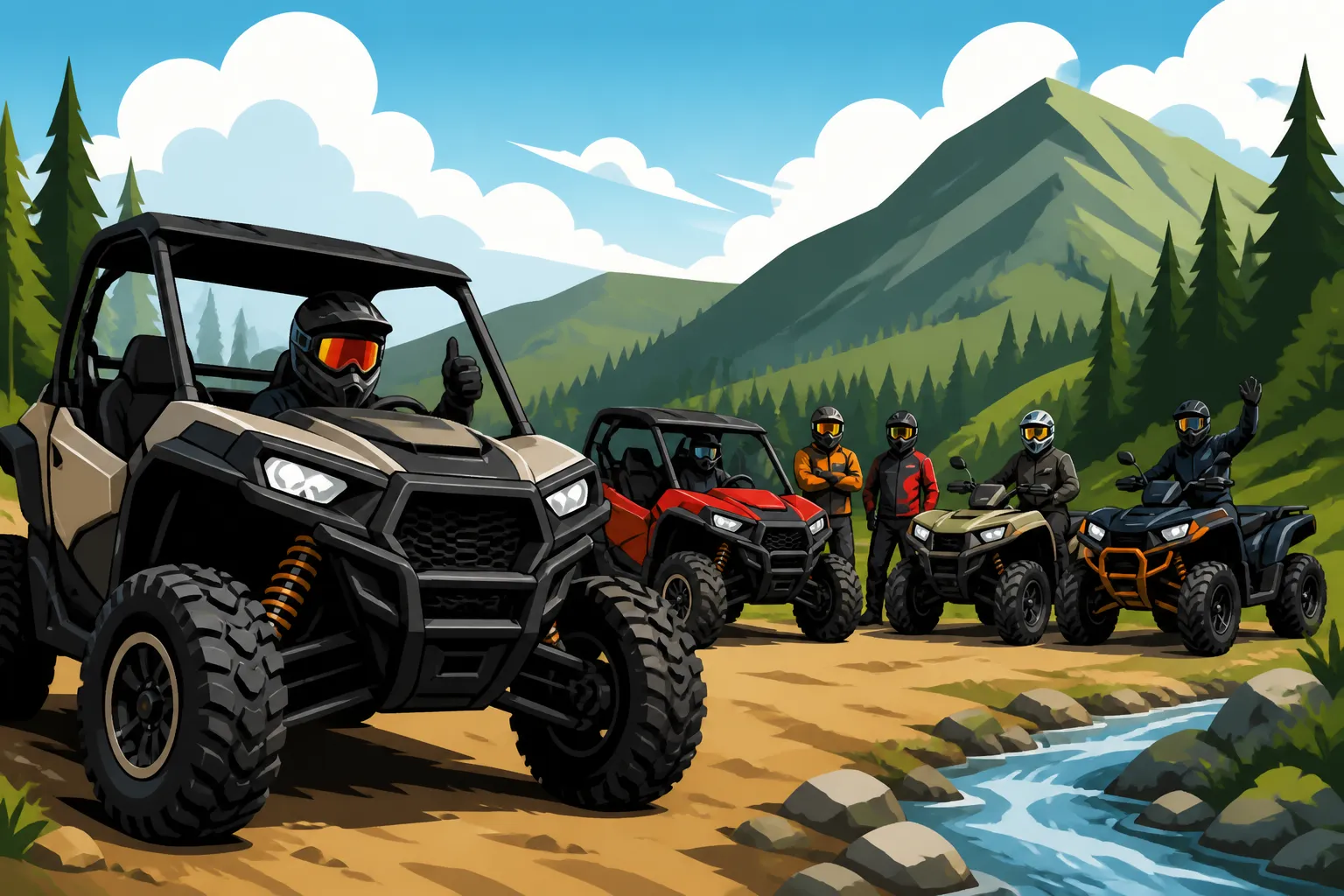
A long line of machines can stretch out quickly, particularly when riders stop to check a map or take a break. Set the order before departure: a lead rider who knows the planned route, a sweep rider who stays behind the group, and a middle position for anyone who may need extra support. Riders should know who to follow and who to contact if the line becomes separated.
Use planned regrouping points rather than asking the entire group to stop unpredictably on a narrow trail. The lead rider can pause at a safe, visible location and wait until the sweep confirms that everyone has arrived. If someone does not reach the regroup point, the group should follow the agreed response plan rather than splitting up to search in different directions. A map app such as onX Offroad can help people refer to the same route, but clear roles and communication matter more than the app itself.
Leave room between machines. Dust, limited sightlines, sudden stops, and different riding speeds can make close following uncomfortable or unsafe. Encourage riders to maintain a distance that lets them react without feeling rushed. If the group is too large to travel comfortably as one line, consider splitting into smaller riding groups with separate leaders and a shared plan for where and when to meet. Do not create a second group that rides independently without someone responsible for its route and head count.
Prepare for safety, rules, and changing conditions
Check requirements and local restrictions
Before the ride, confirm that each machine and rider is prepared for the places you intend to travel. Requirements can vary depending on whether you are on a managed trail, Crown land, or a resource road. Check applicable rules for registration, insurance, protective equipment, and access, and carry what is required for the route. BC Crown Land Riding Explained and BC Forest Service Road Requirements can help you identify questions to resolve before the group departs.
Pay attention to posted restrictions and changing conditions. A road may have industrial traffic, a trail may be closed, or weather may make a route unsuitable. A large group needs to be especially careful about stopping where vehicles or work crews need to pass. Follow signs and directions on site, and do not assume that a route used on a previous visit remains open or suitable.
Assign one person to check access information before the ride and another to relay any changes to the group. This reduces the chance that every rider is trying to interpret different messages while unloading. If the planned route is unavailable, use the backup plan or change the outing. Do not pressure riders to continue simply because the group has already made the drive.
Have a plan for separation or a breakdown
Agree on what happens if riders become separated. A practical plan includes a meeting point, a time to wait, and a rule that riders do not continue past a junction if the person behind them has not appeared. Remind everyone to stop somewhere safe if they lose contact, rather than taking an unfamiliar turn in an attempt to catch up.
For a mechanical issue, decide whether the group will stop together, whether a small support team will stay with the rider, or whether everyone will return to the staging area. The right choice depends on the location and the problem, but the decision should not be left to one stressed rider on a remote trail. Carry basic tools and supplies appropriate to your machines, and make sure at least a few people know the route and the day’s plan.
Finally, keep the group’s expectations realistic. A big ride often involves more waiting, more conversations, and more adjustments than a small outing. Building in that time makes the day feel less like a schedule that has gone wrong and more like a ride designed for the people who actually showed up. Share the route, keep the staging area orderly, and make it easy for anyone to speak up if they are tired, uncertain, or uncomfortable.
Disclaimer
This article is for general informational purposes only and does not constitute professional advice. Laws, prices and regulations vary by location and change over time. Consult a qualified professional for guidance on your specific situation.