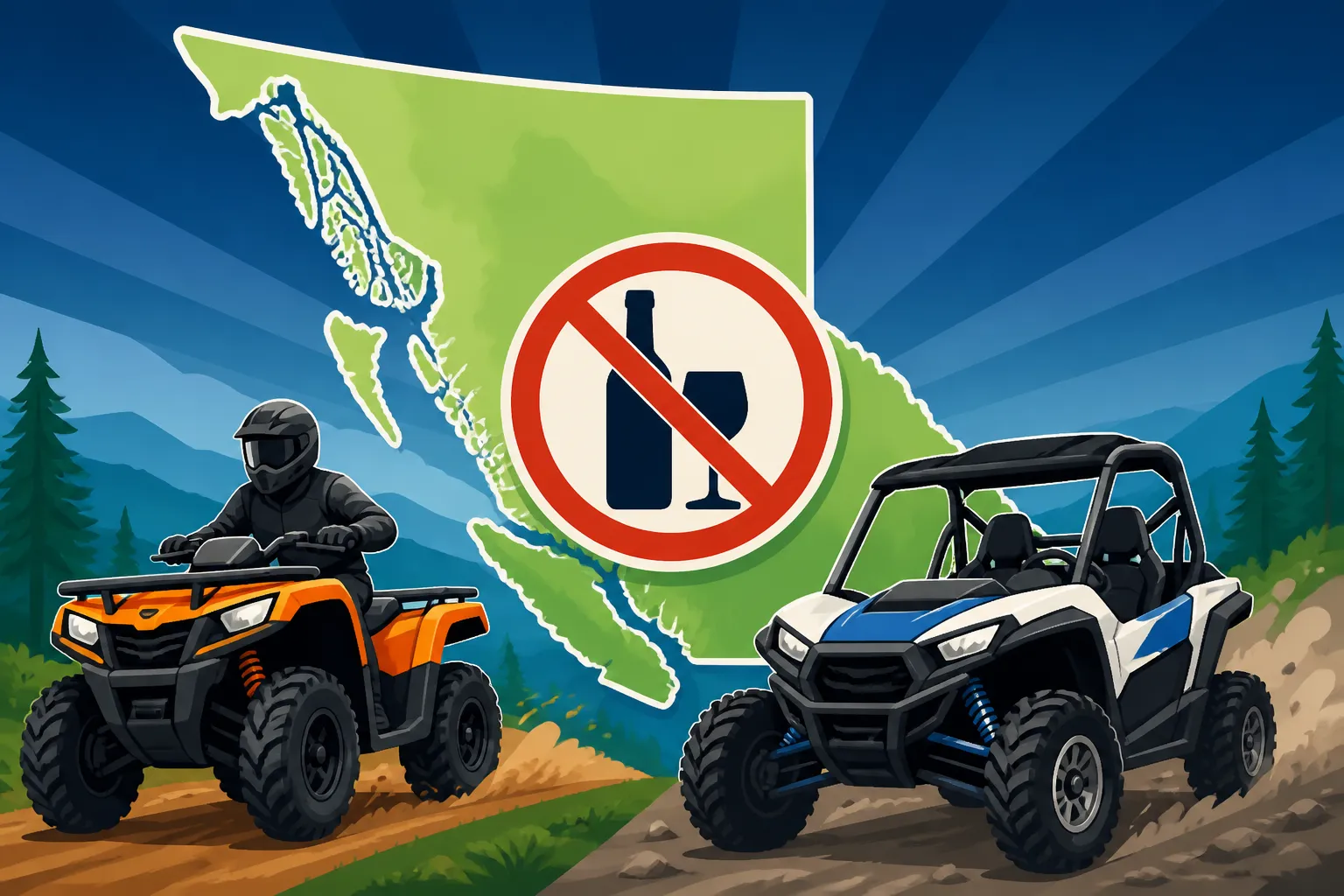
Impaired Operation Applies Anywhere in BC
Many off-road vehicle enthusiasts in British Columbia might mistakenly believe that impaired riding laws only apply on public roads or Crown land. The truth, however, is far more encompassing and can lead to severe consequences for anyone operating an ATV or UTV while under the influence, no matter where they are in the province. This guide will delve into why impaired operation applies universally in BC and the serious repercussions riders face, helping you understand the legal landscape before you hit the trails.
The Harsh Reality: Impaired Operation Doesn't Discriminate by Location
It's a common misconception that if you're not on a paved road, the same strict rules about impaired driving don't apply. Perhaps you're out camping with friends, enjoying a few drinks around the fire, and decide to take your ATV for a quick spin around the campsite. Or maybe you're working on your family's expansive private property, and after a long day, you have a beer or two before hopping on your side-by-side to move some equipment. In both these scenarios, and countless others like them, the law views the operation of your off-road vehicle while impaired with the same gravity as if you were driving a car on the Trans-Canada Highway. The location simply doesn't shield you from legal accountability.
The critical takeaway here is that British Columbia, through its provincial legislation and alignment with federal criminal law, casts a wide net when it comes to impaired operation. It's not about where you're driving, but what you're driving and how you're driving it. This comprehensive approach is designed to protect everyone, including the impaired operator themselves, from the inherent dangers of operating heavy machinery under the influence. Whether you're navigating a challenging mountain trail or simply puttering around your own backyard, the legal definition of "impaired operation" remains steadfast and the potential for serious harm, and serious penalties, is ever-present.
Understanding the "Conveyance" Clause
At the heart of why impaired operation applies anywhere in BC is the federal Criminal Code's definition of a "conveyance." For many years, the term was "motor vehicle," which sometimes led to ambiguity regarding off-road machines. However, amendments to the Criminal Code replaced "motor vehicle" with "conveyance," which explicitly includes any motor vehicle, vessel, aircraft, or railway equipment. Critically for ATV and UTV riders in BC, ATVs and UTVs fall squarely under the "motor vehicle" part of that conveyance definition. This means that if you're operating an ATV or UTV, you are operating a conveyance.
What's particularly important about this change is that the Criminal Code's provisions regarding impaired operation of a conveyance apply "in any place." This is a crucial distinction that many people overlook. It means that whether you're on a public highway, a remote [BC Crown Land Access Rules], a bustling resource road, or even a quiet, privately owned field, if you are operating your ATV or UTV while impaired, you are committing a criminal offense. The specific location does not act as a legal loophole or provide any immunity from prosecution. Understanding [BC Impaired Riding and the Criminal Code] is paramount for every rider.
This broad application ensures a consistent standard of safety across all modes of transportation and all types of terrain. Imagine the chaos and danger if impaired driving laws only applied to paved roads; the backcountry would become a free-for-all, endangering not only the riders but also hikers, wildlife, and anyone else who might be in the vicinity. The law recognizes that operating a powerful machine like an ATV or UTV requires full cognitive function and an unimpaired ability to react, regardless of the operating environment.
Dispelling the Myth of "Private Land Immunity"
One of the most persistent myths surrounding off-road vehicle use is the idea that "my land, my rules" applies to impaired driving. Many individuals mistakenly believe that if they are on their own private property, or private land with permission, they are exempt from impaired driving laws. This is simply not true. While property rights do give owners control over who can access their land and what activities can take place, they do not override federal criminal law, which governs impaired operation. The Criminal Code's definition of "conveyance" and its application "in any place" means that private land offers no sanctuary from these charges.
Consider a scenario where a rider has had too much to drink at a remote cabin on private property and decides to take their UTV for a short, seemingly harmless ride around the perimeter. If law enforcement is called to the property for any reason – perhaps due to a noise complaint, an accident, or another reported incident – and they observe you operating your UTV while impaired, you can absolutely be charged under the Criminal Code. The fact that you are on private land does not change the legal nature of the offense. While [BC Private Land and the Registration Question] might address provincial regulations like registration, it doesn't touch federal criminal statutes.
The danger on private land is just as real, if not more so, than on public trails, especially if there are other people present, or even just hazards like trees, ditches, or structures. Accidents involving impaired operators on private land can still result in severe injuries or fatalities for the driver, passengers, or innocent bystanders. Therefore, whether you're working on your ranch or simply enjoying some recreation on your acreage, the rule of thumb remains: if you wouldn't drive your truck impaired on the highway, you absolutely shouldn't drive your ATV or UTV impaired on private property.
What Constitutes Impaired Operation in BC?
Impaired operation isn't just about blowing over the legal blood alcohol limit; it's a much broader concept that encompasses anything that compromises your ability to safely control your off-road vehicle. This comprehensive definition is crucial because it accounts for the myriad ways a person's judgment, reaction time, and coordination can be negatively affected, putting themselves and others at risk. It’s not simply about consuming a substance, but how that substance, or even a condition, impacts your capacity to operate a machine safely.
Law enforcement officers are trained to look for a range of indicators, not just the smell of alcohol, when assessing potential impairment. Their goal is to determine if your ability to operate the ATV or UTV is compromised to any degree by the presence of a substance or condition. This means that even if you feel "fine" or believe you are "only slightly" affected, an officer might still determine that you are impaired in the eyes of the law. The standard is objective safety, not subjective feeling, underscoring the importance of completely avoiding mind-altering substances before or during a ride.
Beyond Alcohol: Drugs, Medication, and Fatigue
While alcohol is the most commonly recognized cause of impaired driving, it is far from the only one. In British Columbia, impaired operation explicitly includes impairment by drugs, whether they are illicit, over-the-counter, or even legally prescribed medications. If a drug, even one your doctor prescribed, affects your ability to operate your ATV or UTV safely, you can face impaired driving charges. The effects of different drugs can vary wildly, from drowsiness and slowed reaction times to altered perception and poor judgment, all of which are incredibly dangerous when operating a powerful machine.
Furthermore, the concept of impairment can even extend to severe fatigue. While not a substance, extreme tiredness can mimic the effects of alcohol or drugs, significantly impairing your concentration, judgment, and reaction time. Imagine riding on a challenging [BC Forest Service Road Requirements] for hours on end, becoming increasingly exhausted, and then facing a sudden obstacle. Your ability to respond effectively can be severely compromised by fatigue, making it just as dangerous as being under the influence of a substance. It's about ensuring you are in full command of your faculties when you're in the driver's seat.
Police officers are now equipped with tools and training to detect drug impairment, including Standardized Field Sobriety Tests (SFSTs) and Drug Recognition Expert (DRE) evaluations. These methods allow officers to assess physiological indicators of drug use, such as pupil size, muscle tone, and balance, providing evidence of impairment even without a breathalyzer reading. This expanded focus means riders need to be vigilant about all substances they consume and their potential impact on safe operation, not just alcohol.
The Role of Observation and Standardized Field Sobriety Tests
When a police officer suspects impairment, their assessment often begins with simple observation. They'll look for signs like slurred speech, fumbling for documents, unsteady movements when exiting the vehicle, or the smell of alcohol or cannabis. If these initial observations raise suspicion, the officer may then proceed with further tests to gather more evidence of impairment. This step-by-step process is a standard procedure designed to ensure fairness and accuracy in their assessment.
The next step often involves the use of an Approved Screening Device (ASD) for alcohol, or for drug impairment, a Standardized Field Sobriety Test (SFST). An SFST is a series of roadside tests designed to determine if a driver's physical and mental abilities are impaired. These tests might include the horizontal gaze nystagmus (HGN) test, the walk-and-turn test, and the one-leg stand test. These are not arbitrary exercises but scientifically developed assessments that correlate with impairment. A failing performance on an SFST can provide grounds for an officer to demand further testing, such as a blood sample or a Drug Recognition Expert (DRE) evaluation.
It is crucial to understand that under Canadian law, refusing to comply with a demand for an ASD, SFST, or a breath/blood sample carries the same legal weight, and often the same severe penalties, as being found impaired. This refusal to comply is itself a criminal offense. Therefore, if an officer has reasonable grounds to suspect impairment, it is in your best interest to comply with their lawful demands, even if you believe you are not impaired. The legal system is designed to provide avenues to challenge charges in court, but refusing roadside tests can lead to immediate and undeniable criminal charges.
The Serious Consequences: Penalties for Impaired ATV/UTV Operation
The penalties for impaired operation of an ATV or UTV in British Columbia are severe and far-reaching, designed to deter such dangerous behaviour and punish those who engage in it. Unlike a simple traffic ticket, an impaired driving charge is a criminal offense, carrying consequences that can dramatically alter your life beyond just fines. It's not just about losing money; it's about losing your freedom, your driving privileges, and potentially your reputation and future opportunities. The justice system takes these offenses very seriously because of the high risk they pose to public safety.
The repercussions extend from immediate actions taken by law enforcement at the roadside to long-term legal and personal consequences that can linger for years. These penalties apply whether you're riding your ATV on a designated trail, a [BC Forest Service Road] during hunting season, or even just on your own private land. There is no lesser penalty category for off-road vehicles; the Criminal Code treats them as seriously as any other conveyance when it comes to impaired operation. Understanding the full spectrum of these penalties is crucial for any responsible rider.
Immediate Roadside Prohibitions and Licence Suspensions
If a police officer determines you are impaired while operating your ATV or UTV, the consequences begin immediately at the roadside. One of the most immediate actions an officer can take is issuing a 24-hour driving prohibition. This means your off-road machine, and any other vehicle you might operate, is off-limits for an entire day, requiring you to arrange for alternate transportation for yourself and your ATV. This is just the beginning, however, and more severe immediate penalties are likely.
More significantly, an officer can issue an Immediate Roadside Prohibition (IRP) if they have grounds to believe you are impaired by alcohol or drugs. These prohibitions can range from 3, 7, 30, or even 90 days, depending on the circumstances and your history. Crucially, these prohibitions apply to all motor vehicles, meaning your regular driver's licence for a car or truck will also be suspended, even though you weren't operating it at the time of the offense. This can severely impact your daily life, affecting your commute to work, your ability to run errands, and your overall independence. While [BC Penalties for Riding Unregistered] might seem inconvenient, an IRP is a far more impactful consequence.
In addition to the driving prohibition, your ATV or UTV will almost certainly be impounded, often for a period mirroring the length of your prohibition. This means you will incur significant towing and storage fees, even if no criminal charges are ultimately laid. The combination of losing your driving privileges and having your machine impounded creates an immediate and undeniable hardship, serving as a stark reminder of the serious nature of impaired operation.
Administrative Penalties, Court Fines, and Jail Time
Beyond the immediate roadside actions, a charge of impaired operation can lead to a cascade of administrative and criminal penalties. On the administrative side, if your case proceeds, you could face mandatory enrolment in remedial programs, further licence suspensions, and increased insurance premiums through ICBC (or denial of coverage by private insurers). These administrative consequences are often separate from and in addition to any penalties imposed by the courts.
If convicted under the Criminal Code, the consequences become even more severe. For a first offense of impaired operation, you will face a mandatory minimum fine, usually in the range of $1,000, and a minimum one-year driving prohibition. However, repeat offenders face increasingly stringent penalties. A second offense typically results in a mandatory minimum of 30 days in jail and a two-year driving prohibition. For a third or subsequent offense, you could be facing a mandatory minimum of 120 days in jail and a three-year or longer driving prohibition. This escalation underscores the legal system's intolerance for habitual impaired driving, with [BC Jail Terms Up to Three Years] being a very real possibility in serious cases.
It's critical to understand that a conviction for impaired operation results in a permanent criminal record. This record can have profound implications for your future, affecting employment opportunities, travel to other countries (especially the United States), and even volunteer positions. These are not minor infractions; they are serious criminal charges that carry long-lasting social and economic consequences, extending far beyond the initial fines and prohibitions.
Vehicle Seizure: Losing Your Machine
One of the most immediate and impactful consequences of impaired ATV/UTV operation can be the seizure and impoundment of your machine. When an officer determines you are impaired, they have the authority to impound your off-road vehicle on the spot. This means your ATV or UTV will be towed away, often at your expense, and stored in an impound lot. The fees for towing and daily storage can quickly add up, creating a significant financial burden on top of any fines or legal costs. This is not a temporary measure; the vehicle will remain impounded until the legal requirements are met, which could be days, weeks, or even months.
In more serious cases, particularly with repeat offenses or severe impairment, the Crown may seek permanent forfeiture of your vehicle. This means you could lose ownership of your ATV or UTV entirely, without compensation. This is a powerful deterrent designed to remove the means by which offenders commit the crime. The concept of [BC Warrantless Seizure of a Machine] is a stark reality for those found to be operating their ORV while under the influence.
Even if your machine is eventually returned, the process of retrieval can be complicated and costly. You'll need to pay all impound and storage fees, and potentially other administrative charges, before your vehicle is released. This means that not only do you face personal legal penalties, but your valuable equipment is also directly impacted, creating a tangible and often very expensive reminder of the consequences of impaired operation.
Protecting Yourself and Others: Responsible Riding Practices
Understanding the severe consequences of impaired ATV/UTV operation in British Columbia is the first step towards preventing it. The next, and most crucial, step is to actively adopt responsible riding practices that prioritize safety above all else. This isn't just about avoiding legal trouble; it's about safeguarding your life, the lives of your passengers, and the safety of everyone else who shares the trails and wilderness areas. Becoming a responsible rider means making conscious choices before you even start your engine.
Responsible riding is a mindset that integrates safety planning into every aspect of your off-road adventure. It means recognizing that the power and capabilities of ATVs and UTVs demand respect and clear judgment. By proactively addressing potential risks and making smart decisions, you can enjoy all the excitement and freedom that off-road riding offers without compromising safety or breaking the law. Let's look at some actionable strategies to ensure your rides are always safe and legal.
Planning Ahead: Designating a Sober Driver
The simplest and most effective way to prevent impaired operation is to plan ahead. If your outing involves alcohol, even in a social setting, designate a sober driver (or rider) who commits to abstaining from all intoxicating substances for the entire duration of the trip, from start to finish. This person will be responsible for operating the ATV or UTV safely, ensuring everyone gets back to camp or home without incident. This designated rider should be someone reliable and trustworthy, committed to the role.
This planning should extend to your entire group. Ensure that everyone understands the designated driver arrangement and respects the sober rider's responsibility. If no one can commit to being completely sober, then the decision should be to simply avoid operating the machines altogether. Alternatives include trailering your machines to and from your destination, or simply enjoying the social aspect of the outing without incorporating riding if alcohol is involved. Remember, even if you possess a [BC Drivers Licence Requirement on a Highway], that doesn't grant you permission to operate an ORV impaired anywhere else.
It's also a good idea to pack plenty of non-alcoholic beverages and food. Having appealing alternatives available can help reduce the temptation to consume alcohol or other substances. Communicate openly with your riding group about your commitment to sober riding, fostering a culture of responsibility and safety. No amount of fun is worth the risk, or the severe penalties, associated with impaired operation.
The Importance of Education and Safety Training
Beyond avoiding substances, ongoing education and safety training are vital components of responsible ATV/UTV operation. Understanding how to properly handle your machine, anticipate hazards, and react in emergencies significantly reduces the risk of accidents. This knowledge is crucial for all riders, regardless of experience level, and especially for those who might be exposed to challenging terrains or unpredictable conditions. While safety training doesn't directly prevent impaired driving, it instills a culture of responsible operation that naturally discourages reckless behaviour.
Taking courses like those offered in [BC ATV Safety Training Options] can dramatically improve your riding skills and awareness. These courses cover everything from basic controls and riding techniques to risk assessment and emergency procedures. They help riders develop the judgment and reflexes necessary to navigate diverse environments safely. A well-trained rider is a safer rider, and a safer rider is less likely to engage in risky behaviors like impaired operation.
Many organizations and [BC ATV Clubs Worth Joining] actively promote safety training and responsible riding. They often host workshops, provide resources, and advocate for safe practices within the off-road community. Engaging with these groups not only enhances your personal safety but also contributes to a broader culture of responsibility. By continually educating yourself and refining your skills, you reinforce the commitment to operating your ATV or UTV with the clear mind and sharp reflexes that the law, and common sense, demand.
| Offence (First Offence, Adult) | Immediate Roadside Action | Administrative Penalties (ICBC) | Criminal Code Penalties (Court) |
|---|---|---|---|
| Impaired Operation | 24-hour to 90-day driving prohibition, vehicle impoundment | Driving prohibition (90 days+), fines, remedial programs, increased insurance premiums | Mandatory minimum $1,000 fine, 1-year driving prohibition, criminal record |
| Refusal to Provide Sample | 90-day driving prohibition, vehicle impoundment | Driving prohibition (90 days+), fines, remedial programs, increased insurance premiums | Mandatory minimum $1,000 fine, 1-year driving prohibition, criminal record |
| Driving While Prohibited | Immediate vehicle impoundment | Extended driving prohibition | Hefty fines, mandatory minimum jail time, criminal record |
Disclaimer
This article is for general informational purposes only and does not constitute professional advice. Laws, prices and regulations vary by location and change over time. Consult a qualified professional for guidance on your specific situation.