BC Rules for a Visiting Alberta Rider
Heading to British Columbia with your ATV or UTV for some incredible trail riding is a dream for many Alberta adventurers. But before you load up the trailer and hit the highway, there's often a gnawing uncertainty about what rules are different, what paperwork you need, and whether your trusty quad will be legal on BC's diverse terrain. This comprehensive guide is here to clarify those distinctions, ensuring your BC riding trip is all about breathtaking views and zero unnecessary headaches.
Understanding British Columbia's Off-Road Vehicle Act as an Alberta Visitor
When you cross the provincial border from Alberta into British Columbia, you're entering a different regulatory landscape for off-road vehicles (ORVs). Alberta has its own set of rules, often perceived as more relaxed when it comes to formal registration for recreational use. BC, however, introduced its comprehensive Off-Road Vehicle Act in 2015, which significantly changed how ORVs are managed and regulated throughout the province. This Act governs everything from registration and insurance to operation and safety, especially when you're riding on Crown land, which makes up a huge portion of BC's riding opportunities.
The biggest mental shift for many Alberta riders is the concept of mandatory registration. In Alberta, you might simply register your quad with a provincial registry for identification purposes, but it's not always tied to public land access in the same way. In BC, if you're riding on any Crown land – which includes vast tracts of wilderness, forest service roads, and designated trails – your machine must be registered. This is where the confusion often begins for visitors. While BC residents must register their machines with ICBC and obtain a [BC's Certificate of Registration Explained], the rules are slightly different for non-residents like yourselves, who already have a home province's registration system.
The intent of BC's ORV Act isn't to make it impossible for visitors to ride; it's to ensure accountability, aid in law enforcement, and track machines for environmental management and accident reporting. For an Alberta rider, this means understanding how your existing Alberta registration and identification documentation fit into BC's framework. It's about demonstrating that your machine is legally owned and identifiable, even if you don't get a specific "BC plate" if you're not a BC resident. The Province of BC generally respects the registration requirements of other jurisdictions, meaning your Alberta plates and proof of ownership are crucial.
What Your Alberta Registration and Insurance Mean in BC
One of the most common questions Alberta riders have is whether they need to re-register their ATV or UTV in BC. The short answer is generally "no," you don't need to obtain BC-specific registration if you are genuinely a non-resident visiting from Alberta. British Columbia's Off-Road Vehicle Act recognizes valid registration and identifying plates from other jurisdictions, including Alberta, provided those jurisdictions have a similar registration system. This is a huge relief for many, as the thought of navigating another province's bureaucracy just for a holiday can be daunting. You'll be pleased to know that [BC Does Not Register Non-Resident Machines].
What you do need to carry with you is clear proof of your Alberta registration and proof of ownership. This typically includes your Alberta registration certificate and any other documents that confirm you are the legal owner of the machine. Think of it this way: BC authorities need to be able to verify that the machine you are riding isn't stolen and that it belongs to you. Always keep these documents, along with photo identification, readily accessible while you're riding. [BC Riders Must Carry Photo ID] and [BC Riders Must Carry the Certificate] apply, even if your "certificate" is your Alberta equivalent.
Now, let's talk about insurance, because this is where a significant difference arises. While your Alberta-based ORV insurance might cover liability and damages in your home province, BC has specific requirements, especially for riding on Forest Service Roads (FSRs), which are a common access point to many fantastic riding areas. On an FSR, which are essentially working industrial roads and public routes on Crown land, BC mandates a minimum of $200,000 in third-party liability insurance. This is non-negotiable and something many Alberta policies might not automatically meet for out-of-province ORV use, or at least not without a specific endorsement.
It's absolutely critical to check with your Alberta insurance provider before you head to BC. Explain that you'll be riding on Forest Service Roads and other Crown land in British Columbia and ask if your current policy provides the mandatory $200,000 liability coverage in BC. If it doesn't, you'll need to purchase additional coverage. Sometimes, your existing provider can add a rider or endorsement, or you might need to look into a temporary policy from an insurer that operates in BC. This isn't just a suggestion; it's a legal requirement that can lead to fines if you're caught without it. [BC Forest Service Road Insurance] is a serious consideration, and getting it sorted before you leave Alberta will save you a lot of potential stress and expense. Many riders will find that even if they usually opt for basic coverage, the FSR requirement is a non-starter. Some private insurers in Alberta might offer policies that easily extend to meet BC's FSR requirements, so it's worth exploring your options.
| Aspect | Alberta ORV Rules (General) | British Columbia ORV Rules (for Visitors) |
|---|---|---|
| Registration | Required by some municipalities/registries, but not universally tied to Crown land access. | Home province registration recognized, but proof must be carried. |
| Plate Display | Typically required by provincial regulations. | Your Alberta plate must be clearly displayed. |
| Proof of Ownership | Recommended, often tied to registration. | Mandatory to carry proof of ownership (e.g., Alberta registration certificate). |
| Liability Insurance | Minimums vary; often covered by private insurance. | Minimum $200,000 liability required on Forest Service Roads. |
| Helmet Law | Varies by age and type of machine. | Mandatory for all ride-astride ORVs, recommended for side-by-sides unless caged and belted. |
| Spark Arrestor | Required. | Mandatory on all ORVs. |
| Operation Permits | Not common for recreational riding on public land. | May be required by local police for specific highway crossings/access. |
Essential Gear and Safety Rules for Riding in BC
Beyond the paperwork, ensuring your machine is properly equipped and you're aware of BC's safety rules is paramount for a safe and enjoyable trip. British Columbia's terrain can be rugged, diverse, and unpredictable, from coastal rainforest trails to dusty interior mountains. Having the right gear isn't just about comfort; it's often a legal requirement.
First and foremost, let's talk about helmets. In BC, if you're riding an ATV or a dirt bike (which are classified as "ride-astride" machines), wearing an approved helmet is absolutely mandatory for both drivers and passengers, regardless of age. For side-by-sides (UTVs), helmets are also highly recommended, though generally not legally required if the vehicle is equipped with seat belts and a roll cage, and you are wearing the seatbelt. However, given the nature of off-road riding, a helmet is always a wise choice. Ensure any helmet you bring meets recognized safety standards. [BC ATV Helmet Law Explained] covers this in detail.
Another piece of mandatory equipment, and one that often catches visitors off guard, is a spark arrestor. All ORVs operated on Crown land in BC must be equipped with a properly functioning spark arrestor. This is a critical wildfire prevention measure. Check your exhaust system to confirm it has one, and that it's in good repair. Fines for not having one can be steep, especially during wildfire season. If you're running an aftermarket exhaust, verify that it includes a certified spark arrestor. Companies like SuperATV offer a range of aftermarket parts, but always double-check they comply with local regulations. [BC Spark Arrestor Rules and Fines] are in place for a reason – BC takes wildfire prevention very seriously.
Beyond these legal requirements, consider the following for a safer BC adventure:
- Lighting: If you plan on riding at dawn, dusk, or night, your ORV must have working headlights and taillights. Many trails are deeply canopied, making good lighting crucial even during the day.
- Winch and Recovery Gear: BC's trails can be challenging, with mud, steep climbs, and rocky sections. A winch can be a lifesaver, and carrying recovery straps, a small shovel, and a first-aid kit is always a good idea, especially if you're venturing into remote areas. Having strong, reliable components from a brand like SuperATV can make a real difference when you're far from help.
- Tires: Ensure your tires are in good condition and suitable for the terrain you plan to tackle. Mud-specific tires might be great for some areas, but general-purpose knobbies could be better for varied conditions.
- Communication: Cell service can be spotty to non-existent in many of BC's backcountry areas. Consider carrying a satellite messenger or a two-way radio, especially if you're riding in a group. On many Forest Service Roads, resource road radio practice is common to communicate with industrial traffic like logging trucks. [BC Resource Road Radio Practice] is something every rider should familiarize themselves with.
- Bear Spray: BC is bear country. Carrying bear spray and knowing how to use it safely is a prudent precaution when riding in wilderness areas.
- Layers: Weather in BC, particularly in the mountains, can change rapidly. Dress in layers to adapt to temperature swings, and always pack rain gear, even on a sunny day.
Finally, be aware of BC's specific rules regarding youth riders and passengers. There are age restrictions for operating ORVs, and specific rules about who can carry passengers and where. Generally, children under 16 have stricter rules about machine size, supervision, and passenger carriage. [BC Youth Riding Rules Explained] highlights these critical points. Always ensure that the supervising adult meets the age and proximity requirements.
Navigating BC's Trails: Where and How to Ride Legally
So, you've got your Alberta registration, proper insurance, and all your safety gear. Now, where can you actually ride in British Columbia? This is perhaps one of the most exciting, yet potentially confusing, aspects for visiting riders. BC boasts an incredible network of trails and access points, but it's crucial to understand where ORVs are permitted and where they are not.
The vast majority of legal ORV riding in BC takes place on Crown land, including designated trails managed by recreation groups and, importantly, the aforementioned Forest Service Roads. These FSRs often provide access to staging areas and connect to extensive trail networks. Many trails are maintained by local ATV clubs, and sometimes require specific day passes or memberships for their upkeep. For instance, popular sites like Bear Creek OHV in the Okanagan might have [BC Trail Pass Cost at Bear Creek] for visitors, which helps fund trail maintenance. Always check the specific area you plan to visit for any local rules or passes required.
However, there are also significant restrictions:
- Private Land: You can only ride on private land if you have explicit permission from the landowner. Trespassing laws are strictly enforced. [BC Private Land and the Registration Question] is often raised, but permission is the overriding factor here.
- Highways and Paved Roads: With very limited exceptions (like crossing at specific intersections or under a police permit), ATVs and UTVs are generally not permitted on public highways or paved roads in BC. [Can You Ride an ATV on the Road in BC?] The answer is almost always no, unless you have a specific operation permit issued by local police for a very short, controlled segment. [BC ORV Crossing Rules at Stops and Lights] outline the strict ways you can even cross a highway.
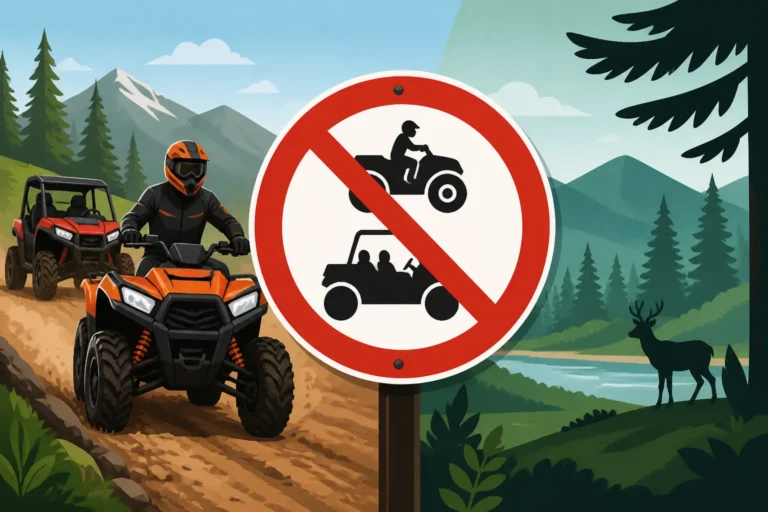
- Provincial Parks: Most BC Provincial Parks prohibit motorized recreation. Always check the park's specific regulations before assuming you can ride there. [BC Provincial Parks That Ban Machines] are common.
- Motor Vehicle Closed Areas: Various areas of Crown land are designated as "Motor Vehicle Closed Areas" for wildlife protection or environmental reasons. These are often marked, and it's essential to respect these closures. [BC Motor Vehicle Closed Areas] are critical to research before your trip, as they change seasonally or based on environmental needs.
- Wildfire Bans: During wildfire season (typically summer and early fall), BC often implements partial or full ORV prohibitions in certain Fire Centres. Riding during a fire ban can result in massive fines and even jail time. Always check the BC Wildfire Service website for current prohibitions before heading out. [Checking a Fire Ban Before You Ride in BC] is a daily ritual for many local riders.
When riding on FSRs, remember they are actively used by industrial traffic, especially logging trucks. These trucks always have the right of way, and they travel fast. Maintain vigilance, keep to the right, and use appropriate radio channels if you have a radio. [BC Riders Meeting a Logging Truck] can be a dangerous encounter if you're not prepared. Respect all signage and posted speed limits.
Being a responsible and informed visitor means not only adhering to the letter of the law but also to the spirit of respectful backcountry use. Pack out everything you pack in, stay on designated trails to prevent environmental damage, and be mindful of other users, whether they are hikers, mountain bikers, or other ORV enthusiasts. BC's natural beauty is a shared resource, and preserving it for everyone is part of the riding experience. Enjoy your adventure in British Columbia – with the right preparation, it's an unforgettable experience!
Disclaimer
This article is for general informational purposes only and does not constitute professional advice. Laws, prices and regulations vary by location and change over time. Consult a qualified professional for guidance on your specific situation.