BC Rules for Riding Private Land
It's a common misconception, isn't it? Many of us think that if we're on our own property, or land we have permission to ride on, then all the rules for our ATVs and UTVs just kind of melt away. We imagine a free-for-all, a place where we can truly let loose without a care in the world. But the reality in beautiful British Columbia is a bit more nuanced than that. This guide is here to untangle the specifics, helping you understand exactly what regulations still apply when you're enjoying your off-road machine on private land in BC, so you can ride safely and legally without any nasty surprises.
The Foundation: Permission is Paramount on Private Land
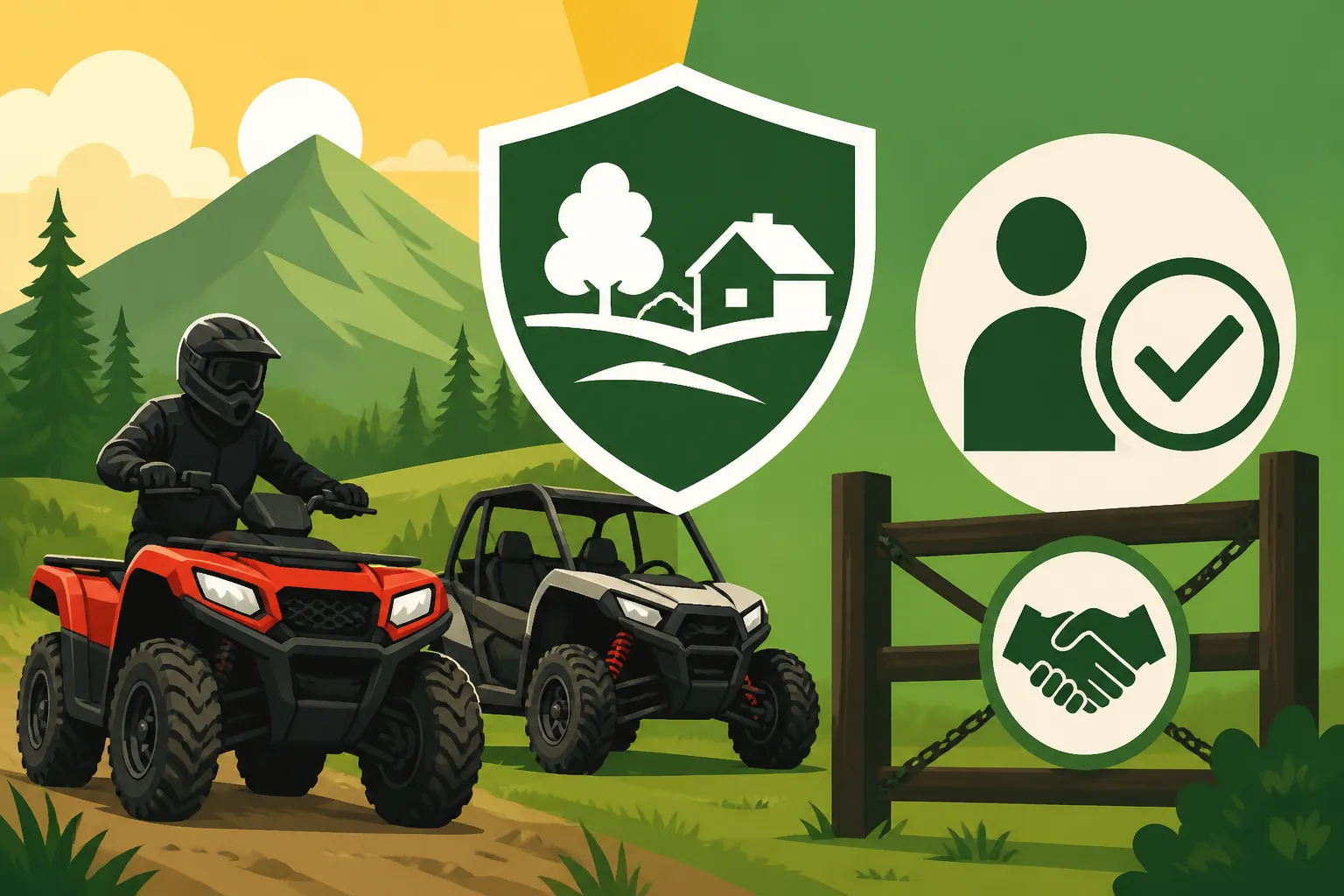
Before we even get to the nuances of specific ORV regulations, the absolute cornerstone of riding on any private land that isn't your own is permission. This might seem like a no-brainer, but you'd be surprised how often people overlook this crucial step, assuming a handshake or a vague understanding is enough.
Always Secure Express Permission
Riding on private land without the owner's explicit consent is trespassing, plain and simple. In BC, this isn't just a minor annoyance; it can lead to legal trouble, fines, and even the seizure of your machine. Whether it's a friend's acreage, a relative's farm, or a piece of leased Crown land, you need to have a clear, preferably written, agreement that you are allowed to be there and ride your off-road vehicle. This protects both you and the landowner.
Think about it from the landowner's perspective: if you're out there riding and something goes wrong – an accident, property damage, or even just noise complaints from neighbours – they are the ones who might face repercussions. Having express permission means they know who's on their land and for what purpose. It's a sign of respect and responsibility. Always ask, and make sure you understand any specific conditions or restrictions the landowner might have, such as areas to avoid, times of day when riding isn't permitted, or speed limits they might want you to observe. This is especially true if you're thinking of setting up an obstacle course or pushing your machine's limits; the landowner needs to be fully aware and comfortable with the activity.
Understanding Trespass Laws
The BC Trespass Act gives landowners the right to control who is on their property. If you're caught riding without permission, you could be issued a ticket, asked to leave, or even have law enforcement involved. It's not just about fences and "No Trespassing" signs; sometimes land looks unmaintained or abandoned, tempting riders to explore. But without permission, you're always taking a risk.
Consider situations where private land might look like a natural extension of Crown land or a forest service road. Sometimes, a well-used trail might actually cut across private property. It's incumbent upon the rider to know where they are and whose land they're on. Even if you've ridden the same route for years, land ownership can change, and new owners might not be as welcoming. Always verify your route and ensure you have permission for every stretch of private property you intend to cross. The last thing you want is to be halfway through a ride and find yourself in a confrontation with an upset landowner.
Your Machine's Status: Registration and Insurance on Private Property
This is where things can get a little confusing for many riders. The Off-Road Vehicle Act in British Columbia made ORV registration mandatory, but there are specific triggers for when that rule applies. Riding exclusively on private land you own or have explicit permission to use can change things, but it's not a blanket exemption.
When Registration is (and Isn't) Required
The core of BC's ORV registration requirement hinges on where you're riding. The [BC Registration Became Mandatory in 2015] specifically states that you need to register your machine if you intend to operate it on Crown land, which includes things like [BC Resource Roads Count as Crown Land]. If you only ever plan to ride on private property, and never, ever touch a publicly accessible trail, road, or piece of Crown land, then the requirement to register your ORV with ICBC might not apply.
However, here's the massive caveat, and why most riders in BC still choose to register: it's incredibly rare for an ORV to never leave private property. Even a quick trip across the road to a neighbour's field, or moving your machine from your property to a trailer parked on the shoulder, technically places it on a public thoroughfare or Crown land. The convenience and peace of mind of having your machine properly registered usually outweigh the narrow exemption for strictly private land use. Think of it this way: your ORV might be exempt if it lives its entire life within the confines of your property, never touching a public road or forest service road. But the moment you venture beyond that boundary, even by a few feet, the registration rule kicks in. You can learn more about this in [BC Crown Land Triggers the Registration Rule].
The Importance of Insurance
While basic registration might be conditionally optional for strict private land use, insurance is a different beast entirely. Even if you're just puttering around your own large property, accidents can happen. Someone could get hurt, property could be damaged, or you could even incur significant medical costs.
In British Columbia, there are three tiers of insurance relevant to ORVs:
- Basic Autoplan (Highway Use): This is mandatory if you ever take your ORV onto a highway, even for a legal crossing or to ride the shoulder where permitted. Without it, you're breaking the law and potentially facing massive personal liability in case of an accident. You can learn more about this in [BC Has No Street-Legal Path for an ATV].
- Resource Road (FSR) Liability: This is typically $200,000 in third-party liability coverage and is mandatory for riding on any forest service road. Even if an FSR cuts through or borders private land, you need this coverage. For more details, check out [BC Requires $200,000 on a Forest Service Road].
- Voluntary Off-Road Liability: This is the coverage that applies to general Crown land and private property. While not always legally mandated for private land use, it is highly recommended. This coverage protects you financially if you cause damage to property or injure someone while riding. Without it, you could be on the hook for hundreds of thousands of dollars if a serious incident occurs. Imagine you're riding on your friend's farm, lose control, and damage their barn or injure another person who's helping out. Without voluntary liability insurance, that financial burden falls squarely on you.
Many private insurers offer off-road liability policies. It's always a good idea to chat with an insurance broker who understands ORVs to ensure you have adequate coverage for all scenarios, especially if your riding habits might occasionally take you beyond your own fence line. Don't forget, having good insurance is not just about legality; it's about protecting your financial future and the relationships with those whose land you might be using.
| Feature | Primarily Private Land (No Public Access) | Public Roads/Crown Land/FSRs |
|---|---|---|
| ORV Registration | Potentially optional (if never leaves private) | Mandatory |
| Basic Autoplan | Not required | Mandatory for highway crossings/shoulder riding |
| FSR Liability | Not required | Mandatory for Forest Service Roads |
| Voluntary Liability | Highly Recommended | Highly Recommended (for general Crown Land) |
| Helmet Law | Always Applies | Always Applies |
| Impaired Driving | Always Applies | Always Applies |
| Trespass Act | Always Applies (if not your land) | Not applicable (unless you leave public access areas) |
| Spark Arrestor | Always Applies (especially during fire season) | Always Applies |
Rider Conduct and Safety: What Still Applies on Private Land?
Just because you're on private land doesn't mean you can throw caution to the wind regarding safety and responsible operation. Several critical regulations and common-sense practices remain fully in effect.
Helmet Laws are Universal
Let's be crystal clear on this one: In British Columbia, if you're riding a "ride-astride" off-road vehicle like an ATV or a dirt bike, a helmet is always required. This isn't just a rule for public trails; it applies regardless of where you're riding, including private property. The law is designed to protect your brain, and a severe head injury doesn't care whose land you're on when it happens.
This rule is about personal safety, and it's non-negotiable. Don't ever compromise on wearing a properly fitted, certified helmet. It's the most crucial piece of safety gear you own. Even if you're just moving your quad a short distance on your property, strap on that helmet. [BC ATV Helmet Law Explained] details this further. For UTVs (side-by-sides) with seatbelts and roll cages, the helmet requirement might differ, often emphasizing seatbelt use over helmets, but always consult your machine's manual and the provincial regulations for specifics. Safety accessories, like those found at SuperATV, can greatly enhance your machine's protection, but they don't replace the need for personal safety gear.
Impaired Riding is Never Okay
Just like driving a car, operating an off-road vehicle while impaired by alcohol or drugs is illegal under the Criminal Code of Canada. This law doesn't distinguish between private land and public roads. If you're caught riding your ATV or UTV on your own property while impaired, you can face the same severe penalties as if you were on a highway: fines, license suspension, and even jail time.
The Criminal Code considers an ORV a "conveyance," meaning that impaired operation applies anywhere, not just on public thoroughfares. Law enforcement can investigate and lay charges if they have reasonable grounds to believe you're operating your machine while impaired, regardless of the land's ownership. The consequences of an impaired riding charge can be life-altering, not to mention the immense danger you pose to yourself and others. Always ride sober.
Environmental Responsibility and Noise
While specific provincial park or trail system rules might not apply, environmental responsibility and general nuisance laws certainly do.
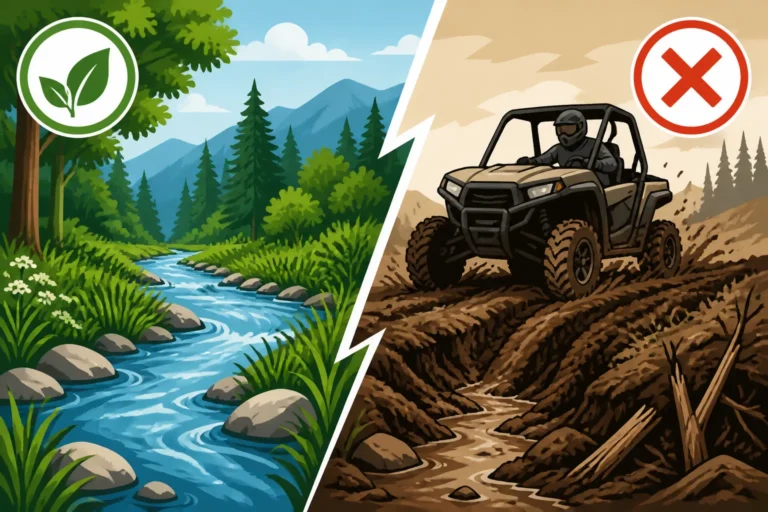
- Environmental Impact: Even on private land, you are responsible for avoiding damage to riparian areas (near water bodies), sensitive ecosystems, or creating erosion that could affect neighbouring properties or public land downstream. Many landowners will have specific requests about how you ride to protect their land's integrity. [BC Riding in Spring Melt] and [BC Alpine Meadows and Damage] highlight the sensitivity of certain terrains.
- Noise Complaints: Excessive noise from your ORV, especially late at night or early in the morning, can still lead to complaints from neighbours. Even if you're on your own property, local bylaws might have noise restrictions, and repeated complaints could attract unwanted attention from local authorities. Being a good neighbour means being mindful of your machine's sound output and riding during reasonable hours. Ensure your exhaust system is in good repair and meets manufacturer specifications.
The Grey Areas: When Private Land Borders Public Access
Many riders use private land as a staging area or have properties that directly abut public trails, forest service roads, or even highways. Navigating these transitions legally requires careful attention.
Crossing Highways and Roads
Even if your intention is to ride exclusively on private land or Crown land, you might need to cross a highway or road to get there. In BC, crossing a highway with an ORV is tightly regulated. You cannot simply ride across at any point. There are specific rules, often requiring you to stop, yield, and cross at a 90-degree angle to the flow of traffic, usually at an intersection or marked crossing. Furthermore, [BC Requires a Driver's Licence on a Highway] and [BC Requires Basic Autoplan on a Highway] for these crossings.
This is a critical point of enforcement for police. They understand that many ORV riders need to access trail systems, but the highway is not part of the ORV network. Ignorance of these rules is not a defence, and tickets for improper highway crossings are common and can be costly. Always plan your route to minimize highway interaction, and when it's necessary, ensure you comply with all crossing regulations.
Private Land Adjacent to Crown Land or FSRs
Many rural properties in BC are adjacent to vast tracts of Crown land or connect directly to a network of forest service roads (FSRs). This is where the registration and FSR insurance requirements become immediately relevant, even if you start on private land.
If you ride from your private property onto an FSR, you must have your machine registered and carry the [BC Riders Must Carry the Certificate] of registration. You also need the mandatory $200,000 third-party liability insurance specific to FSRs. The moment your tires touch that FSR, you're subject to its rules. The same goes for venturing onto general Crown land – while not requiring the $200,000 FSR insurance, it still requires your machine to be registered and carrying the Certificate.
It's common for riders to mistakenly believe that because their private driveway leads directly to an FSR, they don't need to worry about registration until they "really" get into the trails. This is incorrect. The boundary between private and public land is the trigger. If you're going to explore beyond your fence line, ensure your machine and your paperwork are in order. [BC Registration for an Older Machine] or [BC Registration for an Imported Machine] are common scenarios where people need to ensure their documentation is current before hitting those public access points.
The Role of SuperATV in Private Land Management
For those with significant private land, especially properties that might require maintenance or have varied terrain, accessories from companies like SuperATV can be incredibly useful. Think about how you use your machine on your own property. Are you hauling firewood? Clearing brush? Tending to remote parts of your acreage?
SuperATV offers a range of parts and accessories that can enhance the utility and durability of your ORV for these kinds of private land tasks. Heavy-duty axles, reinforced A-arms, robust winches, and durable skid plates can all contribute to making your machine more capable and resilient when performing chores or simply navigating challenging terrain on your own property. While not directly related to legal compliance, these accessories can help prevent damage and keep your machine running reliably for the jobs you need it to do around your land, potentially saving you headaches and repair costs down the line. It's about building a machine that's as ready for work as it is for play.
Ultimately, riding on private land in BC isn't an "anything goes" situation. While you gain a certain degree of freedom from the ORV Act's registration triggers when you stay strictly private, you never escape the fundamental responsibilities of permission, safety, environmental care, and the laws governing impaired operation. Always ride smart, ride safe, and respect the land you're on, private or otherwise.
Disclaimer
This article is for general informational purposes only and does not constitute professional advice. Laws, prices and regulations vary by location and change over time. Consult a qualified professional for guidance on your specific situation.