BC Requires $200,000 on a Forest Service Road
Riding an ATV or UTV in British Columbia offers some of the most spectacular backcountry experiences imaginable, but it also comes with a unique set of rules that can feel like navigating a legal maze. Many riders hit the trails assuming general off-road rules apply everywhere, only to discover that riding on a Forest Service Road (FSR) demands a specific and crucial piece of the puzzle: a minimum of $200,000 in third-party liability insurance. This guide is here to untangle those frustrations, explaining exactly why this coverage is mandatory, what it protects you from, and what other requirements you absolutely need to know before you venture onto an FSR.
Understanding BC's Off-Road Vehicle Act and Forest Service Roads
British Columbia's diverse landscapes are a playground for off-road enthusiasts, but with that freedom comes a responsibility to understand and adhere to the specific regulations governing where and how you can operate your machine. The rules aren't always intuitive, especially when you consider the unique legal status of Forest Service Roads.
What Defines an ORV in BC?
Before diving into FSR specifics, let's clarify what kind of machine we're talking about. In BC, an Off-Road Vehicle (ORV) is defined quite broadly under the Off-Road Vehicle Act. This includes the quad you might call an ATV, the utility task vehicle you know as a side-by-side (UTV), dirt bikes, snowmobiles, and even certain types of specialized vehicles. Essentially, if it's designed for use off of paved public roads and has an engine, it likely falls under the ORV umbrella.
The key takeaway here is that these machines are treated differently from regular highway vehicles, but they are still subject to significant regulation. This means that if you own one of these powerful machines, whether it's a nimble dirt bike or a robust side-by-side, you're expected to know and follow the rules that apply to its operation, particularly when you're out exploring the vast network of FSRs. [What the Off-Road Vehicle Act Covers in BC] gives a great overview of this.
The Dual Nature of Forest Service Roads
Forest Service Roads are the arteries of BC's backcountry, built and maintained primarily for resource extraction, like logging, mining, and forestry. They provide access deep into remote areas, opening up incredible opportunities for recreation such as hunting, fishing, camping, and, of course, ATV and UTV riding. However, because of their primary purpose and location, FSRs aren't your typical public roads. They are managed by the provincial government, often under the Forest Act, and they are critical for industrial operations.
What makes them "dual nature" is that while they offer public access for recreation, they are still active industrial workplaces. This means you might encounter heavy equipment, logging trucks, or other industrial vehicles at any time, often without warning. Their conditions can vary wildly, from well-graded gravel to rough, unmaintained sections, sometimes with washouts or missing bridges. It’s this unique status – public access meets industrial workplace – that dictates many of the specific rules, especially regarding insurance and safety. [BC Resource Roads Count as Crown Land] elaborates on this.
Why FSRs Aren't Like Paved Highways
It's tempting to think of an FSR as just another gravel road, but legally and practically, they are miles apart from paved highways. Public highways fall under the Motor Vehicle Act, with its comprehensive set of rules for vehicle registration, licensing, and insurance. FSRs, while accessible by the public, are distinct. They are not designed for high-speed commuter traffic, and they lack the regular maintenance, signage, and safety infrastructure you'd find on a highway.
The very nature of FSRs presents elevated risks. Dust can severely limit visibility, sharp corners can hide oncoming industrial traffic, and the remote locations mean emergency services are often hours away. The rules for FSRs are designed to mitigate these increased risks, both for recreational users and for the industrial workers whose livelihoods depend on these roads. Understanding this fundamental difference is the first step toward safe and compliant riding on any BC FSR.
The Mandatory $200,000 Liability Insurance Rule
One of the most critical, and often misunderstood, requirements for riding an ORV on a Forest Service Road in British Columbia is the mandatory third-party liability insurance. This isn't just a suggestion; it's a legal obligation that carries significant weight for your safety and financial protection.
Why This Specific Coverage Amount?
The requirement for a minimum of $200,000 in third-party liability insurance on FSRs isn't an arbitrary number. It's set to provide a reasonable level of protection against the financial fallout of an accident in a high-risk environment. Imagine a scenario: you're riding your UTV on an FSR, misjudge a corner, and collide with a loaded logging truck. The damage to the truck, potential injuries to the driver, and environmental cleanup costs could easily soar into the hundreds of thousands of dollars. Without adequate insurance, you would be personally responsible for these staggering expenses.
This coverage is designed to protect you from claims made by others if you are at fault for an accident. It covers property damage and bodily injury to third parties. Given the heavy industrial traffic, the potential for serious accidents, and the remote nature of FSRs where emergency response can be slow and costly, $200,000 provides a baseline safety net. It acknowledges the increased risk of operating powerful machinery in an uncontrolled environment where large commercial vehicles share the road. [BC Forest Service Road Insurance] goes into more detail.
Where to Get This Coverage
When it comes to securing this mandatory liability coverage, you have a couple of options in BC. The primary provider for vehicle insurance in the province is ICBC (Insurance Corporation of British Columbia) through its Autoplan system. While ICBC doesn't register ORVs in the same way they do highway vehicles (that's handled by Autoplan brokers for the Certificate of Registration), they do offer the necessary third-party liability insurance for ORVs. You'll typically purchase this basic coverage when you register your ORV. [BC Autoplan Brokers Handle ORV Registration] explains the process.
However, you're not limited to ICBC. Many private insurance companies also offer off-road vehicle insurance, often providing more comprehensive coverage options beyond just the basic third-party liability. These private policies can offer higher liability limits, collision coverage for your own machine, and coverage for accessories, which can be particularly useful if you've invested in aftermarket parts from a company like SuperATV, known for their robust upgrades. Exploring private options can often yield better rates or more tailored coverage for your specific riding style and machine value. It's always a good idea to compare quotes. [BC Insurance Price Gaps Riders Talk About] highlights the differences.
What Happens Without Adequate Insurance
Riding on a Forest Service Road without the mandatory $200,000 third-party liability insurance is a serious offense in British Columbia, and the consequences can be severe. If you are stopped by a Conservation Officer, RCMP, or other authorized official and cannot produce proof of this coverage, you could face significant fines. These aren't just minor penalties; they are designed to deter uninsured operation due to the high risks involved.
Beyond the immediate fine, the real danger lies in the event of an accident. If you cause an accident while uninsured, you are personally and financially responsible for all damages and injuries. This could mean paying out of pocket for medical bills, vehicle repairs (which, for a logging truck, could be astronomical), and even legal fees if the injured party decides to sue. The financial ruin from such an event could last a lifetime. It's simply not worth the risk. Always carry proof of your insurance, just as you carry your [BC Riders Must Carry the Certificate] of registration.
Beyond Insurance: Other FSR Riding Requirements
While the $200,000 liability insurance is non-negotiable for FSRs, it's just one piece of the regulatory puzzle. British Columbia has a comprehensive set of rules for ORV operation, and many of these apply universally, including on Forest Service Roads. Understanding these additional requirements is crucial for a safe, legal, and enjoyable ride.
The Importance of a Helmet
Safety always comes first, and in BC, that means wearing a helmet. The law is clear: every rider and passenger on an off-road vehicle must wear an approved helmet. This rule applies no matter where you're riding, be it a designated trail, private land with permission, or a Forest Service Road. The helmet must be designed for motorized vehicle use and meet specific safety standards (like DOT, Snell, or ECE certifications).
This isn't just about avoiding a ticket; it's about protecting your life. Head injuries are among the most common and devastating injuries in ORV accidents. Wearing a properly fitted, approved helmet can dramatically reduce the risk of serious injury or fatality. For those riding side-by-sides with enclosed cabs and seatbelts, there's a specific nuance regarding helmets versus seatbelts, but for ride-astride machines like quads and dirt bikes, a helmet is absolutely essential. [BC Helmet Law Covers Every Rider] provides all the details.
Vehicle Registration and Plates
Since November 2015, all off-road vehicles operated on Crown land in British Columbia have been required to be registered. Forest Service Roads are considered Crown land, so this rule absolutely applies. When you register your ORV, you receive a Certificate of Registration and a unique number plate.
This plate must be prominently displayed on your machine. For most ATVs and dirt bikes, this means on the front, back, or left side, clearly visible. Side-by-sides often have a designated spot. The registration ensures that your machine is identifiable, which is important for accountability, law enforcement, and in case of theft or accident. It's a one-time registration, not an annual renewal, which makes it easier to manage. [BC ORV Registration Became Mandatory in 2015] outlines the history and process.
Driver's Licence and Operating Permits
Here's where it can get a little tricky. While you don't need a specific ORV licence to ride an ATV or UTV on Crown land (including FSRs), you do need a valid driver's licence if you need to cross or briefly operate on a public highway. If you are riding solely on FSRs and never touch a public highway, a driver's licence isn't strictly mandated by the ORV Act for operating the ORV itself. However, common sense and the Criminal Code dictate that you must be a competent and unimpaired operator.
Children under 16 have specific rules regarding supervision and age-appropriate machines. Furthermore, if you do need to cross a highway, even for a short distance to get to another FSR, you'll need an Operation Permit issued by local police, and for that, you typically need a valid driver's licence. These permits specify the conditions under which you can briefly operate on a highway. [Do You Need a Licence for an ATV in BC?] clarifies these nuances.
Lights, Spark Arrestors, and Other Equipment
Beyond helmets, registration, and insurance, your ORV needs to be properly equipped for FSR use:
- Lights: If you plan to ride at any time from 30 minutes before sunset to 30 minutes after sunrise, or in conditions of poor visibility (like fog or heavy rain), your ORV must have at least one white headlight visible for 60 metres and at least one red taillight visible for 60 metres. Many modern SuperATV lighting kits offer excellent visibility and durability for backcountry conditions.
- Brakes: Your ORV must have fully functional brakes.
- Muffler and Spark Arrestor: This is crucial for fire prevention. Your ORV must be equipped with a muffler that effectively limits noise and, critically, a spark arrestor that is in good working order. A spark arrestor prevents incandescent particles from escaping the exhaust and igniting dry forest fuels, a major concern in BC's fire-prone summers. Being caught without one, or with a faulty one, can lead to substantial fines.
- Other safety gear: While not explicitly mandated by law, carrying items like a first-aid kit, fire extinguisher, and a repair kit is highly recommended, especially when exploring remote FSRs.
Compliance with these equipment requirements is not just about avoiding fines; it's about ensuring your safety and protecting the sensitive forest environment from fire and excessive noise pollution.
Navigating the Complexities of BC's FSRs
Forest Service Roads offer unparalleled access to BC's wilderness, but they also present unique challenges and responsibilities. Navigating them safely and respectfully requires more than just knowing the regulations; it demands an understanding of the environment, other users, and practical considerations.
Active Logging and Industrial Traffic
One of the most significant differences between FSRs and recreational trails is the presence of active industrial traffic. Logging trucks, excavators, graders, and other heavy machinery frequently use these roads. These vehicles are massive, often fast, and their operators are focused on their work, not necessarily recreational users. It's absolutely imperative to understand that industrial traffic always has the right of way.
This means yielding to all commercial vehicles. Be prepared to pull over safely and completely off the road, giving these vehicles ample room to pass. In many areas, particularly those with active logging, it's common practice to use VHF radios to call out your location and direction of travel on designated resource road channels. This radio practice, while not legally mandatory for recreational users, is a highly recommended safety measure that can literally save lives. [BC Resource Road Radio Practice] explains this life-saving protocol. Always expect an oncoming vehicle, especially around blind corners and crests.
Identifying FSRs and Understanding Closures
Knowing you're on an FSR is usually evident from signage, but sometimes it's less clear. These roads are typically unpaved, often gravel or dirt, and will have signs indicating "Forest Service Road" or similar designations. However, some sections might be paved near communities. It’s vital to consult maps (paper or GPS-enabled) before you head out, specifically looking for FSR networks.
Beyond identifying them, it's crucial to be aware of potential closures. FSRs can be temporarily or permanently closed for various reasons:
- Active logging operations: Roads are often closed for safety during tree falling or hauling.
- Wildfire activity: During fire season, large areas, including FSRs, can be closed to all public access to prevent new fires and allow firefighters to work safely. [BC Fire Centre Riding Bans] is a good resource for checking these.
- Washouts or damage: Natural events can render sections impassable.
- Environmental protection: Some areas may be closed to protect wildlife or sensitive habitats.
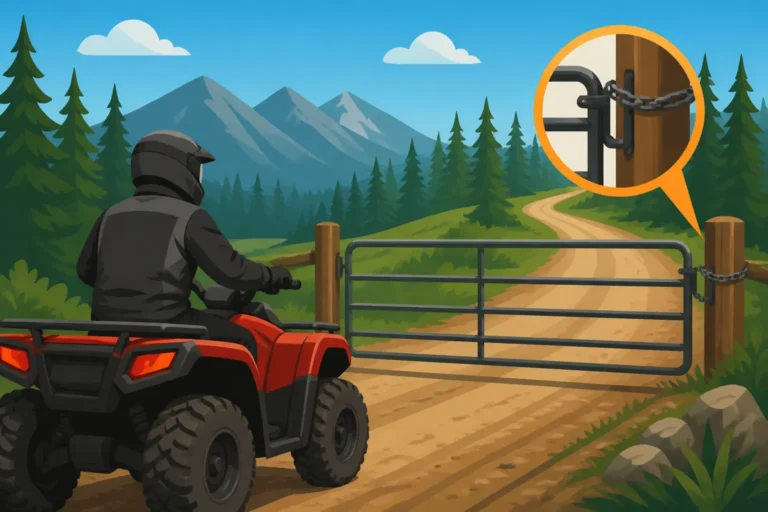
Always check local conditions, official government websites, and forestry bulletins before you leave. A closed gate or a "Road Closed" sign means exactly that – do not proceed.
Respecting the Environment and Other Users
Forest Service Roads are shared spaces, and responsible use extends beyond just legal compliance. It also encompasses environmental stewardship and respect for others:
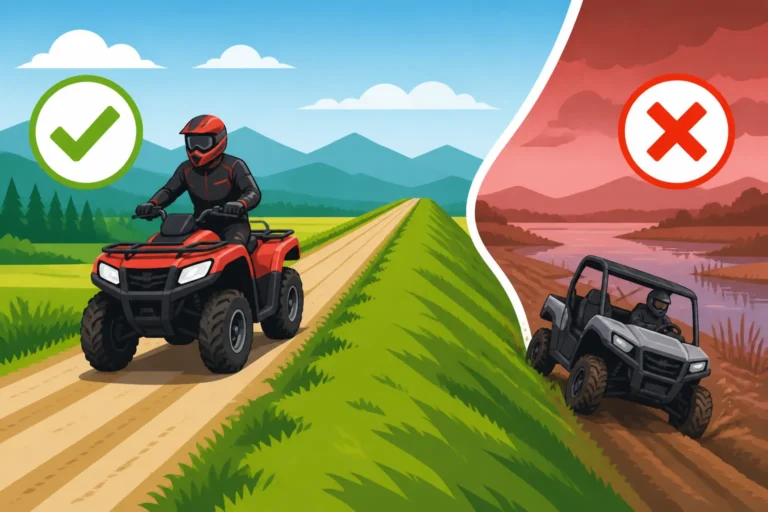
- Stay on designated roads and trails: Do not create new tracks, especially in sensitive areas like riparian zones or alpine meadows. Off-roading through sensitive ecosystems can cause irreparable damage.
- "Tread Lightly": This mantra encourages minimizing your impact on the land. Avoid excessive wheel spin, cross streams only at designated crossings, and pack out everything you pack in.
- Wildlife: BC is rich with wildlife. Ride cautiously, especially at dawn and dusk, and be prepared to encounter animals on the road. Do not harass or approach wildlife. Carrying bear spray is a good precaution in many areas.
- Other recreational users: FSRs are used by hikers, campers, hunters, mountain bikers, and other motorized users. Be courteous, control your speed, and keep noise levels down, especially near campsites.
By adhering to these principles, you contribute to the sustainability of these incredible resources for everyone to enjoy.
Preparing for Your FSR Adventure in BC
Embarking on an ATV or UTV adventure on a Forest Service Road in BC is an exhilarating experience, but it demands thorough preparation. Being ready for anything the backcountry throws at you is key to a safe and enjoyable trip.
Pre-Ride Checklist for Safety and Compliance
Before you even load your machine onto the trailer, go through a comprehensive checklist. This isn't just about avoiding a ticket; it's about preventing breakdowns, ensuring your machine is safe, and confirming you have everything you need.
- Machine Inspection:
- Tires: Check air pressure and tread condition.
- Brakes: Test front and rear brakes for proper function.
- Fluids: Check oil, coolant, and fuel levels.
- Lights: Ensure headlights, taillights, and brake lights are working.
- Spark Arrestor: Confirm it's clean and functional. Many aftermarket exhausts, like those from SuperATV, often come with integrated spark arrestors, but always double-check.
- Suspension and Steering: Look for any loose components or leaks.
- Battery: Ensure terminals are clean and secure.
- Paperwork:
- Certificate of Registration: Carry your original, not a photocopy. [BC Riders Must Carry the Certificate]
- Proof of $200,000 Liability Insurance: Keep this with your registration.
- Driver's Licence (if applicable): Especially if you might cross a highway.
- Operation Permit (if applicable): For highway crossings.
- Personal Gear:
- Approved Helmet: Properly fitted.
- Goggles/Eyewear: For dust and debris protection.
- Gloves: For grip and hand protection.
- Appropriate Clothing: Layers, rain gear, sturdy footwear.
- First-Aid Kit: Well-stocked for various injuries.
This checklist ensures both legal compliance and operational readiness, reducing the chances of unforeseen issues miles from anywhere.
Essential Communication and Navigation Tools
Given the remote nature of many FSRs, relying solely on cell service is a rookie mistake. Cell reception is often non-existent in the backcountry. Investing in reliable communication and navigation tools is paramount.
- Maps: Always carry a detailed paper map of the area, even if you have electronic navigation. Batteries die, screens break, and paper never fails.
- GPS Device: A dedicated GPS unit or a smartphone with downloaded offline maps (like Gaia GPS or Basemaps) can be invaluable for pinpointing your location, tracking your route, and finding your way back.
- Satellite Messenger/PLB: Devices like Garmin InReach or Spot communicators allow you to send SOS messages, check-ins, and even text messages when out of cell range. These are lifesavers in serious emergencies.
- VHF Radio: As mentioned, if you're venturing into active logging areas, a VHF radio is critical for communicating with industrial traffic. Learn the standard call-out procedures.
- Whistle/Mirror: Simple tools for signaling for help in a pinch.
These tools provide a crucial safety net, allowing you to call for help or navigate even when traditional services are unavailable.
Emergency Preparedness
Even with the best planning, things can go wrong. Being prepared for emergencies means having the tools and knowledge to handle common backcountry mishaps.
- Repair Kit:
- Tire repair kit and portable air pump.
- Basic tool kit specific to your ORV (wrenches, screwdrivers, zip ties, duct tape).
- Spare belt (for UTVs).
- Jumper cables or a portable jump starter.
- Winch (if your machine has one) and recovery gear (straps, shackles). Companies like SuperATV offer robust winches and recovery gear that are popular among serious riders.
- Survival Gear:
- Extra food and water (enough for at least 24-48 hours longer than planned).
- Fire starter and emergency blanket.
- Headlamp or flashlight with spare batteries.
- Knife or multi-tool.
- Knowledge:
- Know basic first aid.
- Understand how to use your repair kit.
- Tell someone your route and expected return time. This is often called a "trip plan."
- Know what to do in a wildlife encounter, especially with bears.
Being prepared for emergencies means you can often resolve minor issues yourself, preventing a small problem from escalating into a dangerous situation. It's about taking personal responsibility for your safety in the remote and unpredictable environments of BC's FSRs.
FSR Riding Requirements Summary
| Requirement | General ORV Riding in BC (Crown Land) | Specific for Forest Service Roads (FSRs) |
|---|---|---|
| Registration | Mandatory Certificate & Plate | Mandatory Certificate & Plate |
| Liability Insurance | Voluntary on most Crown land [BC Liability Is Voluntary on Other Crown Land] | Mandatory minimum $200,000 |
| Helmet | Mandatory for all riders/passengers | Mandatory for all riders/passengers [BC Helmets on Ride-Astride Machines] |
| Driver's Licence | Not always required for operating ORV itself | Not always required for operating ORV itself, but needed for highway crossings |
| Operation Permit | Required for highway crossings | Required for highway crossings to access FSRs |
| Lights | Mandatory for low visibility/night | Mandatory for low visibility/night |
| Spark Arrestor | Mandatory | Mandatory |
| Yielding to Industrial Traffic | N/A | Mandatory |
| VHF Radio (Recommendation) | Not generally needed | Highly recommended for active industrial areas [BC Resource Road Radio Practice] |
| Compliance with Closures/Bans | Mandatory | Mandatory (e.g., wildfire bans, logging closures) |
Riding an ATV or UTV on a Forest Service Road in British Columbia is an incredible privilege that comes with specific and crucial responsibilities. The mandatory $200,000 third-party liability insurance is not just a bureaucratic hurdle; it's a vital safeguard against significant financial risk in an environment that demands extra caution. Coupled with mandatory registration, helmet use, proper equipment, and an acute awareness of industrial traffic and environmental conditions, understanding these rules ensures your safety and preserves the backcountry for everyone. So, get your paperwork in order, inspect your machine, pack smart, and enjoy the breathtaking wilderness BC has to offer – responsibly.
Disclaimer
This article is for general informational purposes only and does not constitute professional advice. Laws, prices and regulations vary by location and change over time. Consult a qualified professional for guidance on your specific situation.