BC Registration Before Riding Crown Land
It can be incredibly confusing trying to figure out all the rules and regulations for riding your ATV or UTV in beautiful British Columbia. One of the biggest head-scratchers for many riders is exactly when and where your machine needs to be registered. If you've been wondering if you can just hop on your quad and hit those sprawling backcountry trails, this guide is here to untangle the specifics of why registering your off-road vehicle before riding on BC Crown Land isn't just a suggestion, it's a critical requirement that keeps you legal and safe.
The Mandate: Why Crown Land Triggers BC Registration
For many years, off-road vehicles (ORVs) in British Columbia existed in a bit of a regulatory grey area. You bought your quad, you rode it, and as long as you weren't on a highway, the paperwork was minimal. Those days, however, are long gone. The provincial government recognized the need for better management and accountability of ORVs, especially given their increasing popularity and use across our vast wilderness.
Understanding the Off-Road Vehicle Act
The turning point was the introduction of the Off-Road Vehicle Act, which fundamentally changed how ORVs are handled in BC. This Act, along with its associated regulations, created a clear framework for everything from registration to operator requirements and safe practices. If you're riding an ATV, UTV, dirt bike, or snowmobile anywhere in BC that isn't private property, this Act is your rulebook. It's designed to ensure that all ORV users are identifiable, promoting responsible riding and aiding in land management, emergency response, and even tracking stolen machines. Since [BC Registration Became Mandatory in 2015], ignoring these rules can lead to some significant headaches, not to mention fines.
One of the most crucial aspects of the Act is its direct link between mandatory registration and the type of land you're riding on. The moment your tires leave private property and touch Crown Land, you are legally required to have your machine registered. This isn't just about collecting a fee; it's about establishing accountability for every machine operating in our shared wilderness spaces. The frustration for many is that they might have owned their machine for years, perhaps even decades, without ever needing to worry about registration, only to find themselves suddenly needing to jump through hoops. But understanding that the law aims to protect both riders and the environment helps put this requirement into perspective.
What Exactly Counts as Crown Land?
This is where some riders get tripped up. When we talk about Crown Land in British Columbia, we're not just referring to vast, remote wilderness areas. While those certainly count, the definition is much broader and encompasses a huge percentage of our province. Essentially, if it's not privately owned property (like your backyard or a friend's farm), and it's not a municipal park or highway right-of-way, there's a very good chance it's Crown Land.
This includes the vast network of provincial forests that cover much of BC, designated provincial wilderness areas, and, crucially, the extensive system of resource roads – often called Forest Service Roads (FSRs) or logging roads. Many riders mistakenly believe that because these roads are unpaved and seemingly open, they are exempt from the rules. However, [BC Resource Roads Count as Crown Land], and as such, they fall under the strictures of the Off-Road Vehicle Act. So, whether you're heading out for a day of technical trail riding, exploring old logging clear-cuts, or simply using an FSR to access a favourite fishing spot, your machine needs to be registered. [BC Crown Land Triggers the Registration Rule] is the fundamental principle here, and it's important to internalize that.
Think about it this way: 94 percent of British Columbia is Crown Land. That's a staggering amount of territory. Very few riders, if any, manage to keep their wheels exclusively on private property, especially when accessing the types of terrain ORVs are designed for. Even a seemingly small gravel pit or an undeveloped strip of land on the edge of a rural community could easily be Crown Land. The burden of proof typically falls on the rider to know where they are operating and ensure compliance, so it's always best to assume you're on Crown Land unless you are absolutely certain it's private. If you're ever in doubt, it's safer to register your machine than to risk a ticket or, worse, having your machine impounded.
The Registration Process: Getting Your Machine Ready for Crown Land
Navigating the registration process for your off-road vehicle can feel a bit daunting, especially if you're dealing with an older machine or one with a convoluted ownership history. It's not like registering a car, and the requirements can seem a bit quirky at first glance. However, once you understand the steps and gather the necessary documents, it becomes much more manageable.
Essential Paperwork and the Broker Visit
To register your ORV, you'll need to visit an Autoplan broker. These are the same insurance brokers where you'd register your car or truck. They are the authorized agents for processing ORV registrations and issuing the necessary documents. [BC Autoplan Brokers Handle ORV Registration] – they're your first and only stop for this process.
The key to a smooth registration experience lies in having your paperwork in order. The most crucial document is proof of ownership. Ideally, this means a clean bill of sale from the previous owner to you. If you're buying a new machine from a dealership, they'll often handle much of this for you, but for private sales, it's entirely on you. The broker will need to see a clear chain of ownership from the original owner all the way to you. This is where things can get tricky, particularly for older machines. You might need to provide [BC Bills of Sale for Every Prior Owner] in the chain, even going back decades.
Key Documents You'll Likely Need:
| Document | Purpose | Notes |
|---|---|---|
| Bill of Sale (to you) | Proves you are the current owner. | Must include VIN, seller's and buyer's full names, addresses, date, and purchase price. |
| Prior Bills of Sale | Establishes the full chain of ownership. | Required for all previous transfers if there's no continuous registration record. Can be the most challenging part for older machines. |
| Government-Issued ID | Verifies your identity. | A valid BC Driver's Licence or equivalent. |
| Proof of BC Address | Confirms your residency in BC. | Utility bill, rental agreement, etc., if your ID doesn't show your current BC address. |
| Statutory Declaration | Used when a bill of sale or previous owner information is missing. | Declares under oath your claim of ownership. Can be notarized at a lawyer's office or even by a Service BC agent. Forms are available, and online resources like LawDepot offer templates. |
| Gift Letter (if applicable) | Documents a transfer as a gift, often between family members, to avoid sales tax. | Similar to a bill of sale but states no money exchanged hands. LawDepot has templates for these too. |
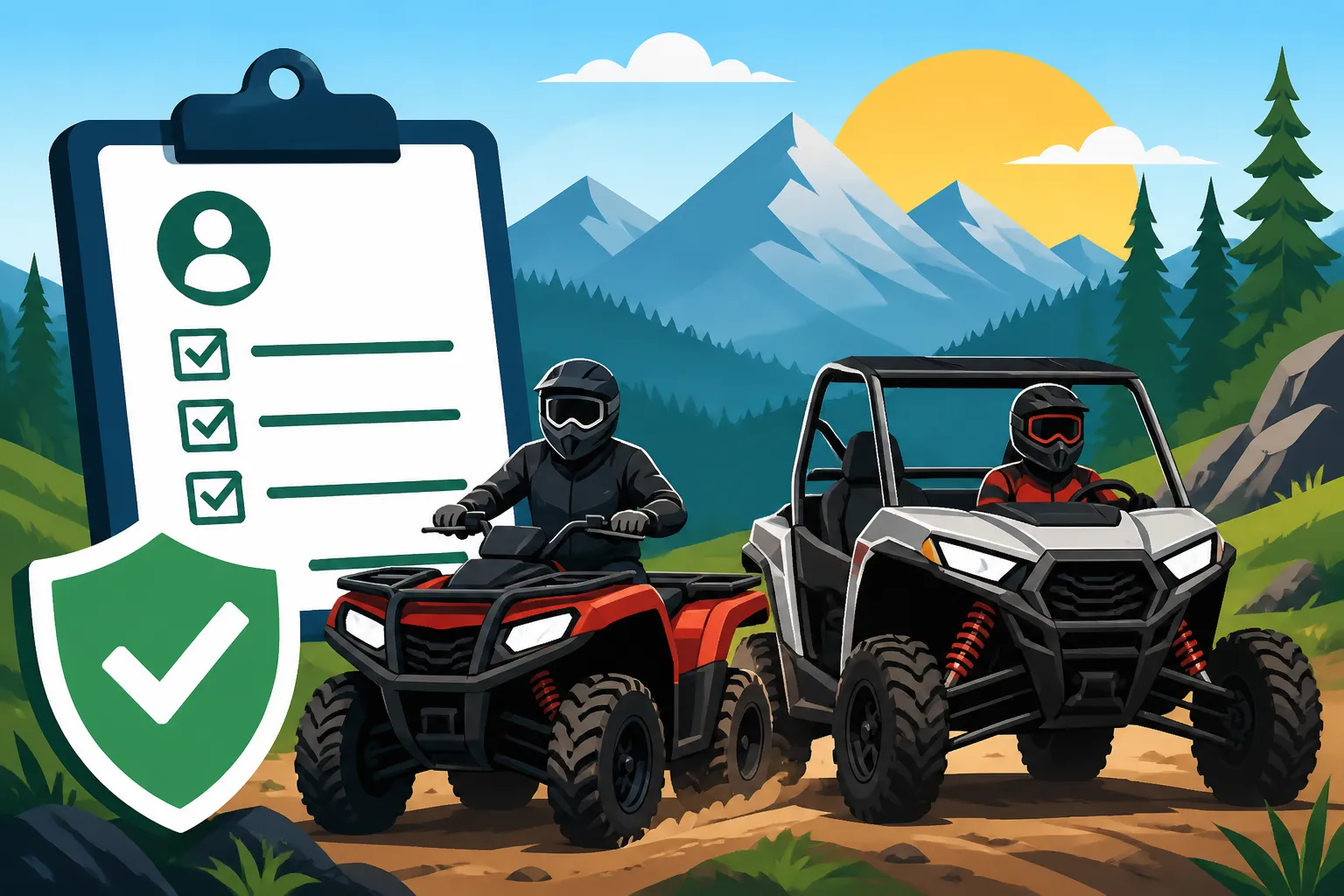
You can find a more extensive list by looking up [BC Registration Paperwork Checklist]. If you've got an older quad that's been passed down through generations or bought with just a handshake, you might be missing some of these crucial documents. This is a common frustration! Thankfully, there's a solution: a statutory declaration. This is a legal document where you declare under oath that you are the rightful owner of the machine and explain how you acquired it. [BC Statutory Declarations Cost $15] (though this fee can vary and should be checked directly with Service BC or a notary), and you'll typically need to have it witnessed and signed by a Commissioner for Oaths or a notary public. Online legal document services like LawDepot can be a helpful resource for understanding what these forms entail and even providing templates to guide you in drafting one, though it must still be officially sworn. Having a clear, detailed declaration is vital when there's a gap in your ownership history.
What You Get After Registration
Once your Autoplan broker has reviewed all your documents, confirmed the ownership chain, and processed your application, you won't walk away with a traditional vehicle "title" like you might for a car in some other jurisdictions. This is a common point of confusion. In BC, off-road vehicles receive a Certificate of Registration, not a title. This means [Why BC Does Not Title an ATV] is a question many people ask, but it's simply how the system is set up for ORVs here.
What you will receive is your [BC's Certificate of Registration Explained], which is a paper document that serves as your proof of registration. This certificate is incredibly important, as it officially links you and your machine within the provincial registry. Additionally, you will be issued a distinctive BC ORV number plate and a small decal that indicates the year of registration. [BC ORV Number Plates and Decals] must be affixed to your machine in a visible location.
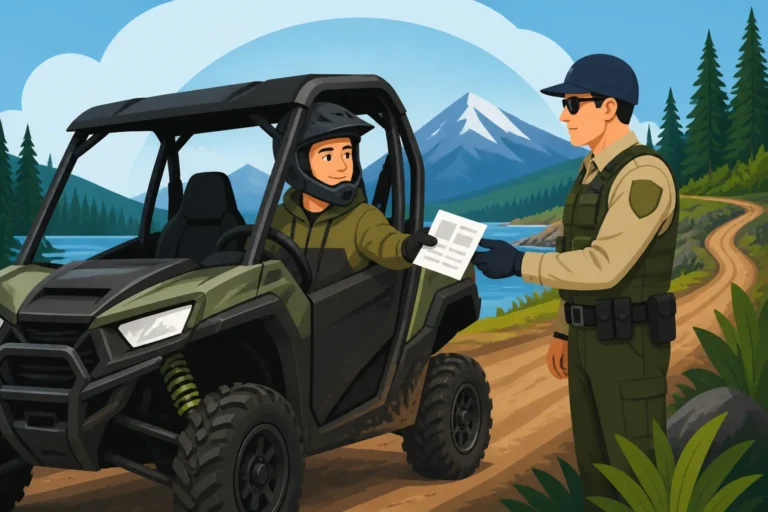
It's absolutely critical that you always carry your Certificate of Registration with you when operating your ORV on Crown Land. Seriously, do not leave home without it. [BC Riders Must Carry the Certificate], and enforcement officers have the authority to ask for it. Along with the certificate, it's also a good idea to carry [BC Riders Must Carry Photo ID]. Think of it like your driver's license and vehicle registration for a car – you wouldn't drive without them, and the same principle applies here. If an officer stops you and you can't produce these documents, it could lead to issues, regardless of whether your machine is actually registered.
Consequences of Non-Compliance: Riding Unregistered on Crown Land
Nobody wants to get a ticket, especially when you're out enjoying the freedom of the backcountry. But when it comes to riding an unregistered ORV on BC Crown Land, the consequences can be more than just a minor inconvenience; they can be financially painful and even lead to losing your machine. It's truly not worth the risk, especially when the process to get registered, while sometimes tedious, is relatively straightforward once you have your paperwork sorted.
The Risks and Penalties
The Off-Road Vehicle Act gives enforcement officers, including RCMP, conservation officers, and forest service officials, the authority to check for proper registration. If you're caught riding an unregistered machine on Crown Land, you could be facing a significant fine. [BC Tickets for an Unregistered Machine] are issued, and these aren't just slaps on the wrist. These fines are designed to deter non-compliance and can quickly add up, turning what was meant to be a fun day into a costly mistake.
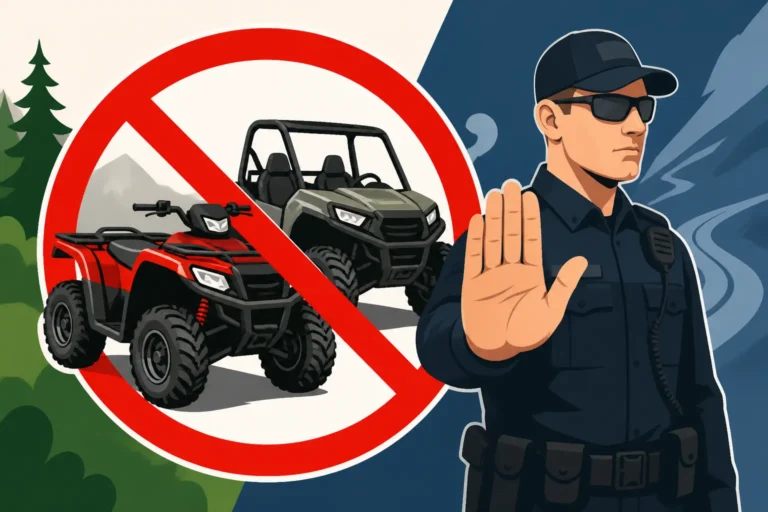
Beyond the immediate financial penalty, there's a more severe consequence that riders often underestimate: machine seizure. Yes, that's right – if your ORV is found operating in violation of the Act, especially if it's unregistered, law enforcement has the power to seize it. [BC Machine Seizures by Police] are not uncommon, and getting your machine back can be a lengthy, expensive, and frustrating process. You'll likely face impound fees, administrative costs, and you'll still have to pay any outstanding fines and get the machine registered before it's released. It truly adds insult to injury to have your recreational vehicle taken away, and it underscores the importance of taking these rules seriously. [BC Penalties for Riding Unregistered] exist for a reason – to ensure accountability and responsible use of our shared public lands.
Beyond Registration: Other Crown Land Requirements
While this guide focuses on the critical requirement of registration before hitting Crown Land, it's important to understand that registration is just the first step in responsible ORV operation. There's a whole suite of other rules that apply, and neglecting them can also lead to fines and safety risks.
Other Key Requirements on Crown Land:
- Insurance: While basic ORV registration doesn't include liability insurance like Autoplan for highway vehicles, if you plan to ride on Forest Service Roads (FSRs), you absolutely need at least $200,000 in third-party liability insurance. [BC Forest Service Road Insurance] is mandatory for FSRs, and it's a wise idea to carry it on all Crown Land for your own protection. You can purchase this through your Autoplan broker when you register.
- Helmets: If you're on a ride-astride machine like an ATV or dirt bike, wearing an approved helmet is mandatory. [BC Helmets Required on an FSR], and generally, on all Crown Land. This isn't just a rule; it's a life-saving safety measure.
- Spark Arrestors: Especially during wildfire season, ensuring your ORV is equipped with a properly functioning spark arrestor is crucial. [BC Spark Arrestor Rules and Fines] are in place to prevent accidental fires. An administrative penalty for not having one can be hefty.
- Lights: If you're riding at night or in low visibility conditions, your ORV must have appropriate headlights and taillights.
- Operator Age and Supervision: There are specific rules regarding the age of ORV operators and when supervision is required, particularly for riders under 16.
Thinking that registration is the only hurdle is a common misconception. It's a foundational requirement, but riders must be aware of all the rules to truly ride legally and safely. For those navigating the complexities of documentation for ORV ownership or future sales, online resources, like LawDepot, can also provide templates for formalizing agreements and ensuring you have the necessary records for various situations, beyond just the initial registration.
Common Scenarios and Misconceptions
The world of ORV registration in BC can throw a few curveballs, especially given the history of how these machines were owned and transferred. It’s important to address some common scenarios that riders face when trying to get their quads and side-by-sides ready for Crown Land adventures.
Older Machines and Gaps in Ownership
One of the biggest headaches for BC riders is registering an older machine that might have changed hands several times without formal paperwork. Imagine you bought a classic 1990s ATV from a friend of a friend years ago, paid cash, and only got a handwritten receipt – or no receipt at all. Now, with mandatory registration, you realize you have a problem. How do you prove ownership when the previous owners are long gone, or the paper trail has vanished? This is a very real frustration for many.
The key here is the concept of a complete ownership chain. Your Autoplan broker needs to see a clear path from the original retail purchase of the machine (if possible) through every subsequent owner, all the way to you. If there’s a missing link – a sale where no bill of sale was ever created or has been lost – that’s where the statutory declaration comes into play. As mentioned before, you’ll need to declare under oath how you acquired the machine and affirm your rightful ownership. It's essentially filling in the blanks of [BC Ownership Chains Going Back Decades] with a legally recognized document. Online resources like LawDepot can be incredibly useful here, offering structured templates for statutory declarations and bills of sale. While you still need to have these documents officially witnessed and sworn, having a clear template ensures you include all the necessary information, making the process smoother at the broker's office. It might feel like a lot of extra work for a machine you've owned for ages, but it's essential for legal compliance. [BC Registration for an Older Machine] often hinges on the quality and completeness of these declarations.
Riding Close to Home vs. Designated Areas
Another common misconception is that the registration rule only applies to "official" riding areas or popular trail systems. Many rural residents have a patch of Crown Land right outside their back door and might use it daily to access firewood, check fences, or simply ride around for recreation. They might think, "I'm just riding close to home, not on a designated trail, so the rules don't really apply." This is a dangerous assumption.
The Off-Road Vehicle Act makes no such distinction. If it's Crown Land, it falls under the Act, regardless of how close it is to your private property or whether it's a "known" riding spot. The moment your wheels touch those public lands, your machine must be registered. This means that if you live in a rural area and frequently access public land directly from your property, you need to be just as compliant as someone trailering their machine to a provincial recreation site. There is no special exemption for what might feel like your "back forty" if that "back forty" happens to be Crown Land.
Understanding this distinction is crucial for avoiding unintended fines and complications. It's about being informed and proactive rather than assuming local habits override provincial law. For ensuring that all your ownership records, whether for current machines or future purchases, are ironclad, services like LawDepot can provide reliable templates for various legal documents, helping you maintain clear, official records that will satisfy brokers and officials alike. This way, whether you're buying a new machine or formalizing the ownership of an old trusty steed, you have the peace of mind that your paperwork is in order for all your BC adventures.
Disclaimer
This article is for general informational purposes only and does not constitute professional advice. Laws, prices and regulations vary by location and change over time. Consult a qualified professional for guidance on your specific situation.