BC Registration Lasts as Long as You Own It
One of the biggest head-scratchers for folks getting into the off-road vehicle (ORV) scene in British Columbia is how registration actually works. If you've just bought a quad, dirt bike, side-by-side, or snowmobile, you might be expecting yearly renewals, stickers, or even a bill in the mail, much like your car. But here in BC, the good news is that your ORV registration is a one-time deal that truly lasts as long as you own the machine, saving you from annual trips to renew paperwork. This guide is going to walk you through exactly what that means for you as a rider and how it all shakes out in the real world.
Understanding BC's Unique ORV Registration Model
When it comes to motor vehicles, most of us are used to the annual dance of renewing our plates, updating our insurance, and maybe slapping a new sticker on the corner of the license plate. It's a routine ingrained in our driving lives. So, when you discover that BC's off-road vehicle registration doesn't follow this familiar pattern, it can feel a little… well, unusual. But trust me, once you get past the initial surprise, it's a pretty straightforward and, dare I say, refreshing system.
The "Once and Done" Philosophy
British Columbia made ORV registration mandatory back in November 2015. Before that, it was a bit of a Wild West out there, with little formal tracking of who owned what off-road. The new system was designed to bring some order and accountability, but with an emphasis on simplicity for the long haul. Instead of setting up an entirely new bureaucratic machine for yearly renewals, the province opted for a "once and done" approach.
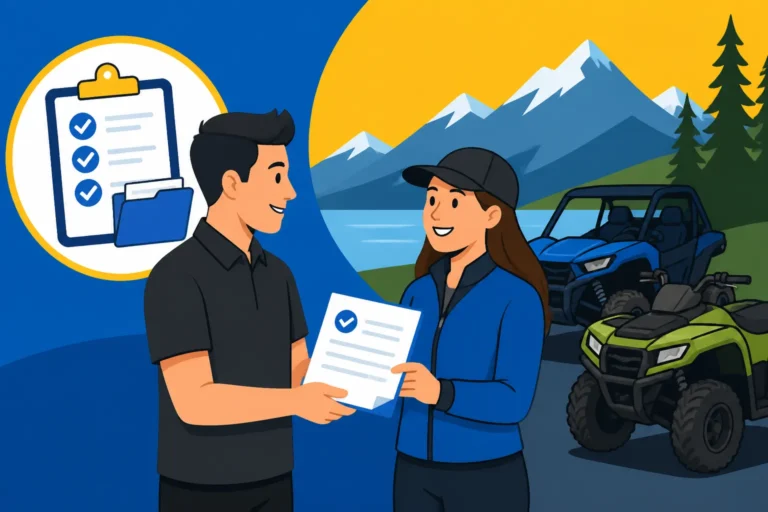
What this means for you is that when you first register your ATV, UTV, or other ORV, you go through the process at an Autoplan broker, provide all your paperwork, pay the initial fee, and receive your Certificate of Registration and your ORV plate. And that's it for registration! As long as you remain the owner of that specific machine, you won't need to visit the broker again to "renew" its registration. This contrasts sharply with provinces or states where you might pay an annual fee and get a new sticker to prove your machine is still registered. Many riders appreciate this simplification, as it's one less thing to remember each year, especially when you're juggling multiple vehicles or busy with life on the trails.
Why No Annual Stickers or Fees?
The absence of annual stickers or fees for ORV registration in BC often prompts questions. Riders might worry they're missing something, or that a hidden cost will pop up later. The reality is, there isn't one for the registration itself. This administrative choice likely stems from a desire to streamline the process and reduce the ongoing burden on both ORV owners and the provincial registration system. Imagine the sheer volume of paperwork and data processing if every single ORV in BC required an annual renewal. By making it a one-time registration per ownership, the system focuses its efforts on ensuring proper initial registration and accurate record-keeping when ownership changes.
Other jurisdictions might use annual fees to fund trail maintenance, search and rescue operations, or administrative costs. In BC, these needs are generally addressed through other channels, such as fuel taxes, recreation site fees, or club memberships. So, while you won't be paying an annual registration renewal fee, it's important to understand that there may be other costs associated with enjoying your ORV, such as voluntary trail passes for managed sites or membership dues for local clubs that maintain riding areas. The key takeaway here is that the official act of registering your machine with the province is completed upon the initial transaction and does not require recurring payment or paperwork as long as you keep your machine. You simply register it [BC ORV Registration You Pay Once].
What "Lasts As Long As You Own It" Really Means
This phrase might sound a little too good to be true if you're used to other vehicle registration systems. But for ORVs in British Columbia, it's precisely how the system is designed. Understanding the details of this long-term registration is crucial for every ORV owner, whether you're a seasoned rider or just getting started.
The Certificate of Registration: Your Permanent Proof
When you complete the initial registration process for your ORV, you'll walk out of the Autoplan broker's office with a [BC's Certificate of Registration Explained]. This document is your official proof that your machine is registered in British Columbia. Unlike a vehicle title, which BC doesn't issue for ORVs ([Why BC Does Not Title an ATV]), this certificate serves as the primary document linking you to your off-road vehicle in the eyes of the province.
It's absolutely vital to understand that this certificate is not just a receipt; it's your permanent record of registration. You're required to [BC Riders Must Carry the Certificate] whenever you're operating your machine on Crown land, including resource roads. Think of it as your ORV's passport. If you're ever stopped by a conservation officer or police, they'll want to see this document along with your photo ID. Keep it safe, maybe laminated, and stored in a waterproof bag on your machine. Losing it can be a hassle, although you can get a replacement from an Autoplan broker. This certificate, once issued, does not expire or need annual renewal, reinforcing the "lasts as long as you own it" principle.
Transferring Ownership: The Only "Restart" of Registration
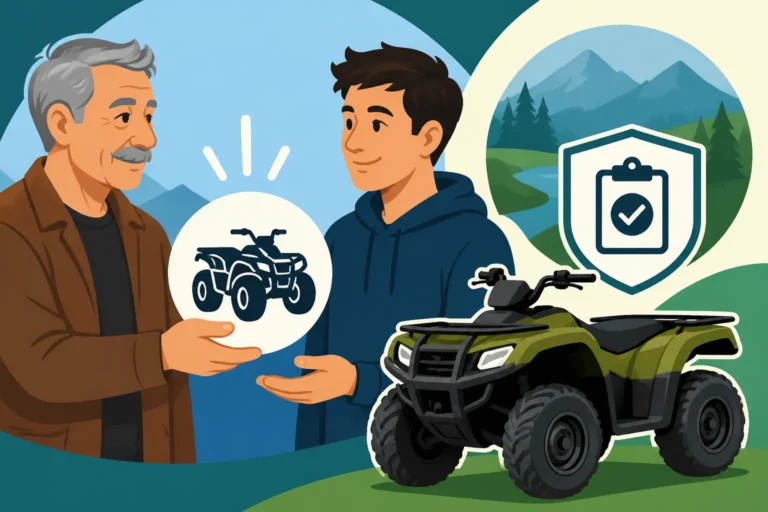
The "lasts as long as you own it" rule applies specifically to your ownership of that machine. The moment you sell your ORV, that specific registration is effectively concluded for you, the seller. For the buyer, it's a brand new ball game. When a machine changes hands, the new owner must go through the entire registration process themselves. This is known as [BC Transfer of Ownership Explained].
This transfer of ownership is the only time the "registration clock" resets for an ORV. It ensures that the provincial records accurately reflect who is responsible for the machine. The new owner will need to visit an Autoplan broker with the appropriate documentation, including a bill of sale, and register the machine in their name. There is a nominal fee for this transfer, which covers the administrative costs of updating the provincial database. [BC Charges $28 to Transfer Ownership] for this process. So, while your registration is permanent for your ownership, it's important to remember that this permanency does not extend to future owners. Each time an ORV is sold, the new owner assumes the responsibility of initiating a fresh registration under their name.
Beyond Registration: Ongoing Responsibilities for ORV Owners
While the "lasts as long as you own it" rule simplifies the registration side of ORV ownership, it's crucial not to mistake this for a total absence of ongoing responsibilities. There are still annual commitments and legal requirements you need to meet to keep your ORV on the trails and roads legally and safely in British Columbia. These aspects are distinct from the one-time registration but are equally important for a responsible rider.
The Plate and Decal: Keeping Them Visible and Legal
After registering your ORV, you'll be issued an ORV plate and a decal. Unlike your registration, which is permanent, your plate is a physical item that needs care. This plate is permanently assigned to your machine, not you, and it needs to be clearly displayed. [BC ORV Number Plates and Decals] must be mounted according to provincial regulations, generally on the front, back, or left side of the machine, ensuring it's visible. [BC Plate Placement on Front, Back or Left] is a common area of confusion, so always double-check the specifics.
Beyond initial placement, you have an ongoing responsibility to keep your plate clean and legible. [Keeping Your ORV Plate Clean Enough to Read] isn't just a suggestion; it's a legal requirement. Mud, snow, or debris obscuring your plate could lead to a ticket. If your plate ever gets lost, stolen, or damaged, you'll need to report it and get a replacement from an Autoplan broker. [BC Plate Replacement If Lost] is a process that ensures you remain compliant and your machine is properly identified. While you don't renew your registration annually, maintaining your plate's visibility and integrity is an ongoing part of your commitment as an ORV owner.
Insurance: Your Yearly Financial Commitment
Here's where the annual costs and paperwork do come into play for ORV owners. While your registration certificate might be permanent, your insurance coverage is definitely not. [BC ATV Insurance Requirements] vary depending on where you plan to ride, and this is typically an annual renewal process. For instance, if you plan to ride on Forest Service Roads (FSRs), you're legally required to have a minimum of $200,000 in third-party liability insurance. However, if you're only riding on private land or certain designated Crown land areas, the liability insurance requirement might be voluntary or differ significantly.
Many riders opt to purchase their ORV insurance at the same time they complete their initial registration, often through the same [BC Autoplan Brokers Handle ORV Registration]. This can create the impression that registration and insurance are tied to the same "lasts as long as you own it" principle. However, your insurance policy, whether purchased from ICBC or a private insurer, will have an expiry date, usually one year from the effective date, and you will need to renew it annually. This is a critical distinction: your registration is permanent, but your insurance is an annual financial commitment. Always ensure your insurance is current and appropriate for your intended riding areas.
Addressing Common Misconceptions and Gaps
The unique nature of BC's ORV registration system can naturally lead to some confusion, especially for those accustomed to different regulations for other vehicles or from other jurisdictions. It's important to clear up these common misconceptions to ensure you're fully compliant and understand your obligations as an ORV owner.
"But What About My Sticker?" – Clarifying the Absence of Annual Renewals
One of the most frequent questions or points of confusion for new ORV owners, especially those moving from provinces or states with annual registration tags, is "Where's my yearly sticker?" or "Do I need to come back for a new decal?" The answer, as we've discussed, is a firm no. [BC Has No Annual Renewal Sticker]. When you first register your ORV, you'll receive a small decal along with your plate and Certificate of Registration. This decal typically indicates the class of ORV (e.g., ATV, snowmobile) and potentially the year of initial registration, but it does not serve as an annual renewal marker.
This initial [BC Decal Placement on a Quad] is proof that your machine has entered the BC ORV registry. It signifies compliance with the mandatory registration that came into effect in 2015. Unlike vehicle license plates that often have a sticker indicating the expiry month and year of your registration, your ORV decal doesn't need to be updated annually. It simply confirms your machine's status within the system. This can be a hard habit to break for some riders, but rest assured, you won't be ticketed for not having a "current year" sticker because no such thing exists for BC ORV registration.
The Importance of a Complete Ownership Chain (and where LawDepot helps)
While your registration itself lasts as long as you own the machine, the ability to prove you own it is paramount. The system relies heavily on a clear and unbroken chain of ownership documents, especially when you initially register a used machine or when you sell it. This means having a valid bill of sale from the previous owner, and they from their previous owner, going all the way back to the original retail purchase. [BC Bills of Sale for Every Prior Owner] are essential for successful registration.
This can become a significant hurdle, particularly for older machines where [BC Ownership Chains Going Back Decades] can be spotty or even non-existent. You might find yourself trying to register a machine [BC Registration Without a Bill of Sale] or worse, [BC Registration When the Seller Has No Papers] from the person they bought it from. In these situations, an Autoplan broker might ask you for a Statutory Declaration. This is a sworn statement, made under oath, attesting to your ownership and the circumstances under which you acquired the machine. [BC Statutory Declarations Cost $15] to have witnessed by a lawyer or notary, and are crucial for bridging gaps in the ownership chain.
This is where resources like LawDepot can be incredibly helpful. While they don't handle the registration itself, they offer templates and guidance for creating robust legal documents like bills of sale and statutory declarations. If you're buying a used machine, ensuring you get a proper bill of sale from the seller is paramount. Templates from services like LawDepot can be incredibly useful to ensure you're getting all the necessary details down, protecting your purchase and making your own registration process smooth. Similarly, if you find yourself needing to create a [BC Statutory Declaration for an ORV] because of missing paperwork, LawDepot can provide a structured, legally sound document to present to your broker. Having these documents in order is critical for proving your legitimate ownership and ensuring your "permanent" registration is valid.
Practical Implications for Riders and Sellers
Understanding that your BC ORV registration is a one-time affair for as long as you own the machine has significant practical implications, both when you decide to sell your registered ORV and when you're looking to purchase a used one. Being prepared for these scenarios can save you time, money, and a lot of headaches.
Selling Your Registered Machine
When it's time to part ways with your beloved quad or side-by-side, the "lasts as long as you own it" rule means your responsibilities regarding your registration effectively end with the sale. However, you have crucial duties to the buyer and the registration system to ensure a smooth transition. The first step in [Selling a Registered Machine in BC] is to provide the buyer with your original Certificate of Registration. This document proves that the machine was legitimately registered to you.
Equally important is a comprehensive bill of sale. This document legally transfers ownership from you to the buyer and is absolutely essential for the new owner to register the machine in their name. A detailed bill of sale should include the date of sale, the price, your name and signature, the buyer's name and signature, and all the identifying details of the ORV, such as the VIN, make, model, and year. While your personal registration concludes, the machine's plate remains with it. The buyer will then take these documents to an Autoplan broker to initiate a new registration under their name. This process clarifies [What Happens to a $48 BC Registration When You Sell]: it doesn't transfer or renew for the buyer; rather, the buyer initiates a new registration for themselves, effectively taking over the machine's registration journey. Remember, a clear paper trail is vital, and using a template from a service like LawDepot can help ensure your bill of sale is complete and legally sound, protecting both you and the buyer.
Buying a Used Machine in BC
If you're on the hunt for a used ORV, the permanent nature of BC's registration for each owner means you need to be diligent about the paperwork you receive from the seller. When [Buying From a Private Seller in BC], the most critical documents you need to obtain are the seller's original Certificate of Registration and a well-detailed bill of sale. Without the Certificate of Registration, proving the machine was previously registered and that the seller was the rightful owner can be an uphill battle.
The bill of sale is your proof of purchase and essential for registering the machine in your name. It should clearly state the VIN, make, model, year, and the full names and contact information of both parties. Before handing over any cash, make sure all serial numbers on the machine match the documentation. Once you have these documents, you should proceed to an Autoplan broker as soon as possible to register the machine in your name. This immediate registration as a new owner isn't just a legal requirement; it also protects you by creating an official link between you and your machine, minimizing any potential issues with previous ownership or theft. Always ask the seller for their photo ID to ensure their identity matches the name on the Certificate of Registration. Just like when selling, a well-drafted bill of sale is your best friend when buying. Consider using a template from a reputable source like LawDepot to ensure all critical information is included, providing you with solid proof of purchase and making your own registration process as smooth as possible.
Comparison: BC ORV Registration vs. Other Jurisdictions/Vehicle Types
To truly appreciate BC's unique "lasts as long as you own it" ORV registration model, it's helpful to see how it stacks up against other systems you might be familiar with. This comparison highlights the key differences and underscores the simplicity that many BC ORV owners enjoy.
| Feature | BC ORV Registration | Typical Car Registration / Other ORV Jurisdictions |
|---|---|---|
| Renewal Frequency | One-time registration for as long as you own the machine | Annually or every two years |
| Renewal Fees | None (after initial registration/transfer fee) | Annual or bi-annual renewal fees |
| Primary Proof of Ownership | Certificate of Registration (non-expiring) | Vehicle Title (permanent) & Registration Certificate (expiring) |
| Plate Renewal | Plate is permanent to the machine, no renewal required | Annual sticker or new plate issued with renewal |
| Insurance Renewal | Annual (separate from registration) | Annual or bi-annual (often tied to registration) |
| Transfer Process | New owner registers (pays transfer fee) | New owner transfers title and re-registers |
This table clearly illustrates that while cars and many ORVs in other regions demand recurring registration efforts, BC has streamlined the core registration process for ORVs. The main ongoing financial commitment for ORV owners in BC is insurance, which remains an annual responsibility.
Disclaimer
This article is for general informational purposes only and does not constitute professional advice. Laws, prices and regulations vary by location and change over time. Consult a qualified professional for guidance on your specific situation.