BC Registration Became Mandatory in 2015
For years, if you owned an ATV or UTV in British Columbia, the rules around registration felt a bit like the wild west. Many folks rode their machines on Crown land, logging roads, and even their own property without much thought given to official paperwork. Then came November 1, 2015, and everything changed. Suddenly, that beloved quad you’ve had for decades, or the side-by-side you just bought, needed to be registered. This shift created a lot of head-scratching and frustration for riders, especially those with older machines and faded memories of purchase records. This guide will walk you through why this change happened, what it means for you, and how to navigate the registration process, no matter how old your machine is.
The Shift: Why BC Made ORV Registration Mandatory in 2015
Before 2015, the landscape for off-road vehicles in British Columbia was, shall we say, less structured. You could buy a quad, ride it around, and as long as you weren't on public roads managed by the Motor Vehicle Act, you didn't really need a government-issued piece of paper saying you owned it. This worked for many, but it also led to some significant challenges, from difficulty tracking stolen machines to confusion about liability and rider responsibilities.
Before the ORV Act: A Wild West Approach
Imagine heading out to your favourite riding spot in the Okanagan or up a remote forest service road near Prince George back in the early 2010s. For many riders, the primary concern was having enough fuel, a helmet, and maybe some snacks. The idea of registering your ATV with the government just wasn't on the radar unless you were thinking about highway use, which is a whole different ballgame. This lack of a central registry meant that if your machine was stolen, tracking it down was incredibly difficult. Law enforcement had no simple way to identify ownership, making it a frustrating experience for both victims and police. It also complicated accident investigations on Crown land, as there was no consistent record of who owned what.
This informal approach also made private sales a bit of a gamble. You might buy a quad from someone with just a handwritten receipt, or sometimes no receipt at all, based purely on trust. While this often worked out, it left buyers vulnerable to purchasing stolen property or machines with undisclosed issues. The system was based on a handshake, which is great for neighbourly transactions but less so for provincial governance and public safety.
The Rationale Behind the New Law
The Provincial government saw a growing need for greater accountability, public safety, and environmental protection regarding off-road vehicles. As the popularity of ATVs, UTVs, dirt bikes, and snowmobiles surged, so did the potential for misuse, environmental damage, and accidents. The absence of a robust regulatory framework made it difficult to manage these issues effectively. A central registration system was seen as a foundational step to address these concerns.
One of the key drivers was the desire to create a solid framework for law enforcement. With registration, police and conservation officers gained a crucial tool for identifying riders, verifying ownership, and enforcing the new rules laid out in the Off-Road Vehicle Act. This meant improved public safety, not just for riders, but for other users of Crown land as well. It also aimed to curb illegal activity, making it harder for stolen machines to be resold or for riders to simply vanish after an incident.
What Changed on November 1, 2015
On November 1, 2015, the Off-Road Vehicle Act came into effect, making it mandatory for nearly all off-road vehicles operating on Crown land or other public property in British Columbia to be registered. This wasn't just for new machines; it applied to every ORV, regardless of when it was purchased. If you wanted to ride your quad on a forest service road, a designated trail, or any other area designated as Crown land, you needed a registration. [What the Off-Road Vehicle Act Covers in BC] goes into more detail about the specific provisions of this legislation.
This change meant that every ORV owner needed to visit an Autoplan broker to get their machine registered. It introduced the requirement for a Certificate of Registration and a physical number plate to be displayed on the machine. This effectively brought ORVs into a similar administrative system as highway vehicles, at least in terms of identification and ownership tracking. It was a significant shift, signaling that the era of completely unregulated off-road riding in BC was over.
Navigating the New Requirements for Existing Machines
The biggest headache for many long-time riders was suddenly having to register a machine they’d owned for years, sometimes decades, for which they had no formal paperwork. That quad you bought from a neighbour with a handshake and a wad of cash back in '98? Now it needed a paper trail. This retroactive requirement caused a lot of stress and confusion, but the system did try to provide pathways for those in difficult situations.
The Challenge of Retroactive Registration
Imagine you're living in a small town in the Kootenays. You bought your trusted ATV 15 years ago from a guy down the road, paid cash, and never got a bill of sale. It's been your reliable workhorse for hauling firewood and exploring the backcountry. Now, suddenly, you're being told you need to prove you own it to register it. Your neighbour has moved away, or perhaps even passed on. This was the reality for countless BC ORV owners. The challenge wasn't just finding a bill of sale; it was often reconstructing an entire chain of ownership that had never been formally recorded.
Many machines, particularly those bought for cash in private sales, simply didn't come with the kind of documentation now required. The thought of having to track down previous owners, some of whom might be long gone or untraceable, was daunting. This situation highlights why [BC Machines With No Paperwork] became such a common issue for brokers and riders alike in the years following the mandate. It felt like the government was asking you to prove a negative, or at least prove something that was never formally captured in the first place.
Proving Ownership for Vintage Quads and Side-by-Sides
For older machines, proving ownership often means getting creative and compiling whatever evidence you can. If you're one of the lucky ones, you might still have an original bill of sale, even if it's faded or handwritten. Any document that shows the transfer of the machine from one person to another, even a simple receipt, is a good start. Photos of the machine with you or your family from years past can also sometimes serve as supporting evidence, though they aren't proof of ownership in themselves.
When direct documentation is missing, you'll need to demonstrate "continuity of ownership" as best as possible. This involves bringing in any old registration documents (if it was registered for highway use at some point), old insurance papers, or even repair invoices with the VIN listed and your name on them. The goal is to paint a picture for the Autoplan broker that you are, in fact, the rightful owner, and that there hasn't been a break in the ownership chain that could suggest a stolen machine. Remember, the brokers are there to help, but they also have a duty to ensure legitimate ownership.
The Role of Statutory Declarations
When all else fails, and you simply cannot produce a traditional bill of sale or a full chain of previous owners, a statutory declaration becomes your best friend. This is a formal, legal document where you swear under oath (or affirm) that you are the rightful owner of the machine, explaining how and when you acquired it, and why you don't have the standard paperwork. It's a serious document, as making a false statement can have legal repercussions.
You can often obtain statutory declaration forms from a registry agent, and there are online resources, like LawDepot, that can help you draft these legal documents yourself, ensuring all the necessary information is included. You then sign this declaration in front of a legal professional like a notary public, a commissioner for taking affidavits, or even an Autoplan broker who is also authorized. [BC Statutory Declarations Cost $15] is a small price to pay for finally getting your machine registered when you're facing a paperwork dilemma. It's the official pathway for legitimate owners who've simply lost or never had the conventional documents.
The Ongoing Impact for Current and Future Riders
The 2015 mandate wasn't a one-time event; it set the stage for how ORVs are managed in BC moving forward. For new purchases, the process is usually straightforward. For everyone, understanding where registration is required and the consequences of not complying is crucial to enjoying BC's incredible backcountry responsibly.
Where Registration is Required Now
The core principle established in 2015 is that if you're riding your ORV on any land managed by the provincial government, you need to be registered. This specifically includes Crown land, which makes up about 94% of British Columbia. This massive category includes the vast network of forest service roads (FSRs), designated provincial trails, and many other recreational areas. If you're heading out to explore the Chilcotin or riding trails around Chipmunk Creek, your machine needs to be registered. [BC Crown Land Triggers the Registration Rule] covers this in detail, but essentially, if it's not private property or a road legally designated for highway use, assume registration is required.
Riding solely on your own private property, like your farm or a large acreage you own, does not generally trigger the registration requirement. However, the moment you leave that private land and enter Crown land, an FSR, or a designated recreation site, the registration rule kicks in. It's important to know the boundaries of where you're riding, as crossing onto public land, even for a short distance, without registration can lead to penalties.
Penalties for Non-Compliance
Ignoring the registration requirement can be an expensive mistake. If you're caught riding an unregistered ORV on Crown land, you could face significant fines. Conservation officers, RCMP, and other authorized personnel have the authority to issue violation tickets. These tickets are not a gentle reminder; they are a clear message that the law needs to be followed. [BC Tickets for an Unregistered Machine] can quickly add up and put a serious damper on your riding plans.
Beyond fines, there can be other consequences. In some cases, repeated offenses or riding unregistered in a manner that creates other hazards could potentially lead to more severe actions, though these are less common for a first-time registration offence. The intent of the law is to encourage compliance, not just to penalize. Having a registered machine also means you have a verifiable owner in case of an accident, theft, or any other incident that requires identification.
Benefits of a Centralized Registry
While the initial hurdle of registration can be frustrating, the centralized registry offers several important benefits for both the public and ORV owners. Firstly, it significantly improves public safety. By having a record of machines and their owners, law enforcement can more effectively respond to accidents, identify involved parties, and ensure proper follow-up. It helps create a culture of responsibility among riders.
Secondly, it's a powerful tool against theft. With a unique registration number and plate, stolen machines are much easier to track and recover. This protects your investment and makes it harder for criminals to operate. When you visit an Autoplan broker, they can perform checks against stolen vehicle databases, adding a layer of security to the buying process. [BC Transfer of Ownership Explained] ensures that every change of hands is recorded, further closing loopholes for stolen goods.
Finally, the data collected through registration helps the province better manage off-road recreation. It provides insights into the number of machines in use, helping inform decisions about trail maintenance, new riding area development, and resource management. It's about creating a sustainable future for off-road enthusiasts in British Columbia.
The Registration Process Post-2015
Once you understand why registration is mandatory, the next step is knowing how to do it. The process is handled by BC Autoplan brokers, who are well-versed in the requirements. It’s not as complicated as it might seem, especially if you have all your ducks in a row.
What Paperwork a Broker Needs
When you head to an Autoplan broker to register your ORV, whether it’s a brand-new side-by-side or a vintage dirt bike, they're going to need a few key pieces of information and documentation. The most crucial document is proof of ownership. For a new machine, this will typically be the New Vehicle Information Statement (NVIS) from the dealer. For a used machine, it's usually a bill of sale. Ideally, this bill of sale should clearly identify the seller, the buyer, the machine's VIN, the purchase price, and the date of sale.
If you're dealing with an older machine, or one where the paperwork trail is a bit murky, you might need to bring multiple bills of sale to show a continuous chain of ownership. This can be challenging for machines that have changed hands many times. If a bill of sale is missing or unverifiable, a statutory declaration will be necessary. Don't forget your personal identification, as the broker will need to verify your identity as the new owner. [BC Registration Paperwork Checklist] can help you gather everything you need before you go.
The Difference Between a Certificate and a Title
This is a point of common confusion for many riders, especially those coming from other jurisdictions. In British Columbia, when you register your ORV, you receive a Certificate of Registration. This is not a title. A title document, common in many other places, is typically a separate, official document that serves as proof of legal ownership. BC operates differently for ORVs. [Why BC Does Not Title an ATV] clarifies that the Certificate of Registration is the primary document you receive that proves your machine is registered and that you are the registered owner.
The Certificate of Registration is essentially your proof that the machine is officially on file with the province and that you are linked to it in the system. It contains information about your machine, such as the VIN, make, model, and year, along with your name and address as the registered owner. It's critical to understand that this certificate is the document you need to carry with you when riding. [BC's Certificate of Registration Explained] details its purpose and importance.
What You Get After Registering
Once you successfully register your ORV at an Autoplan broker, you'll walk out with a few important items. First, you'll receive your Certificate of Registration. This small, durable card is essentially your machine's ID card. It’s crucial to keep this in a safe place, and importantly, you must carry it with you whenever you operate your ORV on Crown land. An officer can ask to see it, and not having it can lead to trouble.
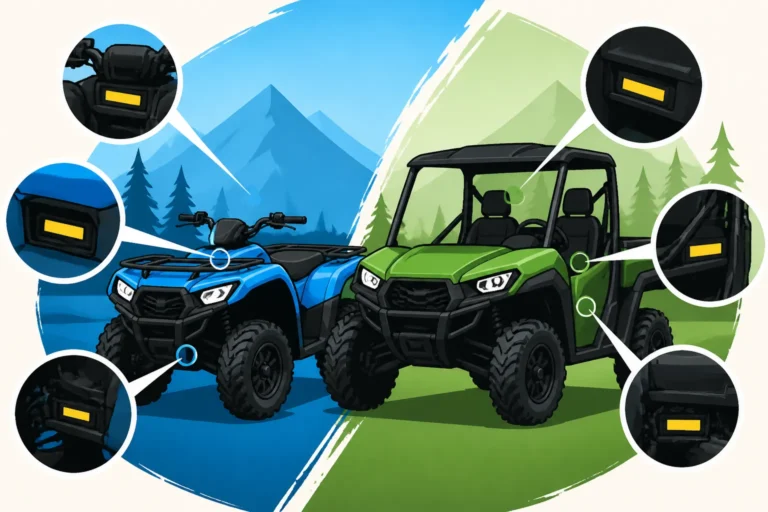
You'll also receive an ORV number plate. This metal plate, similar to a small motorcycle plate, must be securely affixed to your machine in a visible location. There are specific rules about where it needs to be mounted – typically on the front, back, or left side – and it must be kept clean and legible. [BC ORV Number Plates and Decals] explains the proper placement and care of your new plate. The registration process is typically a one-time fee, meaning you pay once, and it lasts as long as you own the machine. [BC Registration Lasts as Long as You Own It] which is a relief for many who are used to annual renewals for highway vehicles.
Common Hurdles and How to Overcome Them
Despite the pathways provided, many riders still hit roadblocks when trying to register machines, particularly those acquired before the 2015 mandate. Dealing with missing paperwork, untraceable sellers, or even damaged VINs can feel like an impossible task. But there are solutions.
Missing Bills of Sale and Ownership Gaps
The most frequent hurdle is the missing bill of sale. For machines purchased decades ago, sometimes multiple times, the paperwork simply never existed or has long since been lost. This creates what's called an "ownership gap," where the current owner cannot trace the machine back through every prior owner to its original point of sale. This is where a statutory declaration truly shines. When you can't get a bill of sale from the person you bought it from, and you can't find a bill of sale from their purchase, a declaration is your way forward.
In your statutory declaration, which you can easily prepare using templates from sites like LawDepot, you'll need to detail the circumstances of your purchase to the best of your ability. Include dates, names (if remembered), locations, and how you came to possess the machine. It’s essentially telling your story under oath. The broker will then use this declaration as proof of ownership, allowing them to register the machine in your name. [Registering a Quad Bought for Cash Decades Ago] often relies heavily on this method.
Registering a Machine Without a Visible VIN
Another challenge, especially with older machines that have seen a lot of hard work or perhaps some rough modifications, is a missing or illegible Vehicle Identification Number (VIN). The VIN is absolutely critical for registration, as it's the unique identifier for your machine. Without a clear VIN, an Autoplan broker cannot process the registration. If your VIN is hard to read, try cleaning the area thoroughly. If it's completely gone or deliberately obscured, you've got a bigger problem.
If the VIN is missing or has been tampered with, the broker may need to involve law enforcement to verify the machine isn't stolen. In some extreme cases, a machine may be deemed unregistrable if the VIN cannot be authenticated or restored. It's a rare but serious issue. Always check the VIN on any machine you're considering buying, making sure it's clear, untampered, and matches any paperwork.
Dealing with Uncooperative or Absent Sellers
Sometimes, you have a bill of sale from your immediate seller, but there's a problem further back in the chain of ownership. Perhaps your seller never properly registered the machine, or they can't provide you with their bill of sale from the person they bought it from. If you've got a seller who is now unresponsive or unreachable, it can feel like you're stuck in a bureaucratic loop.
Again, the statutory declaration comes into play here. If your immediate seller is absent, or if they themselves didn't have all the proper papers, you might need to declare your ownership as if you purchased it without full documentation. The key is to be truthful in your declaration, explaining the situation. An Autoplan broker can guide you on the specific wording and requirements for your unique scenario, ensuring you navigate the process correctly even when the seller isn't playing ball. [BC Transfer of Ownership Steps] relies on cooperation, so having alternatives for when that's not possible is vital.
| Feature / Scenario | Before Nov 1, 2015 | After Nov 1, 2015 (Mandatory Registration) |
|---|---|---|
| Riding on Crown Land | Generally unregulated for registration | Mandatory registration and display of number plate |
| Proof of Ownership | Often informal (handshake, simple receipt) | Formal bill of sale or statutory declaration required |
| Tracking Stolen ORVs | Extremely difficult without central registry | Much easier with unique VIN and registered ownership |
| Accident Investigation | Challenging to identify owners/parties | Facilitated by registered owner information |
| Required Document | None (for ORV use only) | Certificate of Registration to be carried with rider |
| Number Plate | Not required | Mandatory number plate display |
| Cost | None | One-time registration fee (check current figures) |
| Law Enforcement Tools | Limited to direct observation of illegal activity | Enhanced with registration data and verifiable ownership |
Disclaimer
This article is for general informational purposes only and does not constitute professional advice. Laws, prices and regulations vary by location and change over time. Consult a qualified professional for guidance on your specific situation.