No Passenger for a Child Operator
A child may be ready to operate an ATV or side-by-side, but that does not mean they can take a passenger along. In British Columbia, the child-operator rule is separate from adult supervision and the machine’s size or seating capacity. Here’s what the rule means, how to plan a ride, and which other requirements to check before heading out.
What the no-passenger rule means
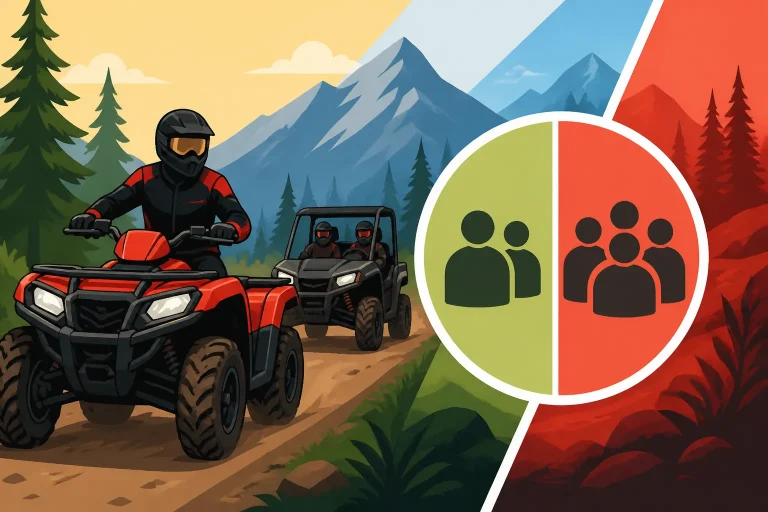
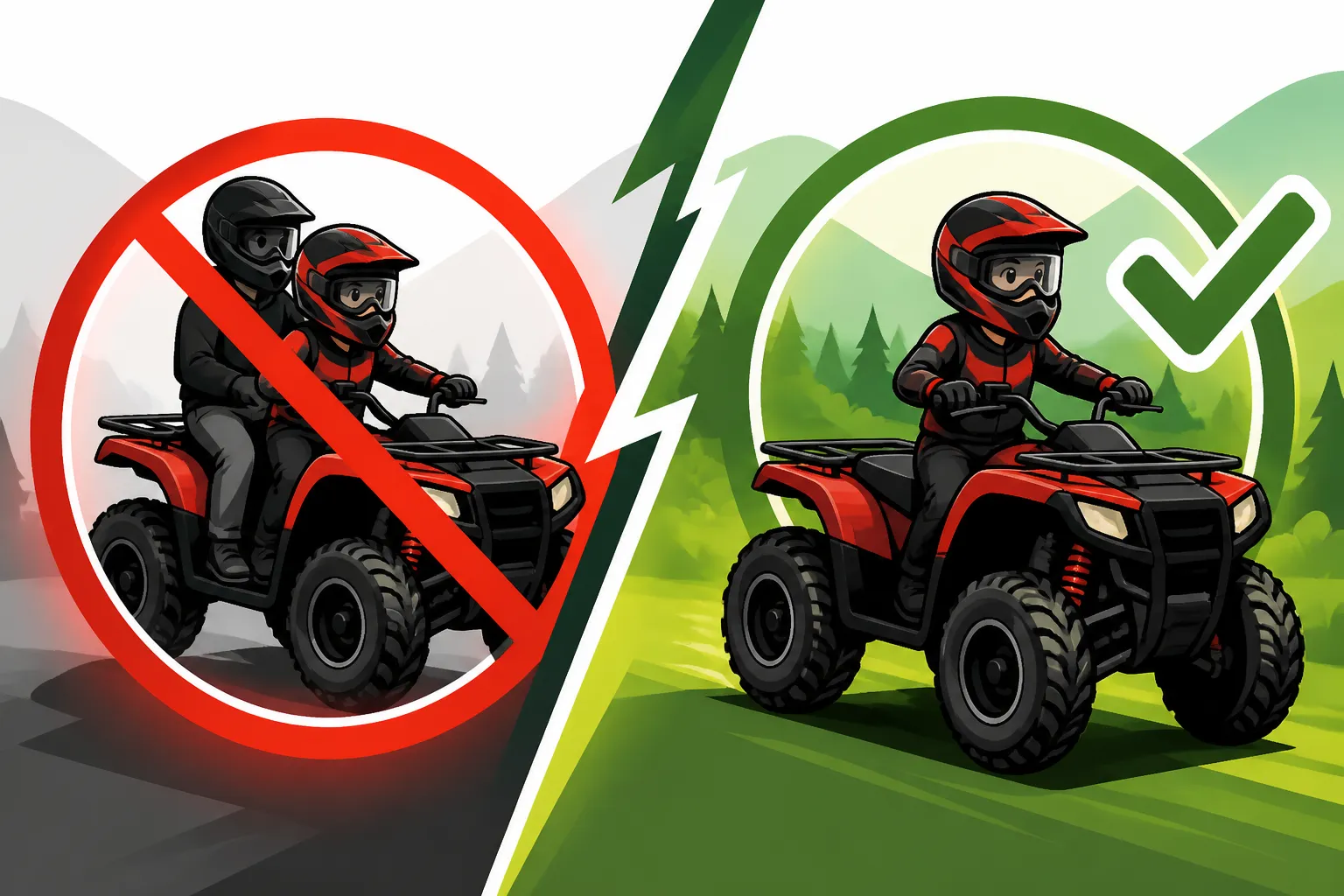
According to the Province of British Columbia, a child cannot drive an off-road vehicle with a passenger. The rule is about who is operating the machine: when a child is at the controls, nobody else should ride on that vehicle with them.
That means a side-by-side’s extra seat does not create an exception for a child operator. Nor does it matter whether the passenger is another child or an adult. The practical choice is straightforward: if the child is driving, keep the machine to the child operator alone. If another person needs a ride, an adult should operate the vehicle instead, subject to the applicable rules.
The rule is easy to confuse with supervision. British Columbia requires adult supervision for children operating ORVs, but the passenger prohibition still applies. An adult’s responsibility to supervise is not permission to ride as a passenger on the machine the child is driving. For details about the supervision requirement, see BC Rules for a Supervising Adult and BC Youth Riding Rules Explained.
| Situation | What the Province of British Columbia requires |
|---|---|
| A child drives an ORV alone | The child may operate it if they meet the manufacturer’s minimum age and weight requirements, and the required adult supervision is in place. |
| A child drives with another rider aboard | A child cannot drive an ORV with a passenger. |
| An adult drives with a child passenger | The child-operator passenger rule does not apply to the adult as operator, but passenger requirements and the machine manufacturer’s guidance still need to be considered. |
| A child rides in a side-by-side | The vehicle’s extra seats do not change the no-passenger rule when the child is driving. |
The Province of British Columbia says a child can operate an ORV only if they meet the vehicle manufacturer’s minimum age and weight requirements. That means age alone is not enough to decide whether a particular machine suits a child. Check the manual or manufacturer’s instructions for that make and model, and do not assume that a machine is appropriate just because the child can reach the controls.
A child’s eligibility to operate, the adult supervision requirement, and the passenger restriction are separate questions. Meeting the manufacturer’s age and weight guidance does not remove the supervision requirement. Adult supervision does not waive the no-passenger rule. And an open seat does not establish that a child is ready to drive that machine.
For more on passenger rules beyond this specific situation, read BC Rules for a Child Passenger and BC Rules for Passengers on a Quad. If the vehicle is a side-by-side, BC Rules for Riding a Side-by-Side covers additional considerations for that type of machine.
How to plan a ride with a child operator
Start by deciding who will operate each vehicle and who will travel on it. If the child is the operator, plan for that vehicle to carry no passenger. If a child needs to ride with someone else, have an adult operate the vehicle and check the passenger rules, manufacturer guidance, and fit of the seat and restraints.
Before leaving, confirm that the child meets the machine manufacturer’s age and weight requirements. Then make a clear plan for adult supervision. British Columbia’s rule requires adult supervision for children under 16, but the facts of a particular ride—such as where the adult will be and how they can supervise—matter in practice. For the requirements that apply to the adult, see BC Rules for a Supervising Adult. If there is any doubt about whether a proposed arrangement counts as supervision, check with an official source before riding rather than treating an adult passenger as an automatic solution.
A useful pre-ride conversation can cover:
- Which vehicle the child will operate, and who will supervise.
- The route and where the group will stop or turn back.
- What the child should do if the group becomes separated or the machine has a problem.
- A firm agreement that nobody will climb aboard the child-operated machine during the ride.
- How the group will handle a change of operator if the child becomes tired or uncomfortable.
These are planning suggestions, not additional legal rules. They help keep the no-passenger boundary clear and reduce pressure to make a decision on the trail. If the planned ride depends on carrying another person on the child’s machine, change the plan before setting out.
Also check whether the route is suitable for the child and the machine. Trail conditions, traffic, weather and the distance from assistance can all affect whether a ride is a sensible choice. A child who is comfortable on one route may not be ready for a different surface or a more demanding setting. Keep the plan flexible enough to turn around.
Other requirements that still apply
The no-passenger rule does not replace the other requirements that can apply to an ORV ride. A child may be riding alone on the machine and still need to meet the rules for equipment, identification, registration and the location where the vehicle is being used.
According to the Province of British Columbia, an ORV operator must carry a copy of the Certificate of Registration or Transfer of Ownership and government-issued photo identification. The Province also says ORV riders aged 12 and older must carry government-issued photo identification. Before the ride, check that the child has the required documents and knows how to keep them accessible.
For an ORV used on Crown land, the Province of British Columbia requires the owner to register it and display the ICBC number plate or sticker. The registration requirement applies to prescribed ORVs, including ATVs and side-by-side ORVs. The Province says registration and transfer transactions are completed through an ICBC Autoplan broker. For the broader land-access context, see BC Rules for Riding Crown Land.
Equipment rules depend in part on the vehicle. According to the Province of British Columbia, operators of ride-astride ORVs must wear a safety-approved helmet, and operators must wear manufacturer-installed seatbelts. The Province also requires lights to be used in low-visibility conditions; bicycle lights are acceptable if the ORV was not manufactured with lights. Check the vehicle’s instructions and the applicable safety rules before the ride. BC ATV Helmet Law Explained has more on helmet requirements.
If you are comparing helmets on Amazon or elsewhere, treat the product listing as a starting point, not proof that a helmet is safety-approved. Check the helmet itself for the relevant approval information and make sure it fits the rider properly. A helmet that is uncomfortable or does not fit securely is unlikely to be a good choice for a child.
Where the machine will be used matters too. The Province of British Columbia says ORV operators on a Forest Service Road must hold a valid driver’s licence and carry at least $200,000 in third-party liability insurance. Those requirements are distinct from the child-operator passenger rule. Do not assume a trail or road is open to ORVs just because it is physically accessible; check the route’s restrictions and any local requirements before the outing. See BC Rules for Riding a Forest Service Road for more on that setting.
Common mistakes to avoid
Treating supervision as permission to ride along. Adult supervision is required for children under 16, according to the Province of British Columbia, but that does not allow a passenger on a machine driven by a child. Make a supervision plan that does not depend on riding as a passenger on the child-operated vehicle.
Assuming a side-by-side’s seat count changes the rule. A vehicle may have several seats, but the Province of British Columbia says a child cannot drive an ORV with a passenger. If the child is operating, leave the other seats unused.
Relying on age alone. The Province of British Columbia says children must meet the manufacturer’s minimum age and weight requirements to ride an ORV. Check the guidance for the exact vehicle rather than relying on a general age assumption.
Thinking a passenger restriction is the only rule to check. Registration, required documents, safety equipment and route access may also matter. For example, the Province of British Columbia requires registration for ORVs used on Crown land, and it requires ORV operators on Forest Service Roads to have a valid driver’s licence and the specified liability coverage.
Changing the plan after the ride starts. A child may get tired, anxious or uncomfortable. Decide in advance what the group will do in that situation. The safest response may be to stop, return to the staging area, or have an eligible adult take over the machine, rather than adding a passenger to the child-operated vehicle.
The key point is simple: when a child is driving an ORV in British Columbia, do not carry anyone else on that machine. Check the manufacturer’s age and weight guidance, arrange the required adult supervision, and confirm the equipment, paperwork and route rules that apply to the ride.
Sources
- Province of British Columbia — Off-road vehicle safety – Province of British Columbia (checked November 3, 2026)
- Province of British Columbia — Off-road vehicles – Province of British Columbia (checked November 3, 2026)
- Province of British Columbia — Motor Vehicle Prohibitions – Province of British Columbia (checked November 3, 2026)
- Province of British Columbia — Improved road access for ORVs – Province of British Columbia (checked November 3, 2026)
- Insurance Corporation of British Columbia — incidental_access_mv1445.pdf (checked November 3, 2026)
Disclaimer
This article is for general informational purposes only and does not constitute professional advice. Laws, prices and regulations vary by location and change over time. Consult a qualified professional for guidance on your specific situation.