BC Safety Course Providers
BC ATV and UTV safety courses can build practical skills, but not every course meets the same need. The right choice depends on whether you want recreational instruction, workplace training or a certificate for a young rider. Here’s how to compare providers, check whether a course counts for a legal requirement, and avoid enrolling based on a certificate that doesn’t fit your situation.
What a BC ATV or UTV safety course can do
A safety course can help riders learn to control a machine, recognize hazards and make better decisions on the trail or at work. Depending on the course, it may cover pre-ride inspections, braking, turning, hills, carrying cargo, passenger safety, protective equipment and emergency response. Some courses include practical riding; others focus on online learning or workplace procedures.
Those differences matter. A short online course can introduce basic concepts, but it cannot give you the same opportunity to practise turning, stopping or handling a slope as supervised, hands-on instruction. A worksite course may address hazards such as fatigue, communication and operating near other equipment, while giving less attention to recreational trail riding. Before signing up, decide what you want to be able to do better.
A course certificate also doesn’t automatically replace every legal requirement. Adult recreational riders in BC generally aren’t required to take a safety course just to ride. A course may still be useful, but don’t assume that any certificate qualifies a young rider for an exception to supervision rules. If you’re looking at a course for a child or teen, confirm that the specific course and provider meet the applicable BC requirements before paying or attending. See BC Safety Courses Are Voluntary for Adults and BC Youth Riding Rules Explained for the distinction between voluntary training and age-related rules.
Training is separate from registration, insurance and permission to use a trail or road. Completing a course doesn’t register a machine, provide coverage, or grant access to private property or Crown land. Visitors also shouldn’t assume that a training certificate changes the registration or riding rules that apply to them in BC. If you’re visiting from another province, check BC Non-Resident Riding Rules and BC Rules for a Visiting Alberta Rider as separate questions.
Where to look for training providers
For BC riders, a sensible starting point is to match the provider to the kind of training you need, then confirm the details of its specific course. Two names to investigate are the BC Forest Safety Council and the Canada Safety Council. The BC Forest Safety Council is relevant to people seeking occupational off-road vehicle training; the Canada Safety Council is a source to check for rider education and available courses. Availability, course format and recognition can vary, so contact the provider directly rather than relying on a course title or a search result alone.
| Provider or course type | A potential fit | What to confirm before enrolling |
|---|---|---|
| BC Forest Safety Council training | Riders operating ATVs or UTVs for work, especially where workplace procedures matter | Whether the course is available in your area, includes hands-on practice, covers your machine type and meets any specific certificate requirement |
| Canada Safety Council training | Recreational riders looking for structured safety instruction | Whether a suitable local course is offered, what the practical component involves and whether the certificate is accepted for your intended purpose |
| Employer-arranged training | Workers whose employer requires training or has a safety program | Which machines and tasks are covered, how practical assessment is handled and whether the employer accepts the provider |
| Local instructor or riding organization | Riders seeking in-person practice close to home | Instructor qualifications, insurance, machine requirements and whether the course is recreational instruction or recognized certification |
| Online course | Riders seeking an introduction or theory component | Whether there is a practical session, what the certificate actually represents and whether BC recognizes it for the specific rule you’re checking |
Treat the table as a shortlist of places and questions, not a guarantee that each provider offers every course or that every certificate has legal recognition. A provider may offer several programs with different purposes. Recognition can attach to a particular course, instructor, machine class or certificate—not simply to a familiar organization’s name.
For more options and the questions to ask, see BC ATV Safety Training Options and Which Rider Course Providers Are Actually Recognized. If you’re trying to meet a rule for a young operator, the second question is especially important: ask about the exact certificate, not just whether the provider offers “ATV safety training.”
Questions to ask before you book
Contact the provider and describe your situation plainly. For example: “My rider is 15, will operate a quad, and I want to know whether this exact course meets the BC certificate requirement that applies to them.” That gives the provider a chance to identify the course and certificate you mean. If the answer is unclear, check the applicable rule with an official source before relying on it.
Useful questions include:
- Is the course for recreational riding, workplace operation or both?
- Does it cover ATVs, UTVs or both, and are there restrictions by machine type or size?
- Is it classroom, online, practical or a combination?
- Who teaches the practical portion, and how is a rider’s competency assessed?
- What certificate or record will the student receive?
- Is this exact course recognized for the BC requirement I’m asking about?
- Does the course meet the age and machine-class requirements for the intended rider?
- What does the student need to bring, and must they supply a machine and protective equipment?
- What happens if weather, machine availability or a minimum enrolment requirement affects the scheduled course?
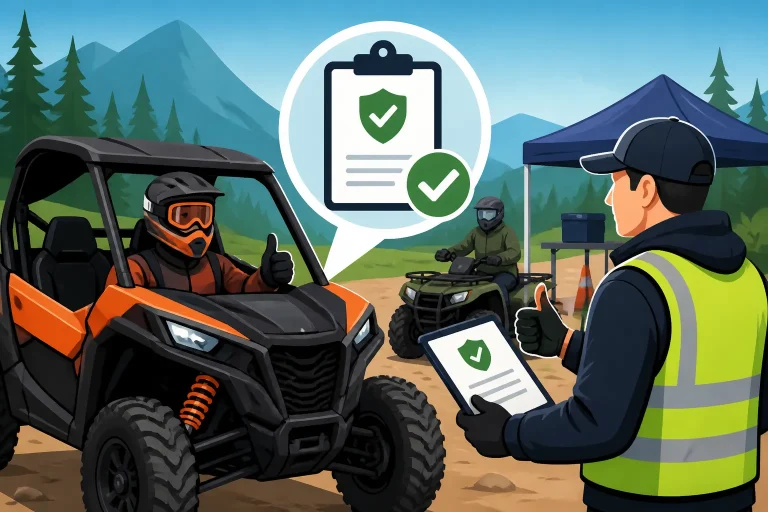
Ask for written confirmation when the course is meant to satisfy a legal or workplace requirement. Save the provider’s reply, course description, proof of completion and any certificate. This is useful if you later need to explain what training the rider completed or verify it with an employer or official.
Checking whether a course counts for a young rider
The most common reason to check course recognition closely is a rider under 16. BC rules include supervision requirements for young operators, and there may be conditions involving a certificate of competency. The details matter: age, the type or class of machine and whether the certificate meets the rule can all affect what a young rider may do. Don’t rely on a generic youth course or an adult course simply because it includes a certificate.
Start by checking the applicable requirements for the rider’s age and machine. Then ask the provider whether the exact course they offer satisfies those requirements. If the provider says yes, ask which certificate is issued and whether there are limits on the machine class or riding circumstances. A course that teaches good habits can be worthwhile even if it does not replace supervision, but it’s important to know which benefit you are paying for.
A certificate also doesn’t necessarily mean a young rider can operate anywhere, in any conditions or without an adult. Rules about supervision, permission, passengers and manufacturer guidance are separate issues. Review BC Supervision Required Under 16, BC Rules for a 14-Year-Old Rider and BC Youth Riding Rules Explained before planning a ride. When a rule depends on a supervisor being present or able to give direction, passing a course shouldn’t be treated as permission to ignore that condition unless the applicable rule clearly says so.
Keep the paperwork together after the course. Store the certificate where you can retrieve it, and make sure the name and details are legible. If the rider changes to a different machine or moves into a different age category, check whether the same training and certificate still apply. A course record is evidence of training; it is not a general pass for every machine or every setting.
For a younger rider, training should also suit the actual size and controls of the machine they will operate. A course on one style of ATV may not prepare a student for a side-by-side’s different handling and passenger setup. Ask what machines the practical session uses and whether the instructor can assess the rider on a comparable model. Don’t use a certificate as a substitute for checking the manufacturer’s age, weight and passenger guidance.
Choosing a course that fits your use
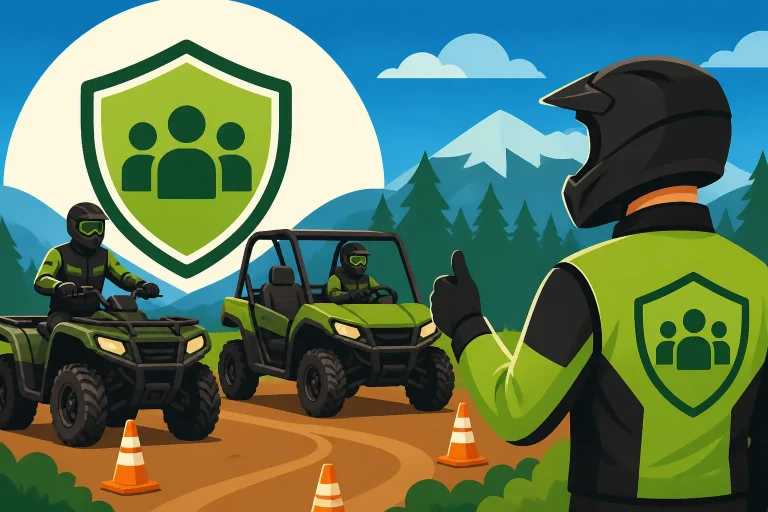
For recreational riders, favour instruction that includes practical exercises and gives students time to ask questions. A beginner may benefit from practising starts, stops, turns and controlled riding over simple terrain before trying steeper or rougher trails. More experienced riders may want training focused on carrying loads, operating with a passenger or making decisions around changing conditions. A course’s usefulness depends on the match between its exercises and the riding the student will actually do.
For workers, ask whether the training reflects the hazards and tasks on the job. A workplace program may need to cover pre-use checks, safe loading, communication, fatigue, site procedures and what to do when a machine is damaged. Confirm with the employer which provider and certificate it accepts. A course that is suitable for a recreational rider may not satisfy an employer’s safety requirements, and an employer-specific course may not cover all the skills someone wants for recreational riding.
If a family is choosing training for a teen, consider more than the certificate. Look for an instructor who will give the rider feedback, a machine appropriate to their size and ability, and an environment where they can practise without pressure. Ask whether parents or supervisors may observe. Keep following supervision rules until you’ve confirmed the precise conditions under which an exception applies.
Before you enrol, weigh the trade-offs:
- Online learning can be convenient and useful for theory, but it may offer little or no supervised machine handling.
- In-person instruction provides an opportunity for questions and practical feedback, but courses may be less available locally.
- Workplace training can be tailored to job hazards, but may not be designed for recreational riding.
- A certificate-bearing course may document completion, but the certificate’s value depends on what it certifies and whether it is accepted for your purpose.
The same care applies if you’re comparing course listings online. Look beyond the headline and check the instructor, syllabus, machine type, practical component and certificate. A low-cost or convenient option may be enough for basic awareness, but it may not provide hands-on skill-building or satisfy a formal requirement. When buying protective gear or course supplies, choose items that fit the machine and the rider; equipment alone does not make an unrecognized course count.
A good next step is to write down the rider’s age, machine type, intended use and the reason for taking the course. Use those details when contacting a provider. If the goal is simply to improve confidence, compare practical instruction and instructor experience. If the goal is to satisfy a youth, employer or other formal requirement, confirm recognition first and keep proof. In both cases, course completion is one part of safe operation—not a replacement for checking registration, insurance, access rules and the conditions where you plan to ride.
Disclaimer
This article is for general informational purposes only and does not constitute professional advice. Laws, prices and regulations vary by location and change over time. Consult a qualified professional for guidance on your specific situation.