Tires for Wet Coastal Clay
Wet coastal clay can make a familiar BC trail feel like a sheet of soap: the tires spin, the machine slides sideways, and every throttle correction seems to dig a deeper rut. Choosing the right ATV or UTV tires helps, but tread, pressure, riding style, and trail conditions all matter. This guide explains what to look for and how to ride with more control.
Why wet coastal clay is so slippery
Clay behaves differently from ordinary mud
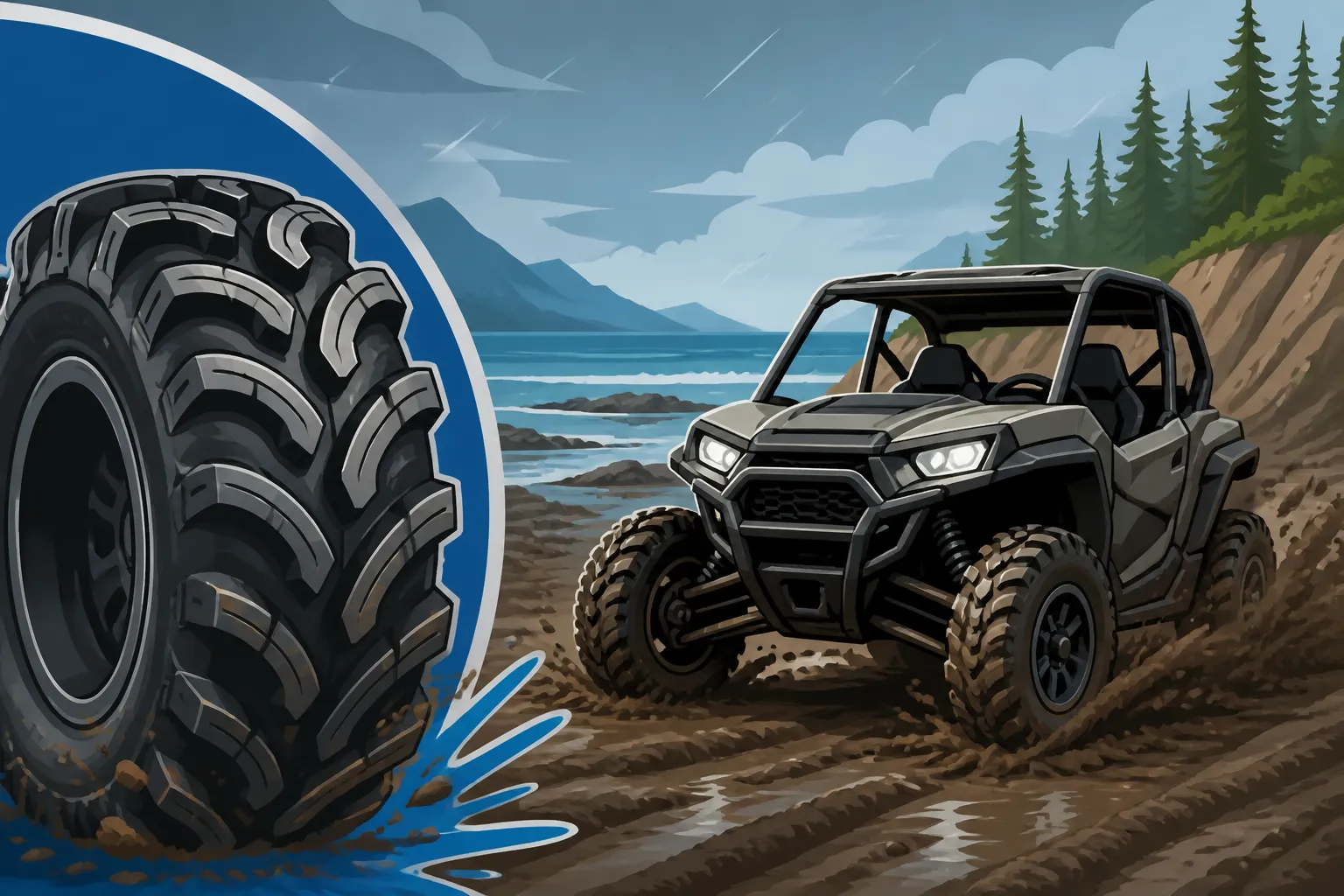
Coastal clay often packs into the spaces between tread blocks, leaving the tire with less bite than its aggressive pattern suggests. Instead of digging cleanly through loose dirt, the tread can fill and turn into a nearly smooth surface. Add a thin layer of water, and the tire may lose traction abruptly.
That’s why a machine can feel confident on a gravel approach, then start skating on a short clay slope. The change can catch you off guard, especially when the trail is narrow or has a drop-off at the edge. A tire that works well in dry soil or deep, soft mud may not feel predictable on slick, compacted clay.
Clay also clings to roots, rocks, and the tire itself. A route that looks straightforward from the seat may have hidden slick patches where water has run across the trail. On Vancouver Island and around coastal riding areas, expect conditions to change quickly with shade, elevation, drainage, and recent rain.
The terrain matters as much as the tire
A broad, flat clay section calls for steady momentum and gentle steering. A steep climb asks more of the tire, but adding too much throttle can spin the tread and polish the surface further. On a side slope, even a small sideways slide can become unnerving because the machine is already leaning downhill.
Look beyond the trail surface. Exposed roots, wet leaves, standing water, and shallow ruts can each affect grip differently. A tire that hooks up well in open mud may still slide on a wet root crossing. Before committing to a difficult stretch, check what lies beyond the patch and whether there is room to stop or turn around safely.
Conditions can also deteriorate as more machines pass through. A trail that was firm in the morning may become rutted and slick later in the day. For current route planning, onX Offroad can be one tool for reviewing your intended ride, but don’t treat a mapped route as confirmation that a trail is open or suitable for the day’s conditions. Check local notices and use judgment on the ground.
How to choose ATV and UTV tires for clay
Look for tread that can clear itself
For wet, sticky conditions, tread design matters less as a matter of appearance than of function. Open spaces between tread blocks give packed material somewhere to go as the tire rotates. If the lugs are tightly spaced, clay may fill the gaps and reduce the useful edges that would otherwise help the tire bite.
That does not mean the deepest or most aggressive tread is automatically best. Very tall lugs can feel less settled on hard-packed sections, and a tire that digs sharply may tear up a soft trail. For mixed coastal riding, look for a pattern that balances open spacing with predictable contact on firmer ground.
A useful comparison is how the tread behaves across different surfaces:
| Riding condition | Tire feature to consider | Possible trade-off |
|---|---|---|
| Sticky, wet clay | Open tread with space between lugs | Can feel rougher or less settled on firm surfaces |
| Mixed clay and gravel | Moderate, versatile tread pattern | May not excel in deep mud or on hard ground |
| Soft, deep mud | More aggressive tread with strong self-cleaning potential | Can increase trail damage and feel less controlled on hardpack |
| Frequent roots and rocks | Durable construction and a predictable footprint | Tread alone cannot prevent slipping on wet surfaces |
Use this as a starting point, not a guarantee. Tire performance depends on machine weight, tire size, load, suspension setup, and how the trail is ridden.
Match the tire to your usual ride, not one dramatic obstacle
It’s tempting to buy a highly aggressive tire after one frustrating ride through deep mud. But if most of your routes include gravel roads, hard-packed trail, roots, and short clay sections, an extreme mud tire may create new compromises. It could feel less comfortable on long approaches and make it easier to spin or dig when you don’t need to.
Think about the surfaces you encounter most often. If wet clay is an occasional challenge, a capable all-terrain pattern and careful riding may be a better fit than a tire designed primarily for deep mud. If your regular rides involve sustained soft ground, a more open pattern may make sense, provided you’re prepared to manage the added trail impact.
For a UTV, account for the machine’s weight, passengers, cargo, and how the tires behave under load. For an ATV, consider whether you ride alone, carry equipment, or frequently climb. Check the vehicle and tire manufacturer’s fitment guidance before changing tire size or type. A tire that looks like it will fit may still affect clearance, steering, gearing, or component stress.
Choose construction and size thoughtfully
Bias-ply and radial tires can feel different on the trail, but neither construction is a universal answer for coastal clay. Construction, sidewall behavior, tread layout, and tire pressure all contribute to handling. Compare manufacturer guidance and consider the kind of terrain your machine actually covers rather than buying based on a single feature.
Avoid changing size without checking your machine’s recommendations. Larger tires may alter clearance and handling, while wider tires can change how the machine floats or tracks through soft ground. A more aggressive tire may also place extra demands on drivetrain components if it grips strongly. If you’re uncertain, talk with a shop familiar with your specific ATV or UTV and the terrain you ride.
Set up for traction without damaging the trail
Treat tire pressure as a measured adjustment
Pressure affects the size and shape of the tire’s contact patch, so it can influence how the machine feels on soft or uneven ground. But there is no single pressure that suits every ATV, UTV, tire, load, and riding condition. Start with the vehicle and tire manufacturers’ guidance, then make only cautious adjustments within their recommendations.
Changing pressure by guesswork can create problems. Too much pressure may make the ride harsher and reduce compliance over uneven ground. Too little can increase the chance of tire damage, bead problems, or unstable handling, particularly when carrying passengers or gear. Check pressure with a gauge rather than relying on how the tire looks.
If you experiment, change one thing at a time and test in a safe, open area before tackling a narrow trail or slope. Keep a record of what works for your machine and load. A setup that feels manageable on a solo ride may behave differently with a passenger, a loaded rack, or a trailer.
Use smooth inputs to preserve grip
On slick clay, sudden inputs often make a difficult patch worse. Apply the throttle gradually, steer smoothly, and avoid abrupt braking while the tires are already sliding. If the wheels begin to spin, easing off may help the tread clear and regain contact; continuing to accelerate can dig a rut or make the surface even more polished.
On a climb, choose a line before you start and maintain controlled, steady movement. Avoid stopping midway if you can do so safely, since restarting on a slick incline may be harder than continuing at a sensible pace. If the machine loses traction, don’t make a sudden steering correction that could push it toward the edge. When the route no longer feels safe, backing out or turning around is a sound decision.
On a descent, let the machine move slowly and predictably. Avoid relying on a hard brake application to compensate for a poor line. If you’re riding with a group, leave room between machines so each rider can choose a line and avoid the fresh ruts left by the person ahead.
Know when to turn around
A muddy trail is not automatically a good trail to ride. Deepening ruts, standing water, damaged edges, and exposed soil are signs that continued traffic may make the route worse. Wet clay is especially vulnerable to repeated spinning and aggressive tread, so take the conditions seriously even if your machine can push through.
Check route information before you leave and be willing to change plans. A map can help with orientation, but closures and surface conditions need local confirmation. onX Offroad may help you review routes before a trip; pair it with current local information and on-the-ground signs rather than assuming a mapped track is open. For more route-planning context, see BC ATV Trail Map Downloads and BC Trail Closures After a Storm.
Prepare for a coastal ride and adapt on the trail
Inspect tires and machine before leaving
A simple pre-ride check can prevent a small issue from turning into a recovery problem. Look for cuts, embedded debris, uneven wear, and damage around the sidewalls. Confirm pressure with a gauge, check that wheels are secure, and make sure the machine has the equipment you need for the route and conditions.
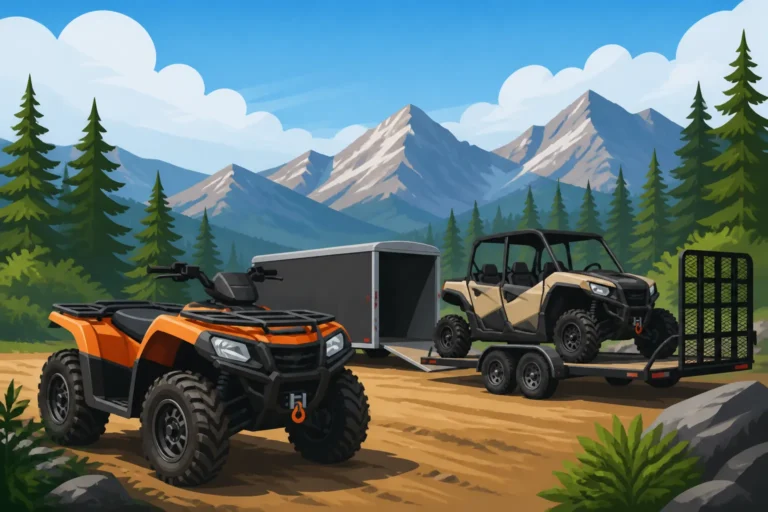
Pack for delays as well as the ride itself. Coastal weather can shift, and a short trail section can take longer than expected when it is slick. Bring suitable clothing, water, basic recovery equipment, and a way to contact help if your route takes you beyond reliable service. Tell someone where you plan to ride and when you expect to return.
If you ride in an unfamiliar area, review the route before setting out. onX Offroad can be useful during trip preparation, especially when you want to compare a planned route with nearby alternatives. Still, route information does not replace signs, land-use rules, or a decision to stop when conditions are unsafe.
Clean and inspect after the ride
Clay packed between lugs can hide damage and affect how the tire performs next time. Once you’re back, remove packed material and inspect the tread, sidewalls, wheels, and undercarriage. Check for cuts or objects lodged in the tire, and look for anything that may have loosened during the ride.
Clean mud responsibly. Avoid washing sediment into streams, ditches, or sensitive areas. If you ride at managed sites, follow their wash and cleaning rules. A little time spent removing clay also makes it easier to spot uneven wear or a slow leak before your next trip.
Take note of what worked. Did the tire clear clay, or did it pack up? Was the machine stable across the slope? Did a particular section become noticeably worse after rain? Those details help you choose tires and pressure settings based on real experience rather than marketing claims or one memorable slide. The advice in BC Trail Difficulty Ratings can also help you assess whether a route matches your experience and machine.
Plan around rain, melt, and local trail conditions
A trail’s condition can change between visits, particularly after heavy rain or during spring melt. Before heading out, check local trail information and look for signs, gates, or closures at the access point. If a route is already soft and rutted, choosing a more durable surface protects both your machine and the trail.
Different parts of BC’s coast offer different riding experiences, so local knowledge matters. If you’re planning an Island trip, BC Vancouver Island Riding Areas can help you explore the broader riding-area picture. For the Fraser Valley, Chilliwack Area Riding in BC offers relevant regional context. You can also read BC Riding After Heavy Rain and BC Riding in Spring Melt before deciding whether to ride or postpone.
A reliable setup is more than a set of tires. It’s a tire pattern suited to your usual terrain, pressure within manufacturer guidance, steady riding inputs, and the willingness to choose another route when clay conditions are deteriorating. For local expectations around sharing and caring for trails, see BC Trail Etiquette Locals Expect.
Disclaimer
This article is for general informational purposes only and does not constitute professional advice. Laws, prices and regulations vary by location and change over time. Consult a qualified professional for guidance on your specific situation.