Snorkels for Creek Crossings
A snorkel can help keep an ATV or UTV’s air intake above shallow water, but it does not make the whole machine waterproof. Creek crossings in British Columbia can hide deep holes, soft banks, swift current, and fragile streamside ground. This guide explains what a snorkel protects, how to prepare for a crossing, and when turning around is the safer choice.
What an ATV or UTV snorkel does
It raises the air intake, not the whole machine’s water limit
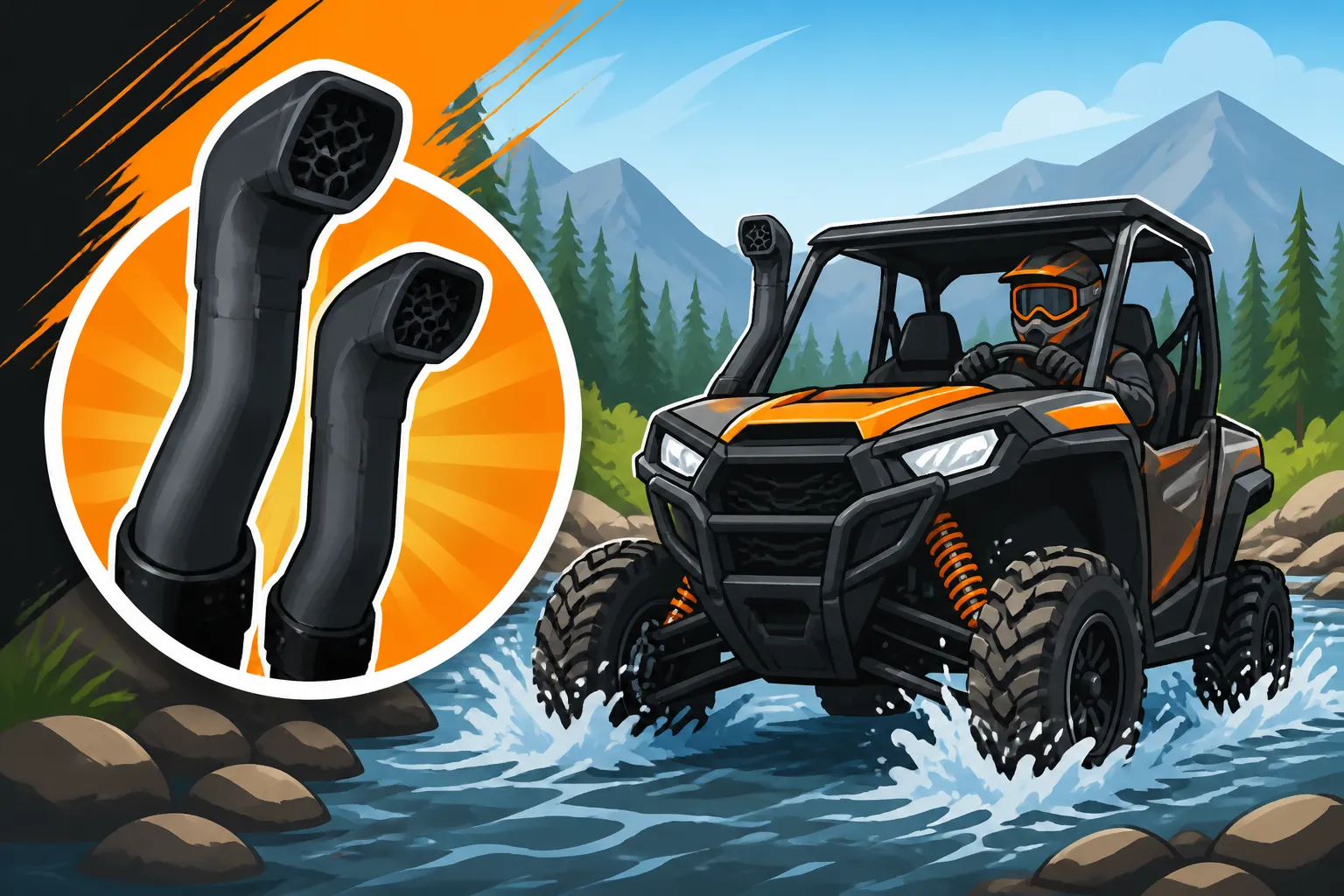
An engine needs air to run. If water reaches the intake and gets drawn into the engine, the result can be severe damage. A snorkel relocates the intake opening higher on the machine, reducing the chance of the engine drawing in water during a crossing or in deep mud.
That protection has limits. Water can still enter through other openings or affect electrical connections, belts, bearings, fluids, and components that were never designed to operate submerged. A snorkel also does not prevent water from entering the exhaust when the engine is off, or protect a machine that is submerged beyond its safe operating depth.
Think of it as one modification that may add a margin of protection—not permission to ride through any water you encounter. A creek that looks manageable from the bank can conceal a sudden drop, a shifting rock bed, or a current strong enough to move the machine.
A snorkel system needs to be installed and maintained properly
A useful snorkel setup depends on more than a raised tube. The intake path, airbox seals, and connections need to be suitable for the machine and installed so water is less likely to reach the engine. Some riders also modify other systems for water exposure, but the correct setup varies by make, model, and equipment. Follow the manufacturer’s guidance and have a qualified mechanic assess modifications if you are unsure.
Before a ride, look for loose fittings, cracks, missing caps, damaged hoses, or water and dirt inside the airbox. A tube can look tall and sturdy while a poorly sealed connection lower down remains vulnerable. If your machine has been modified, know what the modifications do—and what they do not do—before you approach a crossing.
Do not treat the snorkel opening’s height as a published wading-depth rating. The safe depth depends on the machine, the water’s movement, the bottom, the approach and exit banks, and the rider’s skill. Check the owner’s manual and ask a knowledgeable dealer or mechanic about your specific machine.
Water can cause problems even when it stays out of the engine
A crossing can affect parts that a snorkel does not protect. Water may contaminate fluids, reach electrical connectors, soak a belt or clutch area, or wash grit into bearings. On a UTV, water can also reach the cabin and affect belts, seats, switches, and stored gear. On either type of machine, an abrupt current or hidden obstacle can cause a loss of traction or control.
After a crossing, pay attention to changes in the machine’s sound, feel, smell, and performance. If it stalls, runs roughly, makes an unusual noise, or behaves differently, stop somewhere safe rather than pushing on. Water-related problems can worsen if the machine is repeatedly operated without inspection.
For a broader look at route options, BC Trails With Creek Crossings can help you think through the kind of terrain you may encounter. Treat any route description as a planning aid, not proof that a particular crossing is safe on the day you arrive.
How to assess a creek crossing before riding in
Check the route and access before leaving
Start by confirming that the route is open and that motorized use is allowed. A creek on a map does not automatically mean there is a legal or suitable place to cross it. Land status, road restrictions, seasonal closures, posted signs, and local conditions can affect where you may ride. For background on access, review BC Crown Land Access Rules and BC Forest Service Road Requirements.
Route-planning tools such as onX Offroad can help you review a route before the ride and identify questions to check. Do not rely on a map alone to confirm that a crossing is open, legal, or passable. Check current notices and signs, and ask a local club, land manager, or other informed source when the status is unclear. Save the route information you need before entering an area where cell service may be limited.
Give extra attention to recent rain, snowmelt, and reports of high water. Conditions can change between the time you plan a ride and the time you arrive. BC Riding After Heavy Rain offers related planning context, while BC Riparian Areas to Avoid is a useful reminder that streamside ground can be sensitive and easily damaged.
Look from a safe place before approaching the water
Stop well back from the bank and take time to observe the creek. Look for the direction and speed of the current, the apparent depth, submerged rocks, branches, slippery edges, and a clear way out on the far side. A muddy or cloudy creek can hide the bottom, while glare and changing light can make depth difficult to judge.
Do not assume that a crossing is shallow because another machine went through earlier. Water levels can rise, sediment can shift, and a track made by a larger or differently equipped vehicle may not suit your ATV or UTV. If you cannot see enough to judge the route—or cannot confidently identify a safe exit—do not ride into the water to find out.
Keep the group together while you assess the crossing, but avoid crowding the bank. One person can observe from a safe position while the rider makes a decision. If you are using onX Offroad to keep track of your planned route, use it to help with orientation, not to replace what you can see and verify on the ground.
Know when the safest crossing is no crossing
Turn around if the water is fast, rising, too deep to assess, or moving debris. Do the same if the entry or exit is steep, unstable, or badly eroded; if the bottom is unknown; or if you would have to enter a sensitive area to make the crossing. A snorkel does not reduce the risk of being swept off line, tipping, striking an unseen obstacle, or damaging the creek bank.
This can be frustrating when the crossing is only a short distance from your planned destination. Still, a safe ride includes the option to change the plan. If the route becomes questionable, choose a known alternative or head back rather than letting schedule pressure make the decision for you. A route-planning tool such as onX Offroad may help you keep track of alternatives, but verify that any alternate route is open and appropriate before using it.
Respect posted restrictions and avoid making a new route around an obstacle by cutting across vegetation or streamside ground. Trail etiquette matters at crossings because repeated attempts can loosen banks, churn sediment, and leave damage for the next rider. See BC Trail Etiquette Locals Expect for more on considerate riding.
Preparing your machine and group for a crossing
Make a pre-ride check part of the routine
Before a ride, inspect the snorkel and its connections, the airbox, and any other water-exposed components identified in your machine’s manual. Check tires for damage and confirm that the machine is in good working order. If you have recently installed or changed a snorkel system, test and inspect it in a controlled setting recommended by a qualified mechanic—not for the first time at a remote creek.
Carry basic recovery and repair supplies appropriate to the trip, along with a first-aid kit and a way to communicate if someone needs help. Tell someone where you plan to ride and when you expect to return. In remote areas, prepare for limited cell coverage rather than assuming you can call for assistance from the trail.
Agree on a simple group plan before reaching a crossing. Riders should know where to wait, how to communicate, and what to do if a machine stalls or someone decides not to cross. Keep people and equipment clear of the water and recovery line. Do not stand downstream of a machine in a position where it could move unexpectedly.
Make one decision at a time, without rushing
If you have judged a crossing to be suitable, approach only when you have a clear line and know where you intend to exit. Follow the owner’s guidance for operating the machine in water, and avoid sudden inputs that could upset traction or balance. A passenger should stay seated and follow the operator’s instructions. Never let a group’s momentum or pressure turn an uncertain crossing into a rushed one.
If the machine loses traction, starts to drift, or behaves unexpectedly, do not keep forcing it forward. A failed attempt can put both the rider and machine in danger. Stop and reassess from a safe position. If a recovery is needed, use proper equipment and a recovery plan suited to the machine; improvised pulling or standing in moving water can create additional hazards.
No single technique works for every machine and every creek. Water depth, current, footing, vehicle design, and rider experience all matter. If you are new to creek crossings, build experience in controlled conditions with knowledgeable instruction rather than learning on a remote route.
Inspect the machine after water exposure
Once you are safely away from the crossing, check for obvious water intrusion, loosened parts, unusual smells, warning lights, or changes in how the engine and drivetrain operate. If the machine stalls in water or you suspect water has entered the engine or another system, avoid repeated attempts to restart it. Arrange for the machine to be inspected by a qualified mechanic.
Dry and clean the machine as appropriate after the ride, following the owner’s manual. Pay attention to areas where mud and grit can collect. If you are unsure whether water has contaminated a fluid or reached an electrical component, get professional advice rather than guessing. Catching a problem early can be less costly and safer than continuing to ride and discovering it later.
| Before or after the crossing | What to check | Why it matters |
|---|---|---|
| Before the ride | Snorkel fittings, airbox, and machine condition | A raised intake cannot help if connections or other components are damaged |
| Before entering | Current, depth, bottom, entry, and exit | Hidden obstacles and unstable banks can make a crossing unsafe |
| During the ride | Route status, signs, and group communication | Access and conditions may differ from what you expected |
| After exposure | Stalling, unusual sounds, warning lights, and signs of water intrusion | A new symptom may need attention before the next ride |
Common snorkel and creek-crossing mistakes
Assuming a snorkel makes a machine waterproof
This is the biggest misunderstanding. A snorkel raises an air intake; it does not seal every opening or protect every mechanical and electrical component. Treating a snorkeled ATV or UTV as waterproof can lead a rider to attempt deeper or faster water than they would otherwise consider.
The same caution applies to other modifications. A machine equipped for occasional water exposure is not automatically suitable for a prolonged crossing, a flooded trail, or a strong current. Know the purpose and limits of each change, and follow machine-specific advice rather than relying on a general rule of thumb.
Following tracks without checking the conditions
Fresh tire tracks can make a crossing look reassuring, but they do not tell you who made them, how recently they were made, or whether the water and bottom have changed. Another rider’s machine may also have different equipment, tires, clearance, or experience.
Pause and assess the crossing for yourself. If the route or access is uncertain, use a map such as onX Offroad to help orient your planning, then confirm conditions and restrictions through current local information and posted signs. A track on a screen should never be treated as a guarantee of safe access.
Riding into sensitive ground to get around water
When a creek is not crossable, it can be tempting to detour along the bank or through nearby vegetation. That can damage streamside ground and create new tracks that encourage others to follow. Choose an established, permitted route—or turn around. A short detour is not worth damaging a riparian area or creating a bigger access problem.
For any ride in British Columbia, build room in your plan for changing conditions. Check restrictions before you leave, stay within permitted routes, and be willing to abandon a crossing that does not look right. A snorkel can be a useful piece of equipment when selected and maintained appropriately, but sound judgment remains the most important protection.
Disclaimer
This article is for general informational purposes only and does not constitute professional advice. Laws, prices and regulations vary by location and change over time. Consult a qualified professional for guidance on your specific situation.