Exit 119A and Vedder Road
Finding the right turn off Highway 1 is only the first part of a Chilliwack ATV outing. From Exit 119A, Vedder Road leads toward the Chilliwack River Valley, where traffic, changing road conditions and limited cell service can complicate the trip. This guide explains how to plan the approach, choose a suitable staging area and prepare before unloading your machine.
Getting from Exit 119A to the Chilliwack River Valley
Use Vedder Road as your approach, not as a trailhead
Exit 119A puts you on the local road network in Chilliwack. Vedder Road is a practical route toward the Chilliwack River Valley, but turning off the highway does not mean you have reached an ATV trailhead. You still need to travel to an appropriate staging area and confirm that your intended route is open to your machine.
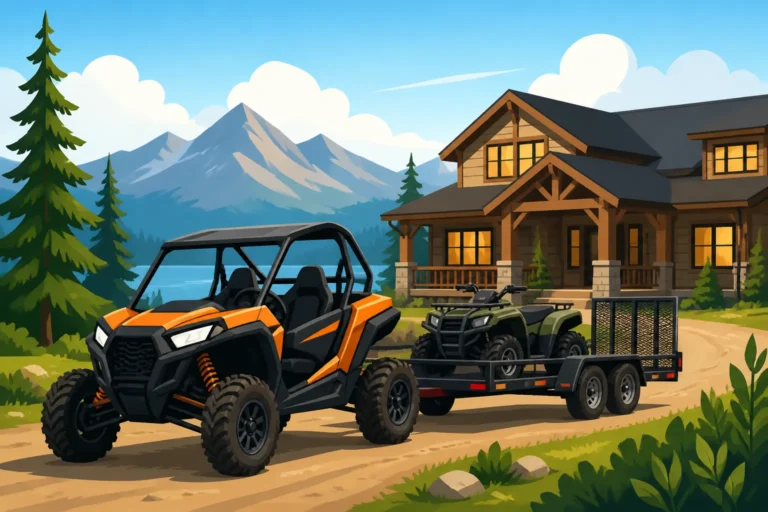
That distinction matters when you are towing a trailer. A road that looks like a convenient place to pull over may not be a legal or safe unloading spot, and roadside space can be limited. Plan to reach a designated staging area rather than treating a wide shoulder or road entrance as an informal launch point.
For a broader look at riding opportunities in the area, start with Chilliwack Area Riding in BC. It helps place the Vedder Road approach within the wider range of riding options around Chilliwack, rather than making one highway exit seem like the whole destination.
Continue toward Chilliwack Lake Road with a route plan
From Vedder Road, the route toward the valley connects with Chilliwack Lake Road. That road is an important approach for reaching recreation and staging areas, but it is not a guarantee that every spur or adjoining forest road is open, suitable for your vehicle, or available for recreational use.
Before leaving home, save your intended route and identify the turnoffs you expect to use. A map app such as onX Offroad can help you review mapped roads and trails and keep a route available when cell reception becomes unreliable. Treat any digital map as a planning aid, not proof that a route is currently open or that you have permission to ride it.
The approach is sometimes described around 25 Kilometres of Chilliwack Lake Road. Use that reference to understand the general corridor, not as a promise that every trip will involve the same distance, travel time or road conditions. Construction, traffic, access changes and your chosen staging area can all affect the drive.
Check the whole journey, including the return
A common planning mistake is to focus on where to ride and forget the time needed to get there. If your group is meeting near Exit 119A, agree on a meeting point with enough room for vehicles and trailers. Then allow time to reach the staging area, unload, check equipment and review the route before starting the ride.
Also plan for the return drive. A long day on rough trails can leave riders tired, while a dusty or wet machine may need attention before it is secured on a trailer. Make sure the tow vehicle has what it needs for the return journey and decide in advance where the group will regroup if someone has to stop.
Choosing a staging area and ride route
Match the staging area to your group
A good staging area makes the start of a ride less stressful. Consider whether it has suitable space for your truck and trailer, room for your group to unload safely, and access to the type of route you actually want to ride. Do not assume that a staging area will have every service or facility your group needs; check the details before you leave.
The Rapids staging area is one local option to research. Six Sites at the Rapids Staging Area can help you understand what is available there, but conditions and site access still need to be checked for your particular trip. If the area is busy, arrive with a backup plan rather than expecting to find an open place for a large trailer.
For other route ideas, BC ATV Trails: Where to Ride offers a broader starting point. Compare options based on your riders’ experience, machine type, available daylight and the kind of terrain you want. A ride that suits a nimble dirt bike may not be a comfortable choice for a wide side-by-side or a family group with newer riders.
| Planning question | Why it matters | What to do before leaving |
|---|---|---|
| Where will we unload? | Not every roadside pullout is a suitable staging area | Choose a designated, appropriate staging location |
| Is the intended route open? | Access can change, and restrictions may apply to specific roads or areas | Check current closures and posted signs |
| Will our machines fit? | Narrow routes, rough surfaces or tight turns may not suit every vehicle | Match the route to your ATV or UTV |
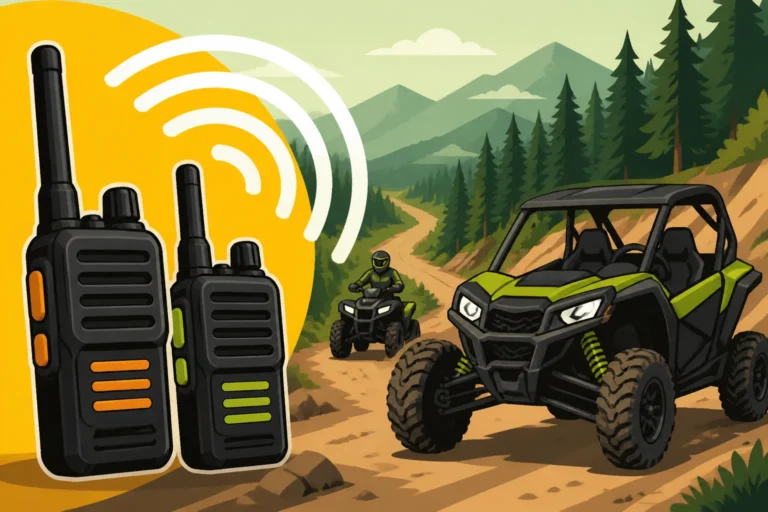
| Can we navigate without service? | Cell reception may be limited in the valley | Save maps and agree on a regrouping plan |
| Is industrial traffic active? | Work vehicles can use resource roads and may have limited room to manoeuvre | Review road conditions and follow posted directions |
Treat forest roads as working roads
Routes such as Foley Lake Forest Service Road may be part of a larger network of forest and resource roads. These roads can serve industrial users as well as recreational visitors. Expect changing surfaces, blind corners, dust, narrow sections and vehicles that are much larger than an ATV.
Do not assume a road is quiet just because you do not see traffic at the entrance. Logging and other work can vary by location and day, and a loaded truck may need the full road width. Review BC Resource Roads With Active Hauling before your trip and follow posted signs, radio instructions and safe yielding practices where they apply.
If your group does not have experience sharing roads with industrial traffic, talk through the basics before riding. Keep the group together where it is safe to do so, avoid stopping in blind spots, and make sure every rider knows what to do if a truck approaches. A resource road is not a private trail, and courtesy is a safety measure as much as a matter of trail etiquette.
Check closures and surface conditions
An open route on a map is not necessarily an open route on the day you arrive. Storm damage, washouts, maintenance work, fire-related restrictions or seasonal closures may change what is accessible. Check for current notices before driving to the valley, and pay attention to signs once you are there.
After heavy rain, some routes can become muddy, rutted or vulnerable to damage. If a road or trail looks unsafe, badly eroded or closed, do not try to push through simply because your group has already made the drive. BC Trail Closures After a Storm is useful background for thinking through how conditions can affect access and why a planned route may need to change.
A practical backup is to have a shorter alternative ride or a different permitted area in mind. That way, a closure does not turn into pressure to ignore a sign or continue onto uncertain ground. Keep the map app available if it helps with orientation, but use local signs and official access information to confirm what you can actually ride.
Preparing for the ride from Vedder Road
Build a route that suits the least experienced rider
The best plan is not necessarily the longest loop. For a mixed group, choose a route that the least experienced rider can complete comfortably, with room to turn around or take a break. A confident rider may be happy to explore rougher ground, while a newer rider may need a shorter outing and simpler navigation.
Before you leave the staging area, make sure everyone knows the route, planned stopping points and regrouping procedure. Decide what happens if someone loses sight of the group or needs to turn back. In an area with limited reception, a simple plan agreed on in advance is more useful than assuming a phone call will solve the problem.
You can use onX Offroad to review mapped routes and help your group follow a planned line, but do not let a displayed track override a closure sign, private-property boundary or unsafe road condition. Save the information you need before entering areas where service may be weak. Limited Cell Service at a Staging Area is a helpful reminder to prepare for navigation gaps rather than waiting until a phone has no signal.
Bring the essentials for a remote outing
A ride that starts close to town can still take you into a setting where help is not immediately available. Pack water, food, suitable clothing, basic first-aid supplies and the equipment needed for your machine. Bring more than one way to navigate if possible, and tell someone who is not riding with you where you plan to go and when you expect to return.
Check the machine before unloading: tires, brakes, controls, fuel, lights and any required safety equipment. For a UTV, confirm that passengers understand seat-belt use and the group’s plan for travelling on rough or narrow routes. For an ATV, make sure riders are wearing appropriate protective gear and are comfortable with the machine they will operate.
A digital route is useful, but a phone battery can run down, a device can be damaged and a mapped line can become unsuitable on the ground. Keep your route plan practical and carry the basics you would want if the group had to wait for assistance or retrace its route.
Ride with care around other users and the environment
Chilliwack’s backroads and recreation areas can bring riders into contact with hikers, cyclists, other motorized users, local residents and industrial crews. Slow down where visibility is poor, leave room for others to pass and avoid creating unnecessary dust near people or homes. BC Trail Etiquette Locals Expect covers the kind of considerate habits that help keep shared routes enjoyable.
Stay on routes that are open to your vehicle, and avoid riding around a gate or onto a spur simply because it appears on a map. Do not damage stream banks, wet ground or vegetation to get around an obstacle. If conditions make a route impassable, turn around and choose your backup rather than widening the track.
The trip from Exit 119A and Vedder Road can be a straightforward way to reach the Chilliwack River Valley, but a safe outing depends on more than following a road line. Choose a suitable staging area, check access before you go, prepare for weak reception and treat working roads with care. With those details settled, your group can spend less time sorting out logistics and more time enjoying the ride.
Disclaimer
This article is for general informational purposes only and does not constitute professional advice. Laws, prices and regulations vary by location and change over time. Consult a qualified professional for guidance on your specific situation.