Buying a Helmet That Passes in BC
One of the biggest headaches for any ATV or UTV rider in British Columbia, especially if you're new to the sport or just visiting, is trying to figure out the maze of helmet regulations. It’s not just about slapping on any old lid; you need to understand what actually passes muster with the law and, more importantly, what will truly protect your noggin when you’re out on the trails. This guide is here to cut through the confusion and give you the real scoop on choosing a helmet that keeps you safe and legal in BC.
Understanding BC's Helmet Law for ATVs and UTVs
It’s easy to feel overwhelmed by all the different rules and regulations when you’re heading out to enjoy BC’s incredible backcountry. But when it comes to helmets, the rules are pretty clear, and for good reason: your safety is paramount. Let's break down exactly when and why you need to wear a helmet, and the critical difference between the types of machines you might be riding.
The Mandate: When a Helmet is Required
Picture this: you're loading up your quad, gear packed, eager to hit a beautiful Forest Service Road (FSR) near Squamish or a wide-open trail system in the Okanagan. Before you even think about starting that engine, you need to know that wearing a helmet isn't just a suggestion in BC; it's a legal requirement in most situations. If you're riding an Off-Road Vehicle (ORV) on Crown land, which includes nearly all those fantastic FSRs and provincial recreation areas, you absolutely must wear an approved helmet. This also extends to many designated trail systems managed by local clubs or Recreation Sites and Trails BC. The law states clearly that [BC Helmet Law Covers Every Rider] of an ORV, regardless of age or experience, when operating on specified lands.
For those of us who ride traditional, ride-astride ATVs – the quads and dirt bikes we all know and love – there's no wiggle room here. You and any passengers, if your machine is designed to carry one, must have a helmet on. It’s a non-negotiable part of getting ready for your ride, just like checking your tire pressure or packing water. This applies to everyone, from a seasoned veteran tackling challenging routes in the Kootenays to a new rider learning the ropes on easier paths. When you're on a ride-astride machine, [BC Helmets on Ride-Astride Machines] are always required when the ORV Act applies.
Beyond the Law: Why Safety Matters Most
While no one enjoys being told what to do, the helmet law isn't about control; it's about protecting you from serious injury. Let's be honest, off-road riding, while exhilarating, carries inherent risks. You might be navigating tricky terrain, encountering unexpected obstacles, or simply misjudging a corner. A sudden stop, a roll-over, or a branch snapping back can happen in an instant, and when it does, your head is incredibly vulnerable. A properly fitted, certified helmet is your first and best line of defense against concussions, skull fractures, and even more devastating brain injuries.
Think about it: the human brain is a marvel, but it's also delicate. It floats inside your skull, surrounded by cerebrospinal fluid. A sudden impact can cause your brain to slosh against the inside of your skull, leading to bruising and swelling. This is where a helmet steps in. It's designed to absorb and dissipate the energy from an impact, spreading it over a larger area and reducing the force transmitted to your head. Without one, a minor fall could turn into a life-altering event. No matter how experienced you are, how careful you ride, or how familiar you are with the trails, accidents can happen. Investing in a good helmet isn't just about avoiding a ticket; it's about making sure you can keep riding for years to come and, more importantly, live your life fully off the trails too.
Deciphering Helmet Standards and Certifications
Okay, so you know you need a helmet. Great! But walk into any motorsports shop, or even browse online, and you'll quickly discover a dizzying array of options, all plastered with different acronyms and logos. DOT, Snell, ECE – what do they all mean? It’s enough to make your head spin before you even put a helmet on! Understanding these certifications is crucial because they're your assurance that the helmet has been rigorously tested and meets specific safety benchmarks.
The Alphabet Soup of Certifications: DOT, Snell, ECE
When you pick up a helmet, one of the first things you should look for is a certification sticker. These aren't just decorative; they're legal and safety markers. In British Columbia, the regulations specify that your helmet must meet certain safety standards. [BC Helmet Standards in the Regulation] generally refer to widely recognized international standards. Let's break down the big three you'll encounter:
- DOT (Department of Transportation): This is perhaps the most common standard you'll see in North America. The DOT certification, specifically FMVSS 218, is a self-certification standard. This means manufacturers declare their helmets meet the standard, but the National Highway Traffic Safety Administration (NHTSA) randomly tests helmets to ensure compliance. A DOT-certified helmet is designed to protect against impact and penetration. It ensures a certain level of protection, focusing on the ability to withstand a specific force and distribute energy in a crash. It's a solid baseline for safety.
- Snell (Snell Memorial Foundation): The Snell certification is considered one of the most stringent and goes above and beyond the DOT standard. Snell is a non-profit organization dedicated to helmet safety research and testing. They have their own, often more rigorous, testing protocols which include multiple impacts at different points, greater impact energy absorption, and more aggressive penetration tests. A helmet with a Snell rating (like M2020D or M2020R) has passed these tougher tests. Many serious riders, especially those involved in racing or high-performance riding, often opt for Snell-certified helmets for that extra layer of confidence.
- ECE (Economic Commission for Europe): If you're buying a helmet that might have been originally sold in Europe, you'll see the ECE R22.05 or the newer ECE 22.06 standard. This is a widely accepted international standard, especially prevalent across Europe and many other parts of the world. ECE testing is comprehensive, including impact absorption, rigidity, deformation, and chin strap retention. Many riders view ECE as a good middle ground, often combining strong protection with a focus on a balance of safety and weight.
Each of these certifications involves extensive testing, from dropping helmets onto anvils to ensure impact absorption, to sharp-object penetration tests, and chin strap integrity checks. They all aim to do the same thing: reduce the risk of head injury in an accident. The key is to ensure your chosen helmet proudly displays at least one of these certifications.
Why a Sticker Isn't Enough: Counterfeits and Outdated Gear
It's tempting, especially with so many online marketplaces, to grab a bargain helmet that looks certified. You might see a sticker that says "DOT" but the price seems too good to be true. Unfortunately, the world of helmet sales isn't immune to counterfeits. There are unscrupulous sellers out there who will apply fake certification stickers to helmets that have never passed any safety test whatsoever. These helmets offer little to no real protection, and trusting your brain to one is an incredibly dangerous gamble. Always buy from reputable dealers or well-known online retailers to ensure you're getting a genuine, certified product. If the price is drastically lower than similar certified helmets, it should be a major red flag.
Beyond fakes, it's also crucial to understand that helmets have a lifespan. The materials that make up the helmet's protective layers – the EPS foam liner, the shell resin, and the adhesives – degrade over time due to exposure to UV light, sweat, oils, and even just atmospheric conditions. Most manufacturers and safety organizations recommend replacing your helmet every five to seven years, even if it hasn't been in a crash. Furthermore, if your helmet has been involved in any kind of impact, even if there's no visible damage, it needs to be replaced immediately. The internal foam, which is designed to crush and absorb energy, can be compromised, leaving you unprotected in a subsequent fall. Don't try to save a few bucks by wearing a helmet that has done its job once; it won't be able to protect you again. [Replacing a Helmet That Cracked in a Fall] is not just a recommendation, it's a safety imperative.
Choosing the Right Helmet Type for Your Riding Style
With the legal requirements and safety standards understood, the next big question is: which type of helmet is right for your riding? There's no one-size-fits-all answer, as the best helmet for carving through tight forest trails might not be ideal for cruising in an open-air side-by-side. Your choice should balance protection, comfort, and the specific demands of your adventures in BC.
Full-Face, Modular, Open-Face, and Off-Road Specifics
Each helmet style brings its own set of advantages and disadvantages to the table for ATV and UTV riders:
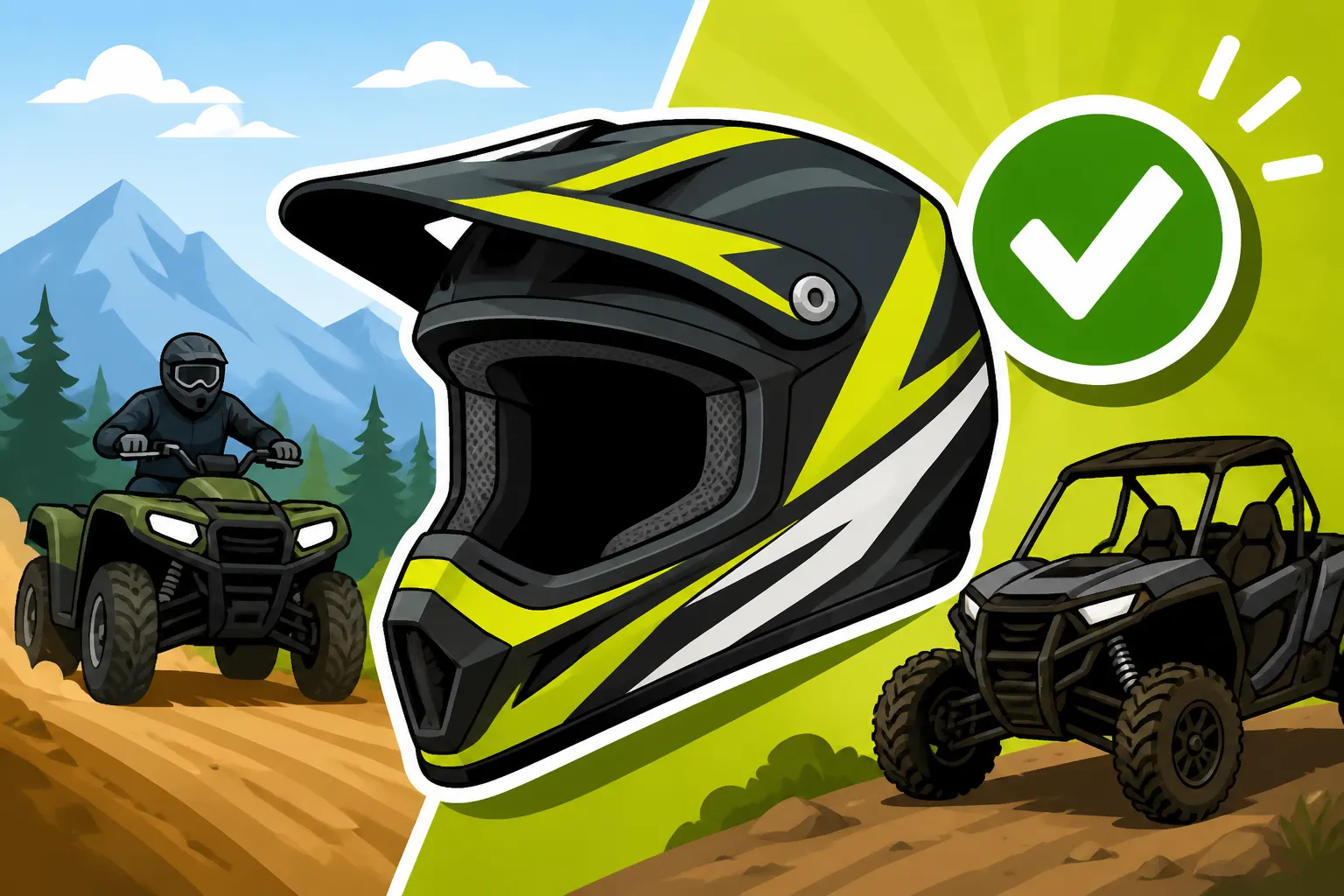
- Off-Road (Motocross or MX) Helmets: This is arguably the most popular choice for ATV and dirt bike riders, and for good reason. They feature a distinct elongated chin bar for extra protection and improved airflow, a prominent visor (or "peak") to shield from sun, roost, and branches, and a large eye-port designed specifically to accommodate goggles. The open design allows for excellent ventilation, which is a blessing when you're working hard on the trails, especially in warmer weather or technical terrain. They're typically lighter than full-face road helmets and prioritize protection for impacts often encountered in off-road riding. If you're primarily on a quad or dirt bike tearing up trails, an MX-style helmet with a good pair of [Goggles for a Dusty Corridor] is often your best bet.
- Full-Face Helmets (Road-Style): While primarily designed for street motorcycles, some riders, particularly those in UTVs, might consider a full-face helmet for its comprehensive protection. These helmets offer excellent overall coverage, including a built-in visor for eye protection and often superior noise reduction. However, they can be hotter and less ventilated than MX helmets, and the fixed visor might fog up more easily in humid conditions or at low speeds. They also lack the peak visor that is so useful for deflecting sun and debris in off-road environments.
- Modular (Flip-Up) Helmets: These offer a blend of full-face protection and the convenience of an open-face design. The chin bar and visor can flip up, allowing you to easily talk, drink, or get some fresh air without removing the entire helmet. This versatility is appealing to some UTV riders. However, modular helmets are generally heavier due to the additional mechanisms, and the protection of the chin bar when in the "up" position is non-existent. For off-road riding, ensure it's fully closed and latched for maximum protection.
- Open-Face (3/4) Helmets: While they offer a feeling of freedom and excellent airflow, open-face helmets provide minimal protection for your face and chin. While they might be legally acceptable in some very specific, low-speed, non-ORV Act situations, they are generally not recommended or compliant for most ATV/UTV riding in BC due to the significant risk to your lower face and jaw. If you opt for one, you absolutely need robust eye protection like goggles or a face shield, but honestly, for serious off-road use, it's a compromise on safety that most riders would advise against.
When considering helmets, remember that [Helmets for Driver and Passenger] both need to meet the proper standards. Don't compromise on a passenger's safety by giving them an inferior or ill-fitting helmet.
Side-by-Side Specific Considerations: Cages and Belts
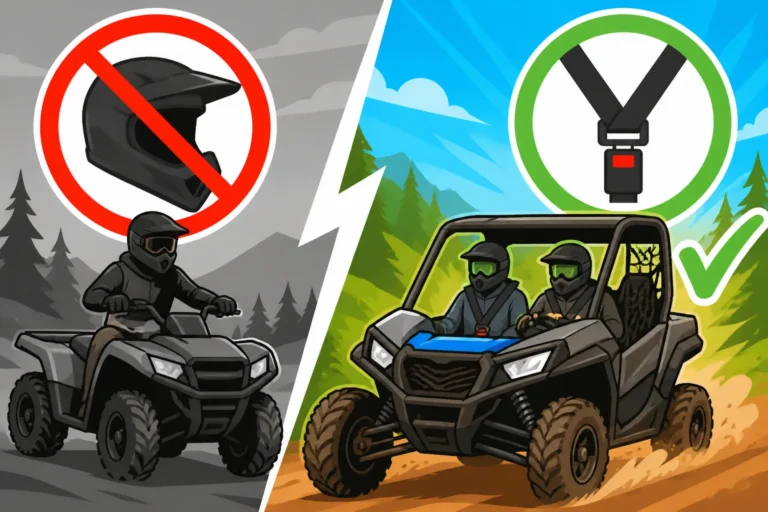
Here's where things get a little nuanced. If you primarily ride a side-by-side (SXS) with a roll cage and seatbelts, you might think you’re exempt from helmet rules. The ORV Act in BC does state that [BC Seat Belts Instead of Helmets] can be an alternative in specific scenarios for ORVs equipped with a roll bar or similar structure and seatbelts. This often applies to UTVs that meet certain manufacturer specifications and are operated in designated areas. However, this exception often comes with conditions, and many riders, tour operators, and even some riding areas still strongly recommend or require helmets for UTV occupants, even when seat-belted in.
Why the continued push for helmets in SXS, even with a cage and belts? Because while the cage protects you from being crushed in a rollover, your head can still strike internal components of the vehicle, or you can experience significant whiplash that a helmet could help mitigate. Flying debris, dust, and branches are also a factor. Many UTV-specific helmets are available, often resembling a motocross helmet but sometimes adapted with specific features for UTV riding, like integrated communication systems or clearer visors instead of requiring goggles. Manufacturers like SuperATV offer a range of accessories that complement your UTV safety, including windshields and roofs, but remember, these are in addition to, not a replacement for, proper head protection. Even if the law provides a loophole, common sense and safety consciousness should always prevail when it comes to protecting your most valuable asset.
Fit, Features, and Maintenance for Longevity
You've done your homework on regulations and certifications, and you've picked out a helmet style that suits your riding. Now comes the critical part: ensuring it fits correctly and maintaining it properly. An ill-fitting helmet is almost as bad as no helmet at all, and a neglected helmet won't last or protect you as it should.
The Perfect Fit: More Than Just Comfort
Getting the right fit isn't just about avoiding discomfort on a long ride; it's fundamental to the helmet's ability to protect you. A helmet that's too loose can shift during an impact, exposing vulnerable areas, or even fly off. One that's too tight can cause painful pressure points and headaches, distracting you from the trail.
Here’s how to find that perfect fit:
- Measure Your Head: Use a flexible tape measure to find the circumference of your head, just above your eyebrows and around the widest part of your skull. Compare this measurement to the manufacturer's sizing chart. This gives you a starting point.
- Try It On: Once you have a size in mind, put the helmet on. It should slide on snugly but without excessive force. It might feel a little tight at first, as the internal padding will compress slightly over time.
- Check for Snugness: The helmet should feel firm and even all around your head, with no significant pressure points. Your cheeks should feel a slight squeeze, and the top of your head should be making contact with the crown pad. If you can wiggle the helmet from side to side or front to back easily, it's too big.
- The "Shake Test": With the chin strap securely fastened (but not painfully tight), try to move the helmet around your head. Your scalp and skin should move with the helmet; the helmet itself shouldn't slide independently. Now, try to move your head from side to side – the helmet should not rock around.
- Comfort Check: Wear the helmet for at least 5-10 minutes. Pay attention to any developing hot spots or painful pressure points. If these persist, try a different size or even a different brand, as head shapes vary (round oval, intermediate oval, long oval). What fits one person perfectly might cause discomfort for another. This is why it's always best to try on multiple helmets before buying, if possible. Even if you're renting, take the time to ensure you're [Checking That a Rental Helmet Actually Fits] properly before you head out.
Remember, a helmet's fit is unique to the individual and the brand. Don't rush this step. It's the difference between a helmet that's just a compliance piece and one that's a true life-saver.
Essential Features and Accessories
Beyond the basic shell and padding, modern helmets come with a host of features that enhance comfort, safety, and rider experience:
- Ventilation Systems: Look for helmets with adjustable vents (intake and exhaust) to control airflow. Good ventilation is crucial to keep you cool, reduce sweat buildup, and prevent visor fogging, especially during strenuous riding or in varying BC weather.
- Visors and Goggles: For MX-style helmets, a good pair of goggles is non-negotiable. Look for anti-fog and UV-protected lenses, and ensure they integrate well with your helmet's eye-port without creating pressure points. If you're riding in extremely dusty conditions, investing in tear-offs or roll-offs for your goggles can be a game-changer. For full-face or modular helmets, a scratch-resistant, anti-fog visor is key. Many riders appreciate tinted or photochromatic visors for adapting to changing light conditions.
- Removable and Washable Liners: This is a fantastic feature for hygiene and extending your helmet's life. Being able to pull out the cheek pads and comfort liner to wash them means you can keep your helmet fresh and free from sweat, dirt, and odor buildup. This also helps prevent skin irritation.
- Chin Strap Closure: Most off-road helmets use a double D-ring closure, which is simple, secure, and highly reliable. Some street-oriented helmets may feature quick-release buckles, which can be convenient but you should always ensure they are robust and certified for motorsports use.
- Integrated Communication Systems: For UTV riders, especially groups or those with passengers, integrated communication systems or dedicated spaces for aftermarket comms are a huge plus. They allow for easy conversation without yelling over engine noise, enhancing safety and the social aspect of the ride. SuperATV also offers accessories that can complement a UTV, such as sound bars and communication devices, which can work well with certain helmets.
Caring for Your Helmet: Cleaning and Storage
Just like your ATV or UTV, your helmet needs proper care to ensure it performs optimally and lasts for its intended lifespan. Neglecting it can lead to degradation of materials and reduced effectiveness.
- Cleaning the Shell: Use a mild soap and water solution with a soft cloth to clean the exterior. Avoid harsh chemicals, petroleum-based cleaners, or solvents, as these can damage the helmet's finish or compromise the structural integrity of the shell. Rinse thoroughly and air dry.
- Cleaning the Liner: If you have removable liners, follow the manufacturer's instructions, typically hand washing with mild soap and air drying. If the liner isn't removable, you can use a helmet-specific interior cleaner or a very damp cloth with mild soap, being careful not to soak the EPS foam. Ensure it's completely dry before reassembling or wearing again.
- Visor/Goggle Care: Clean visors and goggle lenses with a specific lens cleaner or mild soap and water, using a microfiber cloth. Avoid wiping a dry, dusty lens as this can scratch the surface and impair visibility.
- Storage: Store your helmet in a cool, dry place, away from direct sunlight and extreme temperatures. Heat and UV light can degrade the EPS foam and shell materials over time. Keep it away from chemicals, fuels, and exhaust fumes. Many helmets come with a helmet bag, which is great for protecting it from scratches and dust during storage or transport. Never hang your helmet by the chin strap, as this can deform the padding over time.
- When to Replace: Beyond the 5-7 year general lifespan, always replace your helmet if it has sustained an impact, even a seemingly minor one. The internal foam is designed to crush on impact, and once it has done its job, it cannot provide the same level of protection again. Also, inspect your helmet regularly for any signs of damage, cracks, or deterioration of the materials.
By diligently following these care instructions, you can ensure your helmet remains in top condition, ready to protect you on every adventure.
Where to Buy and What to Look For Locally
So you're armed with knowledge about helmet types, certifications, and fit. The next step is actually making the purchase. While the internet offers vast choices, there's a lot to be said for getting your hands on a helmet in person.
Reputable Dealers and Online Retailers
When it comes to buying a helmet, having options is great, but knowing where to buy from is even better.
- Local Powersports Dealers: This is often your best bet, especially if you're new to riding or unsure about sizing. A dedicated motorsports dealer in places like Chilliwack, Kelowna, or Kamloops will have staff who are knowledgeable about various helmet brands, fitment, and the specific demands of off-road riding in BC. You can try on multiple helmets from different manufacturers to find the one that best suits your head shape and comfort. They can also advise you on local regulations, [BC ATV Safety Training Options], and what other gear you might need. Plus, you're supporting a local business that often contributes to the riding community.
- Major Online Retailers: Websites dedicated to motorsports gear offer an immense selection, competitive pricing, and often detailed customer reviews. This can be a great option if you already know your size and preferred brand, or if you're looking for specific models that might not be available locally. However, the downside is you can't try it on before you buy. If ordering online, always check the retailer's return policy for helmets, as you might need to exchange it if the fit isn't perfect. Be cautious of marketplace sellers with unusually low prices, as mentioned earlier, to avoid counterfeits. Websites like SuperATV might offer various gear and accessories, but for helmets specifically, look for retailers specializing in certified personal protective equipment.
- Manufacturer Websites: Buying directly from a helmet manufacturer's website can ensure authenticity and access to their full range of products. They often provide detailed sizing guides and customer support to help with your purchase.
The Importance of a Pre-Purchase Inspection
Before you hand over your hard-earned cash, whether online or in person, take a moment to do a thorough inspection of the helmet. This can save you a lot of hassle and, more importantly, ensure your safety.
- Check for Certifications: Double-check for the DOT, Snell, or ECE sticker. Ensure it's securely affixed and appears genuine. Don't be shy about asking the retailer questions if anything looks off.
- Date of Manufacture: Look for a date of manufacture sticker, usually hidden under the comfort liner or on the chin strap. While helmets have a general lifespan, you don't want to buy one that's already a few years old off the shelf. Aim for one manufactured as recently as possible.
- Visible Damage: Carefully inspect the shell for any cracks, chips, or deep scratches. Check the visor or goggle lens for scratches that could impair vision. Ensure all vents and moving parts (if applicable, like a modular hinge) operate smoothly.
- Chin Strap and D-rings: Examine the chin strap for fraying or damage, and ensure the D-rings (or buckle) are solid and function correctly.
- Padding Integrity: Press on the internal padding to ensure it's firm and resilient. Look for any signs of compression, tears, or excessive wear.
- Never Buy a Used Helmet (Unless You Know Its History Impeccably): This cannot be stressed enough. Unless you personally know the seller and can verify the helmet's entire history, including any impacts, age, and storage conditions, do not buy a used helmet. Even if it looks perfect on the outside, the internal, energy-absorbing EPS foam could be compromised from a previous impact, leaving you completely unprotected in a fall. Your brain is worth the investment in a new, certified helmet.
Choosing and buying a helmet that truly "passes" in BC means understanding the law, respecting the safety standards, picking the right style for your riding, ensuring an impeccable fit, and maintaining it diligently. It's a key part of responsible off-road riding, ensuring that your adventures remain fun, safe, and memorable for all the right reasons. When you're heading out to hit [BC Rules for Riding a Forest Service Road] or any other Crown land, a proper helmet is as essential as fuel in your tank.
| Helmet Certification | Primary Focus | Key Features | Typical Users |
|---|---|---|---|
| DOT FMVSS 218 | Impact & Penetration | Baseline legal standard in North America | General riders, budget-conscious |
| Snell M2020D/R | Multiple, Higher Energy Impacts | More stringent tests, consistent protection | Serious riders, racers, safety-focused |
| ECE R22.05/22.06 | Comprehensive: Impact, Rigidity, Shear | Widely accepted internationally, balance of safety/weight | European models, many global brands |
Disclaimer
This article is for general informational purposes only and does not constitute professional advice. Laws, prices and regulations vary by location and change over time. Consult a qualified professional for guidance on your specific situation.