BC Passes Exist Only at Managed Sites
A BC trail pass can be confusing because there is no single pass that covers every ATV or UTV ride in the province. Some managed riding sites require a day or annual pass, while other Crown land routes may have no site pass at all. This guide explains where passes apply, how to check before you go, and what visiting riders should carry.
What a managed-site pass covers
A managed site is a riding area or trail system where an organization actively manages access or facilities. That might mean maintaining trails, providing staging areas, managing parking, or setting rules for use. A club, recreation-site operator, or other land manager may oversee the area, and the pass requirement depends on that specific site.
A pass is generally permission to use a particular managed area under its rules. It is not a province-wide permit, a registration document, insurance, or permission to ride anywhere else. If your ride leaves the managed site and continues onto another road or area, different rules may apply along the way.
Some managed sites require users to buy a pass. Others may request a voluntary contribution, rely on membership, or have no pass requirement. Even within one broad riding region, access arrangements can differ between trailheads, routes, and facilities. Do not assume that a pass bought for one location is accepted at another.
| What you need | What it generally does | Does it replace a managed-site pass? |
|---|---|---|
| Site or trail pass | Provides access to a specified area under its rules | It is the pass for that location only |
| Vehicle registration | Identifies a machine under applicable registration rules | No |
| Insurance | Provides coverage subject to the policy terms and where you ride | No |
| Club membership | Supports a club and may provide member benefits | Not unless the site says membership grants access |
| Police operation permit | May authorize certain highway travel under its conditions | No |
| Landowner permission | Allows access to private land when granted | No |
A site pass does not automatically make a ride lawful. You still need to follow applicable vehicle, road, land-access, fire, and safety rules. For example, registering a machine does not create a right to ride on a closed trail or private property. For the broader picture of access across different types of land, see BC Crown Land Riding Explained.
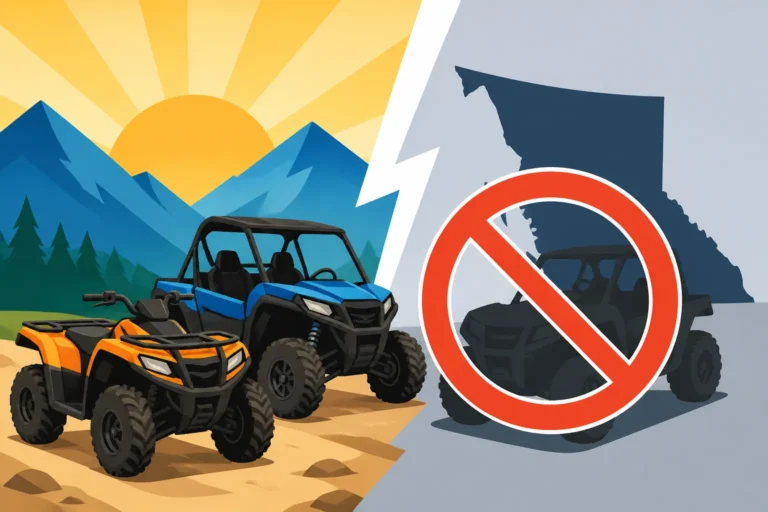
There is no general BC ATV pass that lets a rider use every trail or Crown land route. That distinction is easy to miss if you are used to a system where one permit covers an entire region. In BC, the access question is often local: who manages this particular site, what does that manager require, and where do those rules stop? BC Has No Province-Wide Trail Pass
Why there is no single pass for all of BC
A province-wide pass would suggest that one organization controls access to all riding areas. That is not how BC’s riding access works. Riding may involve public land, managed recreation sites, roads, private land, or areas with seasonal and activity-specific restrictions. Different authorities and organizations can manage different places, and their requirements are not necessarily shared.
That means three things can be true on the same trip:
- You may not need a site pass on one section of the route.
- You may need a pass or permission at a managed trailhead or recreation area.
- You may need to follow separate road or land-use rules after leaving that area.
The pass question is separate from whether the machine needs registration. BC ORV registration rules and local site-access rules serve different purposes. Learn about the registration requirement in Do You Need to Register an ATV in BC?, then check the pass rules for the exact location you plan to ride.
A pass also differs from club membership. Membership dues may help pay for trail work, advocacy, events, or insurance-related benefits, depending on the organization. Membership alone does not necessarily grant access to a managed site. Some site operators may offer a pass through a club or give members a particular way to purchase one, but check the site’s own terms rather than assuming. Why Club Membership Is Not the Same as a Pass
Passes are location-specific
A day pass usually applies to a particular visit or operating period, while an annual pass may cover a longer period at that site. The exact dates, eligible machines, purchase options, and conditions depend on the operator. Some sites may set different terms for adults and youth, require each machine to have its own pass, or specify where proof must be displayed.
Do not infer that one site’s rules apply throughout the region. A pass might cover the trails managed by one organization but not an adjacent network, staging area, or connector road. If the boundary is unclear, ask the operator which trails and facilities are included.
A pass is not a road-use permit
A managed-site pass does not authorize highway travel, make an ATV or UTV street legal, or replace a permit that may be needed for a specific type of road use. In particular, access to a staging area by trailer is different from riding the machine on a public road to reach it.
If your route involves a Forest Service road, check the rules for that road as well as any site-pass conditions. Relevant requirements may include insurance, helmet use, radio practices, posted restrictions, and industrial traffic precautions. See BC Forest Service Road Requirements before planning a ride on those roads.
How to find out whether your ride needs a pass
The most reliable approach is to identify the specific site and check its current instructions before you leave. A general map or a recommendation from a friend may help you find a trailhead, but it may not tell you whether a pass is required today, which trails it covers, or whether a closure has changed access.
Use this process:
- Name the exact riding area and access point. A region can contain several separate sites or trail networks. Write down the trailhead, staging area, or site name, not just the nearest town.
- Identify who manages it. Look for the organization or land manager responsible for that area. If you cannot tell from signs or the information you have, contact a local riding club or the site operator and ask who to check with.
- Read the current pass instructions. Confirm whether a pass is required, whether it applies per rider or per machine, and which trails, facilities, and dates it covers.
- Check how the pass is obtained. Some sites may offer online purchase, on-site payment, or another process. Do not assume you can buy one at the trailhead, especially if you expect limited cell service.
- Check closures and special restrictions. Fire conditions, active work, seasonal limits, or other land-use restrictions can affect access even if you have a valid pass.
- Keep proof accessible. Follow the operator’s directions for displaying or carrying it. Save confirmation in a way you can use without relying on a live internet connection.
For a managed area, the site operator’s own directions are the best starting point. The general guides BC Day Passes at a Managed Site and BC Annual Passes at a Managed Site can help you understand the difference between pass types, but they do not replace checking the terms for the location you will visit.
A site may charge for access, offer a pass through a club, or have a different arrangement. Because the cost and purchase terms can change, confirm current details directly with the operator rather than relying on an old receipt, forum post, or screenshot from another rider.
Ask questions that prevent a wasted trip
If the information is incomplete, ask specific questions. “Do I need a pass?” is a useful start, but it may not resolve edge cases. Try asking:
- Does the pass cover this exact trailhead and the trails I plan to use?
- Is a pass required for each machine, or for each rider?
- Are there separate rules for a side-by-side, youth rider, passenger, or group?
- Can I buy it before travelling, and what proof must I carry?
- Does it cover parking or staging, or only trail use?
- Are any routes closed or subject to special restrictions?
- Does the pass cover only this site, or an adjoining trail system too?
Keep the answer in writing if you can, particularly if the instructions are unusual or the boundary between areas is confusing. It is also sensible to check again shortly before a ride, since closures and access conditions can change.
Visiting BC from another province or the United States
A visitor may have to think about two separate documents: proof that the machine is properly identified or registered under the visitor’s home rules, and a pass required by the particular BC site. Having one does not substitute for the other.
BC’s approach to visitors’ machines depends in part on whether the home jurisdiction has a registration system and what documentation the visitor has. Do not assume that a BC site pass settles the registration question, or that a home plate automatically grants access to a managed trail network. For Alberta visitors, start with BC Riders From Alberta Use Alberta Plates. If you are visiting from another place, check the information that applies to your home jurisdiction and carry proof of ownership as appropriate. BC Proof of Ownership for Visitors
The site operator’s pass rule usually concerns use of that managed area, not where the machine is registered. A rider from outside BC may therefore need the same local site pass as a resident, while using the machine’s valid home-jurisdiction identification and documents where applicable.
Before travelling, make a short checklist for the machine and the trip:
- Home registration or other applicable identification
- Proof of ownership or permission to use the machine
- The required local site pass, if there is one
- Insurance documents suited to the roads and areas on the route
- Any required permits for a particular type of road travel
- A current closure and access check
Do not treat an old pass from a previous visit as proof that a new trip is covered. The pass might have expired, might apply to a different area, or might have been issued under terms that have since changed. Likewise, a pass receipt from one site is not a general BC riding permit.
Visitors should also account for the route to the riding area. A machine transported on a trailer may still encounter access rules at the destination, and any proposed riding on a public road has its own legal requirements. If you are unsure whether your planned route involves a road rather than a trail, check the road rules before setting out.
Carrying proof and avoiding common mistakes
If a site requires a pass, carry proof in the format the operator accepts. That may be a physical pass, a confirmation on your phone, a displayed document, or another method. Follow the site’s instructions exactly. A purchase confirmation is useful only if it clearly shows the relevant pass and the operator accepts it as proof.
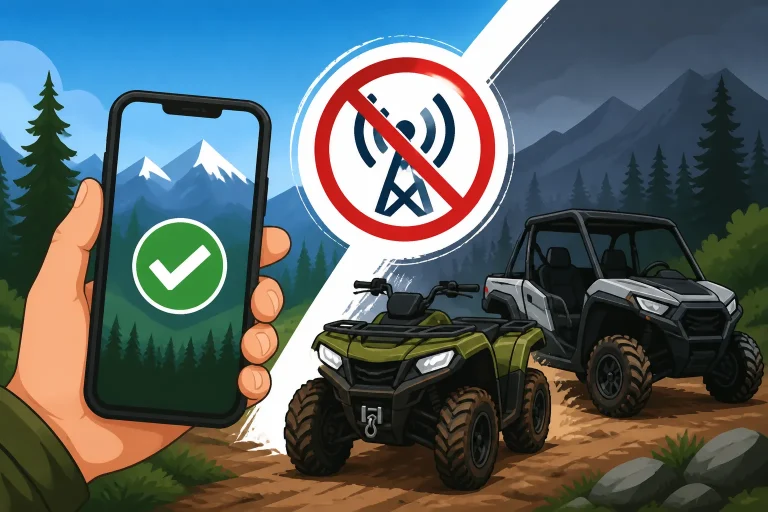
For a phone-based pass, save the confirmation for offline access and consider taking a screenshot before you leave. Do not rely on cell coverage at a remote trailhead. If the pass is physical, protect it from rain, mud, and damage, and place it where the site requires. Keep other vehicle documents separate enough that you can find them quickly.
A waterproof phone pouch can protect a phone carrying a digital confirmation. If you need one, Amazon is one possible place to compare pouch sizes and closure styles; check that the case fits your phone and can still be used easily with gloves. A small document wallet can also keep a printed confirmation or ownership papers together. Amazon has options for simple waterproof wallets, but the useful feature is protection from water and dirt, not the brand. If you buy supplies through Amazon or another retailer, test them at home before a remote ride rather than discovering a weak seal at the trailhead.
Common mistakes include:
- Assuming registration includes trail access. Registration is not a pass and does not grant permission to use a managed site.
- Assuming membership is the pass. Confirm whether the operator requires a separate purchase or specific proof.
- Buying for the wrong area. Check the pass name, boundaries, dates, and included trails.
- Waiting until arrival to check. A site may require advance purchase, or connectivity and payment options may be limited.
- Using an old screenshot. Make sure the pass is valid for the current visit and location.
- Ignoring closures. A pass does not override a closure, prohibition, or direction from the responsible authority.
- Treating a route as one continuous site. A ride may cross into areas managed by someone else, with different rules.
If you ride with a group, make sure every driver knows what the pass covers and what it does not. A lead rider’s confirmation may not prove that every machine or person has met the site’s requirements. Before departure, compare the number of machines with the pass conditions, confirm the route, and decide what the group will do if a gate, closure sign, or access restriction appears.
For a simple pre-ride routine, record the site contact or official access page, save the pass proof offline, check current closures, and carry required vehicle documents. If the ride includes more than one managed area, verify each one separately. This takes a few minutes at home and can prevent confusion when you are far from a service counter or cell signal.
The key point is that BC does not have one pass for every ATV and UTV trail. A pass may be required at a specific managed site, but it is only one part of a lawful and well-planned ride. Confirm the site’s current rules, keep your documents in order, and treat each new riding area as a separate access decision.
Disclaimer
This article is for general informational purposes only and does not constitute professional advice. Laws, prices and regulations vary by location and change over time. Consult a qualified professional for guidance on your specific situation.