Five Campsites and a Boat Launch
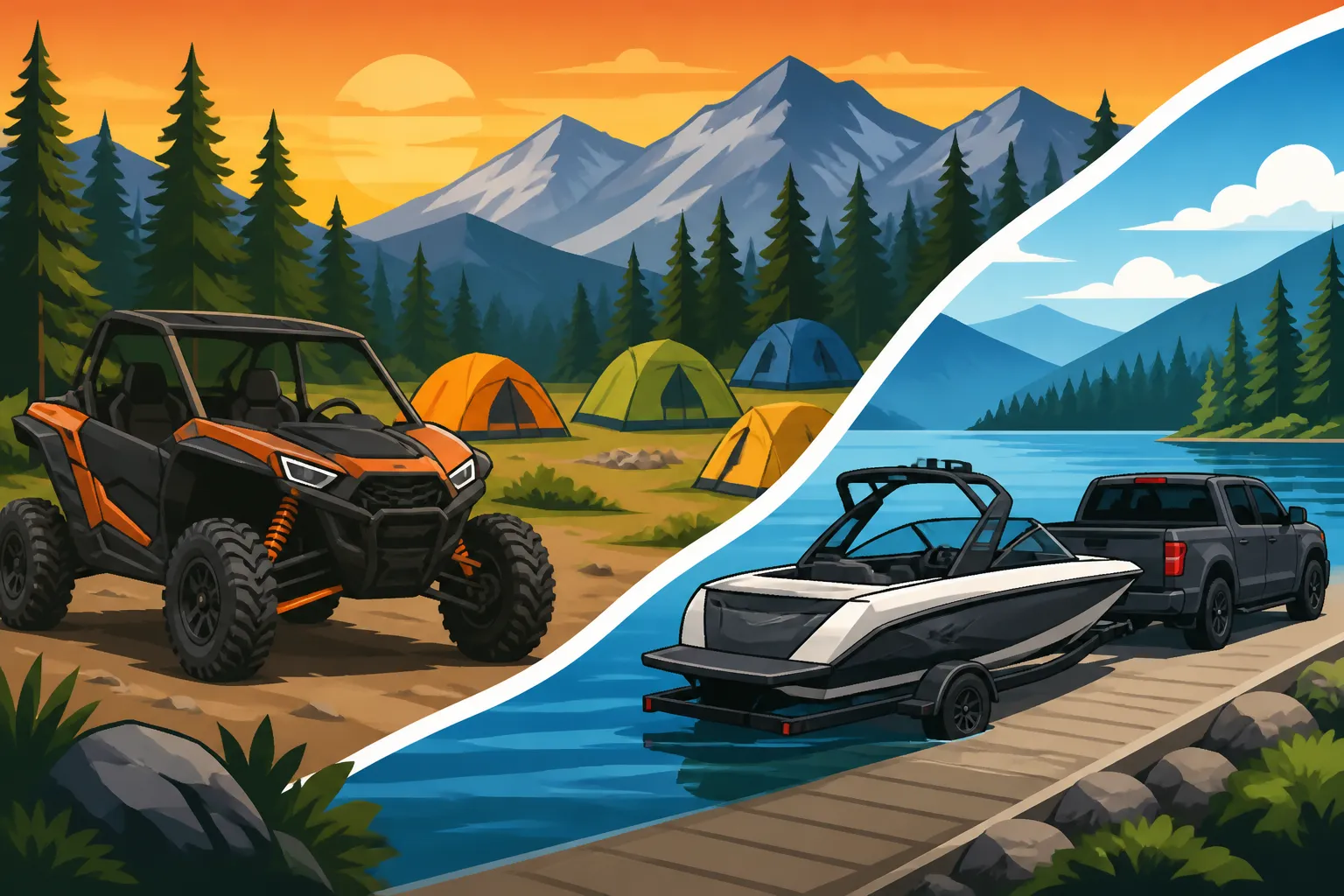
A small lakeside recreation site with five campsites and a boat launch can make a BC ATV weekend feel wonderfully simple: park, camp, ride, and enjoy the water. The catch is that a boat launch and nearby trails do not automatically mean every road is open to ATVs. This guide explains how to plan around limited sites, confirm legal routes, and arrive ready.
Plan the trip around the site’s limits
Treat five campsites as a small, first-come-style opportunity
Five campsites can fill quickly on a sunny weekend, especially when riders, anglers, and families are all looking for the same lakeside escape. Before you tow a trailer for several hours, check whether the site takes reservations, whether camping is allowed at the time of your visit, and whether there are any current access restrictions. A listing or map pin can help you find the place, but it may not tell you whether a site is full or temporarily closed.
Have a backup plan before leaving home. Identify another campground or recreation site within a reasonable drive, and check whether it can accommodate your vehicle and trailer. If you arrive late and all five spots are occupied, you do not want to be making rushed decisions on a narrow forest road in the dark. BC Trails With Camping can help you think through the kinds of camping options to look for when planning a riding trip.
Small sites often have limited room for large trailers, multiple machines, or several groups travelling together. Ask your group to agree on how many vehicles are coming and whether everyone can fit into the site’s parking area. If the campsite is modest, consider meeting at a larger staging area and travelling in fewer vehicles, provided that arrangement is safe and permitted.
Check whether the launch and riding access are actually connected
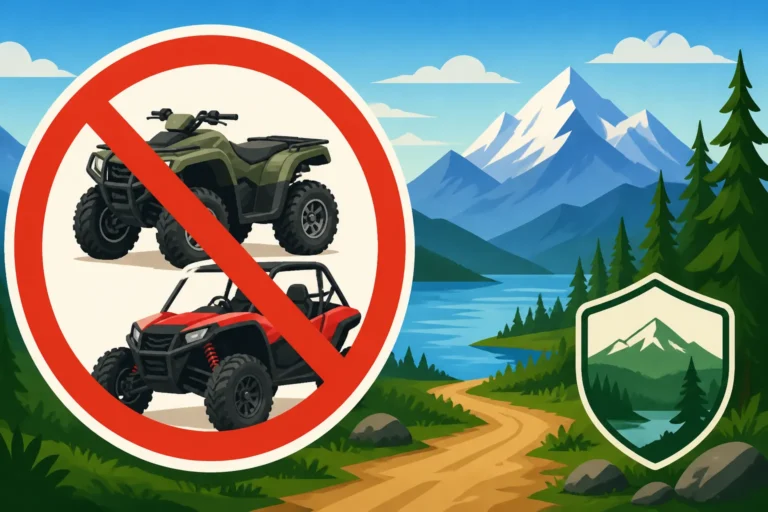
A boat launch is useful for getting a boat onto the water; it is not proof that an ATV trail begins beside it or that riding is allowed around the shoreline. Routes may be separated by private land, seasonal closures, sensitive habitat, or signs restricting motorized access. Confirm where machines can be unloaded and where they may legally travel before treating the campground as a ride base.
This matters particularly in BC, where Crown land access, private property, park boundaries, and road restrictions can meet in a small area. A mapped trail may cross a road or pass near a recreation site without providing a legal route from your campsite. Read posted signs when you arrive, and do not ride through a gate or around a closure because a route appears on a general-purpose map. BC Crown Land Riding Explained offers useful context for understanding why land status and access permission matter.
Use onX Offroad as a planning aid for reviewing possible routes and terrain, but cross-check any route against current local signs, land information, and official closure notices. Map layers can help you spot alternatives and estimate distances; they should not be treated as permission to ride. If you cannot confirm whether a route is open to motorized use, choose a route you can verify rather than testing the boundary on the ground.
Make a backup plan for water, parking, and services
A boat launch does not necessarily come with a dock, paved parking, a washroom, potable water, or room to turn around with a trailer. Check what the site actually provides, and pack as if the basic amenities may be limited. Bring drinking water, garbage bags, a first-aid kit, and supplies for securing food. If the access road is rough, account for the extra time and space needed to unload machines safely.
Fuel and cell coverage deserve attention, too. Small recreation sites may be some distance from fuel, groceries, or reliable phone service. Fill up before leaving the nearest suitable community, and tell someone your intended route and return time. For remote trips, BC Riding Areas With Cell Service is a useful reminder that coverage varies by location; do not assume a phone will work just because it has service in town.
Prepare for a safe and legal ATV ride
Confirm registration, insurance, and required equipment
Before riding, make sure the machine is properly registered for the type of use you have planned and that you have the required documents with you. Riders are expected to carry the registration certificate and photo ID, so keep them somewhere protected from rain, mud, and accidental loss. Carrying Your Certificate of Registration on Every Ride covers this easy-to-overlook part of trip preparation.
Insurance requirements depend on where you ride. A trail, Crown land road, private road, and Forest Service Road may not all have the same rules. If your route uses a Forest Service Road, review the specific insurance and riding requirements before departure. BC Forest Service Road Requirements is a useful place to start, but posted road rules and local conditions still matter.
Check the machine before it goes on the trailer and again before the first ride. Inspect tires, brakes, steering, lights, controls, and any cargo straps. For a side-by-side, check seat belts and ensure passengers have appropriate protective gear. A quick walk-around can catch a loose strap or damaged light before it becomes a problem far from the campsite.
| Before you leave | What to confirm | Why it matters |
|---|---|---|
| Campsite | Availability, access, facilities, and any closures | Five sites offer little room for a last-minute backup |
| Boat launch | Location, parking, and whether the ramp suits your boat | A launch may have limited turning and staging space |
| ATV route | Legal access, current restrictions, and route length | A nearby road or trail may not be open to ORVs |
| Documents | Registration certificate, photo ID, and insurance details | Required documents are easier to access before the ride |
| Machine | Tires, brakes, lights, belts, and cargo security | Small mechanical issues are harder to solve remotely |
| Group plan | Fuel range, meeting points, and return time | Groups can become separated or delayed on unfamiliar routes |
Ride with the road and trail conditions in mind
A lakeside campsite can be a good base for a relaxed ride, but forest roads may carry industrial traffic, including logging trucks. Stay alert around blind corners, keep to a safe speed, and yield as required. If a road has radio procedures or specific posted directions, follow them. Riding cautiously is especially important when dust, rain, or low light reduces visibility.
Do not assume a route remains suitable because it was passable on a previous visit. Spring melt, heavy rain, wildfire activity, road work, and new closures can change access quickly. Check conditions shortly before departure and again at the trailhead. BC Trail Closures After a Storm is a relevant reminder to leave room in your itinerary for changing conditions.
Carry basic repair items and enough food, water, and warm layers to manage a delay. A route that looks short on a screen can take longer when the surface is rutted, the group includes newer riders, or someone needs to turn back. If you are using onX Offroad to plan, save the route details before heading into an area with weak reception and keep a separate record of your intended route. The app can assist with navigation, but it cannot replace sound judgment or local closure information.
Keep the campground comfortable for everyone
A shared recreation site is not a private staging yard. Park so other campers can access their spaces, keep machines away from the launch area when they are not being loaded or unloaded, and avoid blocking the road. Respect quiet hours and any site-specific rules. A five-campsite area has little space to absorb conflict, so considerate parking and a low-key arrival make a real difference.
Pack out garbage and secure food so wildlife is not drawn into the campsite. Keep machines on established routes and avoid damaging vegetation near the shore. Even when the site feels rugged and informal, the shoreline can be sensitive, and repeated vehicle traffic can create erosion or damage habitat. Do not wash mud, fuel, or maintenance fluids into the lake or nearby drainage.
Combine camping, boating, and riding without overloading the weekend
Decide which activity gets priority
It is tempting to arrive with a boat, several ATVs, and an ambitious ride plan, then try to fit everything into one day. That can mean hurried unloading, crowded parking, and a group that is exhausted before the weekend really begins. Choose a main activity for each day. For example, make the first afternoon about setting up camp and checking the launch, then schedule a ride the next morning when everyone is rested.
If boating is the priority, plan around safe launch and retrieval times and leave room for changing weather. If riding is the priority, decide who is staying at camp, who is joining the ride, and how the group will communicate. Make sure nobody is left guessing when the machines will return. A simple written plan with a route, turnaround time, and contact person is practical even for a short outing.
For a family group, not everyone needs to ride. Some people may prefer to stay by the water, while others take a shorter ride. Make sure the non-riding part of the group has what it needs, including shade, drinking water, and a way to contact the riders if coverage allows. Keep children supervised around the boat launch and do not treat the campsite’s proximity to the water as a substitute for active water safety.
Build a realistic route, not just a distance target
A loop that appears manageable on a map may include rough ground, steep grades, mud, or road sections with traffic. Match the route to the least experienced rider and the machine with the most limited fuel range or capability. Agree on a pace and a turnaround point before leaving. If conditions worsen, turning back is a sensible outcome, not a failed ride.
Do not rely on a single map source to settle access questions. Compare route information with local signs and current notices, and ask a nearby club or recreation contact if an access point is unclear. Finding a Club Near Your Town can help riders identify local knowledge that may be useful for understanding trail conditions and etiquette. Local advice is most useful when combined with your own checks rather than treated as a guarantee that every route remains open.
Make sure your route does not quietly turn into an unplanned highway trip. ATVs and UTVs are not automatically allowed on public roads because a campsite or trail is nearby. Where a crossing or road connection is involved, confirm the applicable rules before the ride and use only permitted access. Can You Ride an ATV on the Road in BC? explains why this distinction matters.
Leave the site as carefully as you found it
Before packing up, check the campsite for garbage, food scraps, loose straps, and forgotten gear. Make sure the boat and machines are secured for transport, and leave the launch area clear for the next visitor. If you notice a closure sign, damaged access, or an unsafe condition, do not remove barriers or try to repair public infrastructure yourself. Report the issue through the appropriate local channel.
A five-site campground can be a memorable base for a BC weekend precisely because it is small and close to the outdoors. Planning for limited space, confirming where motorized travel is allowed, and keeping the boating and riding plans realistic can prevent the most common frustrations. Treat the boat launch as one facility—not proof of trail access—and verify the route before unloading your ATV.
Disclaimer
This article is for general informational purposes only and does not constitute professional advice. Laws, prices and regulations vary by location and change over time. Consult a qualified professional for guidance on your specific situation.